


Entrevista
In recent years, artificial intelligence (AI) has gone from being a futuristic promise to becoming an everyday tool: today we live with language models, generative systems and algorithms capable of learning more and more tasks. But as their popularity grows, so does an essential question: how do we ensure that these technologies are truly reliable and trustworthy? Today we are going to explore that challenge with two invited experts in the field:
- David Escudero, director of the Artificial Intelligence Center of the University of Valladolid.
- José Luis Marín, senior consultant in strategy, innovation and digitalisation.
Listen to the full podcast (only available in Spanish)
Summary / Transcript of the interview
1. Why is it necessary to know how artificial intelligences work and evaluate this behavior?
Jose Luis Marín: It is necessary for a very simple reason: when a system influences important decisions, it is not enough that it seems to work well in an eye-catching demo, but we have to know when it gets it right, when it can fail and why. Right now we are already in a phase in which AI is beginning to be applied in such delicate issues as medical diagnoses, the granting of public aid or citizen care itself in many scenarios. For example, if we ask ourselves whether we would trust a system that operates like a black box and decides whether to grant us a grant, whether we are selected for an interview or whether we pass an exam without being able to explain to us how that decision was made, surely the answer would be that we would not trust it; And not because the technology is better or worse, but simply because we need to understand what is behind these decisions that affect us.
David Escudero: Indeed, it is not so much to understand how algorithms work internally, how the logic or mathematics behind all these systems works, but to understand or make users see that this type of system has degrees of reliability that have their limits, just like people. People can also make mistakes, they can fail at a certain time, but you have to give guarantees for users to use them with a certain level of security. Providing metrics on the performance of these algorithms and making them appear reliable to some degree is critical.
2. A concept that arises when we talk about these issues is that of explainable artificial intelligence . How would you define this idea and why is it so relevant now?
David Escudero: Explainable AI is a technicality that arises from the need for the system not only to offer decisions, not only to say whether a certain file has to be classified in a certain way or another, but to give the reasons that lead the system to make that decision. It's opening that black box. We talk about a black box because the user does not see how the algorithm works. It doesn't need it either, but it does at least give you some clues as to why the algorithm has made a certain decision or another, which is extremely important. Imagine an algorithm that classifies files to refer them to one administration or another. If the end user feels harmed, he needs to have a reason why this has been so, and he will ask for it; He can ask for it and he can demand it. And if from a technological point of view we are not able to provide that solution, artificial intelligence has a problem. In this sense, there are techniques that advance in providing not only solutions, but also in saying what are the reasons that lead an algorithm to make certain decisions.
Jose Luis Marín: I can't explain it much better than David has explained it. What we are really looking for with explainable artificial intelligence is to understand the reason for those answers or those decisions made by artificial intelligence algorithms. To simplify it a lot, I think that we are not really talking about anything other than applying the same standards as when those decisions are made by people, whom we also make responsible for the decisions. We need to be able to explain why a decision has been made or what rules have been followed, so that we can trust those decisions.
3. How is this need for explainability and rigorous evaluation being addressed? Which methodologies or frameworks are gaining the most weight? And what is the role of open data in them?
Jose Luis Marín: This question has many dimensions. I would say that several layers are converging here. On the one hand, specific explainability techniques such as LIME (Interpretable Model-agnostic Explanations) or SHAP (SHapley Additive exPlanations) or many others. I usually follow, for example, the catalog of reliable AI tools and metrics of the OECD's Observatory of Public Policies on Artificial Intelligence, because there progress in the domain is recorded quite well. But, on the other hand, we have broader evaluation frameworks, which do not only look at purely technical issues, but also issues such as biases, robustness, stability over time and regulatory compliance. There are different frameworks such as the NIST (National Institute of Standards and Technology) risk management framework, the impact assessment of the algorithms of the Government of Canada or our own AI Regulations. We are in a phase in which a lot of public and private initiatives are emerging that will help us to have better and better tools.
David Escudero: For research, it is still a fairly open field. There are methodologies, indeed, but new models based on neural networks have opened up a huge challenge. The artificial intelligence that had been developed in the years prior to the generative AI boom, to a large extent, was based on expert systems that accumulated a lot of knowledge rules about the domain. In this type of technology, explainability was given because, since what was done was to trigger a series of rules to make decisions, following backwards the order in which the rules had been applied, you had an explanation; But now with neural systems, especially with large models, where we are talking about billions and billions of parameters, these types of approximations have become impossible, unapproachable, and other types of methodologies are applied that are mainly based on knowing, when you train a machine learning model, what are the properties or attributes in the training that lead you to make one decision or another. Let's say, what are the weights of each of the properties they are using.
For example, if you're using a machine learning system to decide whether to advertise a certain car to a bunch of potential customers, the machine learning system is trained based on an experience. In the end, you are left with a neural model where it is very difficult to enter, but you can do it by analyzing the weight of each of the input variables that you have used to make that decision. For example, the person's income will be one of the most important attributes, but there may be other issues that lead you to very important considerations, such as biases. Imagine that one of the most important variables is the gender of the person. There you enter into a series of considerations that are delicate. In other types of algorithms, for example, that are based on images, an explainable AI algorithm can tell you which part of the image was most relevant. For example, if you are using an algorithm to, based on the image of a person's face - I am talking about a hypothetical, a future, which would also be an extreme case - decide whether that person is trustworthy or not. Then you could look at what traits of that person artificial intelligence is paying more attention to, for example, in the eyes or expression. This type of consideration is what AI would make explainable today: to know which are the variables or which are the input data of the algorithm that take on greater value when making decisions.
This brings me to another part of your question about the importance of data. The quality of the training data is absolutely important. This data, these explainable algorithms, can even lead you to derive conclusions that indicate that you need data of more or less quality, because it may be giving you some surprising result, which may indicate that some training or input data is deriving outputs and should not. Then you have to check your own input data. Have quality reference data like you can find in datos.gob.es. It is absolutely essential to be able to contrast the information that this type of system gives you.
José Luis Marín: I think open data is key in two dimensions. First, because they allow evaluations to be contrasted and replicated with greater independence. For example, when there are validation datasets that are public, it not only assesses who builds the system, but also that third parties can evaluate (universities, administrations or civil society itself). That openness of evaluation data is very important for AI to be verifiable and much less opaque. But I also believe that open data for training and evaluation also provides diversity and context. In any minority context in which we think, surely large systems have not paid the same attention to these aspects, especially commercial systems. Surely they have not been tested at the same level in majority contexts as in minority contexts and hence many biases or poor performances appear. So, open datasets can go a long way toward filling those gaps and correcting those problems.
I think that open data in explainable artificial intelligence fits very well, because deep down they share a very similar objective, related to transparency.
4. Another challenge we face is the rapid evolution in the artificial intelligence ecosystem. We started talking about the popularity of chatbots and LLMs, but we find that we are still moving towards agentic AI, systems capable of acting more autonomously. What do these systems consist of and what specific challenges do they pose from an ethical point of view?
David Escudero: Agent AI seems to be the big topic of 2026. It is not such a new term, but if last year we were talking about AI agents, now we are talking about agent AI as a new technology that coordinates different agents to solve more complex tasks. To simplify, if an agent serves you to carry out a specific activity, for example, to book a plane ticket, what the agent AI would do is: plan the trip, contrast different offers, book the plane, plan the outward trip, the stay, again the return and, finally, evaluate the entire activity. What the system based on agent AI does is coordinate different agents. In addition, with a nuance. When we talk about the word agéntica – which we don't have a very direct translation in Spanish – we think of a system that takes the initiative. In the end, it is no longer just you who, as a user, ask artificial intelligence for things, but AI is already capable of knowing how it can solve things. It will ask you for information when it needs it and will try to adapt to give you a final solution as a user, but more or less autonomously, making decisions in intermediate processes.
Here precision and explainability are fundamental because a very important challenge is opened again. If at any given moment one of these agents used by the agentic AI fails, the effect of summing errors can be created and in the end it ends up like the phone smashed. From one system to another, from one agent to another, information is passed and if that information is not as accurate as it should be, in the end the solution can be catastrophic. Then new elements are introduced that make the problem even more exciting from a technological point of view. But we also have to understand that it is absolutely necessary, because in the end we have to move from systems that provide a very specific solution for a very particular case to systems that combine the output of different systems to be a little more ambitious in the response given to possible users.
Jose Luis Marín: Indeed. The moment we go from a type of system that, in principle, we give the "ability to think" about the actions that should be done and tell us about them, to other systems that it is as if they have hands to interact with the digital world - and we begin to see systems that even interact with the physical world and can execute those actions, that do not stop at telling you or recommending them to you – very interesting opportunities open up. But the complexity of the evaluation is also multiplied. The problem is no longer just whether the answer is right or wrong, but it is beginning to be who controls what the system does, what margin of decision it has, who supervises it and, above all, who responds if something goes wrong, because we are not only talking about recommendations, we are talking about actions that sometimes may not be so easy to undo. This leads to new or at least more intense risks: if traceability is lost in the execution of actions that were not foreseen or that should not have occurred at a certain time; or there may be misuses of information, or many other risks. I believe that agentic AI requires even more governance and a much more careful design aligned with people's rights.
5. Let's talk about real applications, where do you see the most potential and need for evaluation and explainability in the public sector?
Jose Luis Marín: I would say that the need for evaluation and explainability is greater where AI can influence decisions that affect people. The greater the impact on rights or opportunities or, even on trust in institutions, the greater this demand must be. If we think, for example, of areas such as health, social services, employment, education... In all of them, logically, the need for evaluation in the public sector is unavoidable.
In all cases, AI can be very useful in supporting decisions to achieve efficiencies in multiple scenarios. But we need to know very well how it behaves and what criteria are being used. This doesn't just affect the most complex systems. I think we have to look at the systems that at first may seem more or less sensitive at first glance, such as virtual assistants that we are already starting to see in many administrations or automatic translation systems... There is no final decision made by the AI, but a bad recommendation or a wrong answer can also have consequences for people. In other words, I think it does not depend so much on technological complexity as on the context of use. In the public sector, even a seemingly simple system can have a lot of impact.
David Escudero: I'll throw the rag at you to make another podcast about the concept that is also very fashionable, which is Human in the loop or Human on the loop. In the public sector we have a body of public officials who know their work very well and who can help. Human in the loop would be the role that the civil servant can play when it comes to generating data that can be useful for training systems, checking that the data with which systems can be trained is reliable, etc.; and Human on the loop would be the supervision of the decisions that artificial intelligence can make. The one who can review, who can know if that decision made by an automatic system is good or bad, is a public official.
In this sense, and also related to agentic AI, we have a project with the Spanish Foundation for Science and Technology to advise the Provincial Council of Valladolid on artificial intelligence tasks in the administration. And we see that many of the tasks that the civil servants themselves ask us do not have so much to do with AI, but with the interoperability of the services they already offer and that are automatic. Maybe in an administration they have a service developed by an automatic system, next to another service that offers them a form with results, but then they have to type in the data communicated by both services by hand. There we would also be talking about possibilities for the agency AI to intercommunicate. The challenge is to involve in this entire process the role of the civil servant as a watchdog that public functions are carried out rigorously.
Jose Luis Marín: The concept of Human in the loop is key in many of the projects we work on. In the end, it is the combination not only of technology, but of people who really know the processes and can supervise them and complement those actions that the Agent AI can perform. In any system of simple care, such supervision is already necessary in many cases, because a bad recommendation can also have many consequences, not only in the action of a complex system.
6. In closing, I'd like each of you to share a key idea about what we need to move towards a more trustworthy, assessable, and explainable AI.
David Escudero: I would point out, taking advantage of the fact that we are on the datos.gob.es podcast, the importance of data governance: to make sure that institutions, both public and private, are very concerned about the quality of the data, about having well-shared data that is representative, well documented and, of course, accessible. Data from public institutions is essential for citizens to have these guarantees and for companies and institutions to prepare algorithms that can use this information to improve services or provide guarantees to citizens. Data governance is critical.
Jose Luis Marín: If I had to summarise everything in a single idea, I would say that we are still a long way from assessment being a common practice. In AI systems we will have to make it mandatory within the development and deployment processes. Evaluating is not trying once and taking it for granted, it is necessary to continuously check how and where they can fail, what risks they introduce and if they are still appropriate when the context in which a certain system was designed has changed. I think we are still far from this.
Indeed, open data is key to contributing to this process. An AI is going to be more reliable the more we can observe it and improve it with shared criteria, not only with those of the organization that designs them. That is why open data provides transparency, can help us facilitate verification and build a more solid basis so that services are really aligned with the general interest.
David Escudero Mancebo: In that sense, I would also like to thank spaces like this that undoubtedly serve to promote that culture of data, quality and evaluation that is so necessary in our society. I think a lot of progress has been made, but that, without a doubt, there is still a long way to go and opening spaces for dissemination is very important.
Interview clips
1. What is explainable artificial intelligence?
2. What role can open data play in explainable AI?

Blog
The increasing adoption of artificial intelligence (AI) systems in critical areas such as public administration, financial services or healthcare has brought the need for algorithmic transparency to the forefront. The complexity of AI models used to make decisions such as granting credit or making a medical diagnosis, especially when it comes to deep learning algorithms, often gives rise to what is commonly referred to as the "black box" problem, i.e. the difficulty of interpreting and understanding how and why an AI model arrives at a certain conclusion. The LLLMs or SLMs that we use so much lately are a clear example of a black box system where not even the developers themselves are able to foresee their behaviour.
In regulated sectors, such as finance or healthcare, AI-based decisions can significantly affect people's lives and therefore it is not acceptable to raise doubts about possible bias or attribution of responsibility. As a result, governments have begun to develop regulatory frameworks such as the Artificial Intelligence Regulation that require greater explainability and oversight in the use of these systems with the additional aim of generating confidence in the advances of the digital economy.
Explainable artificial intelligence (XAI) is the discipline that has emerged in response to this challenge, proposing methods to make the decisions of AI models understandable. As in other areas related to artificial intelligence, such as LLLM training, open data is an important ally of explainable artificial intelligence to build audit and verification mechanisms for algorithms and their decisions.
What is explainable AI (XAI)?
Explainable AI refers to methods and tools that allow humans to understand and trust the results of machine learning models. According to the U.S. National Institute of Standards and Technology (NIST), the NIST is the only organisation in the U.S. that has a national standards body. The four key principles of Explainable Artificial Intelligence in the US are to ensure that AI systems are transparent, understandable and trusted by users:
- Explainability (Explainability): the AI must provide clear and understandable explanations of how it arrives at its decisions and recommendations.
- Meaningful (Meaningful): explanations must be meaningful and understandable to users.
- Accuracy (Accuracy): AI must generate accurate and reliable results, and the explanation of these results must accurately reflect its performance.
- Knowledge Limits (Knowledge Limits): AI must recognise when it does not have sufficient information or confidence in a decision and refrain from issuing responses in such cases.
Unlike traditional "black box" AI systems, which generate results without revealing their internal logic, XAI works on the traceability, interpretability and accountability of these decisions. For example, if a neural network rejects a loan application, XAI techniques can highlight the specific factors that influenced the decision. Thus, while a traditional model would simply return a numerical rating of the credit file, an XAI system could also tell us something like "Payment history (23%), job stability (38%) and current level of indebtedness (32%) were the determining factors in the loan denial". This transparency is vital not only for regulatory compliance, but also for building user confidence and improving AI systems themselves.
Key techniques in XAI
The Catalogue of trusted AI tools and metrics from the OECD's Artificial Intelligence Policy Observatory (OECD.AI) collects and shares tools and metrics designed to help AI actors develop trusted systems that respect human rights and are fair, transparent, explainable, robust, safe and reliable. For example, two widely adopted methodologies in XAI are Local Interpretable Model-agnostic Explanations (LIME) and SHapley Additive exPlanations (SHAP).
- LIME approximates complex models with simpler, interpretable versions to explain individual predictions. It is a generally useful technique for quick interpretations, but not very stable in assigning the importance of variables from one example to another.
- SHAP quantifies the exact contribution of each input to a prediction using game theory principles. This is a more precise and mathematically sound technique, but much more computationally expensive.
For example, in a medical diagnostic system, both LIME and SHAP could help us interpret that a patient's age and blood pressure were the main factors that led to a diagnosis of high risk of infarction, although SHAP would give us the exact contribution of each variable to the decision.
One of the most important challenges in XAI is to find the balance between the predictive ability of a model and its explainability. Hybrid approaches are therefore often used, integrating a posteriori explanatory methods of decision making with complex models. For example, a bank could implement a deep learning system for fraud detection, but use SHAP values to audit its decisions and ensure that no discriminatory decisions are made.
Open data in the XAI
There are at least two scenarios in which value can be generated by combining open data with explainable artificial intelligence techniques:
- The first of these is the enrichment and validation of the explanations obtained with XAI techniques. Open data makes it possible to add layers of context to many technical explanations, which is also true for the explainability of AI models. For example, if an XAI system indicates that air pollution influenced an asthma diagnosis, linking this result to open air quality datasets from patients' areas of residence would allow validation of the correctness of the result.
- Improving the performance of AI models themselves is another area where open data brings value. For example, if an XAI system identifies that the density of urban green space significantly affects cardiovascular risk diagnoses, open urban planning data could be used to improve the accuracy of the algorithm.
It would be ideal if AI model training datasets could be shared as open data, so that it would be possible to verify model training and replicate the results. What is possible, however, is the open sharing of detailed metadata on such trainings as promoted by Google's Model Cards initiative, thus facilitating post-hoc explanations of the models' decisions. In this case it is a tool more oriented towards developers than towards the end-users of the algorithms.
In Spain, in a more citizen-driven initiative, but equally aimed at fostering transparency in the use of artificial intelligence algorithms, the Open Administration of Catalonia has started to publish comprehensible factsheets for each AI algorithm applied to digital administration services. Some are already available, such as the AOC Conversational Chatbots or the Video ID for Mobile idCat.
Real examples of open data and XAI
A recent paper published in Applied Sciences by Portuguese researchers exemplifies the synergy between XAI and open data in the field of real estate price prediction in smart cities. The research highlights how the integration of open datasets covering property characteristics, urban infrastructure and transport networks, with explainable artificial intelligence techniques such as SHAP analysis, unravels the key factors influencing property values. This approach aims to support the generation of urban planning policies that respond to the evolving needs and trends of the real estate market, promoting sustainable and equitable growth of cities.
Another study by researchers at INRIA (French Institute for Research in Digital Sciences and Technologies), also on real estate data, delves into the methods and challenges associated with interpretability in machine learning based on linked open data. The article discusses both intrinsic techniques, which integrate explainability into model design, and post hoc methods that examine and explain complex systems decisions to encourage the adoption of transparent, ethical and trustworthy AI systems.
As AI continues to evolve, ethical considerations and regulatory measures play an increasingly important role in creating a more transparent and trustworthy AI ecosystem. Explainable artificial intelligence and open data are interconnected in their aim to foster transparency, trust and accountability in AI-based decision-making. While XAI provides the tools to dissect AI decision-making, open data provides the raw material not only for training, but also for testing some XAI explanations and improving model performance. As AI continues to permeate every facet of our lives, fostering this synergy will contribute to building systems that are not only smarter, but also fairer.
Content prepared by Jose Luis Marín, Senior Consultant in Data, Strategy, Innovation & Digitalization. The contents and views reflected in this publication are the sole responsibility of the author.
Noticia
Since last week, the Artificial Intelligence (AI) language models trained in Spanish, Catalan, Galician, Valencian and Basque, which have been developed within ALIA, the public infrastructure of AI resources, are now available. Through the ALIA Kit users can access the entire family of models and learn about the methodology used, related documentation and training and evaluation datasets. In this article we tell you about its key features.
What is ALIA?
ALIA is a project coordinated by the Barcelona Supercomputing Center-Centro Nacional de Supercomputación (BSC-CNS). It aims to provide a public infrastructure of open and transparent artificial intelligence resources, capable of generating value in both the public and private sectors.
Specifically, ALIA is a family of text, speech and machine translation models. The training of artificial intelligence systems is computationally intensive, as huge volumes of data need to be processed and analysed. These models have been trained in Spanish, a language spoken by more than 600 million people worldwide, but also in the four co-official languages. The Real Academia Española (RAE) and the Asociación de Academias de la Lengua Española, which brings together the Spanish language institutions around the world, have collaborated in this project.
The MareNostrum 5, one of the most powerful supercomputers in the world, which is located at the Barcelona Supercomputing Center, has been used for the training. It has taken thousands of hours of work to process several billion words at a speed of 314,000 trillion calculations per second.
A family of open and transparent models
The development of these models provides an alternative that incorporates local data. One of ALIA's priorities is to be an open and transparent network, which means that users, in addition to being able to access the models, have the possibility of knowing and downloading the datasets used and all related documentation. This documentation makes it easier to understand how the models work and also to detect more easily where they fail, which is essential to avoid biases and erroneous results. Openness of models and transparency of data is essential, as it creates more inclusive and socially just models, which benefit society as a whole.
Having open and transparent models encourages innovation, research and democratises access to artificial intelligence, while ensuring that it is based on quality training data.
What can I find in ALIA Kit?
Through ALIA Kit, it is currently possible to access five massive language models (LLM) of general purpose, of which two have been trained with instructions from various open corpora. Also available are nine multilingual machine translation models, some of them trained from scratch, such as one for machine translation between Galician and Catalan, or between Basque and Catalan. In addition, translation models have been trained in Aranese, Aragonese and Asturian.
We also find the data and tools used to build and evaluate the text models, such as the massive CATalog textual corpus, consisting of 17.45 billion words (about 23 billion tokens), distributed over 34.8 million documents from a wide variety of sources, which have been largely manually reviewed.
To train the speech models, different speech corpora with transcription have been used, such as, for example, a dataset of the Valencian Parliament with more than 270 hours of recordings of its sessions. It is also possible to know the corpora used to train the machine translation models.
A freeAPI (from Python, Javascript or Curl) is also available through the ALIA Kit, with which tests can be carried out.
What can these models be used for?
The models developed by ALIA are designed to be adaptable to a wide range of natural language processing tasks. However, for specific needs it is preferable to use specialised models, which are more accurate and less resource-intensive.
As we have seen, the models are available to all interested users, such as independent developers, researchers, companies, universities or institutions. Among the main beneficiaries of these tools are developers and small and medium-sized enterprises, for whom it is not feasible to develop their own models from scratch, both for economic and technical reasons. Thanks to ALIA they can adapt existing models to their specific needs.
Developers will find resources to create applications that reflect the linguistic richness of Spanish and the co-official languages. For their part, companies will be able to develop new applications, products or services aimed at the broad international market offered by the Spanish language, opening up new business and expansion opportunities.
An innovative project financed with public funds
The ALIA project is fully publicly funded with the aim of fostering innovation and the adoption of value-generating technologies in both the public and private sectors. Having a public AI infrastructure democratises access to advanced technologies, allowing small businesses, institutions and governments to harness their full potential to innovate and improve their services. It also facilitates ethical oversight of AI development and encourages innovation.
ALIA is part of the Spain's Artificial Intelligence Strategy 2024, which aims to provide the country with the necessary capabilities to meet the growing demand for AI products and services and to boost the adoption of this technology, especially in the public sector and SMEs. Within Axis 1 of this strategy is the so-called Lever 3, which focuses on the generation of models and corpora for a public infrastructure of language models. With the publication of this family of models, advances in the development of artificial intelligence resources in Spain.
Blog
Language models are at the epicentre of the technological paradigm shift that has been taking place in generative artificial intelligence (AI) over the last two years. From the tools with which we interact in natural language to generate text, images or videos and which we use to create creative content, design prototypes or produce educational material, to more complex applications in research and development that have even been instrumental in winning the 2024 Nobel Prize in Chemistry, language models are proving their usefulness in a wide variety of applicationsthat we are still exploring.
Since Google's influential 2017 paper "Attention is all you need" describing the architecture of the Transformers, the technology underpinning the new capabilities that OpenAI popularised in late 2022 with the launch of ChatGPT, the evolution of language models has been more than dizzying. In just two years, we have moved from models focused solely on text generation to multimodal versions that integrate interaction and generation of text, images and audio.
This rapid evolution has given rise to two categories of language models: SLMs (Small Language Models), which are lighter and more efficient, and LLLMs (Large Language Models), which are heavier and more powerful. Far from considering them as competitors, we should analyse SLM and LLM as complementary technologies. While LLLMs offer general processing and content generation capabilities, SLMs can provide support for more agile and specialised solutions for specific needs. However, both share one essential element: they rely on large volumes of data for training and at the heart of their capabilities is open data, which is part of the fuel used to train these language models on which generative AI applications are based.
LLLM: power driven by massive data
The LLLMs are large-scale language models with billions, even trillions, of parameters. These parameters are the mathematical units that allow the model to identify and learn patterns in the training data, giving them an extraordinary ability to generate text (or other formats) that is consistent and adapted to the users' context. These models, such as the GPT family from OpenAI, Gemini from Google or Llama from Meta, are trained on immense volumes of data and are capable of performing complex tasks, some even for which they were not explicitly trained.
Thus, LLMs are able to perform tasks such as generating original content, answering questions with relevant and well-structured information or generating software code, all with a level of competence equal to or higher than humans specialised in these tasks and always maintaining complex and fluent conversations.
The LLLMs rely on massive amounts of data to achieve their current level of performance: from repositories such as Common Crawl, which collects data from millions of web pages, to structured sources such as Wikipedia or specialised sets such as PubMed Open Access in the biomedical field. Without access to these massive bodies of open data, the ability of these models to generalise and adapt to multiple tasks would be much more limited.
However, as LLMs continue to evolve, the need for open data increases to achieve specific advances such as:
- Increased linguistic and cultural diversity: although today's LLMs are multilingual, they are generally dominated by data in English and other major languages. The lack of open data in other languages limits the ability of these models to be truly inclusive and diverse. More open data in diverse languages would ensure that LLMs can be useful to all communities, while preserving the world's cultural and linguistic richness.
- Reducción de sesgos: los LLM, como cualquier modelo de IA, son propensos a reflejar los sesgos presentes en los datos con los que se entrenan. This sometimes leads to responses that perpetuate stereotypes or inequalities. Incorporating more carefully selected open data, especially from sources that promote diversity and equality, is fundamental to building models that fairly and equitably represent different social groups.
- Constant updating: Data on the web and other open resources is constantly changing. Without access to up-to-date data, the LLMs generate outdated responses very quickly. Therefore, increasing the availability of fresh and relevant open data would allow LLMs to keep in line with current events[9].
- Entrenamiento más accesible: a medida que los LLM crecen en tamaño y capacidad, también lo hace el coste de entrenarlos y afinarlos. Open data allows independent developers, universities and small businesses to train and refine their own models without the need for costly data acquisitions. This democratises access to artificial intelligence and fosters global innovation.
To address some of these challenges, the new Artificial Intelligence Strategy 2024 includes measures aimed at generating models and corpora in Spanish and co-official languages, including the development of evaluation datasets that consider ethical evaluation.
SLM: optimised efficiency with specific data
On the other hand, SLMs have emerged as an efficient and specialised alternative that uses a smaller number of parameters (usually in the millions) and are designed to be lightweight and fast. Aunque no alcanzan la versatilidad y competencia de los LLM en tareas complejas, los SLM destacan por su eficiencia computacional, rapidez de implementación y capacidad para especializarse en dominios concretos.
For this, SLMs also rely on open data, but in this case, the quality and relevance of the datasets are more important than their volume, so the challenges they face are more related to data cleaning and specialisation. These models require sets that are carefully selected and tailored to the specific domain for which they are to be used, as any errors, biases or unrepresentativeness in the data can have a much greater impact on their performance. Moreover, due to their focus on specialised tasks, the SLMs face additional challenges related to the accessibility of open data in specific fields. For example, in sectors such as medicine, engineering or law, relevant open data is often protected by legal and/or ethical restrictions, making it difficult to use it to train language models.
The SLMs are trained with carefully selected data aligned to the domain in which they will be used, allowing them to outperform LLMs in accuracy and specificity on specific tasks, such as for example:
- Text autocompletion: a SLM for Spanish autocompletion can be trained with a selection of books, educational texts or corpora such as those to be promoted in the aforementioned AI Strategy, being much more efficient than a general-purpose LLM for this task.
- Legal consultations: a SLM trained with open legal datasets can provide accurate and contextualised answers to legal questions or process contractual documents more efficiently than a LLM.
- Customised education: ein the education sector, SLM trained with open data teaching resources can generate specific explanations, personalised exercises or even automatic assessments, adapted to the level and needs of the student.
- Medical diagnosis: An SLM trained with medical datasets, such as clinical summaries or open publications, can assist physicians in tasks such as identifying preliminary diagnoses, interpreting medical images through textual descriptions or analysing clinical studies.
Ethical Challenges and Considerations
We should not forget that, despite the benefits, the use of open data in language modelling presents significant challenges. One of the main challenges is, as we have already mentioned, to ensure the quality and neutrality of the data so that they are free of biases, as these can be amplified in the models, perpetuating inequalities or prejudices.
Even if a dataset is technically open, its use in artificial intelligence models always raises some ethical implications. For example, it is necessary to avoid that personal or sensitive information is leaked or can be deduced from the results generated by the models, as this could cause damage to the privacy of individuals.
The issue of data attribution and intellectual property must also be taken into account. The use of open data in business models must address how the original creators of the data are recognised and adequately compensated so that incentives for creators continue to exist.
Open data is the engine that drives the amazing capabilities of language models, both SLM and LLM. While the SLMs stand out for their efficiency and accessibility, the LLMs open doors to advanced applications that not long ago seemed impossible. However, the path towards developing more capable, but also more sustainable and representative models depends to a large extent on how we manage and exploit open data.
Contenido elaborado por Jose Luis Marín, Senior Consultant in Data, Strategy, Innovation & Digitalization. Los contenidos y los puntos de vista reflejados en esta publicación son responsabilidad exclusiva de su autor.
Blog
In the fast-paced world of Generative Artificial Intelligence (AI), there are several concepts that have become fundamental to understanding and harnessing the potential of this technology. Today we focus on four: Small Language Models(SLM), Large Language Models(LLM), Retrieval Augmented Generation(RAG) and Fine-tuning. In this article, we will explore each of these terms, their interrelationships and how they are shaping the future of generative AI.
Let us start at the beginning. Definitions
Before diving into the details, it is important to understand briefly what each of these terms stands for:
The first two concepts (SLM and LLM) that we address are what are known as language models. A language model is an artificial intelligence system that understands and generates text in human language, as do chatbots or virtual assistants. The following two concepts (Fine Tuning and RAG) could be defined as optimisation techniques for these previous language models. Ultimately, these techniques, with their respective approaches as discussed below, improve the answers and the content returned to the questioner. Let's go into the details:
- SLM (Small Language Models): More compact and specialised language models, designed for specific tasks or domains.
- LLM (Large Language Models): Large-scale language models, trained on vast amounts of data and capable of performing a wide range of linguistic tasks.
- RAG (Retrieval-Augmented Generation): A technique that combines the retrieval of relevant information with text generation to produce more accurate and contextualised responses.
- Fine-tuning: The process of tuning a pre-trained model for a specific task or domain, improving its performance in specific applications.
Now, let's dig deeper into each concept and explore how they interrelate in the Generative AI ecosystem.
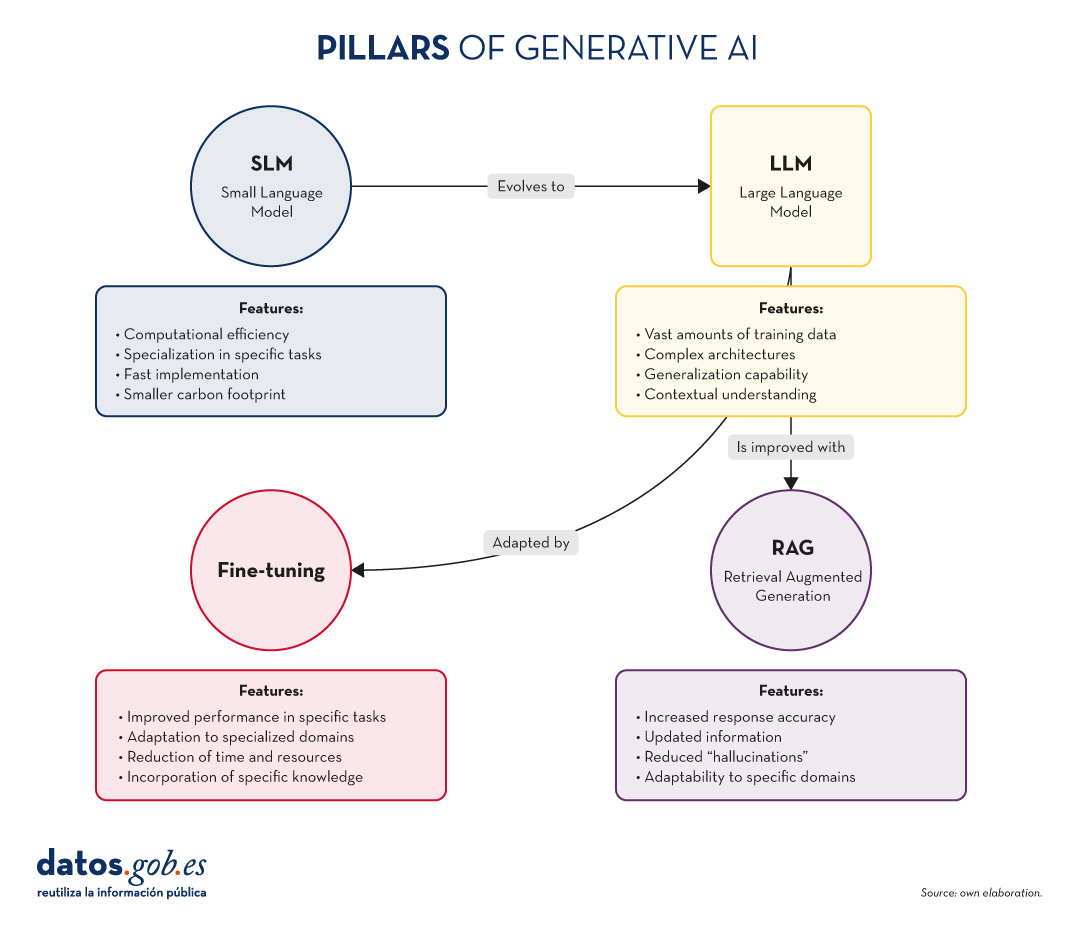
Figure 1. Pillars of Generative AI. Own elaboration.
SLM: The power of specialisation
Increased efficiency for specific tasks
Small Language Models (SLMs) are AI models designed to be lighter and more efficient than their larger counterparts. Although they have fewer parameters, they are optimised for specific tasks or domains.
Key characteristics of SLMs:
- Computational efficiency: They require fewer resources for training and implementation.
- Specialisation: They focus on specific tasks or domains, achieving high performance in specific areas.
- Rapid implementation: Ideal for resource-constrained devices or applications requiring real-time responses.
- Lower carbon footprint: Being smaller, their training and use consumes less energy.
SLM applications:
- Virtual assistants for specific tasks (e.g. booking appointments).
- Personalised recommendation systems.
- Sentiment analysis in social networks.
- Machine translation for specific language pairs.
LLM: The power of generalisation
The revolution of Large Language Models
LLMs have transformed the Generative AI landscape, offering amazing capabilities in a wide range of language tasks.
Key characteristics of LLMs:
- Vast amounts of training data: They train with huge corpuses of text, covering a variety of subjects and styles.
- Complex architectures: They use advanced architectures, such as Transformers, with billions of parameters.
- Generalisability: They can tackle a wide variety of tasks without the need for task-specific training.
- Contextual understanding: They are able to understand and generate text considering complex contexts.
LLM applications:
- Generation of creative text (stories, poetry, scripts).
- Answers to complex questions and reasoning.
- Analysis and summary of long documents.
- Advanced multilingual translation.
RAG: Boosting accuracy and relevance
The synergy between recovery and generation
As we explored in our previous article, RAG combines the power of information retrieval models with the generative capacity of LLMs. Its key aspects are:
Key features of RAG:
- Increased accuracy of responses.
- Capacity to provide up-to-date information.
- Reduction of "hallucinations" or misinformation.
- Adaptability to specific domains without the need to completely retrain the model.
RAG applications:
- Advanced customer service systems.
- Academic research assistants.
- Fact-checking tools for journalism.
- AI-assisted medical diagnostic systems.
Fine-tuning: Adaptation and specialisation
Refining models for specific tasks
Fine-tuning is the process of adjusting a pre-trained model (usually an LLM) to improve its performance in a specific task or domain. Its main elements are as follows:
Key features of fine-tuning:
- Significant improvement in performance on specific tasks.
- Adaptation to specialised or niche domains.
- Reduced time and resources required compared to training from scratch.
- Possibility of incorporating specific knowledge of the organisation or industry.
Fine-tuning applications:
- Industry-specific language models (legal, medical, financial).
- Personalised virtual assistants for companies.
- Content generation systems tailored to particular styles or brands.
- Specialised data analysis tools.
Here are a few examples
Many of you familiar with the latest news in generative AI will be familiar with these examples below.
SLM: The power of specialisation
Ejemplo: BERT for sentiment analysis
BERT (Bidirectional Encoder Representations from Transformers) is an example of SLM when used for specific tasks. Although BERT itself is a large language model, smaller, specialised versions of BERT have been developed for sentiment analysis in social networks.
For example, DistilBERT, a scaled-down version of BERT, has been used to create sentiment analysis models on X (Twitter). These models can quickly classify tweets as positive, negative or neutral, being much more efficient in terms of computational resources than larger models.
LLM: The power of generalisation
Ejemplo: OpenAI GPT-3
GPT-3 (Generative Pre-trained Transformer 3) is one of the best known and most widely used LLMs. With 175 billion parameters, GPT-3 is capable of performing a wide variety of natural language processing tasks without the need for task-specific training.
A well-known practical application of GPT-3 is ChatGPT, OpenAI's conversational chatbot. ChatGPT can hold conversations on a wide variety of topics, answer questions, help with writing and programming tasks, and even generate creative content, all using the same basic model.
Already at the end of 2020 we introduced the first post on GPT-3 as a great language model. For the more nostalgic ones, you can check the original post here.
RAG: Boosting accuracy and relevance
Ejemplo: Anthropic's virtual assistant, Claude
Claude, the virtual assistant developed by Anthropic, is an example of an application using RAGtechniques. Although the exact details of its implementation are not public, Claude is known for his ability to provide accurate and up-to-date answers, even on recent events.
In fact, most generative AI-based conversational assistants incorporate RAG techniques to improve the accuracy and context of their responses. Thus, ChatGPT, the aforementioned Claude, MS Bing and the like use RAG.
Fine-tuning: Adaptation and specialisation
Ejemplo: GPT-3 fine-tuned for GitHub Copilot
GitHub Copilot, the GitHub and OpenAI programming assistant, is an excellent example of fine-tuning applied to an LLM. Copilot is based on a GPT model (possibly a variant of GPT-3) that has been specificallyfine-tunedfor scheduling tasks.
The base model was further trained with a large amount of source code from public GitHub repositories, allowing it to generate relevant and syntactically correct code suggestions in a variety of programming languages. This is a clear example of how fine-tuning can adapt a general purpose model to a highly specialised task.
Another example: in the datos.gob.es blog, we also wrote a post about applications that used GPT-3 as a base LLM to build specific customised products.
Interrelationships and synergies
These four concepts do not operate in isolation, but intertwine and complement each other in the Generative AI ecosystem:
- SLM vs LLM: While LLMs offer versatility and generalisability, SLMs provide efficiency and specialisation. The choice between one or the other will depend on the specific needs of the project and the resources available.
- RAG and LLM: RAG empowers LLMs by providing them with access to up-to-date and relevant information. This improves the accuracy and usefulness of the answers generated.
- Fine-tuning and LLM: Fine-tuning allows generic LLMs to be adapted to specific tasks or domains, combining the power of large models with the specialisation needed for certain applications.
- RAG and Fine-tuning: These techniques can be combined to create highly specialised and accurate systems. For example, a LLM with fine-tuning for a specific domain can be used as a generative component in a RAGsystem.
- SLM and Fine-tuning: Fine-tuning can also be applied to SLM to further improve its performance on specific tasks, creating highly efficient and specialised models.
Conclusions and the future of AI
The combination of these four pillars is opening up new possibilities in the field of Generative AI:
- Hybrid systems: Combination of SLM and LLM for different aspects of the same application, optimising performance and efficiency.
- AdvancedRAG : Implementation of more sophisticated RAG systems using multiple information sources and more advanced retrieval techniques.
- Continuousfine-tuning : Development of techniques for the continuous adjustment of models in real time, adapting to new data and needs.
- Personalisation to scale: Creation of highly customised models for individuals or small groups, combining fine-tuning and RAG.
- Ethical and responsible Generative AI: Implementation of these techniques with a focus on transparency, verifiability and reduction of bias.
SLM, LLM, RAG and Fine-tuning represent the fundamental pillars on which the future of Generative AI is being built. Each of these concepts brings unique strengths:
- SLMs offer efficiency and specialisation.
- LLMs provide versatility and generalisability.
- RAG improves the accuracy and relevance of responses.
- Fine-tuning allows the adaptation and customisation of models.
The real magic happens when these elements combine in innovative ways, creating Generative AI systems that are more powerful, accurate and adaptive than ever before. As these technologies continue to evolve, we can expect to see increasingly sophisticated and useful applications in a wide range of fields, from healthcare to creative content creation.
The challenge for developers and researchers will be to find the optimal balance between these elements, considering factors such as computational efficiency, accuracy, adaptability and ethics. The future of Generative AI promises to be fascinating, and these four concepts will undoubtedly be at the heart of its development and application in the years to come.
Content prepared by Alejandro Alija, expert in Digital Transformation and Innovation. The contents and points of view reflected in this publication are the sole responsibility of its author.
Blog
In recent months we have seen how the large language models (LLMs ) that enable Generative Artificial Intelligence (GenAI) applications have been improving in terms of accuracy and reliability. RAG (Retrieval Augmented Generation) techniques have allowed us to use the full power of natural language communication (NLP) with machines to explore our own knowledge bases and extract processed information in the form of answers to our questions. In this article we take a closer look at RAG techniques in order to learn more about how they work and all the possibilities they offer in the context of generative AI.
What are RAG techniques?
This is not the first time we have talked about RAG techniques. In this article we have already introduced the subject, explaining in a simple way what they are, what their main advantages are and what benefits they bring in the use of Generative AI.
Let us recall for a moment its main keys. RAG is translated as Retrieval Augmented Generation . In other words, RAG consists of the following: when a user asks a question -usually in a conversational interface-, the Artificial Intelligence (AI), before providing a direct answer -which it could give using the (fixed) knowledge base with which it has been trained-, carries out a process of searching and processing information in a specific database previously provided, complementary to that of the training. When we talk about a database, we refer to a knowledge base previously prepared from a set of documents that the system will use to provide more accurate answers. Thus, when using RAGtechniques, conversational interfaces produce more accurate and context-specific responses.
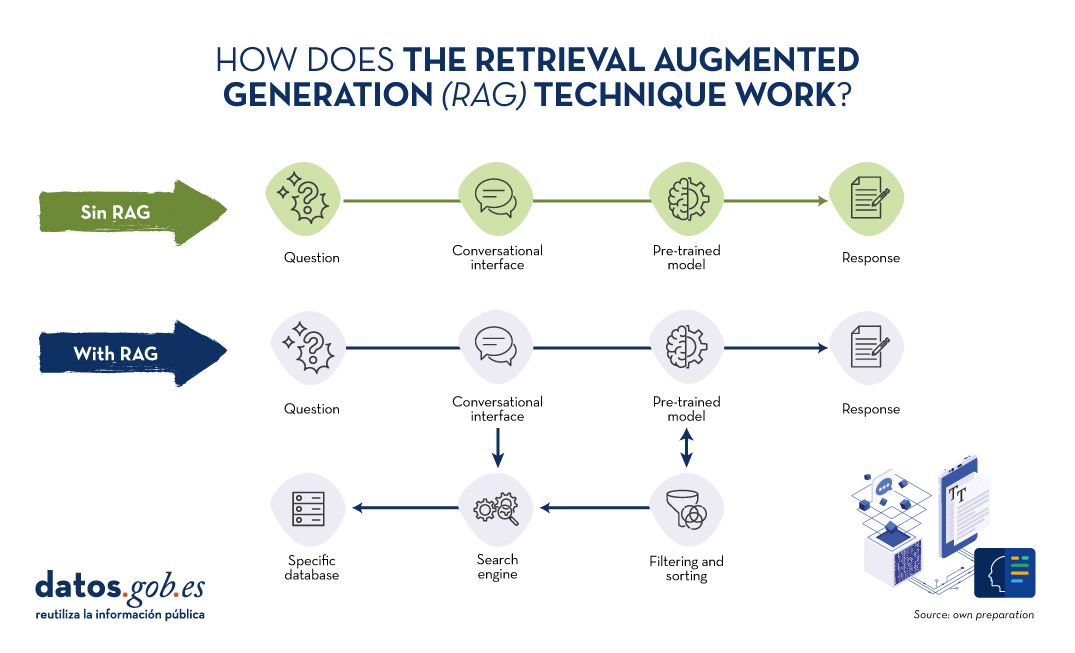
Source: Own preparation.
Conceptual diagram of the operation of a conversational interface or assistant without using RAG (top) and using RAG (bottom).
Drawing a comparison with the medical field, we could say that the use of RAG is as if a doctor, with extensive experience and therefore highly trained, in addition to the knowledge acquired during his academic training and years of experience, has quick and effortless access to the latest studies, analyses and medical databases instantly, before providing a diagnosis. Academic training and years of experience are equivalent to large language model (LLM) training and the "magic" access to the latest studies and specific databases can be assimilated to what RAG techniques provide.
Evidently, in the example we have just given, good medical practice makes both elements indispensable, and the human brain knows how to combine them naturally, although not without effort and time, even with today's digital tools, which make the search for information easier and more immediate.
RAG in detail
RAG Fundamentals
RAG combines two phases to achieve its objective: recovery and generation. In the first, relevant documents are searched for in a database containing information relevant to the question posed (e.g. a clinical database or a knowledge base of commonly asked questions and answers). In the second, an LLM is used to generate a response based on the retrieved documents. This approach ensures that responses are not only consistent but also accurate and supported by verifiable data.
Components of the RAG System
In the following, we will describe the components that a RAG algorithm uses to fulfil its function. For this purpose, for each component, we will explain what function it fulfils, which technologies are used to fulfil this function and an example of the part of the RAG process in which that component is involved.
- Recovery Model:
- Function: Identifies and retrieves relevant documents from a large database in response to a query.
- Technology: It generally uses Information Retrieval (IR) techniques such as BM25 or embedding-based retrieval models such as Dense Passage Retrieval (DPR).
- Process: Given a question, the retrieval model searches a database to find the most relevant documents and presents them as context for answer generation.
- Generation Model:
- Function: Generate coherent and contextually relevant answers using the retrieved documents.
- Technology: Based on some of the major Large Language Models (LLM) such as GPT-3.5, T5, or BERT, Llama.
- Process: The generation model takes the user's query and the retrieved documents and uses this combined information to produce an accurate response.
Detailed RAG Process
For a better understanding of this section, we recommend the reader to read this previous work in which we explain in a didactic way the basics of natural language processing and how we teach machines to read. In detail, a RAG algorithm performs the following steps:
- Reception of the question. The system receives a question from the user. This question is processed to extract keywords and understand the intention.
- Document retrieval. The question is sent to the recovery model.
- Example of Retrieval based on embeddings:
- The question is converted into a vector of embeddings using a pre-trained model.
- This vector is compared with the document vectors in the database.
- The documents with the highest similarity are selected.
- Example of BM25:
- The question is tokenised and the keywords are compared with the inverted indexes in the database.
- The most relevant documents are retrieved according to a relevance score.
- Example of Retrieval based on embeddings:
- Filtering and sorting. The retrieved documents are filtered to eliminate redundancies and to classify them according to their relevance. Additional techniques such as reranking can be applied using more sophisticated models.
- Response generation. The filtered documents are concatenated with the user's question and fed into the generation model. The LLM uses the combined information to generate an answer that is coherent and directly relevant to the question. For example, if we use GPT-3.5 as LLM, the input to the model includes both the user's question and fragments of the retrieved documents. Finally, the model generates text using its ability to understand the context of the information provided.
In the following section we will look at some applications where Artificial Intelligence and large language models play a differentiating role and, in particular, we will analyse how these use cases benefit from the application of RAGtechniques.
Examples of use cases that benefit substantially from using RAG vs. not using RAG
1. ECommerceCustomer Service
- No RAG:
- A basic chatbot can give generic and potentially incorrect answers about return policies.
- Example: Please review our returns policy on the website.
- With RAG:
- The chatbot accesses the database of updated policies and provides a specific and accurate response.
- Example: You may return products within 30 days of purchase, provided they are in their original packaging. See more details [here].
2. Medical Diagnosis
- No RAG:
- A virtual health assistant could offer recommendations based only on their previous training, without access to the latest medical information.
- Example: You may have the flu. Consult your doctor
- With RAG:
- The wizard can retrieve information from recent medical databases and provide a more accurate and up-to-date diagnosis.
- Example: Based on your symptoms and recent studies published in PubMed, you could be dealing with a viral infection. Consult your doctor for an accurate diagnosis.
3. Academic Research Assistance
- No RAG:
- A researcher receives answers limited to what the model already knows, which may not be sufficient for highly specialised topics.
- Example: Economic growth models are important for understanding the economy.
- With RAG:
- The wizard retrieves and analyses relevant academic articles, providing detailed and accurate information.
- Example: According to the 2023 study in the Journal of Economic Growth, the XYZ model has been shown to be 20% more accurate in predicting economic trends in emerging markets.
4. Journalism
- No RAG:
- A journalist receives generic information that may not be up to date or accurate.
- Example Artificial intelligence is changing many industries.
- With RAG:
- The wizard retrieves specific data from recent studies and articles, providing a solid basis for the article.
- Example: According to a 2024 report by 'TechCrunch', AI adoption in the financial sector has increased by 35% in the last year, improving operational efficiency and reducing costs.
Of course, for most of us who have experienced the more accessible conversational interfaces, such as ChatGPT, Gemini o Bing we can see that the answers are usually complete and quite precise when it comes to general questions. This is because these agents make use of AGN methods and other advanced techniques to provide the answers. However, it is not long before conversational assistants, such as Alexa, Siri u OK Google provided extremely simple answers and very similar to those explained in the previous examples when not making use of RAG.
Conclusions
Retrieval Augmented Generation (RAG) techniques improve the accuracy and relevance of language model answers by combining document retrieval and text generation. Using retrieval methods such as BM25 or DPR and advanced language models, RAG provides more contextualised, up-to-date and accurate responses.Today, RAG is the key to the exponential development of AI in the private data domain of companies and organisations. In the coming months, RAG is expected to see massive adoption in a variety of industries, optimising customer care, medical diagnostics, academic research and journalism, thanks to its ability to integrate relevant and current information in real time.
Content prepared by Alejandro Alija, expert in Digital Transformation and Innovation. The contents and points of view reflected in this publication are the sole responsibility of its author.
Blog
The era of digitalisation in which we find ourselves has filled our daily lives with data products or data-driven products. In this post we discover what they are and show you one of the key data technologies to design and build this kind of products: GraphQL.
Introduction
Let's start at the beginning, what is a data product? A data product is a digital container (a piece of software) that includes data, metadata and certain functional logics (what and how I handle the data). The aim of such products is to facilitate users' interaction with a set of data. Some examples are:
- Sales scorecard: Online businesses have tools to track their sales performance, with graphs showing trends and rankings, to assist in decision making.
- Apps for recommendations: Streaming TV services have functionalities that show content recommendations based on the user's historical tastes.
- Mobility apps. The mobile apps of new mobility services (such as Cabify, Uber, Bolt, etc.) combine user and driver data and metadata with predictive algorithms, such as dynamic fare calculation or optimal driver assignment, in order to offer a unique user experience.
- Health apps: These applications make massive use of data captured by technological gadgets (such as the device itself, smart watches, etc.) that can be integrated with other external data such as clinical records and diagnostic tests.
- Environmental monitoring: There are apps that capture and combine data from weather forecasting services, air quality systems, real-time traffic information, etc. to issue personalised recommendations to users (e.g. the best time to schedule a training session, enjoy the outdoors or travel by car).
As we can see, data products accompany us on a daily basis, without many users even realising it. But how do you capture this vast amount of heterogeneous information from different technological systems and combine it to provide interfaces and interaction paths to the end user? This is where GraphQL positions itself as a key technology to accelerate the creation of data products, while greatly improving their flexibility and adaptability to new functionalities desired by users.
What is GraphQL?
GraphQL saw the light of day on Facebook in 2012 and was released as Open Source in 2015. It can be defined as a language and an interpreter of that language, so that a developer of data products can invent a way to describe his product based on a model (a data structure) that makes use of the data available through APIs.
Before the advent of GraphQL, we had (and still have) the technology REST, which uses the HTTPs protocol to ask questions and get answers based on the data. In 2021, we introduced a post where we presented the technology and made a small demonstrative example of how it works. In it, we explain REST API as the standard technology that supports access to data by computer programs. We also highlight how REST is a technology fundamentally designed to integrate services (such as an authentication or login service).
In a simple way, we can use the following analogy. It is as if REST is the mechanism that gives us access to a complete dictionary. That is, if we need to look up any word, we have a method of accessing the dictionary, which is alphabetical search. It is a general mechanism for finding any available word in the dictionary. However, GraphQL allows us, beforehand, to create a dictionary model for our use case (known as a "data model"). So, for example, if our final application is a recipe book, what we do is select a subset of words from the dictionary that are related to recipes.
To use GraphQL, data must always be available via an API. GraphQL provides a complete and understandable description of the API data, giving clients (human or application) the possibility to request exactly what they need. As quoted in this post, GraphQL is like an API to which we add a SQL-style "Where" statement.
Below, we take a closer look at GraphQL's strengths when the focus is on the development of data products.
Benefits of using GraphQL in data products:
- With GraphQL, the amount of data and queries on the APIs is considerably optimised . APIs for accessing certain data are not intended for a specific product (or use case) but as a general access specification (see dictionary example above). This means that, on many occasions, in order to access a subset of the data available in an API, we have to perform several chained queries, discarding most of the information along the way. GraphQL optimises this process, as it defines a predefined (but adaptable in the future) consumption model over a technical API. Reducing the amount of data requested has a positive impact on the rationalisation of computing resources, such as bandwidth or caches, and improves the speed of response of systems.
- This has an immediate effect on the standardisation of data access. The model defined thanks to GraphQL creates a data consumption standard for a family of use cases. Again, in the context of a social network, if what we want is to identify connections between people, we are not interested in a general mechanism of access to all the people in the network, but a mechanism that allows us to indicate those people with whom I have some kind of connection. This kind of data access filter can be pre-configured thanks to GraphQL.
- Improved safety and performance: By precisely defining queries and limiting access to sensitive data, GraphQL can contribute to a more secure and better performing application.
Thanks to these advantages, the use of this language represents a significant evolution in the way of interacting with data in web and mobile applications, offering clear advantages over more traditional approaches such as REST.
Generative Artificial Intelligence. A new superhero in town.
If the use of GraphQL language to access data in a much more efficient and standard way is a significant evolution for data products, what will happen if we can interact with our product in natural language? This is now possible thanks to the explosive evolution in the last 24 months of LLMs (Large Language Models) and generative AI.
The following image shows the conceptual scheme of a data product, intLegrated with LLMS: a digital container that includes data, metadata and logical functions that are expressed as functionalities for the user, together with the latest technologies to expose information in a flexible way, such as GraphQL and conversational interfaces built on top of Large Language Models (LLMs).

How can data products benefit from the combination of GraphQL and the use of LLMs?
- Improved user experience. By integrating LLMs, people can ask questions to data products using natural language, . This represents a significant change in how we interact with data, making the process more accessible and less technical. In a practical way, we will replace the clicks with phrases when ordering a taxi.
- Security improvements along the interaction chain in the use of a data product. For this interaction to be possible, a mechanism is needed that effectively connects the backend (where the data resides) with the frontend (where the questions are asked). GraphQL is presented as the ideal solution due to its flexibility and ability to adapt to the changing needs of users,offering a direct and secure link between data and questions asked in natural language. That is, GraphQl can pre-select the data to be displayed in a query, thus preventing the general query from making some private or unnecessary data visible for a particular application.
- Empowering queries with Artificial Intelligence: The artificial intelligence not only plays a role in natural language interaction with the user. One can think of scenarios where the very model that is defined with GraphQL is assisted by artificial intelligence itself. This would enrich interactions with data products, allowing a deeper understanding and richer exploration of the information available. For example, we can ask a generative AI (such as ChatGPT) to take this catalogue data that is exposed as an API and create a GraphQL model and endpoint for us.
In short, the combination of GraphQL and LLMs represents a real evolution in the way we access data. GraphQL's integration with LLMs points to a future where access to data can be both accurate and intuitive, marking a move towards more integrated information systems that are accessible to all and highly reconfigurable for different use cases. This approach opens the door to a more human and natural interaction with information technologies, aligning artificial intelligence with our everyday experiences of communicating using data products in our day-to-day lives.
Content prepared by Alejandro Alija, expert in Digital Transformation and Innovation.
The contents and points of view reflected in this publication are the sole responsibility of its author.
Blog
Standardisation is essential to improve efficiency and interoperability in governance and data management. The adoption of standards provides a common framework for organising, exchanging and interpreting data, facilitating collaboration and ensuring data consistency and quality. The ISO standards, developed at international level, and the UNE norms, developed specifically for the Spanish market, are widely recognised in this field. Both catalogues of good practices, while sharing similar objectives, differ in their geographical scope and development approach, allowing organisations to select the most appropriate standards for their specific needs and context.
With the publication, a few months ago, of the UNE 0077, 0078, 0079, 0080, and 0081 specifications on data governance, management, quality, maturity, and quality assessment, users may have questions about how these relate to the ISO standards they already have in place in their organisation. This post aims to help alleviate these doubts. To this end, an overview of the main ICT-related standards is presented, with a focus on two of them: ISO 20000 on service management and ISO 27000 on information security and privacy, and the relationship between these and the UNE specifications is established.
Most common ISO standards related to data
ISO standards have the great advantage of being open, dynamic and agnostic to the underlying technologies. They are also responsible for bringing together the best practices agreed and decided upon by different groups of professionals and researchers in each of the fields of action. If we focus on ICT-related standards, there is already a framework of standards on governance, management and quality of information systems where, among others, the following stand out:
At the government level:
- ISO 38500 for corporate governance of information technology.
At management level:
- ISO 8000 for data management systems and master data.
- ISO 20000 for service management.
- ISO 25000 for the quality of the generated product (both software and data).
- ISO 27000 and ISO 27701 for information security and privacy management.
- ISO 33000 for process evaluation.
In addition to these standards, there are others that are also commonly used in companies, such as:
- ISO 9000-based quality management system
- Environmental management system proposed in ISO 14000
These standards have been used for ICT governance and management for many years and have the great advantage that, as they are based on the same principles, they can be used perfectly well together. For example, it is very useful to mutually reinforce the security of information systems based on the ISO/IEC 27000 family of standards with the management of services based on the ISO/IEC 20000 family of standards.
The relationship between ISO standards and UNE data specifications
The UNE 0077, 0078, 0079, 0080 and 0081 specifications complement the existing ISO standards on data governance, management and quality by providing specific and detailed guidelines that focus on the particular aspects of the Spanish environment and the needs of the national market.
When the UNE 0077, 0078, 0079, 0080, 0080, and 0081 specifications were developed, they were based on the main ISO standards, in order to be easily integrated into the management systems already available in the organisations (mentioned above), as can be seen in the following figure:
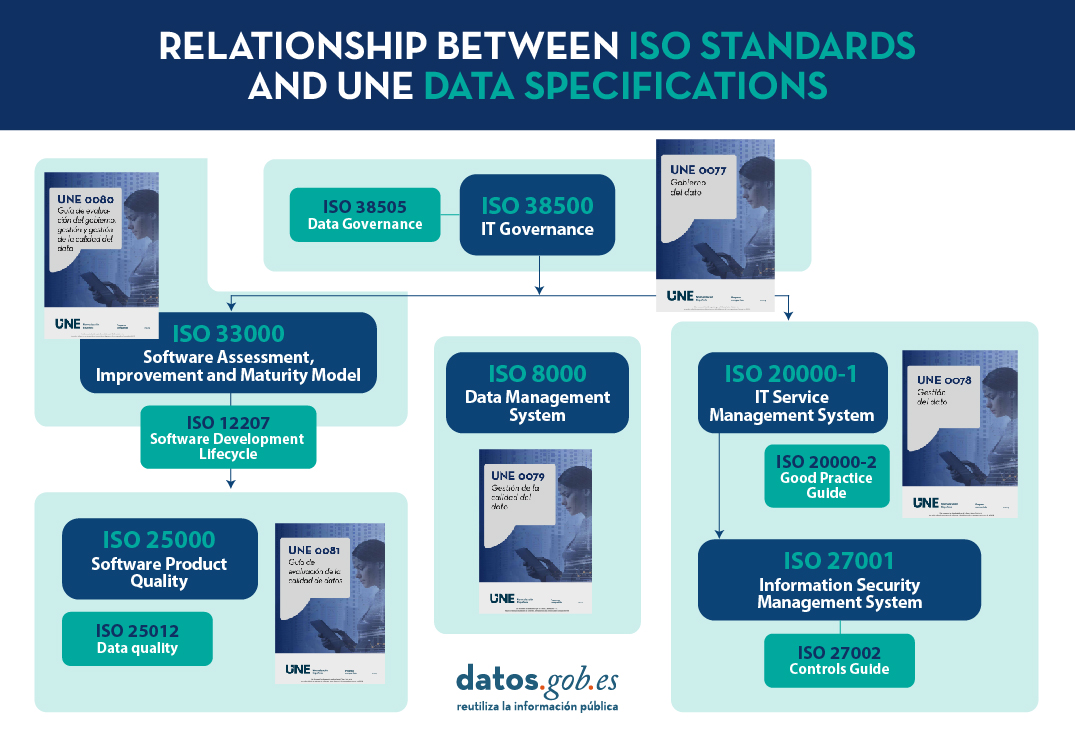
Figure 1. Relation of the UNE specifications with the different ISO standards for ICT.
Example of application of standard UNE 0078
The following is an example of how the UNE and ISO standards that many organisations have already had in place for years can be more clearly integrated, taking UNE 0078 as a reference. Although all UNE data specifications are intertwined with most ISO standards on IT governance, management and quality, the UNE 0078 data management specification is more closely related to information security management systems (ISO 27000) and IT service management (ISO 20000). On Table 1 you can see the relationship for each process with each ISO standard.
| Process UNE 0078: Data Management | Related to ISO 20000 | Related to ISO 27000 |
|---|---|---|
| (ProcDat) Data processing | ||
| (InfrTec) Technology infrastructure management | X | X |
| (ReqDat) Data Requirements Management | X | X |
| (ConfDat) Data Configuration Management | ||
| (DatHist) Historical data management | X | |
| (SegDat) Data security management | X | X |
| (Metdat) Metadata management | X | |
| (ArqDat) Data architecture and design management | X | |
| (CIIDat) Sharing, brokering and integration of data | X | |
| (MDM) Master Data Management | | |
| (HR) Human resources management | ||
| (CVidDat) Data lifecycle management | X | |
| (AnaDat) Data analysis |
| Process UNE 0078: Data Management | Related to ISO 20000 | Related to ISO 27000 |
|---|---|---|
| (ProcDat) Data processing | ||
| (InfrTec) Technology infrastructure management | X | X |
| (ReqDat) Data Requirements Management | X | X |
| (ConfDat) Data Configuration Management | ||
| (DatHist) Historical data management | X | |
| (SegDat) Data security management | X | X |
|
(Metdat) Metadata management |
X | |
|
(ArqDat) Data architecture and design management |
X |
|
|
(CIIDat) Sharing, brokering and integration of data |
X |
|
|
(MDM) Master Data Management |
|
|
|
(HR) Human resources management |
|
|
|
(CVidDat) Data lifecycle management |
X |
|
|
(AnaDat) Data analysis |
|
Figure 2. Relationship of UNE 0078 processes with ISO 27000 and ISO 20000.
Relationship of the UNE 0078 standard with ISO 20000
Regarding the interrelation between ISO 20000-1 and the UNE 0078 specification, here you can find a use case in which an organisation wants to make relevant data available for consumption throughout the organisation through different services. The integrated implementation of UNE 0078 and ISO 20000-1 enables organisations:
- Ensure that business-critical data is properly managed and protected.
- Improve the efficiency and effectiveness of IT services, ensuring that the technology infrastructure supports the needs of the business and end users.
- Align data management and IT service management with the organisation''s strategic objectives, improving decision making and market competitiveness.
The relationship between the two is manifested in how the technology infrastructure managed according to UNE 0078 supports the delivery and management of IT services according to ISO 20000-1.
This requires at least the following:
- Firstly, in the case of making data available as a service, a well-managed and secure IT infrastructureis necessary. This is essential, on the one hand, for the effective implementation of IT service management processes, such as incident and problem management, and on the other hand, to ensure business continuity and availability of IT services.
- Secondly, once the infrastructure is in place, and it is known that the data will be made available for consumption at some point in time, the principles of sharing and brokering of that data need to be managed. For this purpose, the UNE 0078 specification includes the process of data sharing, intermediation and integration. Its main objective is to enable its acquisition and/or delivery for consumption or sharing, noting if necessary the deployment of intermediation mechanisms, as well as its integration. This UNE 0078 process would be related to several of the processes in ISO 20000-1, such as the Business Relationship Managementprocess, service level management, demand management and the management of the capacity of the data being made available.
Relationship of the UNE 0078 standard with ISO 27000
Likewise, the technological infrastructure created and managed for a specific objective must ensure minimum data security and privacy standards, therefore, the implementation of good practices included in ISO 27000 and ISO 27701 will be necessary to manage the infrastructure from the perspective of information security and privacy, thus showing a clear example of interrelation between the three management systems: services, information security and privacy, and data.
Not only is it essential that the data is made available to organisations and citizens in an optimal way, but it is also necessary to pay special attention to the security of the data throughout its entire lifecycle during commissioning. This is where the ISO 27000 standard brings its full value. The ISO 27000 standard, and in particular ISO 27001 fulfils the following objectives:
- It specifies the requirements for an information security management system (ISMS).
- It focuses on the protection of information against unauthorised access, data integrity and confidentiality.
- It helps organisations to identify, assess and manage information security risks.
In this line, its interrelation with the UNE 0078 Data Management specification is marked through the Data Security Management process. Through the application of the different security mechanisms, it is verified that the information handled in the systems is not subject to unauthorised access, maintaining its integrity and confidentiality throughout the data''s life cycle. Similarly, a triad can be built in this relationship with the data security management process of the UNE 0078 specification and with the UNE 20000-1 process of SGSTI Operation - Information Security Management.
The following figure presents how the UNE 0078 specification complements the current ISO 20000 and ISO 27000 as applied to the example discussed above.
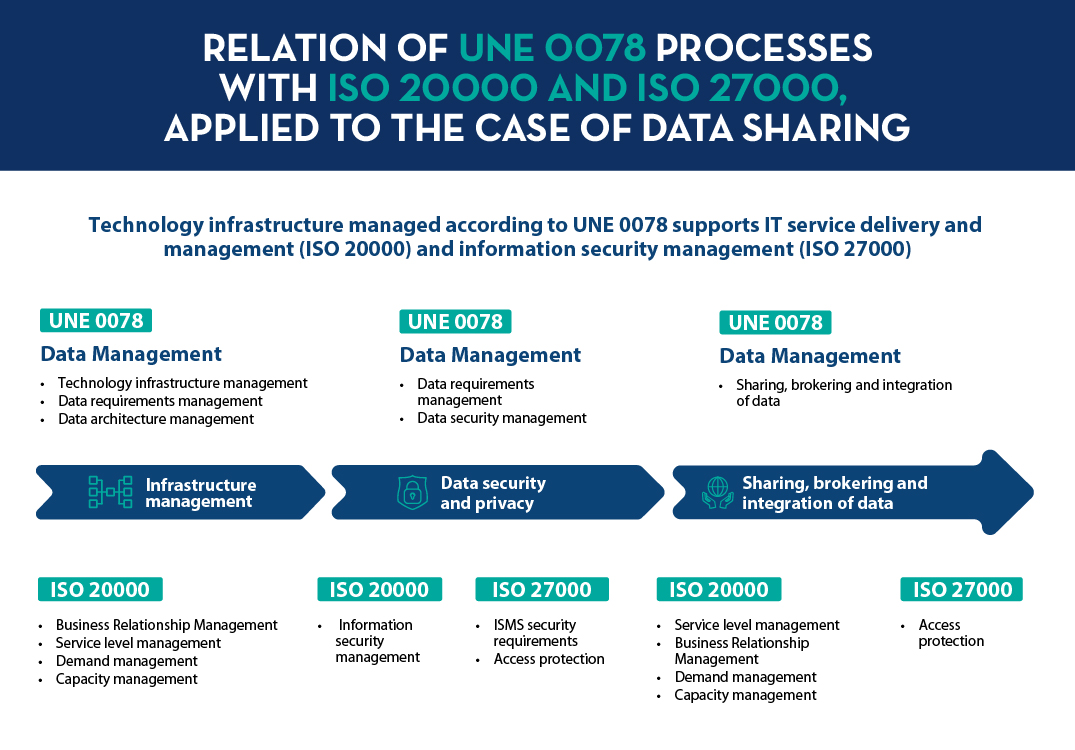
Figure 3. Relation of UNE 0078 processes with ISO 20000 and ISO 27000 applied to the case of data sharing.
Through the above cases, it can be seen that the great advantage of the UNE 0078 specification is that it integrates seamlessly with existing security management and service management systems in organisations. The same applies to the rest of the UNE standards 0077, 0079, 0080, and 0081. Therefore, if an organisation that already has ISO 20000 or ISO 27000 in place wants to implement data governance, management and quality initiatives, alignment between the different management systems with the UNE specifications is recommended, as they are mutually reinforcing from a security, service and data point of view.
Content prepared by Dr. Fernando Gualo, Professor at UCLM and Data Governance and Quality Consultant. The contents and points of view reflected in this publication are the sole responsibility of its author.
Blog
After months of new developments, the pace of advances in artificial intelligence does not seem to be slowing down - quite the contrary. A few weeks ago, when reviewing the latest developments in this field on the occasion of the 2023 deadline, video generation from text instructions was considered to be still in its infancy. However, just a few weeks later, we have seen the announcement of SORA. With this tool, it seems that the possibility to generate realistic videos, up to one minute long, from textual descriptions is here.
Every day, the tools we have access to become more sophisticated and we are constantly amazed by their ability to perform tasks that once seemed exclusive to the human mind. We have quickly become accustomed to generating text and images from written instructions and have incorporated these tools into our daily lives to enhance and improve the way we do our jobs. With each new development, pushing the boundaries a little further than we imagined, the possibilities seem endless.
Advances in Artificial Intelligence, powered by open data and other technologies such as those associated with the Web3, are helping to rethink the future of virtually every field of our activity: from solutions to address the challenges of climate change, to artistic creation, be it music, literature or painting[6], to medical diagnosis, agriculture or the generation of trust to drive the creation of social and economic value.
In this article we will review the developments that impact on a field where, in the coming years, interesting advances are likely to be made thanks to the combination of artificial intelligence and open data. We are talking about the design and planning of smarter, more sustainable and liveable cities for all their inhabitants.
Urban Planning and Management
Urban planning and management is complicated because countless complex interactions need to be anticipated, analysed and resolved. Therefore, it is reasonable to expect major breakthroughs from the analysis of the data that cities increasingly open up on mobility, energy consumption, climatology and pollution, planning and land use, etc. New techniques and tools provided by generative artificial intelligence combined, for example, with intelligent agents will allow a deeper interpretation and simulation of urban dynamics.
In this sense, this new combination of technologies could be used for example to design more efficient, sustainable and liveable cities, anticipating the future needs of the population and dynamically adapting to changes in real time. Thus, new smart urban models would be used to optimise everything from traffic flow to resource allocation by simulating behaviour through intelligent agents.

Figure 1: Images generated by Urbanistai.com
Urbanist.ai is one of the first examples of an advanced urban analytics platform, based on generative artificial intelligence, that aims to transform the way urban planning tasks are currently conceived. The services it currently provides already allow the participatory transformation of urban spaces from images, but its ambition goes further and it plans to incorporate new techniques that redefine the way cities are planned. There is even a version of UrbanistAI designed to introduce children to the world of urban planning.
Going one step further, the generation of 3D city models is something that tools such as InfiniCity have already made available to users. Although there are still many challenges to be overcome, the results are promising. These technologies could make it substantially cheaper to generate digital twins on which to run simulations that anticipate problems before they are built.
Available data
However, as with other developments based on Generative AI, these issues would not be possible without data, and especially not without open data. All new developments in AI use a combination of private and public data in their training, but in few cases is the training dataset known with certainty, as it is not made public. Data can come from a wide variety of sources, such as IoT sensors, government records or public transport systems, and is the basis for providing a holistic view of how cities function holistic view of how cities function and how and how their inhabitants interact with the urban environment.
The growing importance of open data in training these models is reflected in initiatives such as the Task Force on AI Data Assets and Open Government, launched by the US Department of Commerce, which will be tasked with preparing open public data for Artificial Intelligence. This means not only machine-readable formats, but also machine-understandable metadata. With open data enriched by metadata and organised in interpretable formats, artificial intelligence models could yield much more accurate results.
A long-established and basic data source is OpenStreetmap (OSM), a collaborative project that makes a free and editable map of open global geographic dataavailable to the community. It includes detailed information on streets, squares, parks, buildings, etc. which is crucial as a basis for urban mobility analysis, transport planning or infrastructure management. The immense cost of developing such a resource is only within the reach of large technology companies, making it invaluable to all initiatives that use it as a basis.

Figure 2: OpenStreetmap Images (OSM)
More specific datasets such as HoliCity, a 3D data asset with rich structural information, including 6,300 real-world views, are proving valuable. For example, recent scientific work based on this dataset has shown that it is possible for a model fed with millions of street images to predict neighbourhood characteristics, such as home values or crime rates.
Along these lines, Microsoft has released an extensive collection of building contours automatically generated from satellite imagery, covering a large number of countries and regions.

Figure 3: Urban Atlas Images (OSM)
Microsoft Building Footprints provide a detailed basis for 3D city modelling, urban density analysis, infrastructure planning and natural hazard management, giving an accurate picture of the physical structure of cities.
We also have Urban Atlas, an initiative that provides free and open access to detailed land use and land cover information for more than 788 Functional Urban Areas in Europe. It is part of the Copernicus Land Monitoring Serviceprogramme, and provides valuable insights into the spatial distribution of urban features, including residential, commercial, industrial, green areas and water bodies, street tree maps, building block height measurements, and even population estimates.
Risks and ethical considerations
However, we must not lose sight of the risks posed, as in other domains, by the incorporation of artificial intelligence into the planning and management of cities, as discussed in the UN report on "Risks, Applications and Governance of AI for Cities". For example, concerns about privacy and security of personal information raised by mass data collection, or the risk of algorithmic biases that may deepen existing inequalities. It is therefore essential to ensure that data collection and use is conducted in an ethical and transparent manner, with a focus on equity and inclusion.
This is why, as city design moves towards the adoption of artificial intelligence, dialogue and collaboration between technologists, urban planners, policy makers and society at large will be key to ensuring that smart city development aligns with the values of sustainability, equity and inclusion. Only in this way can we ensure that the cities of the future
are not only more efficient and technologically advanced, but also more humane and welcoming for all their inhabitants.
Content prepared by Jose Luis Marín, Senior Consultant in Data, Strategy, Innovation & Digitalization. The contents and views reflected in this publication are the sole responsibility of the author.
Blog
The alignment of artificial intelligence is a term established since the 1960s, according to which we orient the goals of intelligent systems in the exact direction of human values. The advent of generative models has brought this concept of alignment back into fashion, which becomes more urgent the more intelligence and autonomy systems show. However, no alignment is possible without a prior, consensual and precise definition of these values. The challenge today is to find enriching objectives where the application of AI has a positive and transformative effect on knowledge, social organisation and coexistence.
The right to understand
In this context, one of the main pillars of today's AI, language processing has been making valuable contributions to clear communication and, in particular, to clear language for years. Let us look at what these concepts are:
- Clear communication, as a discipline, aims to make information accessible and understandable for all people, using writing resources, but also visual, design, infographics, user experience and accessibility.
- Clear language focuses on the composition of texts, with techniques for presenting ideas directly and concisely, without stylistic excesses or omissions of key information.
Both concepts are closely linked to people's right to understand.
Before chatGPT: analytical approaches
Before the advent of generative AI and the popularisation of GPT capabilities, artificial intelligence was applied to plain language from an analytical point of view, with different classification and pattern search techniques. The main need then was for a system that could assess whether or not a text was understandable, but there was not yet the expectation that the same system could rewrite our text in a clearer way. Let's look at a couple of examples:
This is the case of Clara, an analytical AI system that is openly available in beta. Clara is a mixed system: on the one hand, it has learned which patterns characterise clear and unclear texts from the observation of a corpus of peers prepared by specialists in Clear Communication. On the other hand, it handles nine metrics designed by computational linguists to decide whether or not a text meets the minimum requirements for clarity, for example, the average number of words per sentence, the technicalities used or the frequency of connectors. Finally, Clara returns a percentage score to indicate whether the written text is more or less close to being clear text. This allows the user to correct the text according to Clara's indications and submit it for re-evaluation.
However, other analytical systems have established a different approach, such as Artext of course. Artext is more like a traditional text editor, where we can write our text and activate a series of revisions, such as participles, verb nominalisations or the use of negation. Artext highlights in colour words or expressions in our text and advises us in a side menu what we have to take into account when using them. The user can rewrite the text until, in the different revisions, the words and expressions marked in colour disappear.

Both Clara and Artext specialise in administrative and financial texts, with the aim of being of use mainly to public administration, financial institutions and other sources of difficult-to-understand texts that have an impact on citizens.
The generative revolution
Analytical AI tools are useful and very valuable if we want to evaluate a text over which we need to have more control. However, following the arrival of chatGPT in November 2022, users' expectations are set to rise even further. Not only do we need an evaluator, but we expect a translator, an automatic transformer of our text into a clearer version. We insert the original version of the text in the chat and, through a direct instruction called prompt, we ask it to transform it into a clearer and simpler text, understandable by anyone.
If we need more clarity, we only have to repeat the instruction and the text becomes simpler again before our eyes.

By using generative AI we are reducing cognitive effort, but we are also losing much of the control over the text. Most importantly, we will not know what modifications are being made and why, and we may incur the loss or alteration of information. If we want to increase control and keep track of the changes, deletions and additions that chatGPT makes to the text, we can use a plug-in such as EditGPT, available as an extension for Google Chrome, which allows us to keep track of changes similar to Word in our interactions with the chat. However, we would not be able to understand the rationale for the changes made, as we would with tools such as Clara or Artext designed by language professionals. One limiting option is to ask the chat to justify each of these changes, but the interaction would become cumbersome, complex and inefficient, not to mention the excessive enthusiasm with which the model would try to justify its corrections.
Examples of generative clarification
Beyond the speed of transformation, generative AI has other advantages over analytics, such as certain elements that can only be identified with GPT capabilities. For example, detecting in a text whether an acronym or acronym has been developed previously, or whether a technicality is explained immediately after its appearance. This requires very complex semantic analysis for analytical AI or rule-based models. In contrast, a great language model is able to establish an intelligent relationship between the acronym and its development, or between the technicality and its meaning, to recognise if this explanation exists somewhere in the text, and to add it where relevant.
Open data to inform clarification
Universal access to open data, especially when it is ready for computational processing, makes it indispensable for training large linguistic models. Huge sources of unstructured information such as Wikipedia, the Common Crawl project or Gutenberg allow systems to learn how the language works. And, on this generalist basis, it is possible to fit models with specialised datasets to make them more accurate in the task of clarifying text.
In the application of generative artificial intelligence to plain language we have the perfect example of a valuable purpose, useful to citizens and positive for social development. Beyond the fascination it has aroused, we have the opportunity to use its potential in a use case that favours equality and inclusiveness. The technology exists, we just need to go down the difficult road of integration.
Content prepared by Carmen Torrijos, expert in AI applied to language and communication.
The contents and points of view reflected in this publication are the sole responsibility of the author.