


Noticia
Did you know that Spain created the first state agency specifically dedicated to the supervision of artificial intelligence (AI) in 2023? Even anticipating the European Regulation in this area, the Spanish Agency for the Supervision of Artificial Intelligence (AESIA) was born with the aim of guaranteeing the ethical and safe use of AI, promoting responsible technological development.
Among its main functions is to ensure that both public and private entities comply with current regulations. To this end, it promotes good practices and advises on compliance with the European regulatory framework, which is why it has recently published a series of guides to ensure the consistent application of the European AI regulation.
In this post we will delve into what the AESIA is and we will learn relevant details of the content of the guides.
What is AESIA and why is it key to the data ecosystem?
The AESIA was created within the framework of Axis 3 of the Spanish AI Strategy. Its creation responds to the need to have an independent authority that not only supervises, but also guides the deployment of algorithmic systems in our society.
Unlike other purely sanctioning bodies, the AESIA is designed as an intelligence Think & Do, i.e. an organisation that investigates and proposes solutions. Its practical usefulness is divided into three aspects:
- Legal certainty: Provides clear frameworks for businesses, especially SMEs, to know where to go when innovating.
- International benchmark: it acts as the Spanish interlocutor before the European Commission, ensuring that the voice of our technological ecosystem is heard in the development of European standards.
- Citizen trust: ensures that AI systems used in public services or critical areas respect fundamental rights, avoiding bias and promoting transparency.
Since datos.gob.es, we have always defended that the value of data lies in its quality and accessibility. The AESIA complements this vision by ensuring that, once data is transformed into AI models, its use is responsible. As such, these guides are a natural extension of our regular resources on data governance and openness.
Resources for the use of AI: guides and checklists
The AESIA has recently published materials to support the implementation and compliance with the European Artificial Intelligence regulations and their applicable obligations. Although they are not binding and do not replace or develop existing regulations, they provide practical recommendations aligned with regulatory requirements pending the adoption of harmonised implementing rules for all Member States.
They are the direct result of the Spanish AI Regulatory Sandbox pilot. This sandbox allowed developers and authorities to collaborate in a controlled space to understand how to apply European regulations in real-world use cases.
It is essential to note that these documents are published without prejudice to the technical guides that the European Commission is preparing. Indeed, Spain is serving as a "laboratory" for Europe: the lessons learned here will provide a solid basis for the Commission's working group, ensuring consistent application of the regulation in all Member States.
The guides are designed to be a complete roadmap, from the conception of the system to its monitoring once it is on the market.
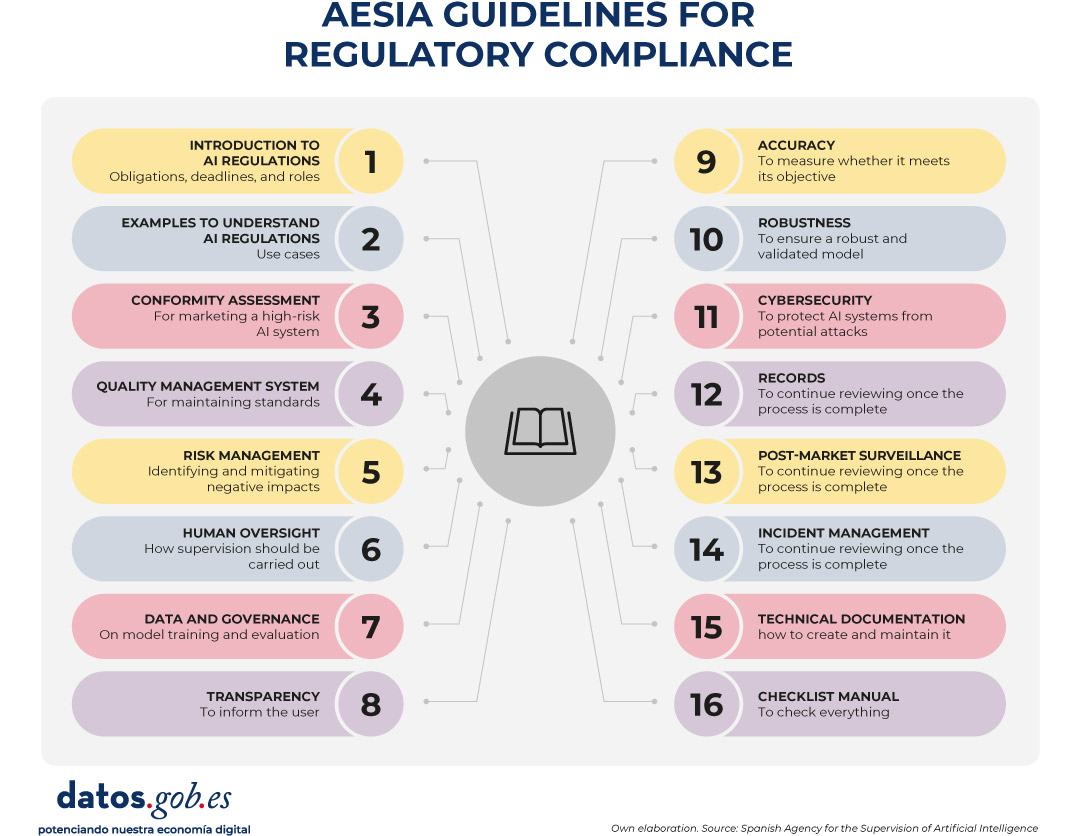
Figure 1. AESIA guidelines for regulatory compliance. Source: Spanish Agency for the Supervision of Artificial Intelligence
- 01. Introductory to the AI Regulation: provides an overview of obligations, implementation deadlines and roles (suppliers, deployers, etc.). It is the essential starting point for any organization that develops or deploys AI systems.
- 02. Practice and examples: land legal concepts in everyday use cases (e.g., is my personnel selection system a high-risk AI?). It includes decision trees and a glossary of key terms from Article 3 of the Regulation, helping to determine whether a specific system is regulated, what level of risk it has, and what obligations are applicable.
- 03. Conformity assessment: explains the technical steps necessary to obtain the "seal" that allows a high-risk AI system to be marketed, detailing the two possible procedures according to Annexes VI and VII of the Regulation as valuation based on internal control or evaluation with the intervention of a notified body.
- 04. Quality management system: defines how organizations must structure their internal processes to maintain constant standards. It covers the regulatory compliance strategy, design techniques and procedures, examination and validation systems, among others.
- 05. Risk management: it is a manual on how to identify, evaluate and mitigate possible negative impacts of the system throughout its life cycle.
- 06. Human surveillance: details the mechanisms so that AI decisions are always monitorable by people, avoiding the technological "black box". It establishes principles such as understanding capabilities and limitations, interpretation of results, authority not to use the system or override decisions.
- 07. Data and data governance: addresses the practices needed to train, validate, and test AI models ensuring that datasets are relevant, representative, accurate, and complete. It covers data management processes (design, collection, analysis, labeling, storage, etc.), bias detection and mitigation, compliance with the General Data Protection Regulation, data lineage, and design hypothesis documentation, being of particular interest to the open data community and data scientists.
- 08. Transparency: establishes how to inform the user that they are interacting with an AI and how to explain the reasoning behind an algorithmic result.
- 09. Accuracy: Define appropriate metrics based on the type of system to ensure that the AI model meets its goal.
- 10. Robustness: Provides technical guidance on how to ensure AI systems operate reliably and consistently under varying conditions.
- 11. Cybersecurity: instructs on protection against threats specific to the field of AI.
- 12. Logs: defines the measures to comply with the obligations of automatic registration of events.
- 13. Post-market surveillance: documents the processes for executing the monitoring plan, documentation and analysis of data on the performance of the system throughout its useful life.
- 14. Incident management: describes the procedure for reporting serious incidents to the competent authorities.
- 15. Technical documentation: establishes the complete structure that the technical documentation must include (development process, training/validation/test data, applied risk management, performance and metrics, human supervision, etc.).
- 16. Requirements Guides Checklist Manual: explains how to use the 13 self-diagnosis checklists that allow compliance assessment, identifying gaps, designing adaptation plans and prioritizing improvement actions.
All guides are available here and have a modular structure that accommodates different levels of knowledge and business needs.
The self-diagnostic tool and its advantages
In parallel, the AESIA publishes material that facilitates the translation of abstract requirements into concrete and verifiable questions, providing a practical tool for the continuous assessment of the degree of compliance.
These are checklists that allow an entity to assess its level of compliance autonomously.
The use of these checklists provides multiple benefits to organizations. First, they facilitate the early identification of compliance gaps, allowing organizations to take corrective action prior to the commercialization or commissioning of the system. They also promote a systematic and structured approach to regulatory compliance. By following the structure of the rules of procedure, they ensure that no essential requirement is left unassessed.
On the other hand, they facilitate communication between technical, legal and management teams, providing a common language and a shared reference to discuss regulatory compliance. And finally, checklists serve as a documentary basis for demonstrating due diligence to supervisory authorities.
We must understand that these documents are not static. They are subject to an ongoing process of evaluation and review. In this regard, the EASIA continues to develop its operational capacity and expand its compliance support tools.
From the open data platform of the Government of Spain, we invite you to explore these resources. AI development must go hand in hand with well-governed data and ethical oversight.
