


Publication date
15/01/2026
Update date
16/01/2026


Description
Environmental sustainability and the fight against climate change are one of the greatest global challenges of our time. Addressing them requires solid evidence and reliable information to understand risks, track progress, guide decision-making, and assess impacts across sectors. As countries design and implement environmental, mitigation, and adaptation policies, access to climate data becomes an essential element for effective climate action.
In this context, open data plays a strategic role. Facilitating access to open and quality climate data allows public administrations, companies, scientific communities and civil society to plan and monitor sustainable territorial development, improve policy-making, foster collaboration between actors and transform scientific knowledge into concrete actions. Various initiatives are making it possible to make progress in improving the accessibility, interoperability and reuse of climate information, helping to overcome data dispersion and strengthen a coordinated response to climate change. Below, we compile a selection of international reference open data repositories and portals on climate.
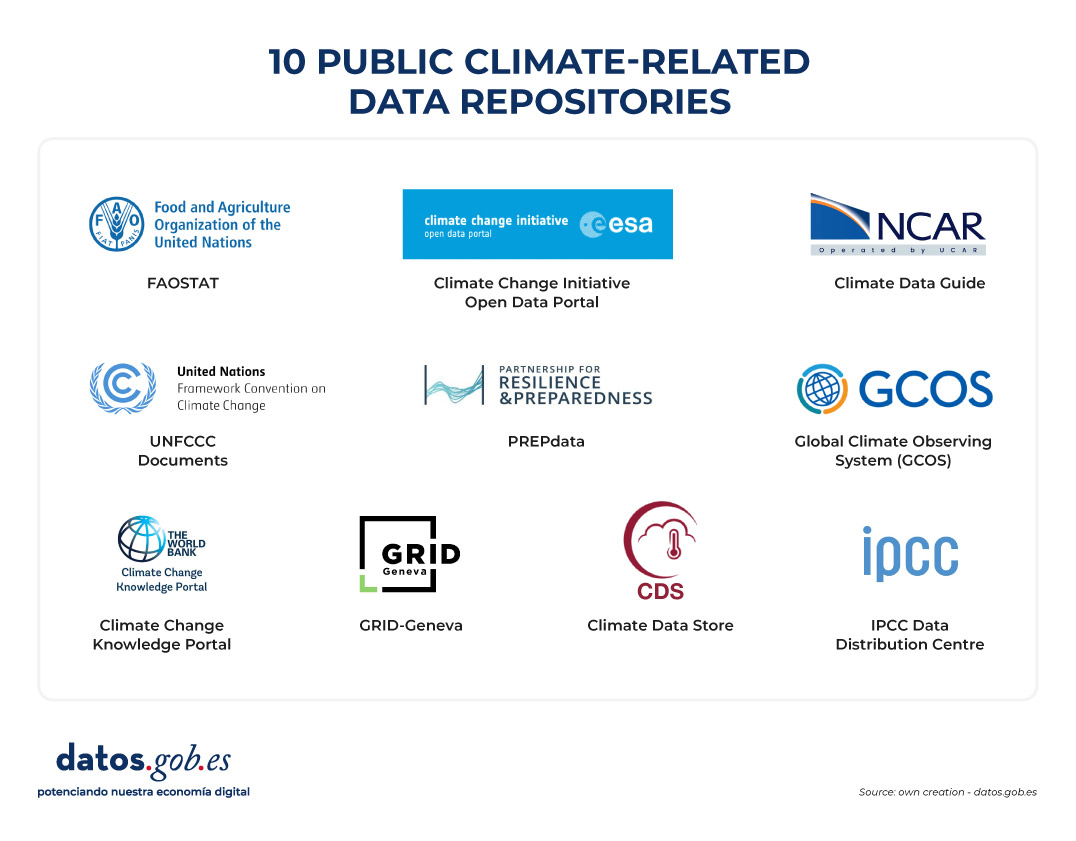
Figure 1. Ten public climate-related data repositories.
Climate Data Store
- Publisher: European Union Copernicus Programme
The Climate Data Store is the data portal of the Copernicus Climate Change Service (C3S). It offers open access to historical observations, reanalysis, climate indicators, and model-based future projections, with global and regional coverage. It includes variables such as temperatures, precipitation, wind, radiation, ice, and sea level. It provides integrated visualization, processing, and download tools for climate analysis, mitigation and adaptation policy planning.
Climate Change Knowledge Portal (CCKP)
- Publisher: World Bank
The World Bank's Climate Change Knowledge Portal provides historical climate data and future projections at global, national, and subnational scales. It includes temperature and precipitation variables, as well as geospatial layers and geocoded data on infrastructure and settlements. The CCKP facilitates climate vulnerability and risk analysis through interactive maps, country profiles, and the downloading of data in standard formats.
IPCC Data Distribution Centre
- Publisher: Intergovernmental Panel on Climate Change (IPCC) of the United Nations
The Intergovernmental Panel on Climate Change's Data Clearinghouse provides access to datasets used in IPCC assessment reports, including historical observations, climate projections, socio-economic scenarios, and key indicators. The portal brings together the data used in the Sixth Assessment Report (AR6), published between 2021 and 2023, although it continues to incorporate complementary and updated datasets that support the analysis of impacts, vulnerability and adaptation to climate change.
Climate Change Initiative Open Data Portal
- Publisher: European Space Agency (ESA)
Through its Climate Change Initiative (CCI) programme, the European Space Agency offers free and open access to datasets focused on Essential Climate Variables (LCDs), such as sea level, temperature, sea ice or land cover. The data, mainly from satellite observations, is available through downloads, interactive maps and web services, and is a key reference for climate monitoring.
Global Climate Observing System (GCOS)
- Publisher: World Meteorological Organization (WMO)
GCOS is an international system that coordinates and promotes climate observation networks to ensure the availability of high-quality data on the atmosphere, oceans and land surface. Developed in collaboration with the United Nations Environment Programme (UNEP), the Intergovernmental Oceanographic Commission of UNESCO (IOC-UNESCO) and the International Council for Science, GCOS facilitates access to climate observations through partner networks and systems.
GRID-Geneva
- Publisher: United Nations Environment Programme (UNEP)
UNEP/GRID-Geneva is a centre specializing in the analysis and visualization of environmental and climate data using geographic information systems, remote sensing and statistical analysis. It manages various specialized platforms, such as MapX, an open-source solution for managing and visualizing geospatial data on natural resources, a specific platform for data on climate change, or on early warning for the environment, among others.
UNFCCC Documents
- Publisher: United Nations Framework Convention on Climate Change (UNFCCC)
This portal brings together the documentary library of the United Nations Framework Convention on Climate Change. It allows you to search, filter and download multiple documents related to international climate negotiations, including decisions adopted at Conferences of the Parties (COPs), reports of subsidiary bodies, national communications and other texts relevant to the international climate process.
FAOSTAT
- Publisher: Food and Agriculture Organization of the United Nations (FAO)
FAOSTAT is the open-access statistical database of the Food and Agriculture Organization of the United Nations (FAO). It contains time series from 1961 to the present with coverage for more than 245 countries. It includes climate and agro-climatic data aimed at analysing the relationship between climate and food systems. Specifically, it offers indicators such as average temperatures, rainfall, evapotranspiration, climatic anomalies and variables related to droughts and water stress.
PREPdata
- Publisher: Partnership for Resilience and Preparedness (PREP)
PREPdata is a map-based open data platform that allows visualizing and combining climate, physical and socioeconomic information for vulnerability analysis and climate change adaptation planning. It is possible to create custom dashboards by integrating global data with local information provided by the users themselves. The initiative is led by the World Resources Institute (WRI) and Future Earth, together with public and private partners.
Climate Data Guide
- Publisher: National Center for Atmospheric Research (NCAR)
The Climate Data Guide offers expert descriptions, comparisons, and recommendations on climate datasets widely used in research. It organizes resources into seven categories: atmosphere, climate indices, cryosphere, land, ocean, paleoclimate, and reanalysis. This platform stands out for offering guidance and helping users understand what data exists, how it is generated, what limitations it has, and where to access it.
This is a compilation of open data repositories related to climate, but there are others that may be of interest. Which ones would you add to this list? Leave us a comment.
Comments