


Publication date
01/12/2025
Update date
29/12/2025


Description
We live in an age where more and more phenomena in the physical world can be observed, measured, and analyzed in real time. The temperature of a crop, the air quality of a city, the state of a dam, the flow of traffic or the energy consumption of a building are no longer data that are occasionally reviewed: they are continuous flows of information that are generated second by second.
This revolution would not be possible without cyber-physical systems (CPS), a technology that integrates sensors, algorithms and actuators to connect the physical world with the digital world. But CPS does not only generate data: it can also be fed by open data, multiplying its usefulness and enabling evidence-based decisions.
In this article, we will explore what CPS is, how it generates massive data in real time, what challenges it poses to turn that data into useful public information, what principles are essential to ensure its quality and traceability, and what real-world examples demonstrate the potential for its reuse. We will close with a reflection on the impact of this combination on innovation, citizen science and the design of smarter public policies.
What are cyber-physical systems?
A cyber-physical system is a tight integration between digital components – such as software, algorithms, communication and storage – and physical components – sensors, actuators, IoT devices or industrial machines. Its main function is to observe the environment, process information and act on it.
Unlike traditional monitoring systems, a CPS is not limited to measuring: it closes a complete loop between perception, decision, and action. This cycle can be understood through three main elements:
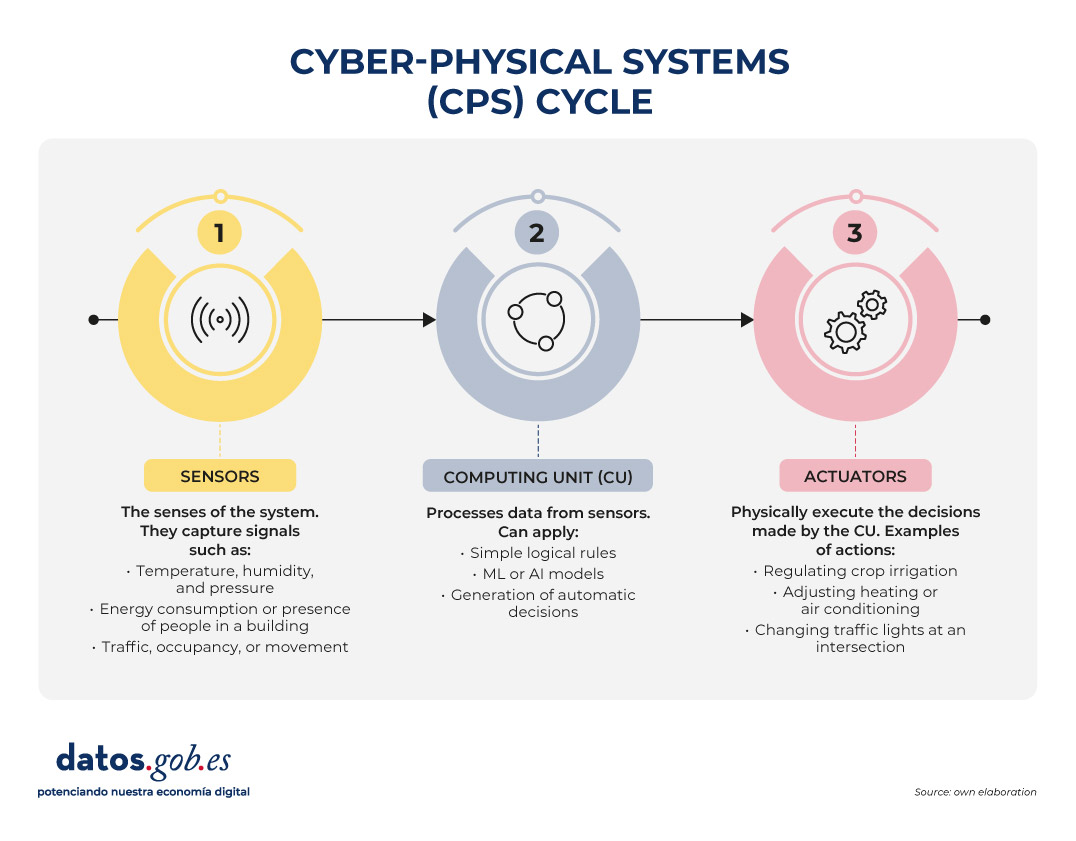
Figure 1. Cyber-physical systems cycle. Source: own elaboration
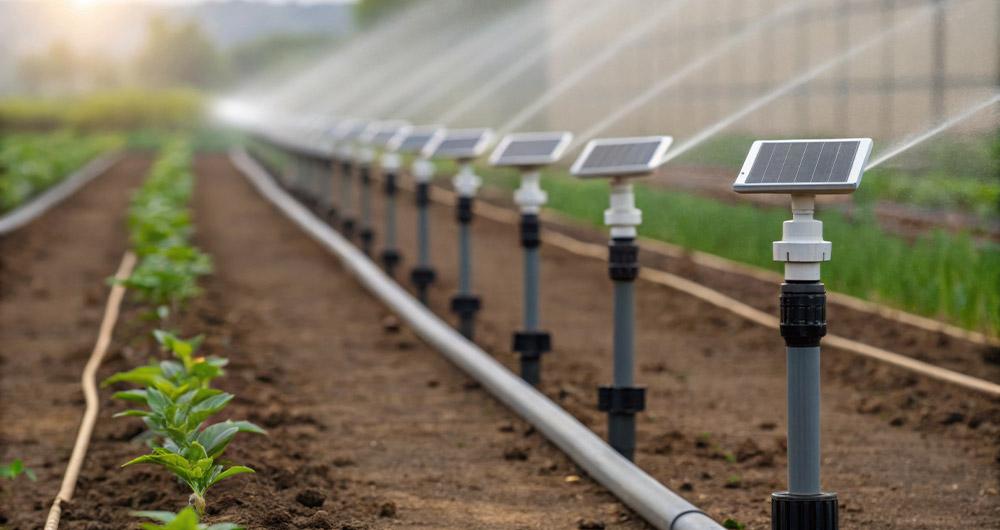
An everyday example that illustrates this complete cycle of perception, decision and action very well is smart irrigation, which is increasingly present in precision agriculture and home gardening systems. In this case, sensors distributed throughout the terrain continuously measure soil moisture, ambient temperature, and even solar radiation. All this information flows to the computing unit, which analyzes the data, compares it with previously defined thresholds or with more complex models – for example, those that estimate the evaporation of water or the water needs of each type of plant – and determines whether irrigation is really necessary.
When the system concludes that the floor has reached a critical level of dryness, the third element of CPS comes into play: the actuators. They are the ones who open the valves, activate the water pump or regulate the flow rate, and they do so for the exact time necessary to return the humidity to optimal levels. If conditions change—if it starts raining, if the temperature drops, or if the soil recovers moisture faster than expected—the system itself adjusts its behavior accordingly.
This whole process happens without human intervention, autonomously. The result is a more sustainable use of water, better cared for plants and a real-time adaptability that is only possible thanks to the integration of sensors, algorithms and actuators characteristic of cyber-physical systems.
CPS as real-time data factories
One of the most relevant characteristics of cyber-physical systems is their ability to generate data continuously, massively and with a very high temporal resolution. This constant production can be seen in many day-to-day situations:
- A hydrological station can record level and flow every minute.
- An urban mobility sensor can generate hundreds of readings per second.
- A smart meter records electricity consumption every few minutes.
- An agricultural sensor measures humidity, salinity, and solar radiation several times a day.
- A mapping drone captures decimetric GPS positions in real time.
Beyond these specific examples, the important thing is to understand what this capability means for the system as a whole: CPS become true data factories, and in many cases come to function as digital twins of the physical environment they monitor. This almost instantaneous equivalence between the real state of a river, a crop, a road or an industrial machine and its digital representation allows us to have an extremely accurate and up-to-date portrait of the physical world, practically at the same time as the phenomena occur.
This wealth of data opens up a huge field of opportunity when published as open information. Data from CPS can drive innovative services developed by companies, fuel high-impact scientific research, empower citizen science initiatives that complement institutional data, and strengthen transparency and accountability in the management of public resources.
However, for all this value to really reach citizens and the reuse community, it is necessary to overcome a series of technical, organisational and quality challenges that determine the final usefulness of open data. Below, we look at what those challenges are and why they are so important in an ecosystem that is increasingly reliant on real-time generated information.
The challenge: from raw data to useful public information
Just because a CPS generates data does not mean that it can be published directly as open data. Before reaching the public and reuse companies, the information needs prior preparation , validation, filtering and documentation. Administrations must ensure that such data is understandable, interoperable and reliable. And along the way, several challenges appear.
One of the first is standardization. Each manufacturer, sensor and system can use different formats, different sample rates or its own structures. If these differences are not harmonized, what we obtain is a mosaic that is difficult to integrate. For data to be interoperable, common models, homogeneous units, coherent structures, and shared standards are needed. Regulations such as INSPIRE or the OGC (Open Geospatial Consortium) and IoT-TS standards are key so that data generated in one city can be understood, without additional transformation, in another administration or by any reuser.
The next big challenge is quality. Sensors can fail, freeze always reporting the same value, generate physically impossible readings, suffer electromagnetic interference or be poorly calibrated for weeks without anyone noticing. If this information is published as is, without a prior review and cleaning process, the open data loses value and can even lead to errors. Validation – with automatic checks and periodic review – is therefore indispensable.
Another critical point is contextualization. An isolated piece of information is meaningless. A "12.5" says nothing if we don't know if it's degrees, liters or decibels. A measurement of "125 ppm" is useless if we do not know what substance is being measured. Even something as seemingly objective as coordinates needs a specific frame of reference. And any environmental or physical data can only be properly interpreted if it is accompanied by the date, time, exact location and conditions of capture. This is all part of metadata, which is essential for third parties to be able to reuse information unambiguously.
It's also critical to address privacy and security. Some CPS can capture information that, directly or indirectly, could be linked to sensitive people, property, or infrastructure. Before publishing the data, it is necessary to apply anonymization processes, aggregation techniques, security controls and impact assessments that guarantee that the open data does not compromise rights or expose critical information.
Finally, there are operational challenges such as refresh rate and robustness of data flow. Although CPS generates information in real time, it is not always appropriate to publish it with the same granularity: sometimes it is necessary to aggregate it, validate temporal consistency or correct values before sharing it. Similarly, for data to be useful in technical analysis or in public services, it must arrive without prolonged interruptions or duplication, which requires a stable infrastructure and monitoring mechanisms.
Quality and traceability principles needed for reliable open data
Once these challenges have been overcome, the publication of data from cyber-physical systems must be based on a series of principles of quality and traceability. Without them, information loses value and, above all, loses trust.
The first is accuracy. The data must faithfully represent the phenomenon it measures. This requires properly calibrated sensors, regular checks, removal of clearly erroneous values, and checking that readings are within physically possible ranges. A sensor that reads 200°C at a weather station or a meter that records the same consumption for 48 hours are signs of a problem that needs to be detected before publication.
The second principle is completeness. A dataset should indicate when there are missing values, time gaps, or periods when a sensor has been disconnected. Hiding these gaps can lead to wrong conclusions, especially in scientific analyses or in predictive models that depend on the continuity of the time series.
The third key element is traceability, i.e. the ability to reconstruct the history of the data. Knowing which sensor generated it, where it is installed, what transformations it has undergone, when it was captured or if it went through a cleaning process allows us to evaluate its quality and reliability. Without traceability, trust erodes and data loses value as evidence.
Proper updating is another fundamental principle. The frequency with which information is published must be adapted to the phenomenon measured. Air pollution levels may need updates every few minutes; urban traffic, every second; hydrology, every minute or every hour depending on the type of station; and meteorological data, with variable frequencies. Posting too quickly can generate noise; too slow, it can render the data useless for certain uses.
The last principle is that of rich metadata. Metadata explains the data: what it measures, how it is measured, with what unit, how accurate the sensor is, what its operating range is, where it is located, what limitations the measurement has and what this information is generated for. They are not a footnote, but the piece that allows any reuser to understand the context and reliability of the dataset. With good documentation, reuse isn't just possible: it skyrockets.
Examples: CPS that reuses public data to be smarter
In addition to generating data, many cyber-physical systems also consume public data to improve their performance. This feedback makes open data a central resource for the functioning of smart territories. When a CPS integrates information from its own sensors with external open sources, its anticipation, efficiency, and accuracy capabilities are dramatically increased.
Precision agriculture: In agriculture, sensors installed in the field allow variables such as soil moisture, temperature or solar radiation to be measured. However, smart irrigation systems do not rely solely on this local information: they also incorporate weather forecasts from AEMET, open IGN maps on slope or soil types, and climate models published as public data. By combining their own measurements with these external sources, agricultural CPS can determine much more accurately which areas of the land need water, when to plant, and how much moisture should be maintained in each crop. This fine management allows water and fertilizer savings that, in some cases, exceed 30%.
Water management: Something similar happens in water management. A cyber-physical system that controls a dam or irrigation canal needs to know not only what is happening at that moment, but also what may happen in the coming hours or days. For this reason, it integrates its own level sensors with open data on river gauging, rain and snow predictions, and even public information on ecological flows. With this expanded vision, the CPS can anticipate floods, optimize the release of the reservoir, respond better to extreme events or plan irrigation sustainably. In practice, the combination of proprietary and open data translates into safer and more efficient water management.
Impact: innovation, citizen science, and data-driven decisions
The union between cyber-physical systems and open data generates a multiplier effect that is manifested in different areas.
- Business innovation: Companies have fertile ground to develop solutions based on reliable and real-time information. From open data and CPS measurements, smarter mobility applications, water management platforms, energy analysis tools, or predictive systems for agriculture can emerge. Access to public data lowers barriers to entry and allows services to be created without the need for expensive private datasets, accelerating innovation and the emergence of new business models.
- Citizen science: the combination of SCP and open data also strengthens social participation. Neighbourhood communities, associations or environmental groups can deploy low-cost sensors to complement public data and better understand what is happening in their environment. This gives rise to initiatives that measure noise in school zones, monitor pollution levels in specific neighbourhoods, follow the evolution of biodiversity or build collaborative maps that enrich official information.
- Better public decision-making: finally, public managers benefit from this strengthened data ecosystem. The availability of reliable and up-to-date measurements makes it possible to design low-emission zones, plan urban transport more effectively, optimise irrigation networks, manage drought or flood situations or regulate energy policies based on real indicators. Without open data that complements and contextualizes the information generated by the CPS, these decisions would be less transparent and, above all, less defensible to the public.
In short, cyber-physical systems have become an essential piece of understanding and managing the world around us. Thanks to them, we can measure phenomena in real time, anticipate changes and act in a precise and automated way. But its true potential unfolds when its data is integrated into a quality open data ecosystem, capable of providing context, enriching decisions and multiplying uses.
The combination of SPC and open data allows us to move towards smarter territories, more efficient public services and more informed citizen participation. It provides economic value, drives innovation, facilitates research and improves decision-making in areas as diverse as mobility, water, energy or agriculture.
For all this to be possible, it is essential to guarantee the quality, traceability and standardization of the published data, as well as to protect privacy and ensure the robustness of information flows. When these foundations are well established, CPS not only measure the world: they help it improve, becoming a solid bridge between physical reality and shared knowledge.
Content created by Dr. Fernando Gualo, Professor at UCLM and Government and Data Quality Consultant. The content and views expressed in this publication are the sole responsibility of the author.



Comments