


Noticia
The Organisation for Economic Co-operation and Development (OECD) has published the main findings of the 2025 edition of the Open, Useful and Re-usable Data Index (OURdata) and the Digital Government Index (DGI), two indices that evaluate the good work of governments in fields related to digital transformation.
Both studies are born from a central idea: "digital transformation is no longer optional for governments: it is an absolute necessity". It enables better services, smarter decision-making and collaboration across borders, but for this to work, a bold and balanced vision is needed, supported by a strong and reliable foundation. Thanks to the analysis offered by the two indices published by the OECD, it is possible to guide policies, prioritize investments and measure the progress of digital transformation in the public sector.
Specifically, the indices assess:
- OURdata Index: national efforts to design and implement useful and reusable open data policies.
- Digital Government Index (DGI): Governments' progress in building the foundations for a coherent and people-centred digital transformation.
Both analyses are based on data collected during the first half of 2025, covering initiatives and policies implemented between January 1, 2023 and December 31, 2024. Its results will also feed into the OECD Digital Government Outlook 2026, which will include more in-depth analysis, key trends and country notes.
Keys to the OURdata Index 2025
The OURdata Index 2025 shows important progress in the opening and reuse of public data in OECD countries. In this index, Spain is in the top 5, consolidating its position among the countries with the best open data policies.
The OECD average rises from 0.48 to 0.53 out of a total score of 1, with almost 60% of countries exceeding the 0.50 threshold. France leads the ranking, followed by South Korea, Poland, Estonia and the aforementioned Spain, as can be seen in the following graph.
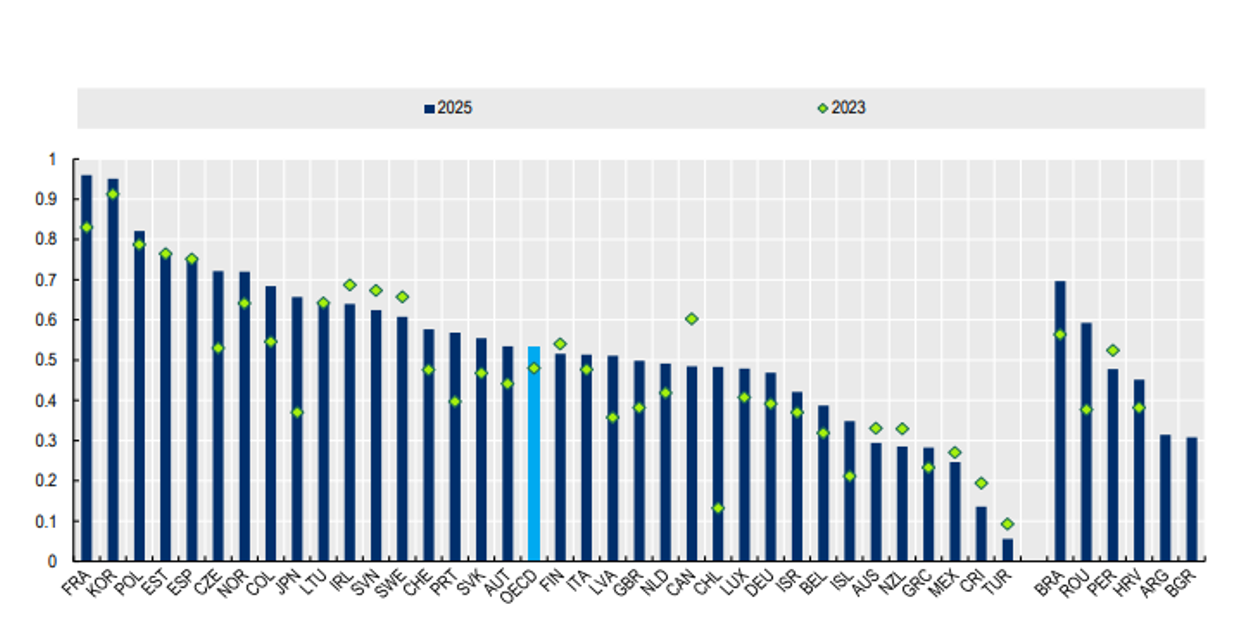
Figure 1. Result by country of the Open, Useful and Re-usable Data Index (OURdata). Source: 2025 Open, Useful and Re-usable Data Index (OURdata), OECD.
To arrive at these data, the report analyzes three pillars, as in 2023:
- Pillar 1: Data availability. It measures the extent to which governments have adopted and implemented formal requirements for publishing open data. It also assesses the involvement of relevant actors to identify the demand for data and the availability of high-value datasets such as open data. It should be noted that, although the report talks about high value datasets, it is not the same concept that the EU handles. In the case of the OECD, other high-impact categories are also taken into account, such as health, education, crime and justice or public finances, among others.
- Pillar 2: Data accessibility. It assesses the existence of requirements to offer open data in reusable formats. In addition, it focuses on the degree to which high-value government datasets are published in a timely manner, in open formats, with standardized and detailed metadata, and through Application Programming Interfaces (APIs). It also analyzes the participation of relevant actors (stakeholders) in the central open data portal and in initiatives to improve its quality.
- Pillar 3: Government support for data reuse. It measures the extent to which governments play a proactive role in promoting the reuse of open data both inside and outside the public sector. Specifically, it analyzes whether there are alliances and organizes events that increase awareness of open data and promote its reuse; whether public officials are involved in the publication of open data and in data analysis and reuse activities; and whether impact assessments of open data are carried out and examples of reuse are collected.
The results show that, as in previous editions, OECD countries perform better in Data Availability (Pillar 1) and Data Accessibility (Pillar 2) than in Government Support for Data Reuse. However, Spain is an exception: it ranks third (0.91) in government support when it comes to promoting the creation of public value from open data and in measuring its real impact. In the rest of the pillars, 1 and 2, it is in 14th position, also ahead of the average of OECD countries.
Claves del Digital Government Index
The 2025 edition of the DGI assesses the digital maturity of governments. To do this, it analyzes whether they have the necessary foundations to leverage data and technology in a comprehensive transformation of the public sector focused on people.
As with the OURData index, the DGI score is based on the same methodology used in the 2023 edition, which allows a longitudinal evaluation to be carried out and progress between that year and 2025 to be compared. In this period, the OECD average in the DGI increased by 0.08 points, from 0.61 (out of 1) in 2023 to 0.70 in 2025, representing a total increase of 14%. Almost all governments exceeded the 0.50 threshold, and 17 of them were above the OECD average, including Spain.
The ranking is headed by South Korea, Australia, Portugal, the United Kingdom and Norway, with Spain in twelfth position, as shown in the following graph.
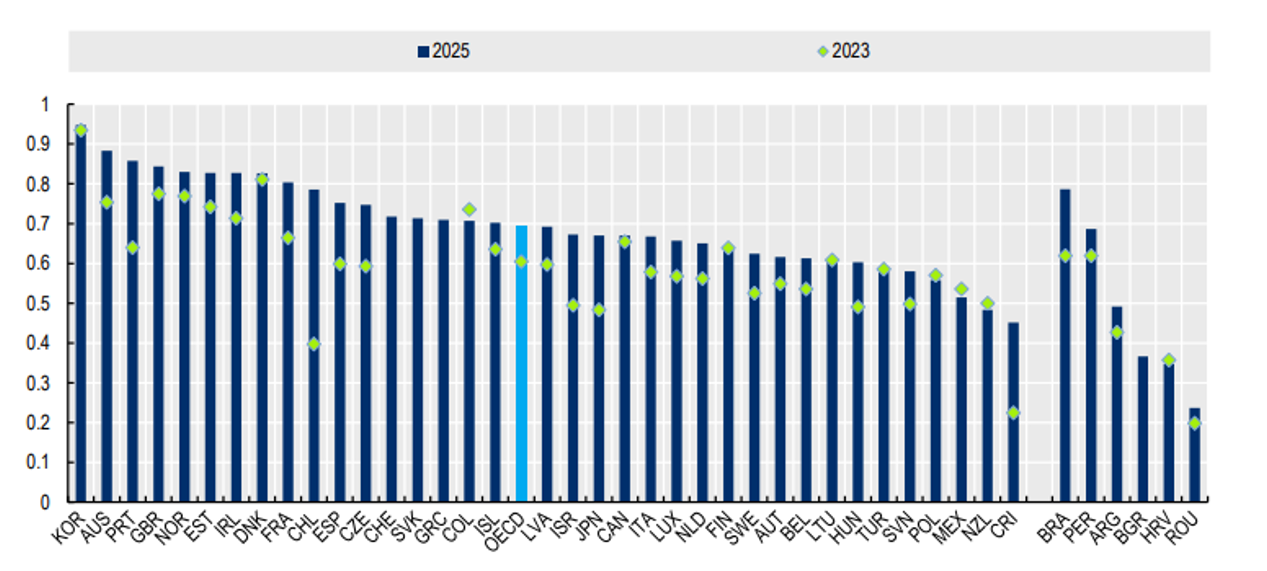
Figure 2. Result by country of the Digital Government Index. Source: 2025 Digital Government Index (DGI), OECD.
The DGI measures the maturity of digital government along six dimensions:
- Dimension 1: Digital by design. It assesses how digital government policies enable the public sector to use digital tools and data consistently to transform services.
- Dimension 2: Data-driven. It discusses advances in governance and the enablers for data access, sharing, and reuse in the public sector.
- Dimension 3: Government as a platform. It measures the deployment of common components such as guides, tools, data, digital identity, and software to drive consistent transformation of processes and services.
- Dimension 4: Open by default. It assesses openness beyond open data, including the use of technologies and data to communicate and engage with different actors.
- Dimension 5: User-centered. It measures the ability of governments to place people's needs at the centre of the design and delivery of policies and services.
- Dimension 6: Proactivity. It analyzes the ability to anticipate the needs of users and service providers to proactively offer public services.
The DGI assessment focuses on both the strategic and operational levels. Therefore, for each dimension, it examines four cross-cutting facets of the policy cycle: strategic approach (strategies and general frameworks), policy levers (resources and tools), implementation (concrete practices), and monitoring (monitoring and evaluation).
While countries have made progress compared to 2023, the 2025 results show that there is still room to increase the pace and depth of digital government policies. As in 2023, OECD countries excel in the Digital by Design, Data-Driven Public Sector, Government as a Platform and User-Centric dimensions, with widespread improvements in their scores. These advances are explained by the strengthening of governance and the use of data, the development of digital infrastructures -such as digital identity systems and service platforms-, the consolidation of digital talent in public administrations and the adoption of service standards.
In contrast, the Proactivity and Open dimensions by default continue to show lower performance, as was already the case in 2023. This is due to weaker results in the use and governance of artificial intelligence in the public sector, in service design and delivery practices, and in open data. Even so, improvements are observed in areas such as the availability of governance instruments for a reliable use of AI and the expansion of tools to test and monitor whether services are adapted to the needs of users.
In this case, Spain does follow the general trend, standing out especially in Digital by design where it enters the top 10 with a ninth position, although with one exception: it also obtains a good score in Proactivity, with a 12th place. In the rest of the indicators, it remains fairly stable, between positions 13 and 19.
Conclusion
Governments around the world face a common challenge: rigid structures, slow processes, and rules that sometimes make it difficult to respond with agility to today's challenges. As a result, digital modernization has become a strategic necessity.
Embracing digital technologies, connecting data, and working with agile methodologies allows governments to be faster, more efficient, and proactive while remaining active in accountability and facilitates collaboration between institutions and countries. Studies conducted by the OECD allow countries to determine their areas for improvement, facilitating informed decision-making regarding digital infrastructure, data or the use of AI.
To find out more about the details of Spain's position, we will have to wait for the country notes to be published in the OECD Digital Government Outlook 2026, but for now, we can take note of our strengths (government support for the reuse of data or the development of digital government policies) and the challenges to be faced (continuing to promote the accessibility and availability of data).

Noticia
Spain continues to make progress in open data. This is corroborated by the latest edition of the Open, Useful and Re-usable data Index, also known as OURdata Index. This report is prepared periodically by the OECD to evaluate the efforts made by different governments in designing and implementing national open data policies.
First launched in 2015, the Index had two subsequent editions published in 2017 and 2019. In this fourth edition, there has been a change in methodology, which does not make it possible to compare the results with those of previous editions.
To conduct the analysis, data was collected regarding the policies carried out by 40 countries in the 2020-2021 period. This is a period marked by the COVID-19 pandemic, which caused an exceptional situation worldwide and highlighted the need for governments to ensure access to high quality data, to build resilience and facilitate joint societal responses to a crisis.
The final report will be published during the second quarter of 2024. However, the OECD has released a summary of some of the main conclusions of the study.
Spain is among the world leaders
According to the study, Spain ranks fifth in terms of open data, behind only South Korea, France, Poland and Estonia, as shown in the following graph.

The report assesses three pillars and nine sub-pillars, all of which have the same value in the final score:
-
Data availability: this indicator measures the extent to which governments have adopted and implemented formal requirements for open data publication. It also assesses whether the different actors involved in the data publication process (stakeholders) are carrying out some work to identify the demand for data in general and the availability of high-value datasets in particular. In this regard, it should be noted that, although the report speaks of high value datasets, this is not the same concept of high value data as that used by the EU. In the case of the OECD, other high-impact categories such as health, education, crime and justice or public finances, among others, are also taken into account. Details of the categories taken into account are given in the annex to the report.
-
Data accessibility: This indicator assesses whether high-value government datasets are provided in open and reusable formats, updated, with good metadata quality and through application programming interfaces (APIs). It also discusses the involvement of different stakeholders in the central open data portal and in improving data quality.
-
Government support for data reuse: this indicator looks at the extent to which governments play a proactive role in promoting the reuse of open public data, both within and outside the administration.

Considering these indicators, Spain is in the group of "leading countries". These countries demonstrate a comprehensive approach to open data initiatives and, in general, perform well in all aspects. In the specific case of Spain, it stands out when it comes to promoting the reuse of data, where it is in second place. It has been taken into account how the governmental sphere makes companies and civil society aware of the opportunities offered by open public data, participating in associations and co-creation events to stimulate the reuse of data. It also highlights the availability of awareness-raising and training initiatives for public officials on open data publication, analysis and reuse, as well as efforts to carry out impact assessments of open public data and the presentation of examples of reuse.
On the other hand, it ranks eleventh in data accessibility in general, although it rises to sixth if we talk about high-value data. Finally, we rank sixth in terms of accessibility.
General conclusions
The report includes a number of general findings from all countries. According to the study, only 48% of high-value datasets are available as open data in OECD countries. Although the COVID-19 pandemic positively influenced the publication of open health data, only 43% of datasets in this category are currently available. Collaboration between public and private healthcare actors is therefore encouraged to promote the publication of these data systematically at the national level.
The results also indicate that countries should prioritize the publication of open data in areas such as public procurement, public budgets and lobbying, as well as boosting those related to the green agenda, highlighting those related to Earth observation, environmental and meteorological data. In addition, consideration should be given to making company registries and company ownership data available to all citizens as open data.
On the opposite side of the scale, there is a large availability of statistical and geospatial data.
Overall, OECD countries have improved the quality of open government data, an important issue that also affects recent developments in Artificial Intelligence (AI). The evolving landscape of AI applications makes it necessary to ensure data quality, paying particular attention to metadata quality and access through APIs.
Ultimately, the report highlights the importance of open public data for democracy in the digital age, as well as in driving innovation in both the public and private sectors.
Blog
Like every other year, the EU Open Data Portal has just published the results of its report Open Data Maturity 2022. It is a study that assesses the maturity of European countries in the field of open data and it provides an overview of the good practices followed in Europe, which can be transferred to other national and local contexts. Both the member states of the European Union (EU-27) and other countries in the region have participated in the study.
Spain has achieved a score of 92%, thirteen points above the EU27 average. With this score, it is in the leading group. France secured first place, followed by Ukraine and Poland.
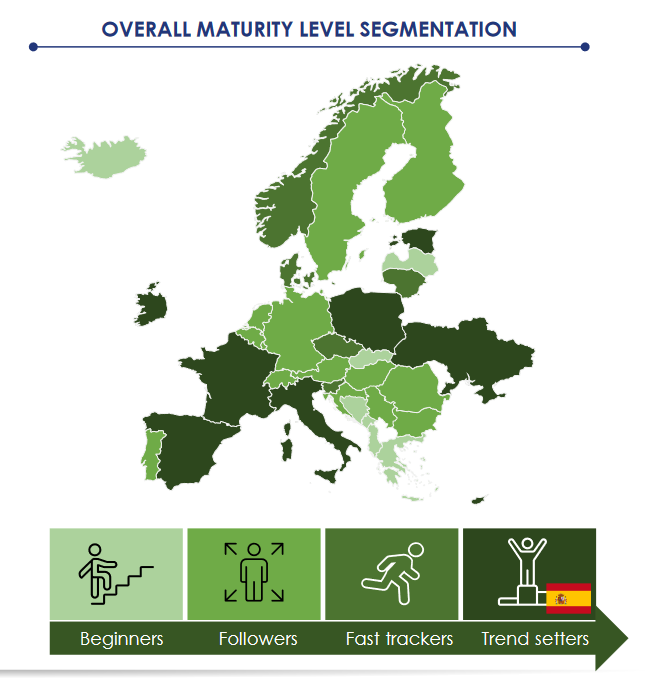
Spain is above the European average for the 4 indicators analysed
The report measures maturity in relation to four aspects of open data:
- Policy, focused on the open data strategies of the different countries.
- Impact, which analyses the activities carried out to monitor and measure the reuse of open data and their impact.
- Portal, focused on evaluating the functions and characteristics of the national platform that allows users to access open data and promote interaction within the community.
- Quality, which examines mechanisms to ensure the quality of (meta)data.
In all four categories, Spain is ahead of the EU27 average, particularly standing out in the policy section. Some of the aspects that the report highlights in Spain are the open mechanisms for communicating and interacting from datos.gob.es with the open data community, the use of dashboards to monitor the use of datasets or some specific examples of use cases such as Climate change scenario viewer or Gijón in a click.
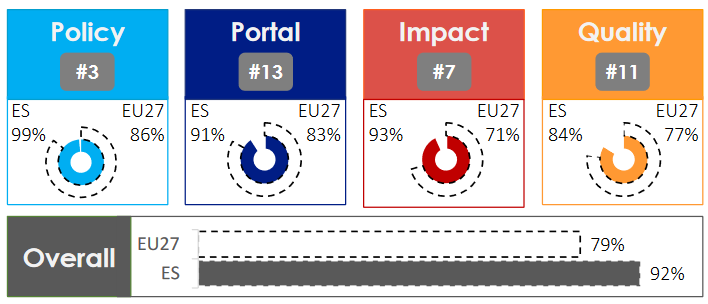
With this score, Spain falls within the so-called trendsetter group. The countries that belong to this group stand out for their strong commitment to open data, borne out by an advanced strategy, more mature platforms and an active methodology for measuring the impact of open data.

3 key trends in Europe
This year's analysis highlights three trends at European level:
- EU Member States are preparing for the implementation of the high-value datasets regulation. Directive 2019/1024 highlighted, amongst other issues, a specific regime for the so-called high-value data, in other words, those whose reuse is associated with considerable benefits for society, the environment and the economy. Although their implementing regulation has not yet been made public, 96% of EU Member States are already working on the identification of high-value data, especially in the categories of statistical, geospatial, Earth observation, environmental and meteorological data. In addition, 85% are already prepared to monitor and measure their level of reuse and 63% to ensure their interoperability with available data sets from other countries. Spain is no exception and it is one of the most advanced countries in this regard.
- Measuring the impact of open data is a priority for EU Member States, but it is a major challenge too. Countries are still interested in understanding and capturing open data reuse and value creation, but compiling data on the impact created remains challenging, especially in the economic area.
- In a post-pandemic world, European countries face new and old common challenges. The impact of the war in Ukraine has affected all countries, both socially and economically. Open data have proven to serve as a mechanism to help refugees or improve energy management. Other common challenges highlighted in the report are the lack of resources and qualified personnel or the difficulty in coordinating between the different levels of the administration, inter alia.
Recommendations to keep moving ahead in the field of open data
The report ends with a series of recommendations by groups of countries. In the case of open data trendsetters, the group to which Spain belongs, the report recommends focusing on maintaining the current ecosystem, experimenting and sharing knowledge.
To be precise, the focus should be placed on improving and consolidating open data ecosystems through the development of thematic communities of providers and reusers. It is also recommended to collaborate with data.europa.eu, other national data teams, universities and research institutions to develop an experimental impact evaluation framework.
High-value data sets stand out as one of the areas to prioritise, based on that which was previously indicated in Directive 2019/1024. In addition to preparing for the Data Governance Regulation, evaluating the existing options to expand the portals and assuming the role of public registry for those organisations linked to the altruistic transfer of data.
You can read the full report via this link.
Noticia
Companies and public administrations in our country continue to advance on their path towards digitalization, with the opportunities that this entails: process optimization, improved user experience, and innovation in the products and services offered. This is reflected in several of the reports published during 2021, starting with the DESI index, prepared within the framework of the European Commission.
DESI Index
The DESI (Digital Economy and Society Index) tracks the progress made by EU Member States in digital competitiveness. For the latest edition, published at the end of 2021, there has been a change in methodology in order to align with the Recovery and Resilience Plan and the objectives set out in the EU Digital Decade Digital Compass. In this way, 4 indicators have been changed to measure: human capital, broadband connectivity, integration of digital technologies by businesses and digital public services.
It should also be noted that the data in the report correspond mainly to the first half of 2020, so the effect of the pandemic is only partially reflected. Its consequences will become clearer in the next edition.
In this context, Spain is positioned in 9th position, improving two positions compared to the previous year.
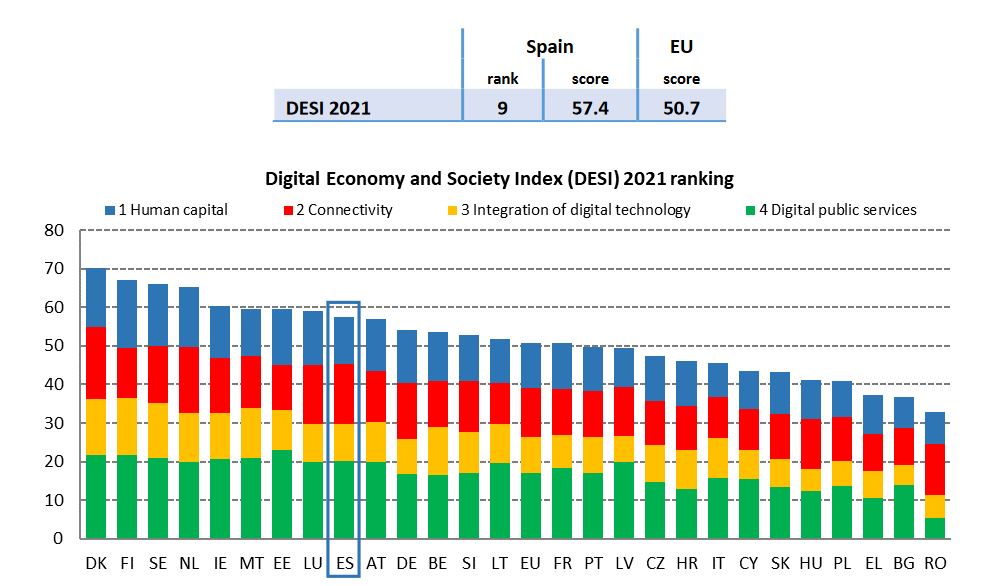
Spain remains ahead of the European average in the 4 categories analysed, standing out especially in the dimensions of digital public services and connectivity.
- Digital public services. The category where our country scores best, especially in the subsection of open data, with a score (94%) 16 percentage points above the EU average. The report also highlights that 67% of Internet users actively participate in e-government services. Thanks to the Public Administration Digitalization Plan, it is expected that at least 50% of digital public services will be accessible via mobile by the end of 2025. This seeks greater personalization of services and improved effectiveness, efficiency and transparency in the public sector.
- Connectivity. Spain stands out in very high-capacity networks. The differences between rural and urban areas are being increasingly reduced, although they still exist. 99.9% of populated areas have 4G coverage, but 5G still only reaches a minority. To reverse the situation, the Plan for Connectivity and Digital Infrastructures and the Strategy to Boost 5G Technology is underway, a roadmap whose goal is for the entire population to have a connection greater than 100 Mbps by 2025.
- Human capital. The report highlights that 57% of the Spanish population has at least basic digital skills. To increase this figure to reach the European target of 80% by 2030, the Spanish government has included the promotion of the population's digital skills as one of the main lines of action of the Digital Spain 2025 strategy. In this regard, the National Digital Skills Plan has been launched with seven lines of action ranging from the digital training of citizens and the reduction of the digital divide to the promotion of ICT specialists, a field where there is still ample room for improvement. The report also highlights the launch of the Educa en Digital Program, which establishes measures to promote greater digitalization of the Spanish education system.
- Integration of digital technology. 62% of Spanish SMEs have at least a basic level of digital intensity and 24% have embraced e-commerce, but few companies are taking advantage of technologies such as artificial intelligence, big data or cloud services. The response to improve this situation is the SME Digitalization Plan 2021-2025, which has five main lines of action: basic digitalization for SMEs; support for digital change management; promotion of disruptive innovation and digital entrepreneurship; support for sectoral digitalization (with a focus on industry, tourism and commerce); and coordination and efficiency.

Other reports related to digital transformation in Spain
In addition to the DESI index, some reports have also been published in our country during the last 12 months that refer to the current state of implementation of digital tools in different areas.
One example is "Sociedad Digital en España 2020-2021" (Digital Society in Spain 2020-2021), by the Telefónica Foundation. The report analyses the effects of the current healthcare situation on the technological habits of Spanish companies and citizens, globally and by autonomous communities. The COVID has driven the transformation, boosting teleworking and forcing many companies and public administrations to adopt digital tools both for their internal processes and for the relationship and provision of services to citizens. In this situation, the report highlights 3 key aspects:
- The importance of connectivity and the quality of the Spanish network, which faced a massive increase in traffic of almost 50%.
- The acceleration of the digitalization of individuals and companies, with the increase in the number of users connected to the network and consuming online services. It is estimated that digitalization could increase Spain's GDP by between 1.5 and 2.5 points each year until 2025 and improve the productivity of SMEs by between 15 and 25%.
- The need to put people at the centre of digital transformation. The pandemic has also widened the gap between those who have already embraced digital transformation and those who have not yet started. To alleviate this situation, it is proposed to rely on public-private partnership initiatives.
Last year also saw an update of the report The Digitalization of the Economy (originally published in 2017), by the Economic and Social Council of Spain. The debate on the impact of digitalization on productivity and employment has been joined by other new challenges related to the risk of technological hegemony of certain countries and companies, the deployment of 5G, the ethical limits to artificial intelligence or data ownership, among others.
Given that this is a situation in continuous evolution, the reports on the subject are constantly being updated. In the coming months, for example, we will be able to discover the conclusions of the new edition of "The Digital Economy in Spain", by the COTEC Foundation, currently under development.
What cannot be denied is that our country is advancing on its path towards digital opportunities. A path in which it is essential to continue promoting access to quality data and related capabilities to extract its full value.
Noticia
For the seventh consecutive year, the European Data Portal has presented its Open Data Maturity assessment. This is a report that analyses a series of indicators to measure the maturity of open data across Europe, in order to understand the progress of each country, make comparisons and find areas for improvement.
This year, Spain ranks third with a score of 95%, 14 points above the European average (81%). First place goes to France (98%), followed by Ireland (also with 95%).
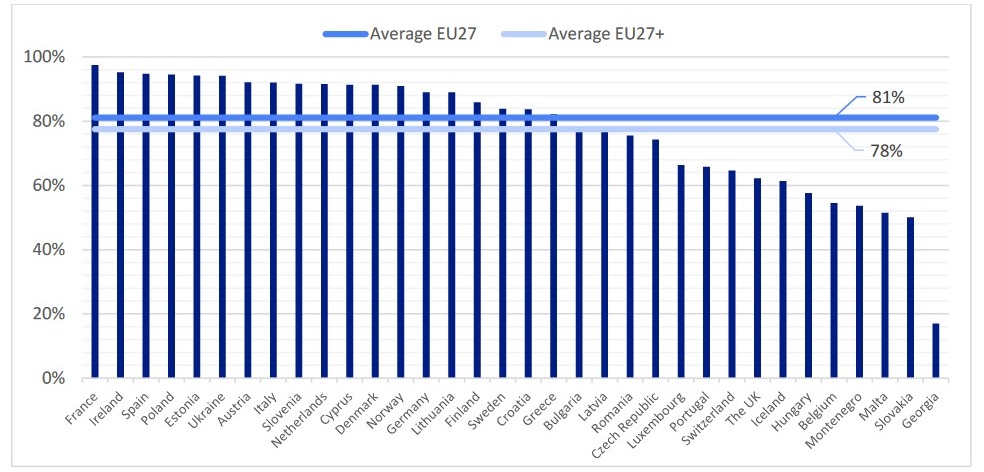
Spain, above the European average in all the analyzed categories
As every year, the report measures 4 categories:
- Policy, focusing on the existence of specific policies and strategies to promote open data at the national level.
- Impact, which analyzes activities to monitor and measure the reuse of open data.
- Portal, which evaluates the existing functions in the national platform (in the case of our country, datos.gob.es) to access open data and interact with the community.
- Quality, which studies the mechanisms that guarantee the quality of (meta)data.
Spain is ahead of Europe in all categories:
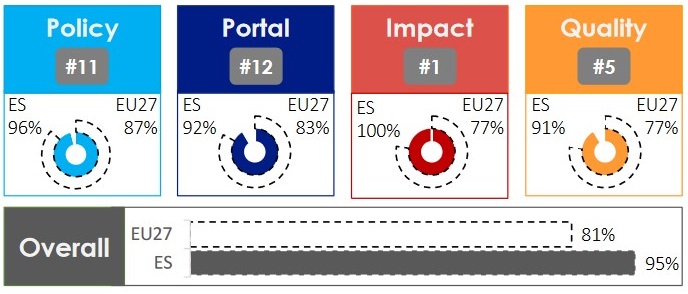
In total, Spain's score has increased by one percentage point compared to 2020, when it stood at 94%. It stands out especially in the impact category, where it is in first position with 100% of the score. The report highlights how the Aporta Initiative conducts an annual national survey to ascertain the control over the use of data by the various national, regional and local public bodies. It also highlights the collaborations that the institutions carry out with universities, such as the agreement adopted by the Valencian Government with all public universities in the Community to work together in training and research activities related to transparency and open data.
Our country continues in the group of open data prescribers
As part of the analysis, the European Portal groups all participating countries into four groups based on the assessment of open data maturity during 2021. With its score, Spain continues to place itself in the leading group of open data in Europe, called trend-setters. The group with the best results is completed by France, Ireland, Poland, Estonia and Ukraine.
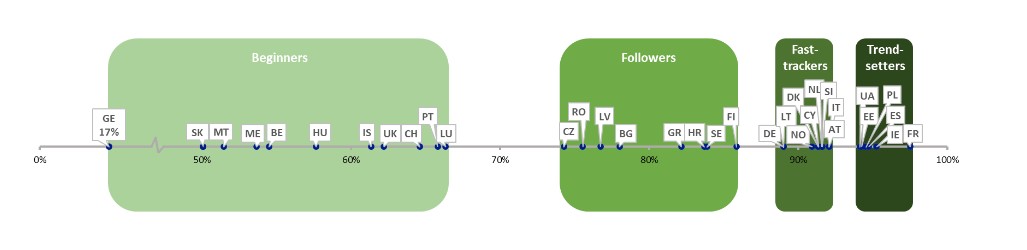
These countries are characterized by an advanced open data policy and a platform with a wide range of functions to meet the needs of advanced users and publishers. They are also countries where there are initiatives to ensure the publication of high-quality data and compliance with the DCAT-AP European open data cataloging profile, and where communities around data reuse are in place. Finally, it is highlighted that there are established methodologies in place to assess the impact of data in the different domains.
Europe's average score rises
In 2021, the average score relating to open data maturity of EU27 countries is 81%, an increase of three percentage points compared to 2020.
The report highlights three trends observed in all the countries analysed:
- Member States are updating their policies to transpose the Open Data Directive into their national legislation. More and more countries are carrying out the transposition process. In the case of Spain, it was included in the Royal Decree-Law 24/2021, approved last December 2 by the Congress. It is worth mentioning that the Open Data Directive still requires the adoption of a future implementing regulation by the European Commission, where the list of high-value datasets to be provided free of charge through APIs is included.
- Understanding, monitoring and measuring the impact of open data is becoming more important. The impact dimension has seen the most growth in the last year, while the quality indicator is the least mature. In recent years, impact has been measured mainly through activities such as maintaining records of data downloads or creating lists of use cases. This year there has been a clear trend towards in-depth studies, such as desk research or surveys, to quantify and verify the impact of open data.
- The COVID-19 pandemic continues to highlight the value and impact of open data. Last year, the health situation led to highlight the importance of systematically collecting data and making it available to the public in an up-to-date manner. This year, the available data is complemented by statistics related to vaccination.
Future recommendations
The report ends with a series of recommendations for each group of countries. In the case of prescribers, a group that includes Spain, some issues are highlighted, such as continuing to develop thematic communities of providers and reusers, giving priority to the high-value data categories highlighted in the Open Data Directive. In this sense, Spain is moving forward with the creation of specific hubs for various sectors such as tourism or health.
Other examples of recommendations are to collaborate with other national and international teams to develop an experimental impact assessment framework and with academic institutions to provide advanced courses and training on open data.
Noticia
We have been talking about the digital transformation for years, but perhaps it has been in the last few months when we have had to stay at home and resort to teleworking or e-commerce, that we have noticed the need for it the most. Many companies have had to transform quickly, adapting their internal processes, their relationship with customers and even their business models to new needs.
However, the digital transformation is nothing new, and before the health crisis there were already many organizations with a long way to go. This is reflected in the Digital Economy and Society Index (DESI), which each year measures the performance and evolution of the EU Member States in terms of digital competitiveness.
DESI INDEX
The DESI Index performs its analysis based on 5 indicators: Digital Public Services, Connectivity, Human Capital, Integration of Digital Technology and Use of Internet Services.
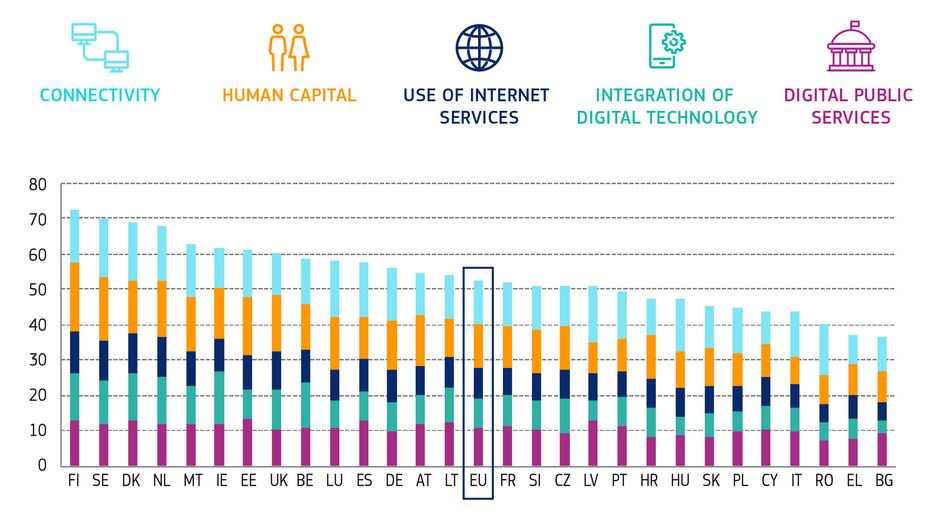
In this index, Spain is above the European Union average, occupying the eleventh position, with unequal scores in the various markers:
- The score where our country stands out the most is Digital Public Services, where it is in second place in Europe, improving its position with respect to last year, thanks to the application of a default digital strategy throughout its central administration. One of the indicators driving Spain's position in this dimension is open data, where we are in second place in terms of maturity in Europe. We are also above average in the availability and use of e-government services.
- Spain also performs well in the area of connectivity (5th place), driven by the good implementation of high-speed networks: 80% of households have fiber optic coverage, well above the EU average (34%).
- In contrast, Spain is below the EU average in the human capital indicator (16th place), with 43% of people between 16 and 74 years of age still lacking digital skills. It does improve on last year's percentage of ICT graduates and specialists in total employment. The report highlights the government's efforts to improve this situation, with actions such as the Strategic Plan for Vocational Training in the Education System 2019-2022, which seeks to create forty new degrees in different ICT fields.
- With regard to the integration of digital technology, Spain ranks 13th, in line with the EU average. Spanish companies take advantage of the opportunities offered by digital technologies and are above Europe in the use of electronic information exchange systems (43% compared to 34%), although slightly below in access to macrodata analysis (11% compared to 12) and the use of the cloud (16% compared to 18%). With regard to emerging technologies, the report highlights that Spain has developed a significant number of coordination measures, especially in the field of cyber security.
- Finally, the use of Internet services has increased since the previous year, and the country has obtained results above the EU average. However, it is worth mentioning that it is still used more for leisure activities (consuming multimedia content), than for day-to-day business, such as banking or e-commerce.
The study was carried out before the pandemic, so the results do not include the actions carried out in recent months, such as the publication of the Digital Agenda 2025, which includes the promotion of a Data Economy. The measures to be developed include the implementation of an Artificial Intelligence Strategy, the development of a Data Office with a Chief Data Officer at the head and the creation of an Artificial Intelligence Advisory Council, among others.
OTHER REPORTS ON DIGITAL TRANSFORMATION IN SPAIN
In addition to the DESI index, in recent months two reports of particular importance when it comes to digitalization have been published in our country: the "Digital Society in Spain Report 2019" and the "COTEC 2020" report.
Digital Society in Spain 2019 Report
This report, published by the Telefónica Foundation, includes data and indicators that describe the state of Spanish society in relation to the media, uses and digital services. Specifically, it focuses on the deployment of telecommunications infrastructure, the level of implementation of the most advanced technologies and the state of the art of Spanish digital life.
The conclusions of the report are very much in line with the DESI index, which it takes as a reference. It highlights that 9 out of 10 inhabitants are Internet users, and that the gender gap in cyberspace has been completely eliminated, although an age gap still exists. The report also highlights that our country has a very good connection, with ultra-fast network coverage in three out of every four homes.
The study indicates that the main technological currents that are shaping the digital transition in Spain revolve around artificial intelligence, industry 4.0 and cyber security, with the first one standing out above all: while in 2013 only one out of every fifty emerging companies focused its activity on artificial intelligence, now one out of every twelve do so.
The report ends with an analysis of the degree of digital development presented by the Autonomous Communities, describing the current situation and the challenges facing each region.
You can read the full report at this link.
COTEC 2020 Report
The COTEC report, on the other hand, focuses on a fundamental aspect to boost the digital transformation: the R&D+I. The report shows us the innovation map in Spain, through the analysis of the main indicators and national, regional and international strategies.
The report analyzes data from 2018 and shows that R&D has gained weight in the productive structure for the second consecutive year, driven mainly by private investment. However, we are still far from countries like France, Italy or Germany.
The autonomous communities maintain heterogeneous levels of effort. The five most advanced regions are the Basque Country, Madrid, Navarre, Catalonia and Castile and Leon).
The report also focuses on education, where it highlights that Spain has a higher rate than the European average in STEM graduates, but with a much wider gender gap than in most surrounding countries. It should be noted that our country has a low proportion of people with an average educational level, since we have a high rate of population that leaves school at an early age, and a high percentage of young people who graduate from university.
You can read the full report at this link.
After taking a look at these reports, we can conclude that both the public and private sectors are making an effort to promote the digital transformation of Spain in order to make the digital transformation and innovation a driver of economic and social development in our country. There are still areas for improvement, but there is no denying the interest in tackling the challenges ahead.
Noticia
The OECD's work on open data began in 2013, but has steadily expanded to reflect its growing importance in member and partner countries. The OECD sees open data as a key asset for economic development, digital innovation and good governance, while always paying special attention to privacy, transparency and ethics.
The OECD includes the need to create a culture based on data as one of the principles needed to promote the digital transformation of the public sector. In its own words "open government data is a public good, which must be delivered with a purpose, in a proactive manner and with a focus on reuse, in line with user needs and its potential contribution to the joint creation of value". In this sense, he has developed a series of indicators to evaluate the digital transformation of countries, based on 6 key dimensions:
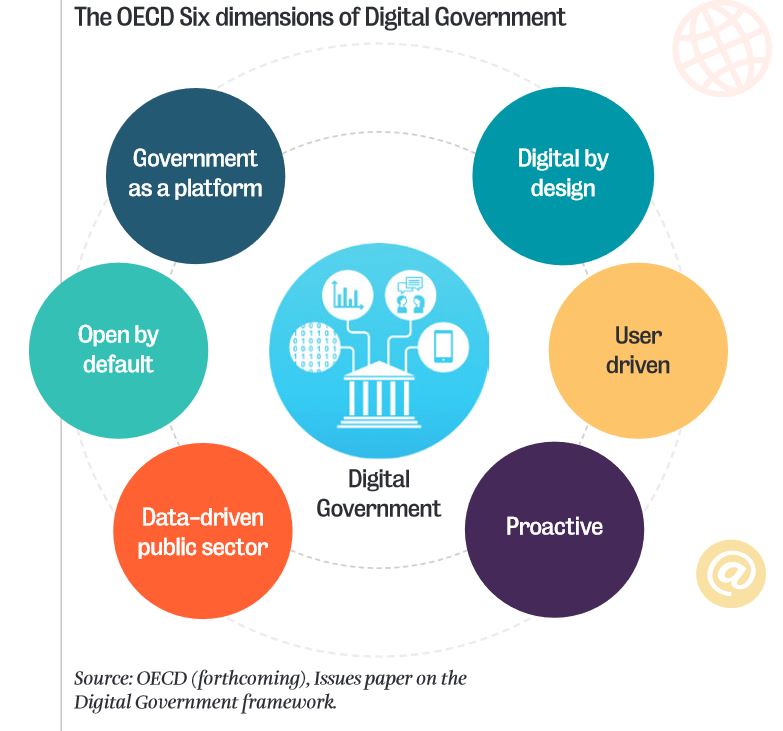
The OURdata index: a way to measure the availability, accessibility and reuse of government data
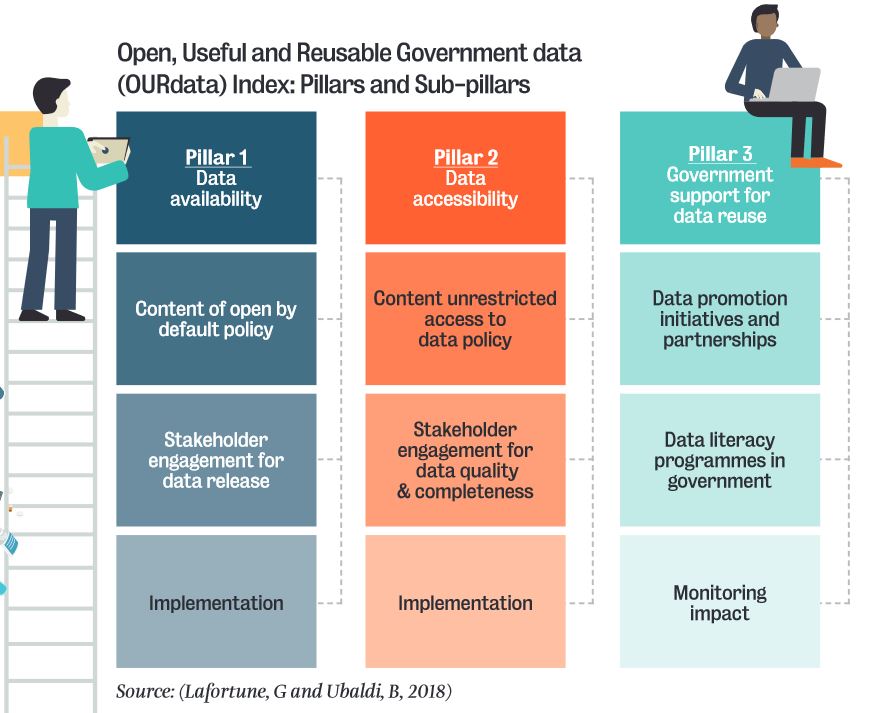
The OURdata index, which evaluates the progress and challenges of open government data policies using 3 pillars, is based on this theoretical framework:
- Data Availability: measures the degree to which governments have adopted and implemented official requirements to promote open government data at the central level.
- Data Accessibility: measures the availability of formal requirements designed to promote unrestricted access to data.
- Government support for data reuse: measures the extent to which governments are playing a proactive role in promoting the reuse of government data within and outside of government.
These pillars are summarized in the table below:
The results of the OURdata 2019 index
The latest edition of the OURdata index published by the OECD is 2019. This report compares the results obtained with those of 2017, with the aim of finding out the state of maturity of the countries analyzed in order to promote improvements that will increase data flows.
The 2019 results show general improvements in all countries. Most countries have adopted the "open by default" approach, including formal requirements not only in the open data strategies, but also in laws and regulations. In addition, more and more governments are enabling their open data portals as communication and feedback tools. These portals are not intended to be mere "data catalogs" but rather platforms to foster innovative, collaborative and knowledge-sharing practices.
Despite these improvements, however, there are still areas for improvement at the general level. More sustainable, long-term approaches are needed, with more defined governance frameworks. There is also a need to boost the training of public officials and encourage high-level political commitment to help recognize the value of data. It is therefore necessary to focus not only on supply, but to put in place mechanisms that stimulate demand and reuse.
In this regard, the report provides a series of recommendations to OECD governments:
- Ensure political support for open data and establish enabling environments to sustain implementation efforts over the long term.
- Build a common approach with a focus on sustainable development and gender issues, among other areas.
- Create Open Government Data portals by adopting an "Open by Default" and "Government as a Platform" approach.
- Ensure that data publication is proactive, timely, and understandable to both humans and machines (using metadata, common standards, etc.), as well as addressing quality issues and biases in data collection and generation.
- Maintain practices that ensure the publication of high-value data taxonomies and their integration across different sectors, driving greater social, government and business innovation.
- Ensure open data policies and establish governance frameworks that facilitate data monitoring and are aligned with data protection regulations In this sense, the OECD has developed a framework for public sector data governance that includes good practices to be followed based on strategic, tactical and data availability components, detailed in its report The Path to Becoming a Data-Driven Public Sector.
- Establish federated models that facilitate data discovery, while maintaining the right levels of autonomy at the local level, and ensure quality at the central level.
- Make the necessary arrangements to enable the delivery of public value through open data in order to maintain and multiply its benefits and impact.
- Maintain efforts that aim to promote the reuse of open government data outside the public sector, as well as its real-time integration into the value chain of relevant actors (e.g., through APIs).
- Increase measurement efforts focused on understanding the effects of data reuse within the public sector.
Spain's position
In the 2019 index, Spain is in eighth position, above the average of the countries analyzed, although with a slight decrease compared to 2017. The indicator where our country scores best is in data accessibility. Among other issues, the report highlights as a good practice the creation of the series of reports "Emerging Technologies and Open Data", which helps the reader to understand how different disruptive technologies work, what the role of (open) data is in them and what their impact on our society will be. Currently available are the volumes dedicated to Artificial Intelligence and Natural Language Processing.
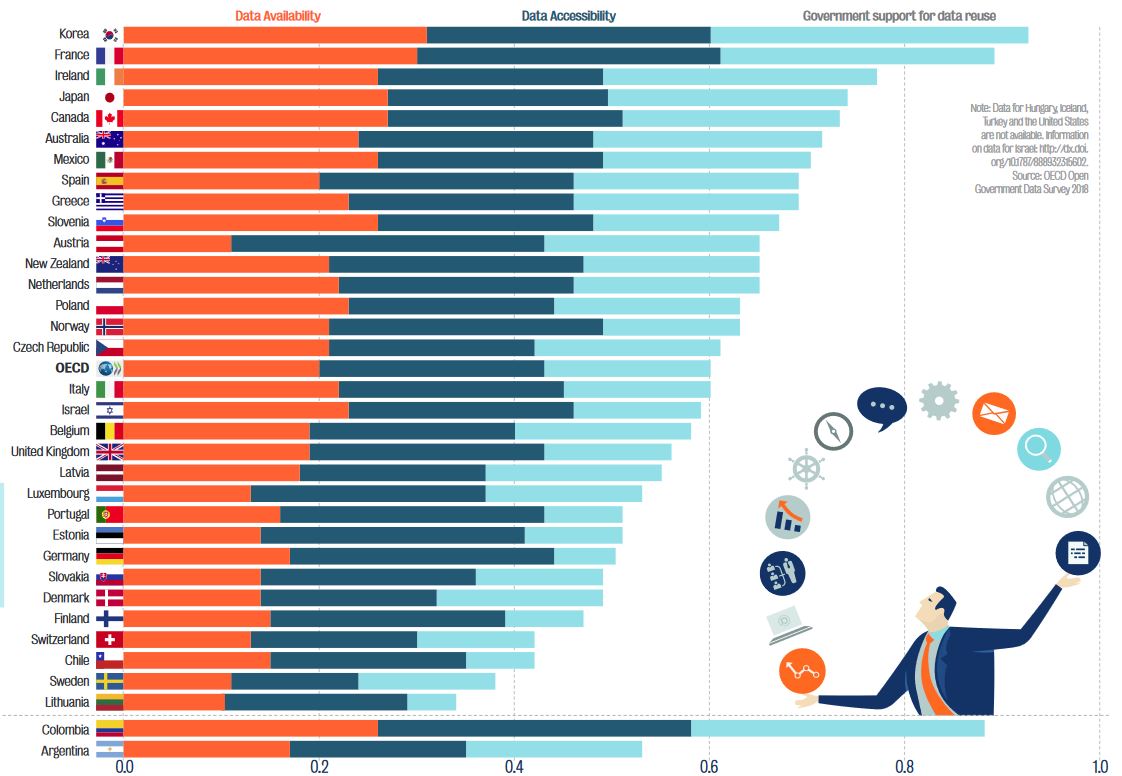
The OECD is already working on the next edition of the index, which is expected to be released in 2021. We will then be able to analyze whether countries have followed the recommendations of this body and have promoted improvements in their open data policies.
Noticia
The Organization for Economic Co-operation and Development (OECD) has published the results of the second edition of the Open-Useful-Reusable Data Index ( OURData Index), developed to support member countries of this organization in promoting Open data policies.
Spain continues to lead in the development of open data policies, thanks to the work that has been done in the promotion of open data from the public sector and in the strategy focused on open and transparent government. The 2017 OECD index puts Spain in 6th position, behind Korea, France, Japan, Britain and Mexico and ahead of the United States, Canada, Germany and Norway. Specifically, this Open Data OURdata 2017 index (Open Useful Reusable Government Data Index) analyses and measures 140 indicators concerning three fundamental pillars: data availability, accessibility thereof and government support for reuse.
This second edition of the OURData Index has been reinforced by incorporating the principles of the International Open Data Charter, as detailed in the section that describes the methodology . This index is part of the Government at a Glance 2017 report which provides the latest data available on public administrations in the 35 OECD countries and also includes data on Brazil, China, Colombia, Costa Rica, India, Indonesia, Lithuania, Russia and South Africa. In the Open Government chapter, the OECD addresses strategies and objectives in open government, human resource coordination and management, monitoring and evaluation of open government strategies, citizen participation in policymaking, and open government data.
Among other conclusions, it highlights the fact that in 2017 about 50% of the OECD countries (17 of 35 countries) have adopted a national policy of open government. The new OURData Index "shows that countries have made great strides in opening government data using open reusable formats but can do more to encourage reuse among citizens and businesses". In that sense, it points out that the use of new technologies and new approaches, such as those based on behavioural sciences, can help to codify and co-produce services with citizens and improve the effectiveness of public policies.
While recognizing that open public policies are gaining momentum - examples include Hackathons to promote data reuse and training and briefings - this index advocates further evaluation. "Few countries evaluate - it states - whether open government initiatives achieve the desired economic, social, public sector productivity or accountability."
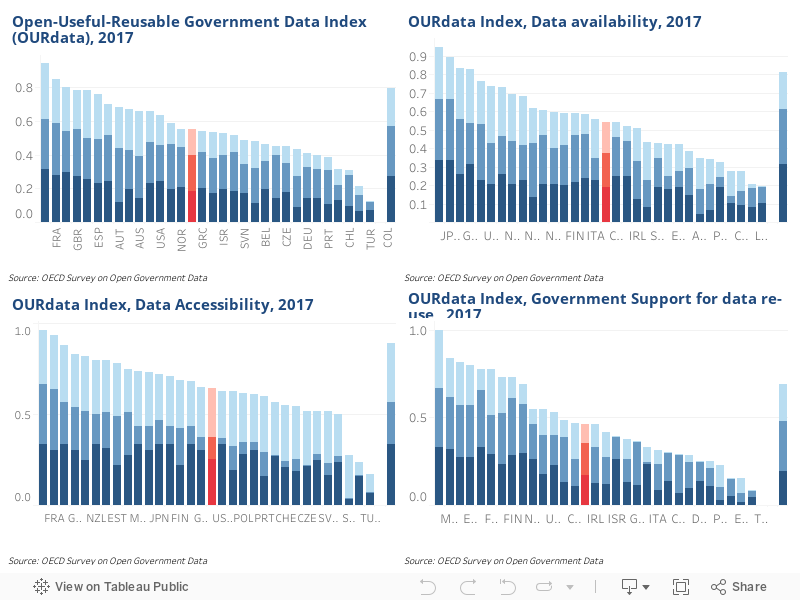
This edition includes new indicators and additional data sources, which allows a wider view of data of public administrations in OECD countries.
The main findings in the OUR Data Index according to the OECD itself are as follows:
- The reuse of Open Government Data (OGD) should be strengthened. Governments have made great efforts to create the formal requirements for dissemination of a large number of data sets in open, non-restrictive and reusable formats. However, few governments have taken an active approach to encourage reuse of data both inside and outside the public sector.
- Delayed implementation of open data policies and practices. Countries such as Czech Republic, Latvia, the Slovak Republic and Slovenia are lagging behind while Canada, France, Korea, the United Kingdom and the United States are pioneers, especially in data availability and accessibility of central data portals.
- Most countries have created public platforms where users can play important role in completing the available data and improving its quality.
- Few countries closely follow the economic and social impact of open data, as well as the impact on productivity and efficiency of the public sector.
The OECD is examining how countries can promote productivity and effectiveness of data reuse policies. With more than 200 indicators in its report, the Organization for Economic Co-operation and Development offers data and ideas with which to understand and compare the policies of each country. Politicians, journalists, academics and the general public can analyse comparative tables by countries in detail and access a clear presentation of the data used to obtain a global overview. More information.
The conclusions of this new edition of the index, regarding the degree of implementation of open data policies in terms of reuse and impact, accessibility and availability, can contribute to the readjustment of public policies in those participating countries. Thus, in the case of Spain, particular emphasis should be placed on aspects related to the availability and accessibility of data, putting the focus on ensuring quality and prioritizing the provision of the data most in demand.
Finally it should be noted how politicians, journalists, academics and the general public can analyse raw data and comparative tables by country in detail, and perform analysis tailored to their needs. More information .
Noticia
Open data indexes and Barometers are intended to reflect the international ranking of countries in their implementation of open data policies. Although it is practically impossible to measure exactly the level of openness, there are certain initiatives that give an overview of the interest in open data in the different countries of the world. In recent months, some of these indexes have been published, which, although they value different aspects related to open data, have the same purpose. How many global indexes are currently being produced in the world on open data? Do they reflect different realities? What methodology do they employ? What countries are analyzed? In this article we provide a description of the four most important indexes and some of their peculiarities.
Open Data Barometer (ODB) – World Wide Web Foundation
On June 1 the latest Open Data Barometer, prepared annually by the World Wide Web Foundation since 2013, was published. The Open Data Barometer assesses the policies and practices of open data that are being developed by 115 countries worldwide. Specifically, the Web Foundation measures how Governments make their data available to their citizens based on three main sources of information: evaluation questionnaires completed by experts, government self-assessments and other data from international databases.
The ODB analyzes three blocks of indicators aimed at measuring the progress of open data initiatives, implementation of open data programs and impact of open data in business, politics and civil society. It also analyzes the existence and quality of 15 sets of key data at national level (from government budgets, the census, public spending and public transport timetables, to crime statistics, environment or public contracts ...), the data refresh rate, accessibility, possibility of reuse, whether free of charge, type of license, interoperability, and so on. In short, more than 150 researchers and government representatives who make possible the production of a report which includes a set of conclusions on the general state of the open data sector in the world.
Informe anual European Data Portal
On March 4 - World Open Data Day - the European Public Data Portal released its annual report in which it analyzes the level of maturity of the open data ecosystem in Europe. In the second edition of the report, the portal evaluates 31 countries (the 28 members of the European Union plus Norway, Switzerland and Liechtenstein). According to this report, the state of open data across Europe has improved overall but it also highlights significant discrepancies between countries, as well as political, legal and technical barriers.
In order to identify the level of a country's maturity two blocks of indicators are set, aimed at measuring the maturity of open data throughout Europe: the availability of open data and the maturity of data portals. The first assesses a variety of aspects of open data policies in each state and to what extent each country carries out actions to measure the social and economic impact of data reuse. The second analyzes the level of maturity of the open data portals, measures the usability of the platforms, as well as the ease of data reuse and data access.
Global Open Data Index (GODI) – Open Knowledge Foundation
The Global Open Data Index, better known as GODI, is produced by the Open Knowledge Foundation. On 15 June, OKF published its global index of open data for 2017 which analyzes 94 countries and territories in the world. Through this index ten categories of data are analyzed. To measure the openness of these ten data types, Open Data Index bases its rating on responses to a questionnaire that includes questions about the format, openness, update rate or periodicity of publication of the data. The scores for each of these are added to create a final ranking where the level of openness of each national dataset is also displayed. This collaborative initiative is open to any citizen who wants to become a country analyst.
Índice OURData Index – OCDE
The OURData Index (Open, Useful, Government Re-usable Data) analyzes the situation of open data in 28 countries belonging to the OECD (Organization for Economic Co-operation and Development). The OECD OURData Index evaluates the efforts made by governments to implement open data in three critical areas: openness, usability and reuse of government data. The index data comes from member countries and focuses on government efforts to ensure the availability and accessibility of public sector data and to encourage greater reuse. The index is based on OECD methodology and the guidelines of the G8 OGD (Open Goverment Data) Charter. The OECD OGD analysis includes: business information, records, patent and trademark information, public bidding databases, geographic information, legal information, weather information, social data and transport information.
Experts point out that such studies should not be considered an accurate reflection of the real situation, because they are partial analyses selecting specific criteria and metrics, providing an incomplete picture of the open data ecosystem. Nonetheless, such indexes or rankings are useful for interested citizens, civil organizations and groups, and for politicians and data publishers. These rankings are especially helpful for those fields where open data is still an incipient subject.
Noticia
Free and open access to data through the Web provides us the transformative potential to enable citizens to be fully involved in the democratic process, making governments and other development agents more efficient and foster the creation of new services that improve our lives. However, in order to make these potential benefits become a reality, first we should be able to implement an effective open data model.
It is on this point where it is essential to measure the different open data models and their progress, in order to understand which ones work best in different contexts. Our aim is not only to be able to measure the performance of the different initiatives, but improve our understanding of the theory and practice in open data, and its value chain.
Nevertheless, measuring the openness of data is not always an easy task. The evaluation of open data initiatives has been identified as one of the main challenges on the global agenda of open data. There are many ways to measure open data models from rankings to use cases through quantitative or qualitative metrics of the impact or performance of a given initiative. But the first question that arises is: what do we exactly want or have to measure?
Fortunately, the common framework for assessing open data, led by the international organization World Wide Web Foundation and the American institution The GovLab, defines a number of dimensions and components that should be present in such assessment, including:
- Context: including all the circumstances of the environment in which the data is published, including legal, organizational, political, technical, social and economic aspects.
- Data: analyzing the variety, quantity and quality of available data, including all general principles of open data, such as availability, update, usability, licensing, etc.
- Use: deepening on aspects such as who is using the data today? Why are they being used? Who may be being excluded? What goals have we set? What sectors are still the most successful?
- Impact: trying to measure the profit obtained by opening up data, including social, political or economic benefits in general or other more specific impacts in areas such as environment, innovation and inclusion.
On the basis of this framework multiple studies and analyzes have been built over time to assess the different dimensions of open data initiatives existing nowadays, so it will not be difficult to find one that fits our interests or needs.
Some of these studies, such as the Open Data Barometer conducted by the Web Foundation, cover with their analysis all dimensions indicated in the reference framework. Others focus on a specific subset, such as the OURdata Index of the OECD which only analyzes the data context and availability. In other cases, the analysis focuses on a specific dimension, such as the availability of data in the Open Data Index, the use of data in the Open Data Impact Map, or the impact of these initiatives in the Open Data's Impact. There are also more specialized studies in specific sectors, such as the Open Data Inventory which focuses on statistical data, or those within a single component that focus on certain aspects of the analysis, such as the Open Data Usability Index or the Open Data Accessibility Framework.
Finally there are also more comprehensive studies, especially in the field of Open Government, which also include in one way or another some aspects of open data in their analysis. Such is the case for example of the Open Government Index or the popular eGovernment survey of the United Nations.
The working group on measurement of open data initiatives of the International Open Data Charter continues to work on the definition of new methods to assess the implementation of its principles among countries adhered to the Charter. The mid-term aim will be to update the common framework for assessment of open data, resulting in a new, more complete version and fully aligned with these principles. This new framework will serve as reference for the assessment of all open data initiatives which uses the principles of the Charter in implementing their policies.