


Noticia
Training is one of the pillars that support the open data ecosystem in Europe. Publishing data is essential, but just as important is that there are capabilities to understand, reuse and manage it properly. In this context, the European Open Data Portal (data.europa.eu) offers an online training programme that allows you to become familiar with the open data ecosystem from different angles: basic concepts, legal frameworks, emerging trends, success stories or good practices of publication and reuse.
This program has incorporated a relevant novelty in 2026: learning paths or structured learning itineraries, which allow you to advance step by step in the domain of open data.
From datos.gob.es we want to publicize this update, which reinforces the European training offer and complements already consolidated initiatives. We tell you about it in this post.
What changes in 2026? Step-by-step itineraries
The main novelty is the incorporation of learning paths, conceived as structured training paths that group content (readings, videos and quizzes) in a logical and progressive order.
Until now, the academy allowed free access to courses organized by subject (Policy, Legal, Quality, Business, Impact, Communication and Portal) and level (beginner, intermediate or advanced). With the new itineraries, learning becomes a more guided experience:
- An itinerary is chosen according to the level of experience.
- Progress is made sequentially.
- Activities and questionnaires are carried out.
- A certification is obtained at the end.
This structure makes learning particularly easy for those who are looking for an orderly training, with clear objectives and a defined progression.
The new itineraries are especially aimed at the public sector, although anyone interested can take them. They are organized into three levels.
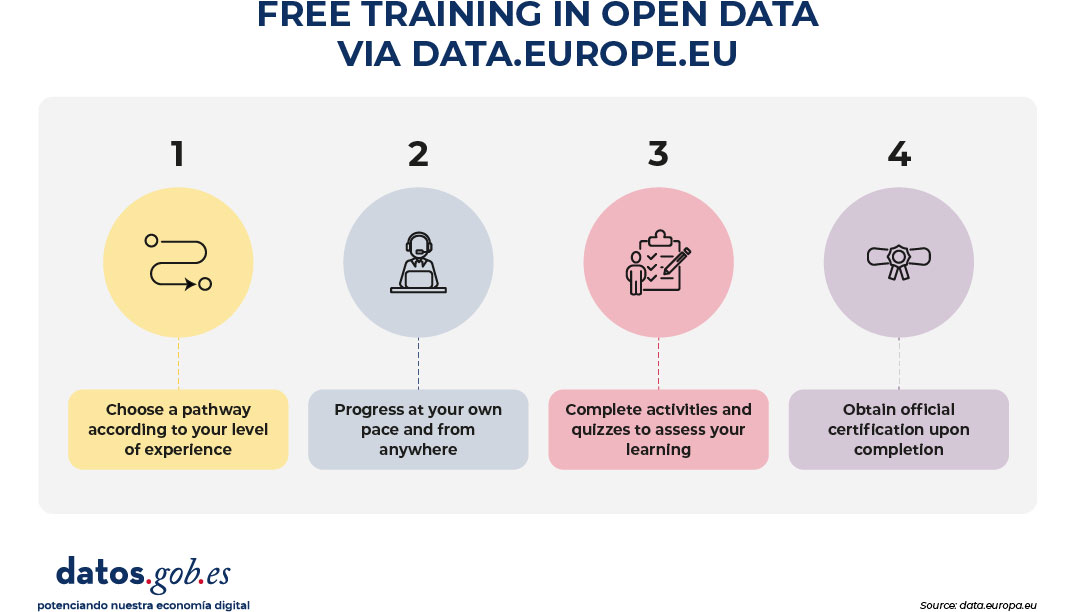
Figure 1. Free training process in open data via data.europe.eu
1. Beginner Level: The Basics of Open Data
Approximate duration: 4 hours and 23 minutes.
This itinerary provides a solid foundation for understanding:
- What is open data?
- What are its fundamental principles?
- How they are published.
- What benefits they generate for innovation, transparency and reuse.
It is intended for people who are new to working with data or want to understand the general framework of open data. It is also useful for non-technical profiles that need a strategic vision. The goal is to build a robust conceptual foundation before addressing more complex aspects.
2. Intermediate level: the legal and strategic framework
Approximate duration: 7 hours and 3 minutes.
The second itinerary delves into the legal and public policy aspects that underpin the European data strategy. Among the topics covered are:
- The European regulatory framework on data.
- The legal implications of information sharing.
- Reuse licenses.
- Regulatory compliance.
This level is especially relevant for transparency managers, legal advisors, portal managers and profiles involved in data governance.
Understanding the legal framework is a requirement to publish data with guarantees and encourage its reuse in a secure way and in accordance with European regulations.
3. Advanced level: quality and interoperability
Approximate duration: 4 hours and 39 minutes.
The third itinerary addresses two critical issues for the success of open data: quality and interoperability.
Content includes:
- Data quality principles and metrics.
- Interoperability methodologies.
- Standardization guidelines.
- Advanced metadata management.
- Application of European standards such as DCAT-AP.
This level is aimed at technical or strategic profiles that want to improve the coherence, accessibility and reuse of published data.
In a European context where cross-border interoperability is essential, adopting common standards is a condition for generating real impact.
Digital Certificates & Badges
One of the most attractive elements of the update is the possibility of obtaining official certificates upon completion of each training itinerary.
To get them, the process is simple:
- Complete all the modules of the itinerary.
- Pass the final quiz.
- Download the corresponding certificate.
In addition, the academy allows you to earn digital badges as you progress through the content. These credentials can be shared in professional profiles and are a tangible way to accredit open data competencies.
In a work environment where data literacy is increasingly in demand, having European certificates reinforces the professional profile and demonstrates commitment to continuous training.
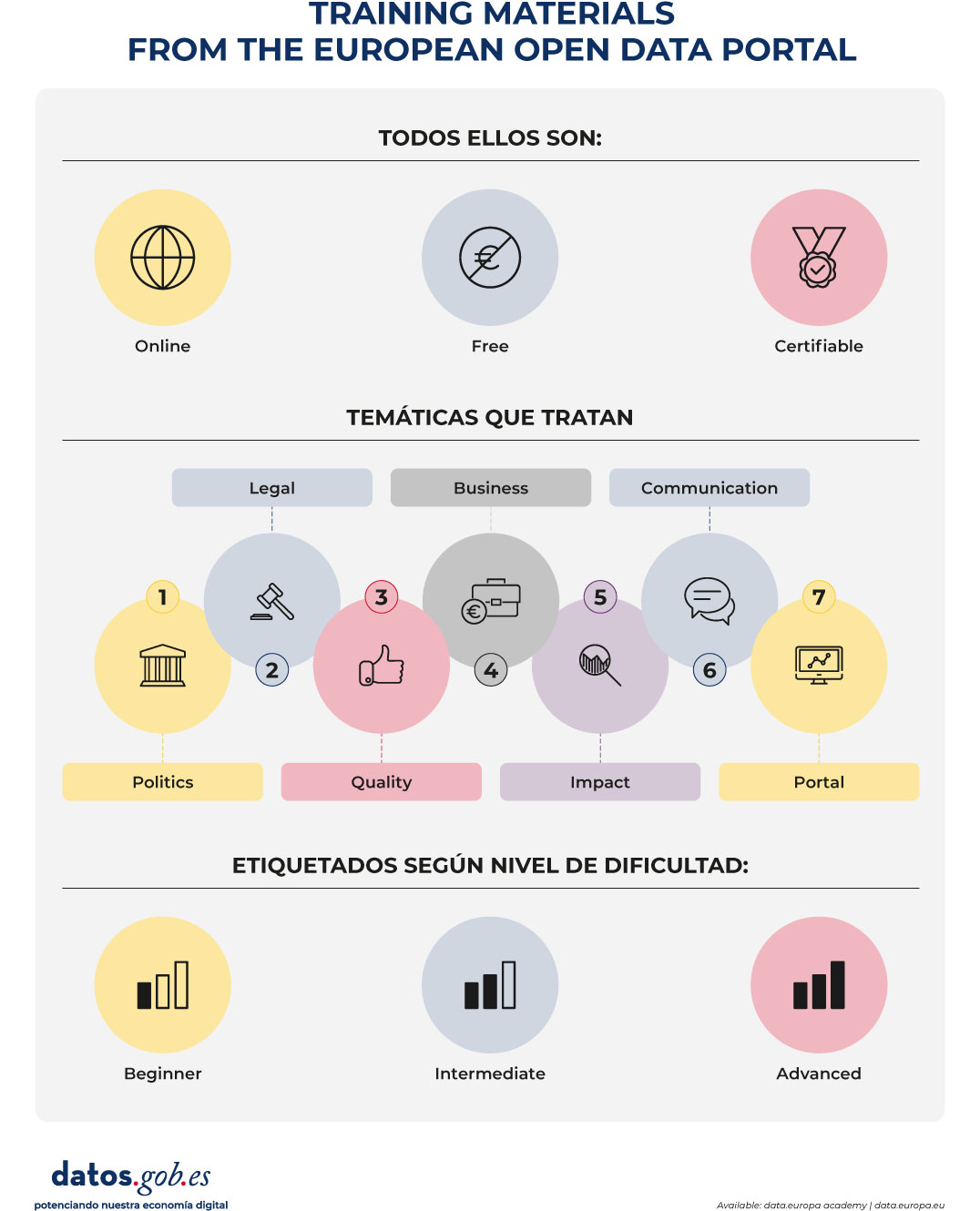
Figure 2. Training materials from the European open data portal. Source: own elaboration
Continuous training as a strategic element
One of the strengths of the academy is its applied approach. The contents show how open data is connected to specific challenges such as improving public services, promoting innovation and economic development or transparency and the evaluation of public policies.
In addition, as it is a free and accessible online platform, it eliminates economic barriers and facilitates participation from any territory.
In this sense, learning paths represent a step forward towards a more structured, coherent and recognizable training. Because, by integrating content, evaluation and certification in a single journey, the academy reinforces the value of learning and makes it easier for each person to advance at their own pace.
The European data ecosystem is evolving rapidly. The European data strategy, sectoral data spaces and common interoperability standards require trained professionals aligned with a shared vision.
The incorporation of structured itineraries in the data.europa.eu academy is a commitment to strengthen the skills necessary for open data to generate public value. Because these new training itineraries define a clearer, more progressive and accessible learning path for the entire community. The academy update will roll out throughout 2026. From datos.gob.es we will continue to share relevant information for the Spanish open data community.

Noticia
On September 14th, the II National Open Data Meeting took place under the theme "Urgent Call to Action for the Environment" at the Pignatelli building, the headquarters of the Government of Zaragoza. The event, held in person in the Crown Room, allowed attendees to participate and exchange ideas in real-time.
The event continued the tradition started in 2022 in Barcelona, establishing itself as one of the main gatherings in Spain in the field of public sector data reuse. María Ángeles Rincón, Director-General of Electronic Administration and Corporate Applications of the Government of Aragon, inaugurated the event, emphasizing the importance of open data in terms of transparency, reuse, economic development, and social development. She highlighted that high-quality and neutral data available on open data portals are crucial for driving artificial intelligence and understanding our environmental surroundings.
The day continued with a presentation by María Jesús Fernández Ruiz, Head of the Technical Office of Open Government of the City of Zaragoza, titled "Why Implement Data Governance in Our Institutions?" In her presentation, she stressed the need to manage data as a strategic asset and a public good, integrating them into governance and management policies. She also emphasized the importance of interoperability and the reuse of large volumes of data to turn them into knowledge, as well as the formation of interdisciplinary teams for data management and analysis.
The event included three panel discussions with the participation of professionals, experts, and scientists related to the management, publication, and use of open data, focusing on environmental data.
The first panel discussion highlighted the value of open data for understanding the environment we live in. In this video, you can revisit the panel discussion moderated by Borja Carvajal of the Diputación de Castellón: II National Open Data Meeting, Zaragoza, September 14, 2023 (morning session).
Secondly, Magda Lorente from the Diputación de Barcelona moderated the discussion "Open Data, Algorithms, and Artificial Intelligence: How to Combat Environmental Disinformation?" This second panel featured professionals from data journalism, science, and the public sector who discussed the opportunities and challenges of disseminating environmental information through open data.

Conclusions from Challenges 1 and 2 on Open Data: Interadministrative Collaboration and Professional Competencies
After the second panel discussion, the conclusions of Challenges 1 and 2 on open data were presented, two lines of work defined at the I National Open Data Meeting held in 2022.
In last year's conference, several challenges were identified in the field of open data. The first of them (Challenge 1) involved promoting collaboration between administrations to facilitate the opening of data sets and generate valuable exchanges for both parties. To address this challenge, annual work was carried out to establish the appropriate lines of action.
You can download the document summarizing the conclusions of Challenge 1 here: https://opendata.aragon.es/documents/90029301/115623550/Reto_1_encuentro_datos_Reto_1.pptx
On the other hand, Challenge 2 aimed to identify the need to define professional roles, as well as essential knowledge and competencies that public employees who take on tasks related to data opening should have.
To address this second challenge, a working group of professionals with expertise in the sector was also established, all pursuing the same goal: to promote the dissemination of open data and thus improve public policies by involving citizens and businesses throughout the opening process.
To resolve the key issues raised, the group addressed two related lines of work:
- Defining competencies and basic knowledge in the field of open data for different public professional profiles involved in data opening and use.
- Identifying and compiling existing training materials and pathways to provide workers with a starting point.
Key Professional Competencies for Data Opening
To specify the set of actions and attitudes that a worker should have to complete their work with open data, it was considered necessary to identify the main profiles in the administration needed, as well as the specific needs of each position. In this regard, the working group has based its analysis on the following roles:
- Open Data Manager role: responsible for technical leadership in promoting open data policies, data policy definition, and data model activities.
- Technical role in data opening (IT profile): encourages execution activities more related to system management, data extraction processes, data cleaning, etc., among others.
- Functional role in data opening (service technician): carries out execution activities more related to selecting data to be published, quality, promotion of open data, visualization, data analytics, for example.
- Use of data by public workers: performs activities involving data use for decision-making, basic data analytics, among others. Analyzing the functions of each of these roles, the team has established the necessary competencies and knowledge for performing the functions defined in each of these roles.
You can download the document with conclusions about professional capabilities for data opening here: https://opendata.aragon.es/documents/90029301/115623550/reto+2_+trabajadores+p%C3%BAblicos+capacitados+para+el+uso+y+la+apertura+de+datos.docx
Training Materials and Pathways on Open Data
In line with the second line of work, the team of professionals has developed an inventory of online training resources in the field of open data, which can be accessed for free. This list includes courses and materials in Spanish, co-official languages, and English, covering topics such as open data, their processing, analysis, and application.
You can download the document listing training materials, the result of the work of Challenge 2's group, here: [https://opendata.aragon.es/datos/catalogo/dataset/listado-de-materiales-formativos-sobre-datos-abiertos-fruto-del-trabajo-del-grupo-del-reto-2
In conclusion, the working group considered that the progress made during this first year marks a solid start, which will serve as a basis for administrations to design training and development plans aimed at the different roles involved in data opening. This, in turn, will contribute to strengthening and improving data policies in these entities.
Furthermore, it was noted that the effort invested in these months to identify training resources will be key in facilitating the acquisition of essential knowledge by public workers. On the other hand, it has been highlighted that there is a large number of free and open training resources with a basic level of specialization. However, the need to develop more advanced materials to train the professionals that the administration needs today has been identified.
The third panel discussion, moderated by Vicente Rubio from the Diputación de Castellón, focused on public policies based on data to improve the living environment of its inhabitants.
At the end of the meeting, it was emphasized how important it is to continue working on and shaping different challenges related to the functions and services of open data portals and data opening processes. In the III National Open Data Meeting to be held next year in the Province of Castellón, progress in this area will be presented.