



Description
The Multisectoral Information Association (ASEDIE) has published the fourteenth edition of the report on the data economy in the infomediary field, consolidating a historical series that offers a broad perspective on the evolution of the sector. Analysis over the years reveals that the infomediary sector has grown by 79% since 2013, with 796 companies identified compared to the initial 444. The report was presented on 21 April in Madrid at an event highlighting the crucial role played by the infomediary sector in the Spanish economy.
Below, we collect the main keys of the report.
A turnover of 2,870 million euros and employment that grows above the national average
Since 2013, the report has been analysing the situation of the infomediary sector, made up of companies and organisations that reuse data from mostly public bodies, complementing it with private sources, to generate value-added products or services. The latest edition underlines that the sector is booming, consolidating itself as a structural component of the data ecosystem in Spain with sustained growth.
The study analyses 796 active companies as of 31 December 2024, of which 623 have financial data available. For the study, the data for the year 2024 have been taken since at the time of the report those relating to the year 2025 were not yet available. The results of the study set the following values for the main indicators of the sector:
- Aggregate turnover reached 2,870 million euros, with a growth of 5.8% year-on-year. The geographic information subsector is consolidated as the main one, exceeding 795 million euros and concentrating 28.4% of total sales. The culture subsector also stands out, doubling its turnover (+120.5%). On the other hand, directorial and market studies registered decreases of 9.8% and 3.9% respectively.
- The sector generates 26,538 jobs, with a growth of 7.6% compared to the previous year, almost five points above the national average. The average employment in the sector also increased compared to the previous period and stands at around 40 employees per company, which reaffirms its ability to generate stable jobs. The boost from the geographic information subsector generated more than 1,000 new jobs in a single year (+12.2%), now accounting for almost 40% of total employment. The average turnover per employee stood at 108,164 euros.
- The subscribed capital amounts to 252 million euros, and the aggregate net profit exceeds 158 million euros, 13 million more than the previous year. The economic and financial, geographic information and infomediation subsectors account for 80% of the profit. 75% of companies ended the year with a profit.
- 75% of the companies carry out their activity in four subsectors of the total ten: geographic information, market, economic and financial research and computer intermediation.
- The business structure of the sector is still dominated by small companies: more than half are mycropymes with less than five employees and around 70% do not reach one million euros in annual turnover. Only 3% exceed 25 million euros in revenue.
- From the point of view of geographical distribution, Madrid concentrates 38% of companies, followed by Catalonia (15%), Andalusia (11%) and the Valencian Community (8%). The sector is present in all the autonomous communities and in the Autonomous City of Melilla, which accounts for its global implementation.
- The temporary analysis shows that the volume of companies has grown by 79% since 2013. In the last decade, 249 companies have been created. In absolute terms, the autonomous communities that have registered the highest growth in companies are Madrid (111), Andalusia (66) and the Valencian Community (58). In relative terms, the ones where the number of companies has increased the most are Cantabria (600%), Murcia (350%) and Extremadura (350%).
- 2024, the last year analysed, registers a slight decrease in the average sales figure, after more than a decade of sustained growth. This adjustment does not modify the consolidation trend and is associated with a stage of greater maturity of the sector after years of sustained growth.
The following visual summarizes some of these data:
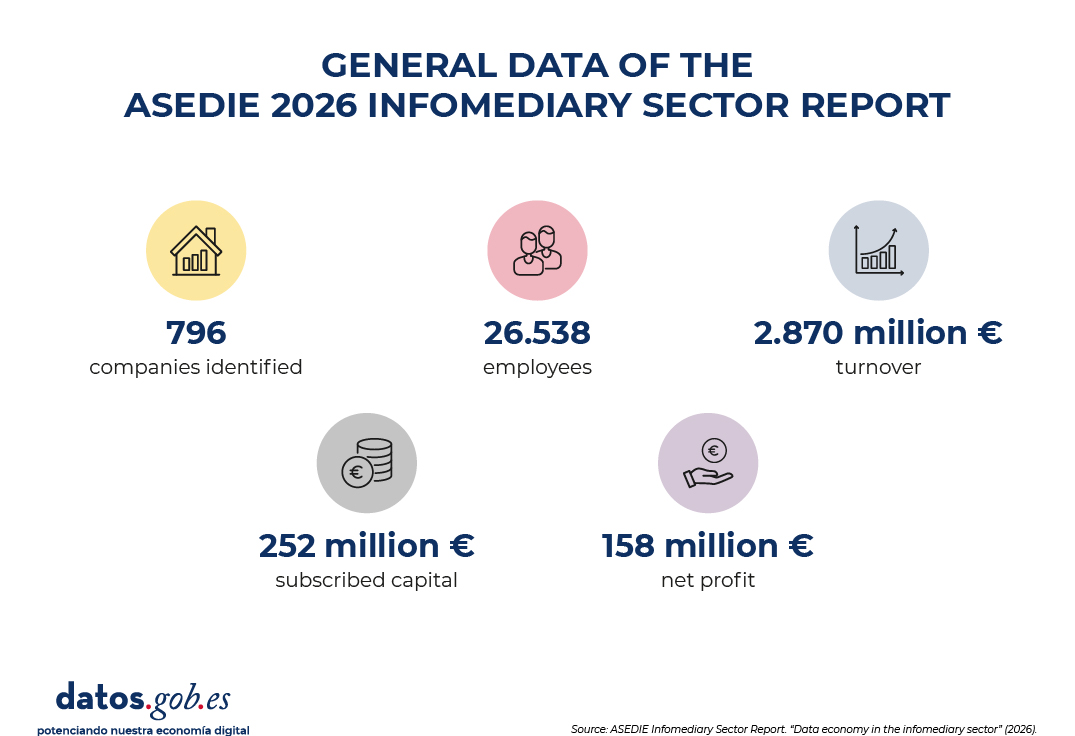
Figure 1. Source: Report of the Infomediary Sector of ASEDIE. "Data Economics in its Infomediary Field" (2026).
Significant advances in the ASEDIE Top 10
ASEDIE's Top 10, launched in 2019 with the support of the 17 autonomous communities, aims to promote public-private collaboration and focus resources on opening up high-value datasets. Seven years later, the balance is positive, as six of the ten datasets – associations, foundations, industrial estates, health centres, educational centres and energy efficiency certificates – are accessible in the 17 autonomous communities.
The most outstanding milestone of this edition is that the Balearic Islands become the first autonomous community to offer access to all ten datasets. The Community of Madrid has also published the ten, although without NIF in the bases of economic agents and ERE/ERTE, which limits the impact of their opening.
The development of the Top 10 has taken place in three phases, each focused on different datasets. The evolution is analysed in the report:
- Phase 1 (2019), where the opening of databases of associations, cooperatives and foundations was promoted. Currently, 12 autonomous communities allow access to the three databases with NIF. In the specific case of cooperatives, 15 of the 16 autonomous communities that offer this information also include the NIF, although there is still one autonomous community to publish this data.
- Phase 2 (2020), focusing on datasets on energy performance certificates, SAT ( Agricultural Transformation Societies) registers and industrial estates. There has been progress in industrial estates, which are now accessible in all communities. There are now 14 communities with the six sets of the first two phases available, leaving only La Rioja, Cantabria and Andalusia in the SAT register.
- Phase 3 (2023), focused on datasets of economic agents, educational centres, health centres and ERES-ERTES (Employment Regulation File and Temporary Employment Regulation File). It is the most incipient phase. Progress has been made, but more work is needed. So far, only three communities offer data on economic agents with NIF (Navarra, the Balearic Islands and Madrid). In the case of the ERE/ERTE, 11 although only the Balearic Islands include the NIF or company name of the company, which limits the real impact of this opening.
New success stories and good practices
The report includes a selection of products and services that illustrate how the sector transforms public data into valuable solutions:
- GeoMarketing Xpert®: Advanced analytics solution that integrates AI and machine learning models to optimize business location strategies, combining consumer, sales potential, and competition data.
- Climate risk data and energy certifications: This database centralizes and updates in real time more than 9 million real certificates, combined with climate risk data organized by temperature, wind, water and soil, differentiating between chronic and acute risks.
- GeoCRM: This CRM shows the commercial portfolio on a map, with business and financial data, allowing you to prioritise prospecting and optimise commercial routes.
- Informa IA Chat: Generates dynamic reports on the situation of a company in natural language from a business database with the possibility of extending the query to all the information available on the internet.
- Artificial Intelligence comes to Insight View: This interactive tool that incorporates artificial intelligence to answer questions and contextualize data automatically, allowing each company to be better understood, risks to be identified and decision-making to be streamlined.
- Open Data Technical Office: A solution from the Government of Catalonia that combines governance and a technological platform to publish accessible and interoperable data. The portal also functions as an internal hub for sharing between departments.
- Credit insurance claims management support platform: Solution that automates claims verification through a single repository, intelligent data extraction with AI and automated reconciliation.
The report also includes good practices from public administrations and the academic sector such as:
- AI dataset analyzer: This tool allows anyone without technical knowledge to consult datasets in natural language, eliminating format barriers, thus promoting autonomous analysis of public information.
- GeoEditPro and Emergency Registry Portal: The Association of Property Registrars has promoted these two initiatives. GeoEditPro facilitates the validation of graphic registry documentation publicly and without authentication. For its part, the Emergency Registry Portal, created after the eruption of the Cumbre Vieja volcano in 2021, allows those affected by natural disasters to request a simple note of their properties free of charge.
- Madrid City Council's open data portal: In February 2026 it launched a platform, reaching 670 datasets from 60 municipal units and more than 489,000 visits.
- Navarre Data Federator Project: Winner of the 2024 Audaz Award, it allows entities of any size to publish data in a common space in a simple and automated way. It stands out for the democratization of data and for the strategic collaborations with the IDENA geoportal, the NASTAT statistics institute, the Public University of Navarra and the Navarre Federation of Municipalities and Provinces.
- Open data portal of the University of Extremadura: Integrates more than 140 datasets with the highest level of reuse. In addition, it has developed a knowledge graph that connects information from multiple sources, allowing complex queries to be carried out and aggregated knowledge to be obtained automatically.
- UniversiDATA: Collaborative portal that brings together six Spanish public universities under a common governance and publication model, awarded by ASEDIE in 2025 in the category "Promoting the Data Economy".
In conclusion, the Spanish infomediary sector is going through a stage of consolidation marked by sustained growth and greater specialization. This year's edition confirms the good trend in the data economy, with 796 active companies, more than 26,500 jobs and a turnover of 2,870 million euros. Although there are still regulatory challenges and differences in the degree of openness between administrations, the evolution of the sector points to a more mature ecosystem with the capacity to continue generating economic activity and progress from the reuse of information.



Comments