Publication date
06/04/2026
Update date
07/04/2026


Description
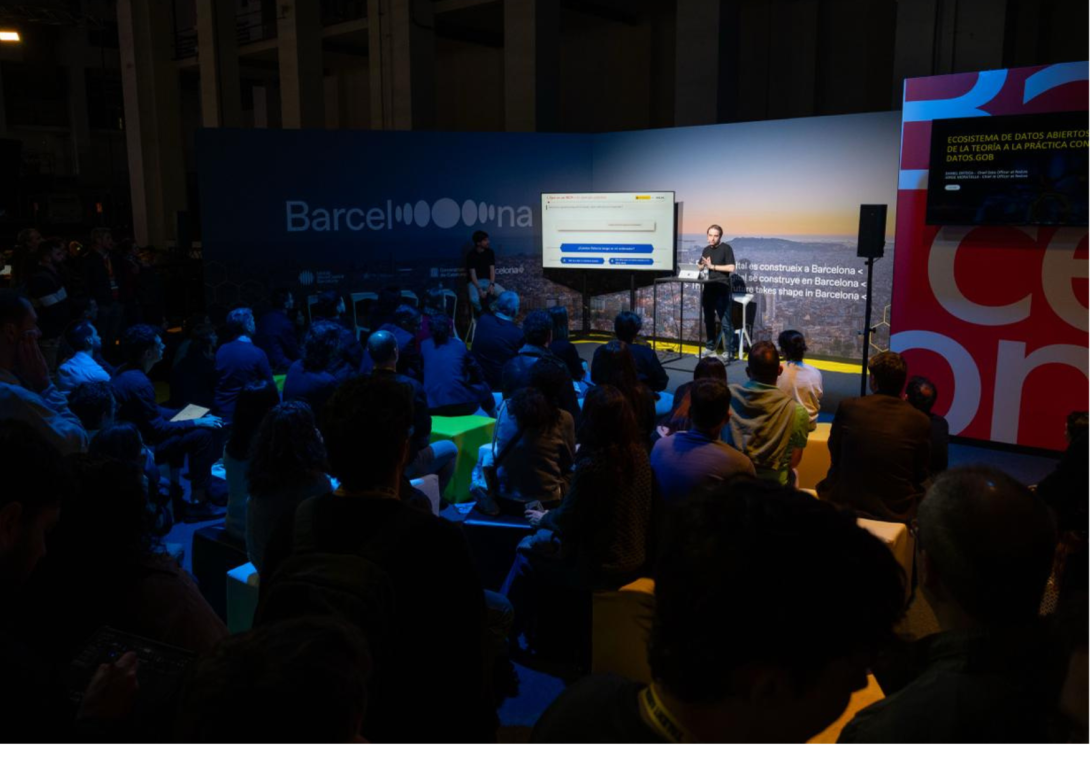
At the epicentre of global innovation that defines Mobile World Congress (MWC), a space has emerged where human talent takes centre stage: the Talent Arena.
The 2026 edition, promoted by Mobile World Capital Barcelona, brought together professionals, technology companies, training centres and emerging talent between 2 and 4 March with a common goal: to learn, connect and explore new opportunities in the digital field. At this event, Red.es actively participated with several sessions focused on one of the great current challenges: how to promote digital transformation through talent, training and innovation. Among them was the workshop "Open Data in Spain. From theory to practice with datos.gob.es", a session that focused on the strategic role of open data and its connection with emerging technologies such as artificial intelligence.
In this post we review the contents of the presentation that combined:
- A didactic look at the evolution, current state and future of open data in Spain
- A hands-on workshop on creating a conversational agent with MCP
What is open data? Evolution and milestones
The session began by establishing a fundamental pillar: the importance of open data in today's ecosystem. Beyond their technical definition – data that can be freely used, reused and shared by anyone, for any purpose – the talk underscored that their true power lies in the transformative impact they generate.
As addressed in the workshop, this data comes from multiple sources (public administrations, universities, companies and even citizens) and its openness allows:
- Promote institutional transparency, by facilitating access to public information.
- Encourage innovation, by enabling developers and businesses to create new services.
- Generate economic and social value, from the reuse of information in multiple sectors, such as health, education or the environment.
One of the key aspects of the workshop was to contextualize the historical evolution of open data. Although the first antecedents date back to the 50s and 60s, the modern concept of "open data" began to consolidate in the 90s. Subsequently, milestones such as the Memorandum on Transparency and Open Government (2007-2009) or the creation of the Open Government Partnership in 2011 marked a turning point at the international level.
In Spain, this development has been supported by a solid regulatory framework, such as Law 37/2007, which establishes key principles:
- Default opening of public data, especially high-value data.
- Creation of interoperable catalogs.
- Promotion of the reuse of information.
- Establishment of units responsible for data management.
The role of datos.gob.es: the national open data portal
At the heart of this ecosystem is datos.gob.es, the national open data portal, which acts as a unified access point to the public information available in Spain.
During the workshop, it was explained how this platform has evolved over time: from a few hundred datasets to hosting more than 100,000 today. It has also been incorporating new functionalities and adapting to international standards such as DCAT-AP and its national adaptation DCAT-AP-ES. These standards allow metadata to be structured in an interoperable way, facilitating integration between different catalogs.
Check here the Practical Guide to Implementing DCAT-AP-ES step by step
In addition, the data federation process in datos.gob.es was detailed , which ensures that data from different sources can be integrated in a consistent and accessible way.
Despite the progress, the presentation also addressed the remaining challenges:
- Data quality and updating.
- Standardization and interoperability.
- Security and access control, especially in AI-connected environments.
- Training of users, both technical and non-technical.
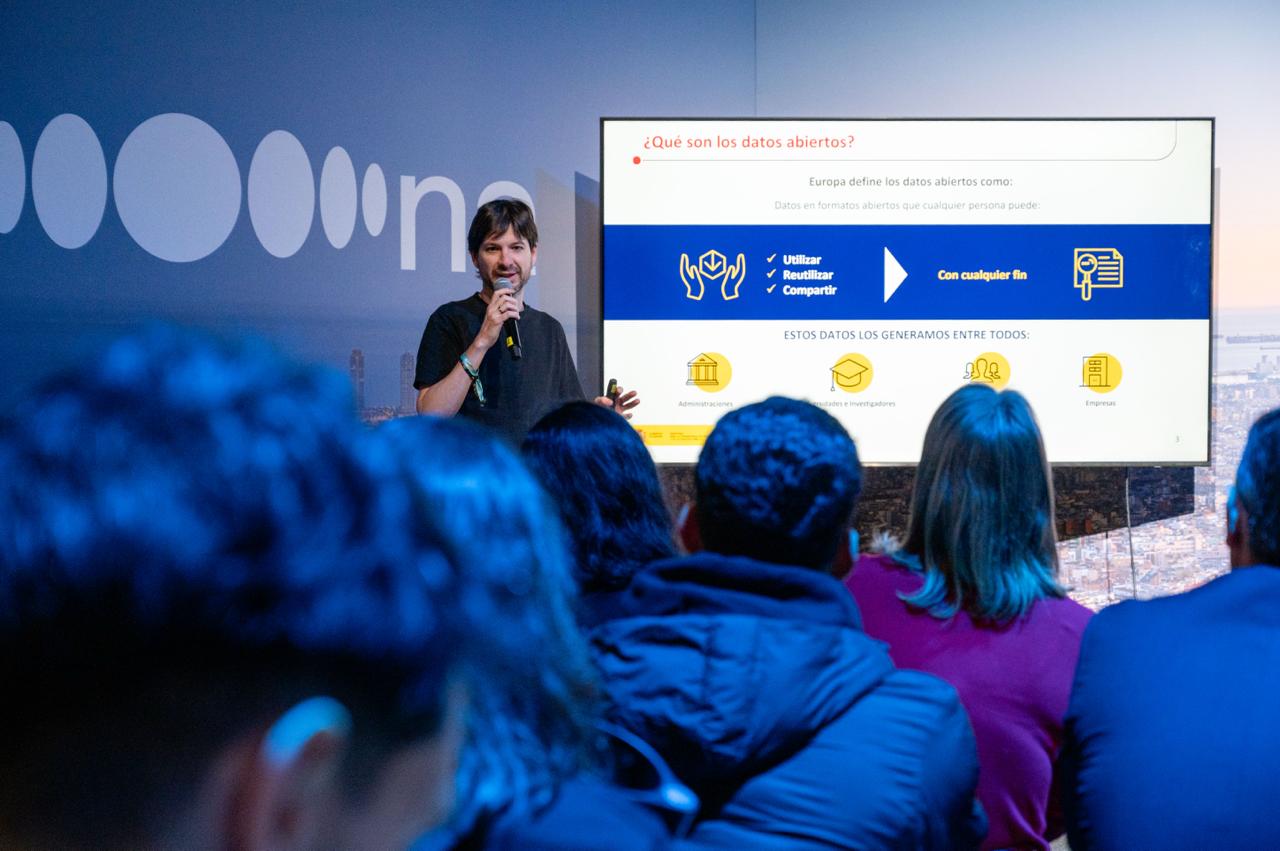
Figure 1. Photo taken during the Talent Arena presentation at the Mobile World Congress. The photo shows the slide from the presentation explaining the concept of open data. Source: own elaboration - datos.gob.es.
From data to intelligence: the leap to AI
One of the most innovative elements of the workshop was its practical approach, focused on the application of artificial intelligence to open data. This is where the Model Context Protocol (MCP) came into play, an open standard that allows you to connect language models (Large Language Model or LLM) with external data sources in real time.
The initial problem that the workshop had to answer is how AI models, on their own, do not have up-to-date access to information or external systems. This limits their usefulness in real contexts. One solution may be to develop an MCP that acts as a "bridge" between the model and data sources, enabling:
- Access up-to-date information.
- Execute actions on external systems.
- Integrate multiple data sources securely.
In simple words, it is about connecting the "brain" (the AI model) with the "tools" (databases, APIs, internal systems).
The exercise, which took place live in the Talent Arena, began with a simple example: creating a database of film preferences and developing an MCP that would allow it to be consulted using natural language.
From there, key concepts were introduced:
- Identification of the intention of the model.
- Function calling.
- Generation of natural language responses from structured data.
This approach allows us to abstract the technical complexity and bring the use of data closer to non-specialized profiles.
The next step was to apply this same approach to the datos.gob.es catalog. Through its API, it's possible. First, it allows you to search for datasets by title and filter by topic; then through the API you can obtain detailed information about a dataset and access catalog statistics.
The MCP developed in the workshop acted as an intermediary between the AI model and this API, allowing complex queries to be made using natural language.
This exercise combined a local database (SQLite) and the consumption of external data through an API, all integrated through an MCP server that allowed these functionalities to be exposed as accessible tools. The goal was to understand how to structure data, query it, and make it available to other AI systems or models in an organized way.
The full code is available as an attachment to this post in Python Notebook format.
This exercise is a sign of the enormous opportunities before us. The combination of open data and artificial intelligence can:
- Democratize access to information.
- Accelerate innovation.
- Improve decision-making in the public and private sectors.
In summary, the workshop "Open Data in Spain. From theory to practice with datos.gob.es" highlighted a fundamental idea: data, by itself, does not generate value. It is their use, interpretation and combination with other technologies that allows them to be transformed into knowledge and real solutions.
The evolution of open data in Spain shows that much progress has been made in recent years. However, the real potential is yet to be exploited, especially in its integration with technologies such as artificial intelligence. Events like Talent Arena 2026 serve precisely that: connecting ideas, sharing knowledge, and exploring new ways of doing things.