


Description
Can you imagine donating your mobility data to improve accessibility to public hospitals? Or give up your energy consumption history to help fight climate change? What a few years ago sounded like a digital utopia is today a regulated reality in the European Union.
Regulation (EU) 2022/868 on European data governance (known as the Data Governance Act or DGA) defined a series of rules with the aim of creating a fairer, safer and more transparent digital market. This regulation establishes the basis for the voluntary donation of data, both by individuals and companies, to be carried out under the control of entities that strictly respect EU principles. To articulate this situation securely, two key figures were created, which have their respective public registries: data altruism organizations and data intermediation services. Below, we explain what they consist of.
The Registry of Data Altruism Organizations: digital solidarity
The concept of data altruism refers to the voluntary and altruistic transfer of data by citizens and companies for purposes of general interest, such as medical research, the improvement of public services or the ecological transition. To prevent its fraudulent use, the European Commission has launched the EU Register of Recognised Altruistic Data Management Organisations. This record works as a seal of trust. Any entity that wants to collect data for charitable causes must meet a series of requirements:
- Non-profit: Your approach should be strictly non-profit, maintaining that status in all your activities related to data altruism. They cannot be influenced by commercial interests that may compromise the neutrality of the data processing.
- Ethical guarantees and responsible use: they must report with full transparency on objectives, activities, funding and data management. They must also ensure that data subjects give explicit, specific and revocable consent, as well as publish clear policies that define the conditions under which data can be used for purposes of general interest.
- Technical compliance: They must be subject to a strict regulatory code that defines security rules, information requirements, and interoperability standards. This technical regulation will be developed by the European Commission in direct collaboration with the sector's own organisations and other stakeholders.
The following visual summarizes these characteristics:
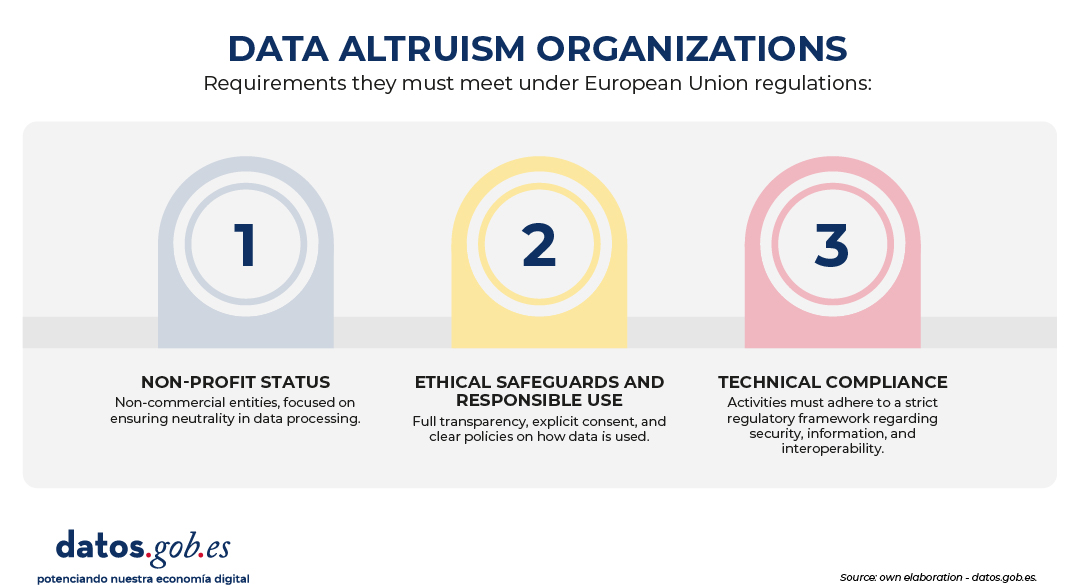
Figure 1. Data altruism organizations. Source: own elaboration – datos.gob.es.
This register is not a simple administrative procedure, but a key element in shaping Europe's digital future, as it allows the consolidation of a centralised, public and permanently updated register at EU level. Member States must communicate the companies that register to the European Commission through this form.
One of the pioneering associations to be part of this list is DATALOG, the Associació Dades pel Benestar Planetari. It is a non-profit organization born in Barcelona (initially promoted by the Universitat Pompeu Fabra, among others) whose fundamental purpose is to democratize access to urban data and intelligent systems to promote knowledge of cities. Through a vision oriented to social and environmental impact, the entity seeks to make this information accessible and traceable to facilitate scientific research and inform decision-making. In this way, its activity is aimed at combating global challenges such as climate change, energy poverty and inequality, while promoting sustainable mobility, the circular economy and the general well-being of people and the environment.
Among other issues, it offers technical-legal tools and mechanisms to facilitate the exchange of data, with a focus on information governance and consent management. Through its MiDATALOG service, citizens and entities can donate their data using its consent protocol. In addition, they work in a browser to visualize existing data in an anonymized and grouped way, as well as in two complementary ways to ensure secure access to data: sandboxes that allow experimentation with synthetic or anonymized information, and Trusted Research Environment (TRE)) that provide protected access to real data without the possibility of extracting it from the server.
The registry of data intermediation services: neutral bridges
Sharing data between different companies or industries isn't always easy or secure. That's where data brokers come in, a business model designed to act as neutral enablers between those who have the data and those who need it to innovate. Data brokering services cannot exploit data for their own purposes, but they can operate as businesses and offer commercial services. Unlike traditional data brokers, these agents are strictly regulated and must meet a series of requirements:
- Neutrality and absence of conflict of interest: they are prohibited from trading the data for their own benefit or using it for advertising profiling. Its function is to ensure a clean and safe technical exchange.
- Functional separation: they may offer specific tools and services to facilitate data sharing, such as temporary storage, organization, conversion, anonymization, and pseudonymization, but only upon express request or approval by the data subject or data subject. They must therefore separate their brokering activities from any other business activity in order to avoid undue influence.
- Full transparency: they must clearly inform about conditions of use, tariffs, access rules and responsibilities. The conditions must be equitable for all users.
- Technical and organisational security: they must guarantee secure infrastructures, access controls and mechanisms to prevent unauthorised use, as well as facilitate traceability (who accesses the data and for what purpose). In the case of personal data, they must apply strict privacy measures, including techniques such as pseudonymization or anonymization where appropriate. They should also allow for regular checks to verify compliance with the regulation and have audit and oversight mechanisms.
To give them visibility and control, the EU has launched its Register of Data Intermediation Services. This public census makes it possible to verify which platforms comply with European regulations. As in the previous case, the Member States have a form for registering these organisations.
In this case, we currently find two Spanish organizations in the registry, Beyond the Scope and Weber Economía y Salud:
- Beyond the Scope is dedicated to securely collecting and processing personal or non-personal documents and data from the platforms where they are available – such as employment, tax, identity or debt information – and validating the information so that data users, especially in the financial sector, can use it in real time.
- Weber Economy and Health, on the other hand, offers a federated and sovereign data space designed to facilitate economic, social and health analysis. The platform allows the multilateral exchange of information between holders and users through European standards such as IDS‑RAM or Gaia‑X, guaranteeing clear, auditable access and use policies aligned with European regulations. Weber acts both as an intermediary between organizations that hold data and those who want to use it, and between people who want to make their own personal or non-personal data available.
Why are these public records essential?
The publication of these records in open and institutional formats is not a simple bureaucratic procedure, it is a tool for technological dynamization:
- Stimulus for innovation: researchers, startups and public administrations can consult these lists to find out which reliable technical partners they can collaborate with to extract the maximum social value from information.
- Citizen sovereignty: it gives control back to users, who can now decide to participate in the data economy with the peace of mind that there are official bodies monitoring the process.
- Curbing fraud: as they are public and auditable records, corporations are prevented from using "altruism" for fraudulent purposes or as a public relations façade.
The future of data is collaborative
Altruism and data intermediation demonstrate that the future of technology is not only measured in economic benefits, but also in its ability to solve collective challenges in a transparent way. Thanks to the EU's common frameworks and the opening up of these registers, we are building a digital infrastructure where trust is the most valuable asset.
And you, would you be willing to donate your data for a social cause? We invite you to explore the official records of the European Commission and to closely follow how this new map of digital solidarity evolves.


Comments