



Description
In recent years, the need for the international scientific community to have agile mechanisms to share research results in order to respond to challenges such as pandemics, the climate crisis, biodiversity loss or the energy transition has become clear. In this sense, R+D tasks have become intensive in the use of both data and specialized software. A concrete example occurred during the COVID-19 pandemic, when data sharing enabled rapid sequencing of the SARS-CoV-2 genome, which was essential for the development of the COVID-19 vaccine in record time.
It is, therefore, time to promote open science. But for open science to become a reality, it is essential to avoid the fragmentation of R+D resources. Beyond scientific publications, it is necessary to connect distributed data repositories and promote software tools that are interoperable to facilitate the effective reuse of scientific datasets.
In this context, EOSC (European Open Science Cloud) was born, a European initiative that aims to connect the scientific community to make open science a reality and maximize its impact on society. EOSC offers researchers in Europe a multidisciplinary, open and trusted environment where they can publish, discover and reuse data, as well as software tools and services in the scientific field.
What is EOSC? Federated access to scientific resources
The European Open Science Cloud is the European initiative to create an open and trusted environment where the research community can publish, discover and reuse scientific data, as well as research software services. Its focus is to federate and scale scientific resources in Europe, promoting interoperability between disciplines. EOSC's ambition is to accelerate open science practices, increasing scientific productivity and strengthening the reproducibility of research in such a way as to maximise its impact on society. To this end, EOSC is conceived as a "system of systems", i.e. instead of centralizing all data and services on a single platform, EOSC interconnects existing platforms (i.e. performs a federation instead of an integration) such as data repositories, research infrastructures, or scientific software service providers.
The European Commission places EOSC as the common European space for R+D data and aligns it with the European objective of achieving a data-driven economy and society. In terms of impact, this favors the following aspects:
- Collaborative research, not only within the same scientific discipline but also between different disciplines and different territories.
- Reuse and combination of digital scientific resources (such as datasets or software services), as well as the promotion of citizen science.
- Impact on society through evidence-based policies, by improving the traceability, availability and interoperability of data that underpin public decisions.
To make EOSC a reality, a federated model is built based on nodes that act as coordinated entry points. Common policies and shared capabilities (e.g. federated authentication, catalogues and interoperability guides) are established on top of these that allow the reuse of data and services. This approach is embodied in the EOSC Federation, which connects infrastructures and communities to provide more homogeneous access to and reuse of scientific resources.
What is the EOSC Federation?
According to the EOSC Federation Handbook (a reference document describing its operational structure, legal and governance framework, and technical operation), the EOSC Federation is a distributed network of nodes. These nodes are interconnected and are able to collaborate to share and manage scientific knowledge and resources (such as datasets, software and services) across thematic and geographical communities, in compliance with FAIR principles. In other words, it is a distributed network that enables capacities to develop interoperable, secure and reliable open science at European level, across disciplines and borders.
As we have seen, the basic element of this federation are the EOSC Nodes (EOSC nodes) that function as entry points for the scientific community to the federation. These are platforms operated by organizations or consortia of territorial or thematic scope, which comprise:
- A set of capabilities essential to operating, such as authentication and access services or resource catalog.
- A set of resources, such as research data products.
A portion of those resources is selected as the Node Exchange, representing what the node shares with the federation. By aggregating the contributions of multiple nodes, they constitute the EOSC Exchange, i.e., the global supply of resources in the federation.
For all this to work, Federating Capabilities are defined as common capabilities (technical and also organizational, such as user support) that allow services to work between nodes and not as isolated silos. These capabilities are enabled by federating services operated by one or more nodes and are supported by interfaces and interoperability guides included in the EOSC Interoperability Framework. The following image graphically represents this process:
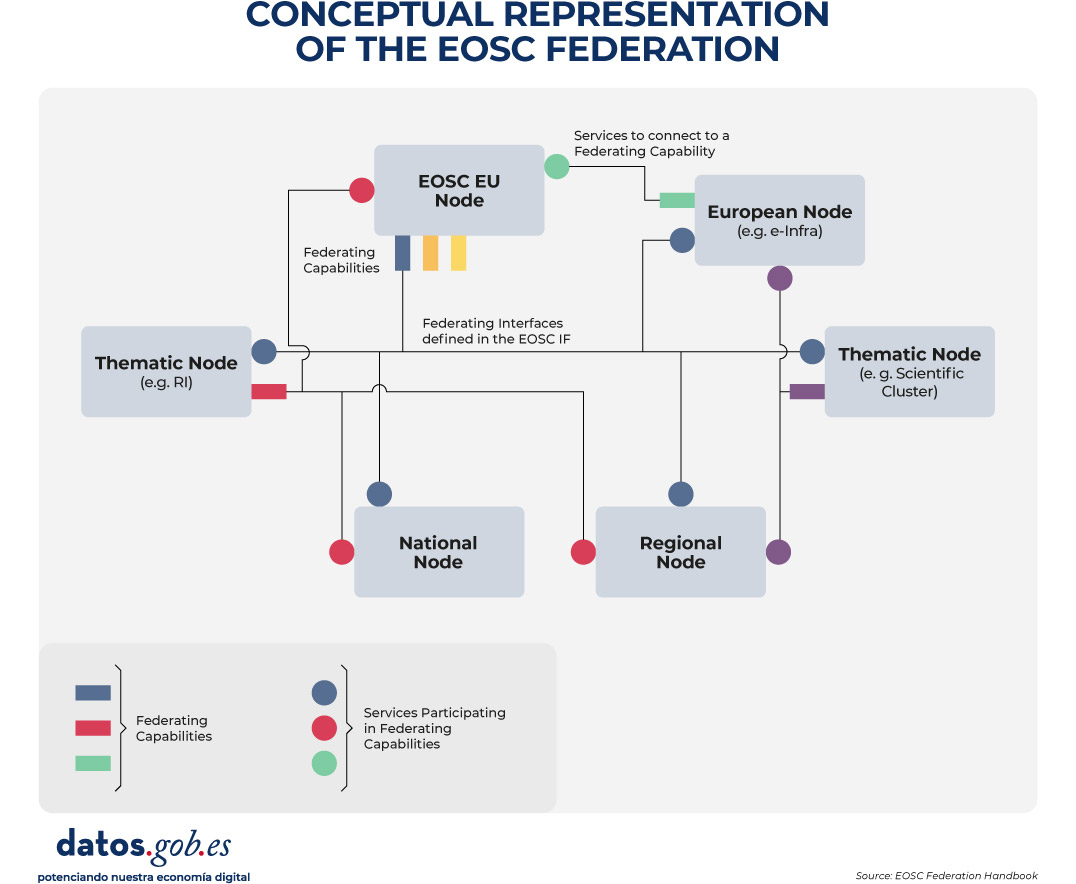
Figure 1. Conceptual representation of the EOSC Federation (source: EOSC Federation Handbook).
There are two mandatory federated capabilities: on the one hand, the authentication and authorization infrastructure (AAI) and, on the other, the resource catalogs that allow the scientific community to discover and access resources offered by the nodes, not only manually but also through computer services. These first capabilities are articulated in the EOSC EU Node.
EOSC EU Node: the first operational node
In this federated model, the EOSC EU Node (promoted by the European Commission) is especially relevant as the first node of the EOSC Federation, providing an initial set of data, tools and services, and acting as a reference node to facilitate the interconnection of other nodes.
This node allows researchers to access with institutional credentials capabilities such as virtual machines, resources such as GPUs, interactive notebooks, containerized scientific workflows, storage, data transfer, and collaborative tools, as well as connect to a catalog of resources to discover research results (scientific datasets, publications, or specialized software services) from federated infrastructures.
Conclusions
EOSC allows dispersed scientific resources to be transformed into an interoperable and reusable ecosystem that allows the scientific community to develop the objectives of open science. The EOSC Federation, through connected nodes and federated capabilities (such as AAI, catalogues or interoperability guides), facilitates access to FAIR data, services and software tools, accelerating scientific collaboration and reproducibility, as well as allowing the promotion of citizen science proposals and promoting the impact of scientific results on society. Finally, it should be noted that EOSC does not replace what already exists, but connects it, makes it interoperable and projects it on a European scale. In Spain, the definition of a national node to connect existing capacities with the EOSC Federation is advancing. Therefore, the early participation of repositories, infrastructures, research centers, universities and service providers will be key to building a representative offer, defining priorities and maximizing scientific and social impact.
Jose Norberto Mazón, Professor of Languages and Computer Systems at the University of Alicante. The contents and views expressed in this publication are the sole responsibility of the author.



Comments