


Noticia
The OECD's work on open data began in 2013, but has steadily expanded to reflect its growing importance in member and partner countries. The OECD sees open data as a key asset for economic development, digital innovation and good governance, while always paying special attention to privacy, transparency and ethics.
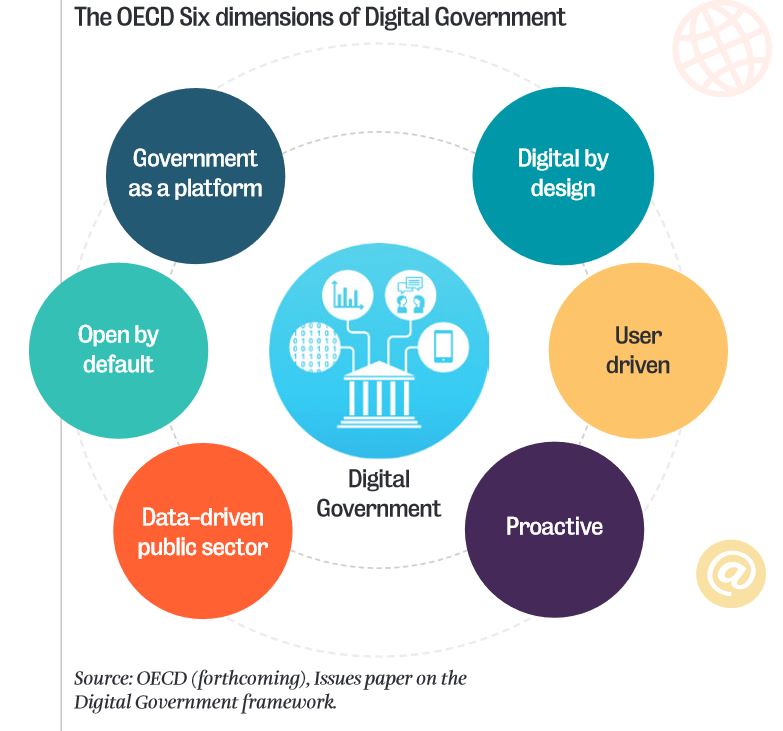
The OECD includes the need to create a culture based on data as one of the principles needed to promote the digital transformation of the public sector. In its own words "open government data is a public good, which must be delivered with a purpose, in a proactive manner and with a focus on reuse, in line with user needs and its potential contribution to the joint creation of value". In this sense, he has developed a series of indicators to evaluate the digital transformation of countries, based on 6 key dimensions:
The OURdata index: a way to measure the availability, accessibility and reuse of government data
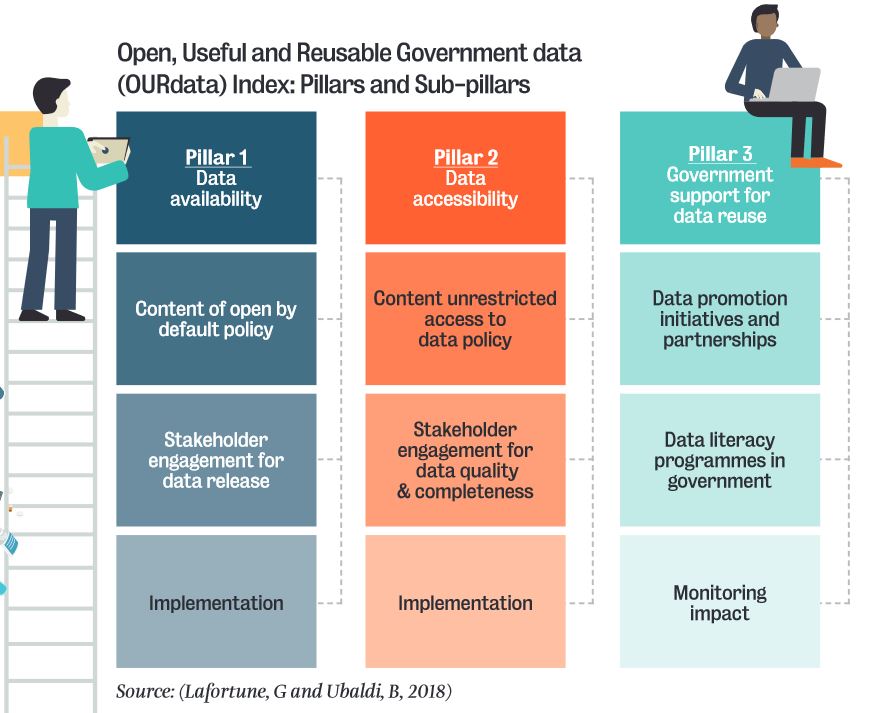
The OURdata index, which evaluates the progress and challenges of open government data policies using 3 pillars, is based on this theoretical framework:
- Data Availability: measures the degree to which governments have adopted and implemented official requirements to promote open government data at the central level.
- Data Accessibility: measures the availability of formal requirements designed to promote unrestricted access to data.
- Government support for data reuse: measures the extent to which governments are playing a proactive role in promoting the reuse of government data within and outside of government.
These pillars are summarized in the table below:
The results of the OURdata 2019 index
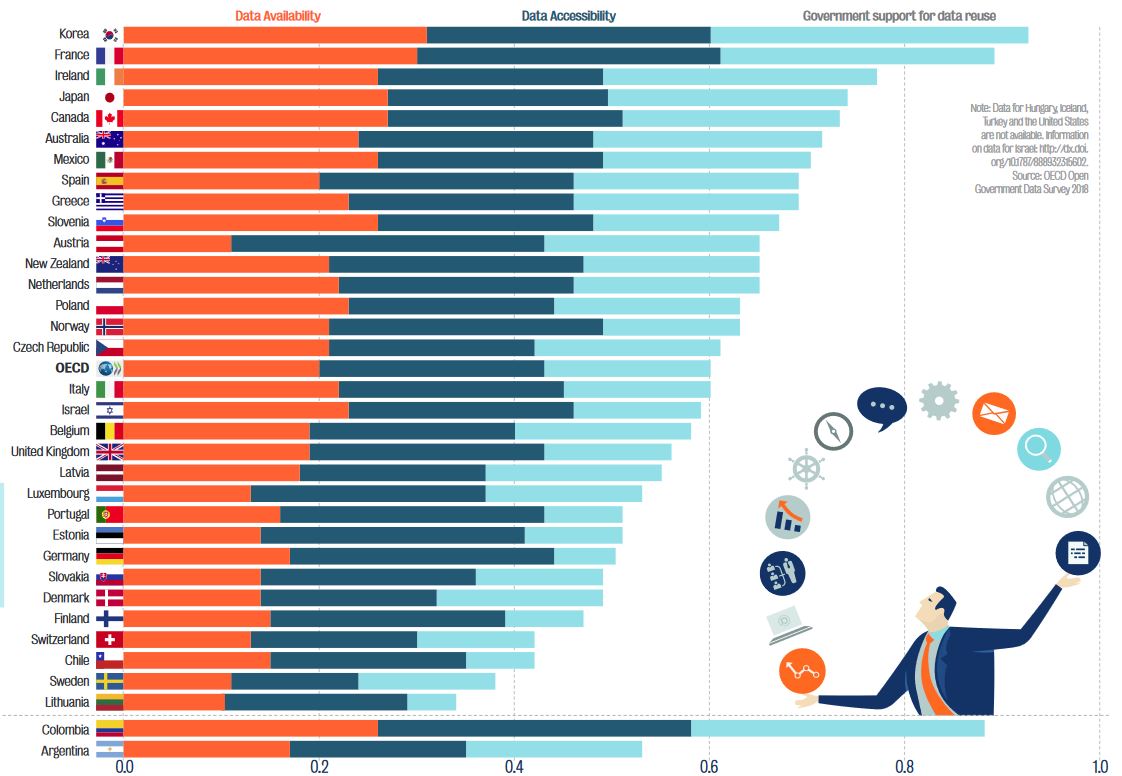
The latest edition of the OURdata index published by the OECD is 2019. This report compares the results obtained with those of 2017, with the aim of finding out the state of maturity of the countries analyzed in order to promote improvements that will increase data flows.
The 2019 results show general improvements in all countries. Most countries have adopted the "open by default" approach, including formal requirements not only in the open data strategies, but also in laws and regulations. In addition, more and more governments are enabling their open data portals as communication and feedback tools. These portals are not intended to be mere "data catalogs" but rather platforms to foster innovative, collaborative and knowledge-sharing practices.
Despite these improvements, however, there are still areas for improvement at the general level. More sustainable, long-term approaches are needed, with more defined governance frameworks. There is also a need to boost the training of public officials and encourage high-level political commitment to help recognize the value of data. It is therefore necessary to focus not only on supply, but to put in place mechanisms that stimulate demand and reuse.
In this regard, the report provides a series of recommendations to OECD governments:
- Ensure political support for open data and establish enabling environments to sustain implementation efforts over the long term.
- Build a common approach with a focus on sustainable development and gender issues, among other areas.
- Create Open Government Data portals by adopting an "Open by Default" and "Government as a Platform" approach.
- Ensure that data publication is proactive, timely, and understandable to both humans and machines (using metadata, common standards, etc.), as well as addressing quality issues and biases in data collection and generation.
- Maintain practices that ensure the publication of high-value data taxonomies and their integration across different sectors, driving greater social, government and business innovation.
- Ensure open data policies and establish governance frameworks that facilitate data monitoring and are aligned with data protection regulations In this sense, the OECD has developed a framework for public sector data governance that includes good practices to be followed based on strategic, tactical and data availability components, detailed in its report The Path to Becoming a Data-Driven Public Sector.
- Establish federated models that facilitate data discovery, while maintaining the right levels of autonomy at the local level, and ensure quality at the central level.
- Make the necessary arrangements to enable the delivery of public value through open data in order to maintain and multiply its benefits and impact.
- Maintain efforts that aim to promote the reuse of open government data outside the public sector, as well as its real-time integration into the value chain of relevant actors (e.g., through APIs).
- Increase measurement efforts focused on understanding the effects of data reuse within the public sector.
Spain's position
In the 2019 index, Spain is in eighth position, above the average of the countries analyzed, although with a slight decrease compared to 2017. The indicator where our country scores best is in data accessibility. Among other issues, the report highlights as a good practice the creation of the series of reports "Emerging Technologies and Open Data", which helps the reader to understand how different disruptive technologies work, what the role of (open) data is in them and what their impact on our society will be. Currently available are the volumes dedicated to Artificial Intelligence and Natural Language Processing.
The OECD is already working on the next edition of the index, which is expected to be released in 2021. We will then be able to analyze whether countries have followed the recommendations of this body and have promoted improvements in their open data policies.

Noticia
At the end of 2018, Renfe launched its open data portal, a space to share information and key indicators with citizens. The launch of this portal was part of its digital transformation strategy to, in its own words, "put the customer at the center of all its services".
With the continuous maintenance of this portal, the operator seeks to improve services and attention to users, as well as to promote transparency and accountability. But, as is always the case with open data, the aim is not only to make the data accessible to citizens, but also to encourage its dissemination and use. Renfe's open data federation with datos.gob.es and consequently also its federation with the European Data Portal enhance its visibility both nationally and internationally.
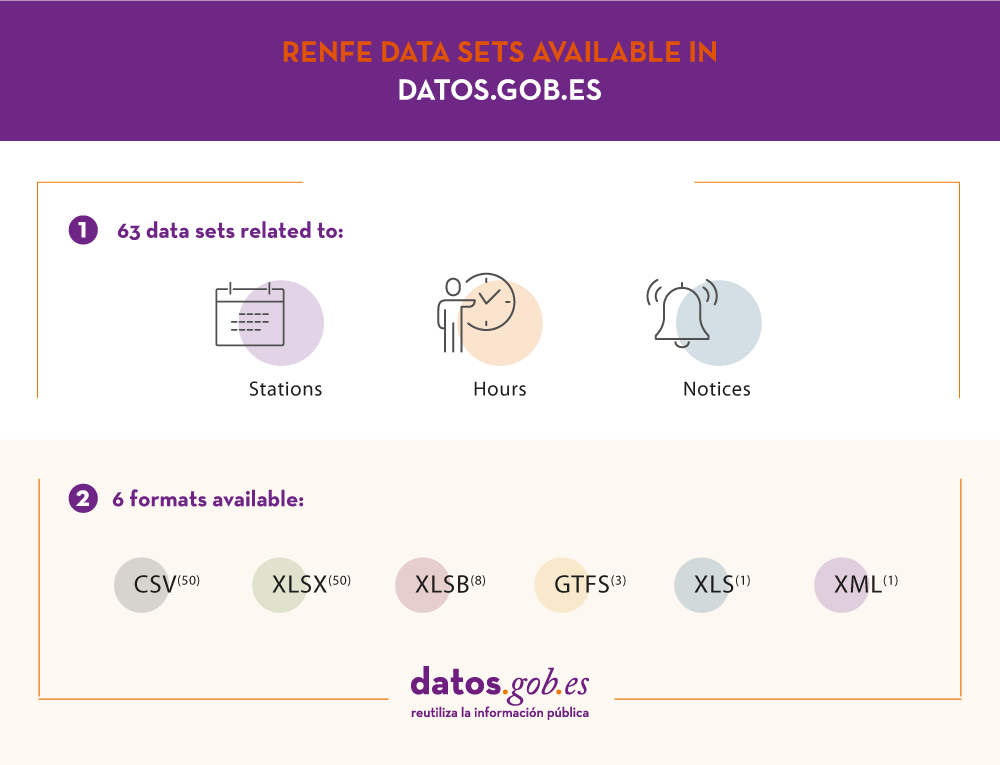
63 sets of data on rail transport
Renfe currently has 63 datasets, which provide information on stations, schedules and notices in 6 formats, as shown in the image below.
Since its inception, the portal has focused on providing operational data, such as general and suburban timetables, geolocated stations or notices of service changes. All of this, giving priority to machine-readable formats to facilitate their reuse.
Of all the datasets currently available, the most visited, according to their own control panel, are:
- High-speed, long-distance and medium-distance schedules.
- Local timetables.
- Stations. Complete list.
- Number of employees.
- List of High Speed, Long Distance and Medium Distance stations.
Renfe's idea is to continue expanding the datasets on a regular basis and taking into account the contributions of citizens. For example, on April 1 of this year they incorporated new data on Cercanías passengers by time slots, as well as train sheets.
Why are open transport data important?
Open data actions such as Renfe's help democratize information, so that it can be consumed free of charge and reused to create valuable products and services.
Transport data is one of the most reused data categories, which is why the European Commission (EC) has identified it as high-value data. In the datos.gob.es data applications section, you can find multiple examples of products and services that are based on this type of information.
The most popular applications created on the basis of this type of data are those that provide information on the arrival time and routes of the various trains or that integrate different transport methods to determine the easiest and quickest way to reach a destination, such as this example. But transport data also provide us with information to better understand our environment and make decisions. For example, we can know how the empty Spain moves, an important information for the development of policies to help us fight this problem. Or know the services of a particular metropolitan area, something fundamental when deciding where to buy a house.
These examples highlight the importance of transport data and why it is necessary to promote its openness and reuse. With the launch of its portal and its continuous updating, Renfe subscribes to its commitment to this type of data, and is aligned with the strategy set out by the European Union in its new directive, which highlights the need to open up transport data due to its great benefits for society, the environment and the economy.
Noticia
Making a city "smart" is not easy. According to the report Smart cities: understanding the challenges and opportunities, the budget constraints and the lack of infrastructure are the two main barriers for populations wanting to implement Smart cities initiatives. In this context, interoperability and collaborative platforms that allow the sharing of resources are key to success.
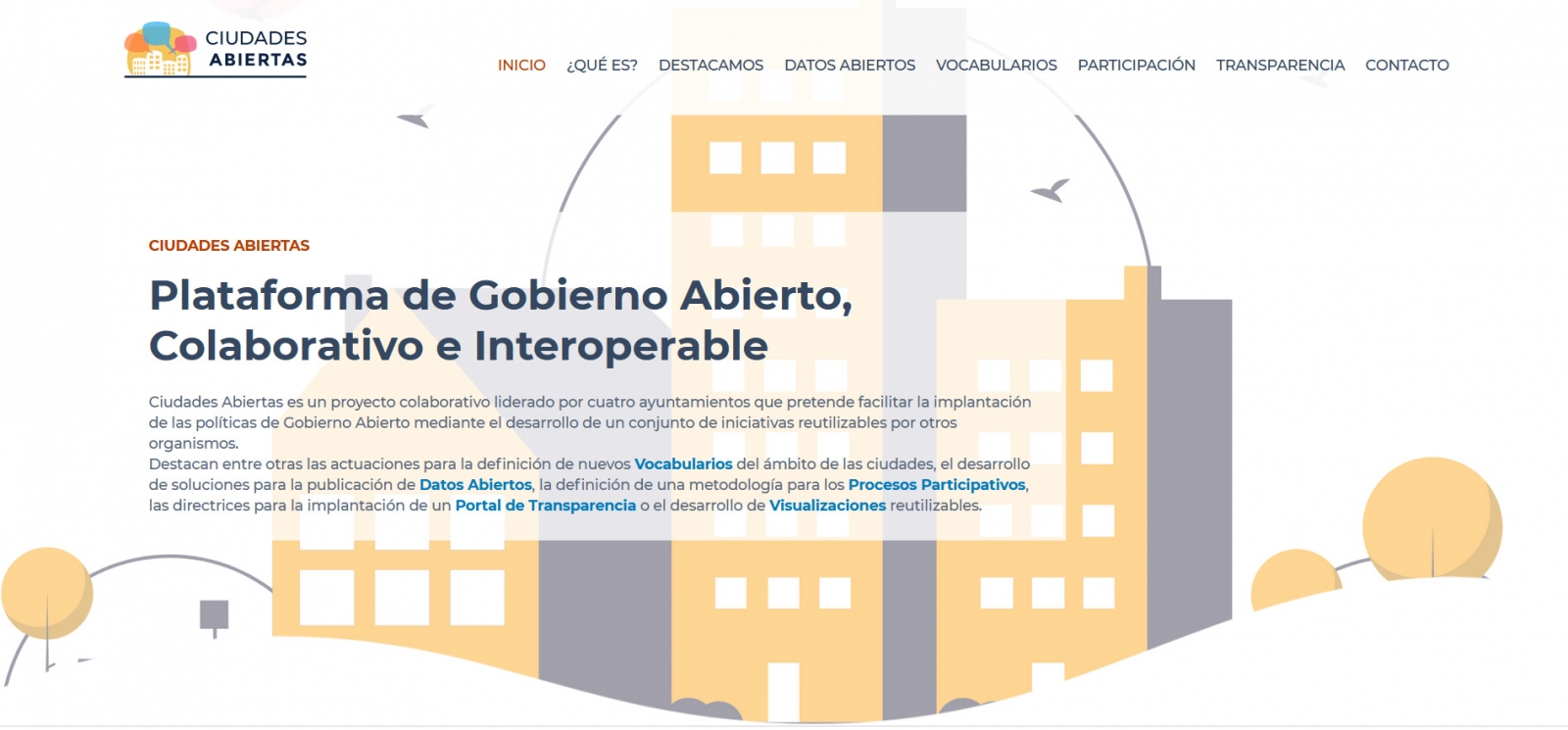
It was with this idea that the Ciudades Abiertas (Open Cities) project emerged 3 years ago, an open, collaborative and interoperable government platform, which was a beneficiary of the II Call for Smart Cities.
Collaboration between municipalities based on 4 lines of action
The Ciudades Abiertas project is led by Red.es and four city councils: A Coruña, Madrid, Santiago de Compostela and Zaragoza. Together, these city councils are developing various initiatives that can be reused by other bodies.
Recently, Ciudades Abiertas has updated its website, incorporating a new design, a highlights section with the latest news of the project and additional functionalities such as execution indicators.
The actions have been developed around 4 pillars:
- Open data: Open data is the most critical requirement of Smart Cities, as the above-mentioned study rightly pointed out. In this sense, the Open Cities project provides the technical and conceptual means necessary for the "management of unique shared data, open by default, georeferenced and semantically annotated by the city". Work is currently underway on the publication of a generic data REST API - or the development of a SPARQL access point to perform complex queries on several datasets at once, among other actions.
- Vocabulariums: The platform offers a catalogue of common and open vocabularies and data structures on Github for use by participating municipalities or any other entity. You can already access the vocabularies on the Municipal Agenda, Population Register or Public Bicycle, the last one to be incorporated in April of this year. They are currently working on other vocabularies such as Traffic or Budget and Budgetary Execution. Within this framework, a couple of videos have also been created to inform about what the vocabularies are and how they are generated and to raise awareness about the advantages of their use, in a simple and didactic way.
- Participation: The project seeks to promote citizen participation in several of the legislative, implementation and control activities carried out by the municipalities, in areas such as participatory budgets or day-to-day management. To this end, a methodology has been developed and two catalogues are provided, one of participatory processes and the other of instruments for participation. A list has also been included with specific examples of participatory processes that can be taken as a reference when setting up an initiative of this type.
- Transparency: Accountability is also a fundamental area of Smart Cities, so mechanisms are needed to ensure that all activities carried out by the council are provided with full transparency. One way to provide this information is through simple visualizations, easy to understand by citizens without technical knowledge. The project explores different ways to facilitate these visualisations. Two interesting reports have been prepared: Report with the Analysis of External Visualisation Systems and the Report with the Analysis of Visualisation Extensions for CKAN.
Next steps
The Open Cities project is still in full development. Among the activities to be developed in the coming months is the definition of new vocabularies until completing those recommended by the UNE 178301:2015 standard, or the creation of a general scorecard that allows comparisons of all the transparency indicators between cities, thanks to the homogenization of the data and its availability in reusable formats. They are also working, through collaborative workshops with citizens, on the design of visualizations that allow to offer information on transparency in an interactive way and with a simple language.
All these actions will facilitate the creation of new Smart Cities projects not only in these cities but in various territories throughout the country.
Blog
The difficulties in adequately measuring the impact of open data initiatives are widely known, as it is a global debate that has been with us practically since the beginning of the first open data initiatives, more than ten years ago. The problem is that it is relatively easy to find isolated examples of how various benefits and improvements have been achieved through open data, but in general - and unless we are talking about very specific areas such as economic impact - it is not common to find complete and structured measurements of the impact that has been achieved through open data initiatives in order to demonstrate their full value.
A review of the various initiatives and methods that exist to measure the impact of open data also shows that there is no clear consensus among researchers on how best to capture the results and impact of these initiatives.
In view of this scenario, we share here the approach to impact measurement that we have been following from the Spanish Government's open data and public information reuse initiative and that is inspired by the recommendations provided by several guides that we consider to be reference in this aspect: the UNE 178301:2015 standard, the framework of common methods for the evaluation of open data, the guide for the empirical analysis of open government data initiatives and the taxonomy of the impact of open data.
Within our personal approach to the problem we must first clarify what we understand “impact” as – “any positive effect or benefit obtained directly or indirectly for individuals, communities or society as a whole, which occurs over a certain period of time and which results from the development of different activities in a given field characterized by the use of open data as a means to an end”.
Thus, the method we use to measure such impact is based on two main components: a quantitative analysis through indicators on data publication and its characteristics, and a qualitative one through the collection of data use cases.
Quantitative analysis
The objective of quantitative analysis is to offer a series of indicators in a quick and simple way that provide us with an overview of the data publication activity. In this way, we can track its evolution over time and easily detect trends and possible areas for improvement. This will help us to distribute available efforts and resources more effectively.
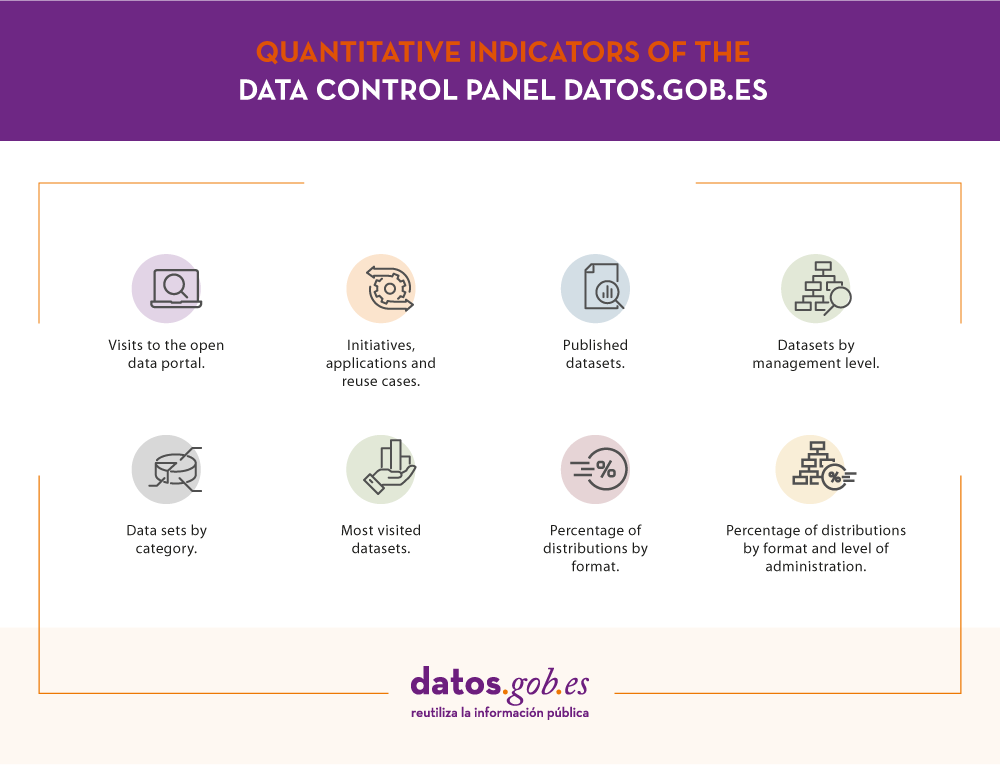
The datos.gob.es initiative has its own public control panel that provides quantitative indicators on the following aspects:
Qualitative analysis
Through the qualitative approach, use cases are identified from different sources that can include personalized interviews, content available online, information provided by different media or academic publications.
These use cases help us to understand the extent to which open data can be considered to have led to positive changes in three main areas described below:
Government level
Including the possible impact on the transparency and accountability of governments, as well as on improving their efficiency and effectiveness. Some of the issues that can be raised in this area are:
- How does openness of data help to improve government efficiency?
- How is data used to examine government resource use and improve existing public services?
- How is open data used to create new public services?
- How does open data contribute to increased transparency and accountability through public scrutiny?
Examples of measurements that are also useful in measuring the impact of open data actions in this area are:
- Increased collaboration between different government departments and agencies.
- Creation of platforms and applications that allow citizens to report on their experience in government services.
- Greater participation of citizens in the formulation of public policies.
- Improved public resource planning.
- Reduction in citizens' perception of corruption.
Social area
Including the environmental aspects and the improvements obtained in the inclusion of minority groups in society. Some of the issues that can be raised in this area are:
- What are the social benefits obtained through the use of open data?
- How is open data used to improve equality and direct public resources to the citizens who need them most at any given time?
- What are the benefits of open data in the area of the environment, climate change, pollution, or sustainability?
Examples of indicators that are also useful when measuring the impact of open data actions in this area are:
- Evidence of greater equality in terms of age, gender, race, social class, disability, geographical location or poverty level.
- Evidence of improvement in social policies.
- Number and effectiveness of sustainability programs implemented as a result of the open data
- Increased attention to environmental factors in project planning.
- Awareness and sensitization of citizens about their own environmental impacts.
Economic area
Through the influence of open data in supporting existing businesses or creating new business models. Some of the issues we address in this area are:
- What is the impact of open data on economic growth and innovation?
- How is open data used to reduce costs in companies and help them become more efficient?
- What new business models are being developed around open data?
Examples of indicators that are also useful when measuring the impact of data openness actions in this area are:
- Companies and/or jobs created from the new economy of data openness.
- New products or services using the open data.
- Contribution of open data to the growth of the economy in terms of better macroeconomic planning.
Future areas of improvement
While the method applied may not be perfect - as it may have limitations in terms of the ability to adequately capture desired changes -, in the absence of other reference methodologies, it allows us to explore the emerging impact of ongoing open data initiatives and provide some substantial evidence regarding their impact, at least.
Thus, it would also be desirable to explore new methods in the future that allow for evidence of impact obtained in a more systematic way through the measurement of specific goals and objectives with respect to the initial starting point, and that could also be replicated among the different initiatives, also considering the entire data value chain in the measurements carried out. Some interesting options to be able to put these objectives into practice could be the methods of outcome mapping or social return on investment (SROI) -both already proposed previously in the field of open data but with very limited or no acceptance so far, due most probably to the higher added cost that their implementation would imply.
Content prepared by Carlos Iglesias, Open data Researcher and consultan, World Wide Web Foundation.
Contents and points of view expressed in this publication are the exclusive responsibility of its author.
Noticia
The Multisectorial Information Association (ASEDIE), which brings together the infomediary companies of our country, has, among its objectives, to promote the use, reuse and distribution of information, both public and private, creating value-added products. In this sense, it has launched an initiative to promote the complete opening of three datasets by all the Autonomous Communities (ACs), following unified criteria that facilitate their reuse.
Specifically, the idea is to open three databases, including the tax identification number of each of the entities. These databases are:
- Cooperatives
- Associations
- Foundations
These datasets have been called the "Top 3 ASEDIE 2019". This action was presented in last year''s edition of the Infomediary Sector Report and the evolution of its result has been included in the latest edition of this year''s report. It is worth noting that 764 companies participated in the 2020 edition, an increase of 10% over the previous edition. This increase in participation reflects the growth of the sector in Spain, both in the number of companies and employees working in this activity, and in its turnover, with an aggregate turnover of more than 2 billion euros.
Driving the opening of three new data sets
Since 2018, ASEDIE has been urging those responsible for the databases of cooperatives, associations and foundations in the 17 Autonomous Communities to make an effort to:
- Identify and open the 3 requested databases
- Unify download formats
- Unify the forms to be filled in when registering
These actions mean going one step further in the commitment to information quality, facilitating its standardization. According to ASEDIE studies, 60% of infomediary companies highlight that the main barrier to the reuse of information is that it is only available in some Autonomous Communities or Town Councils. With actions such as the one developed by ASEDIE, it would be possible to homogenize the available information helping to break down this barrier.
2019: a not very encouraging situation, but with a great margin for improvement and projection
During 2019, ASEDIE only found this type of data open in very localized areas of Spain, such as the two mesetas, the coastal areas and the two archipelagos (Balearic and Canary Islands). The overall picture reflected that, in many Communities, most of these three databases remained closed or open without CIF.
| Type of document | Title | Content |
|---|---|---|
| Opened in 9 of 17 CCAA. | Open in 4 of 17 CCAA. | Abiertas en 7 de 17 CC.AA. |
| Aragon, Castile and Leon, Castile-La Mancha, Catalonia, Galicia, Madrid, Murcia, Basque Country and La Rioja. | Andalusia, Castile and Leon, Murcia and La Rioja | Aragon, Castile-La Mancha, Castile and Leon, Catalonia, Madrid, Murcia and Basque Country. |
2020: great improvements achieved in the sector in recent months.
In this case, the Asedie 2020 Report shows that the situation has improved considerably compared to the previous year, as new areas can be seen where the Autonomous Communities have opened these three databases.
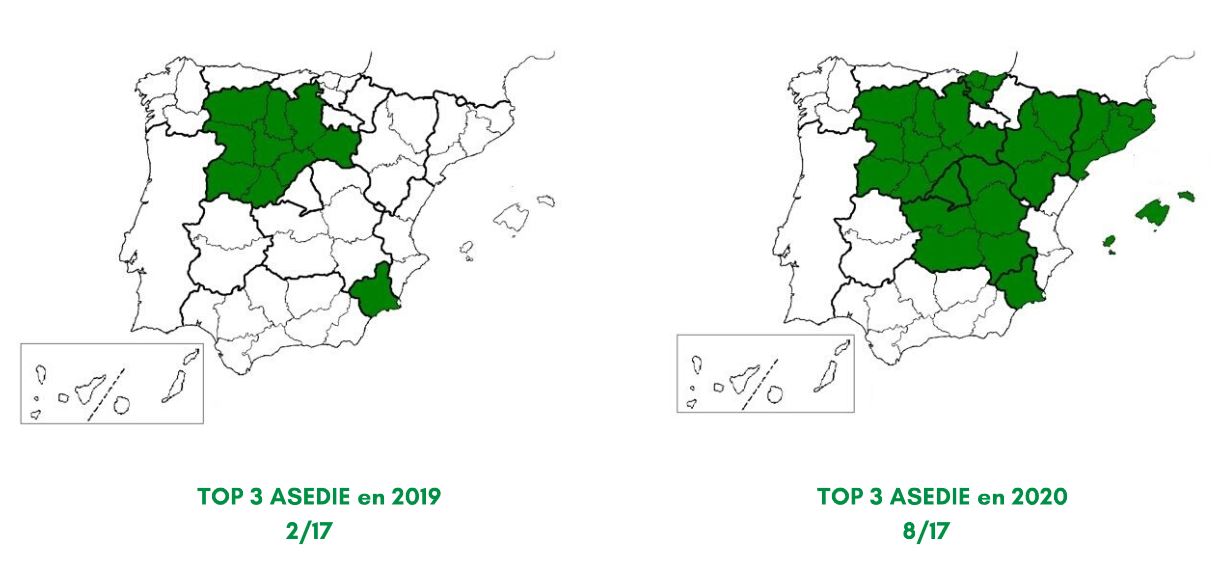
At the date of the presentation of the Report, there were already eight Communities with open databases of Associations, Cooperatives and Foundations. In Navarra, two databases that was closed the previous year were opened in 2020, although without a tax identification number. The Basque Country has two completely open databases and one in the absence of a tax identification number. In Catalonia, these three databases are now completely open with a tax identification number, while in Aragon, the database for cooperatives has been opened in the absence of a tax identification number.
The autonomous community that has had the greatest performance over the last year has been the Balearic Islands, as it has shifted from having the three closed to opening them completely in just one year. The community of Castilla y León is another of those that have all three databases completely open.
The situation will also continue to improve over the coming months, as it is estimated, according to the report, that 88% of the Autonomous Communities are considering action plans to open or improve the publicity of registers of this type.
Next steps: continue to push for the opening of homogenized data
Once ASEDIE has achieved the necessary momentum and after the good reception by the Autonomous Regions, on 18 March the "Top 3 Asedie 2020" was presented, so that this work of opening and homogenization does not stop and the Autonomous Regions that already have the first Top 3 open, will continue with their work:
- Commercial establishments
- Industrial parks
- SAT records
In short, thanks to these initiatives, public-private collaboration will be boosted by making it easier for companies to reuse public information, which will have a great impact on the generation of new business and wealth.
Noticia
Statistical data is considered high-value data, due to its broad benefits to society, the environment, and the economy. Statistical data provides us with information on demographic and economic indicators (for example, data on GDP, educational level or population age), essential information when making decisions and formulating policies and strategies.
Such is its importance for society as a whole that the UN Statistical Commission created in 2018 an Working Group on Open Data, focused on providing support for the application of open data principles to statistical information, so that its universal and free access is provided. This working group is made up of representatives from different countries, international organizations and associations, such as the World Bank, Open Data Watch, the International Statistical Institute or representatives of the UN itself through agencies such as FAO.
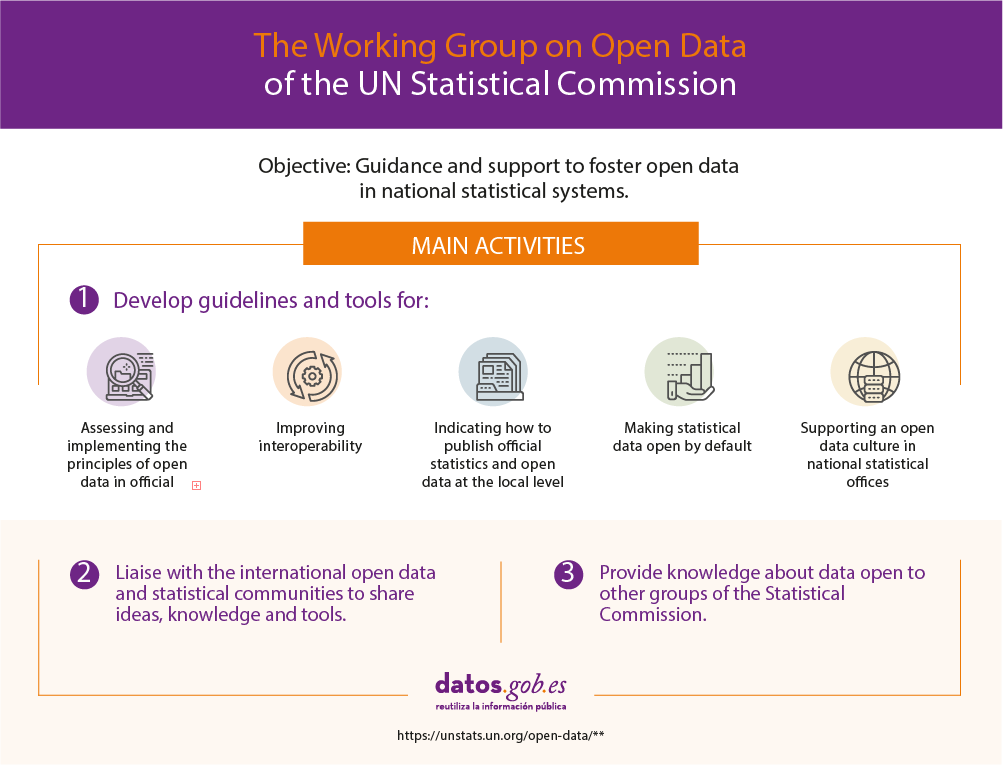
In early March, this group produced a report to guide national statistical offices on open data practices in the production of official statistics. This document is divided into two sections:
• A background document on the application of open data in national statistical offices
• A background document on local level statistics in the form of open data
Let's see the conclusions of each of them.
The application of open data in national statistical offices
The report offers guidelines in the following areas:
- Default open data: The document focuses on the legal aspects of default open data, emphasizing the need for open licensing standards. According to the “Open Data Inventory”, in the period 2018-2019 only 14 out of 180 analysed countries published all their data with an open license. There are many types of internationally recognized licenses. The most common are the Creative Commons and Open Data Commons, although many countries tend to customize them. The report recommends approving an international open license in its original form or preparing a custom license, but conforming to the guidelines formulated by Open Definition. In addition to open licenses, countries also need to have a legal framework with laws on access to information and accountability.
- User-centered designs: The report highlights the need to involve users in the development of platforms and the dissemination of data to ensure that their needs are met. Some of the mechanisms that can be used are conducting surveys, interviews or focus groups. It is also necessary to measure the use of data through website analysis in order to take decisions that increase its use. Given that all countries need to create user participation strategies, it would be advisable to encourage the exchange of templates and guidelines or the holding of joint workshops.
- National reporting platforms: Data platforms must be based on four principles: clarity, adequacy, sustainability and interoperability. For these principles to be fulfilled, it is necessary to promote coordination and cooperation within the national statistical system, and the national statistical office should take the lead.
- Correlation of the Generic Model of Statistical Institutional Processes with interoperability guidelines: To facilitate the different offices to share innovative approaches regarding the collection and dissemination of statistics, it is appropriate to have a framework that includes good practices and standardized terminology. The Generic Model of Statistical Institutional Processes describes the set of actions necessary to produce official statistics, guaranteeing constant improvement. These stages are: a) specify needs; b) design; c) build; d) collect; e) process; f) analyse; g) disseminate; and h) evaluate. In order to incorporate interoperability into the Model, the most relevant interoperability practices should be incorporated into the different design phases.
- Development of an open data culture: The adoption of open data principles in the daily life of statistical institutions can mean a change of mentality. Sometimes you have to "convince" about the need to open this type of information. For this reason, it is essential to carry out internal and external communication actions, analyse existing capacities and carry out training tasks accordingly, and establish responsibilities.
Local level statistics in the form of open data
In addition to having national statistical offices, it is advisable to launch local initiatives that can provide information on specific geographic spaces such as neighbourhoods, rural areas, or census and electoral districts. This information may show disparity between regions and help in the formulation of local policies. It is also useful for civil society, the private sector and NGOs to make better decisions.
In order for comparisons to be made, the report recommends that these data be produced and disseminated following the same guidelines across the country. In addition, it urges national offices to investigate which statistical content is of most interest to users and to provide a series of recommendations, ranging from disclosure mechanisms to the most useful visualization tools. The implementation could be carried out with a gradual approach, where interaction between the different actors involved is encouraged.
The report also refers to the background document presented at the fiftieth session of the Statistical Commission, which includes guidance on understanding open data practices in official statistics. A document worth reviewing when launching such an initiative.
In short, we are dealing with a type of data of great importance, which must be shared with society through an ecosystem of publishers and always respecting the balance between openness and privacy.
Noticia
The COTEC Foundation has recently published a Guide for the opening and sharing of data in the business environment, with recommendations and good practices to boost data reuse in the private sector. The objective is twofold: on the one hand, to raise awareness of the opportunities of data opening and sharing within the companies, and on the other, to accompany organizations in this process.
The guide is organized around 5 steps to follow when launching a data sharing / opening initiative:
- Experimentation and awareness, where the potential of company data is identified.
- Definition of a strong strategy that includes the objectives and decisions to be taken at the organizational level among other aspects.
- Technical preparation, where aspects related to data management and technological infrastructure are addressed.
- Implementation of data life cycle, which is subdivided into the following phases: collect, prepare, share or publish and maintain.
- Initiative monitoring, where the level of success is analysed and actions for continuous improvement are proposed.

The guide also analyses other relevant aspects to consider, such as relationship and financing models, the legal framework and the roles or skills necessary to launch such an initiative. The document ends with an glossary of terms and acronyms.
To illustrate the numerous benefits that data opening can bring to private companies, the guide includes numerous examples of companies that have launched initiatives to share their data with third parties or have found a new business niche based on data. These examples show the potential offered by these processes, both for companies that provide data and for reusers.
The Cotec Open Data Working Group was launched in September 2018 and has been coordinated by Cristina Oyón and Amaia Martínez from the Department of Strategic Initiatives of SPRI, the Basque Agency for Business Development. The Economic Development Agency of La Rioja (ADER), Alliance 4 Universities, Banco Santander, Bankia, BBVA, Clarke Modet, the Ministry of Employment, Business and Commerce of the Junta de Andalucía, Ecoemblajes España (Ecoembes), EDP Spain, Vodafone Foundation, F. Iniciativas, Indra, the Valencian Institute for Business Competitiveness (IVACE), Orange, Primafrío, Suez Advanced Solutions Spain, Tecnalia and Telefónica are part of this group.
Blog
Virtual assistants, purchase prediction algorithms or fraud detection systems. We all interact every day with Artificial Intelligence technologies.
Although there is still a lot of development ahead, the current Artificial Intelligence impact in our lives cannot be denied. When we talk about Artificial Intelligence (or AI) we don't mean humanoid-looking robots that think like us, but rather a succession of algorithms that help us extract value from large volumes of data in an agile and efficient way, facilitating automatic decision making. These algorithms need to be trained with quality data so that their behaviour adapts to our social context rules.
Currently, Artificial Intelligence has a high impact on the business value chain, and affects many of the decisions taken not only by companies but also by individuals. Therefore, it is essential that the data they use are not biased and respect human rights and democratic values.
The European Union and the governments of the different countries are promoting policies in this regard. To help them in this process, the OECD has developed a series of minimum principles that AI systems should comply with. These principles are a series of practical and flexible standards that can stand the test of time in a constantly evolving field. These standards are not legally binding, but they seek to influence international standards and function as the basis of the different laws.
The OECD principles on Artificial Intelligence are based on the recommendations developed by a working group composed of 50 expert AI members, including representatives of governments and business communities, as well as civil, academic and scientific society. These recommendations were adopted on May 22, 2019 by OECD member countries.
These recommendations identify five complementary values-based for the responsible stewardship of Artificial Intelligence:
- AI should benefit people and the planet by driving inclusive growth, sustainable development and well-being.
- AI systems should be designed in a way that respects the rule of law, human rights, democratic values and diversity, and they should include appropriate safeguards – for example, enabling human intervention where necessary – to ensure a fair and just society.
- There should be transparency and responsible disclosure around AI systems to ensure that people understand AI-based outcomes and can challenge them.
- AI systems must function in a robust, secure and safe way throughout their life cycles and potential risks should be continually assessed and managed.
- Organisations and individuals developing, deploying or operating AI systems should be held accountable for their proper functioning in line with the above principles.
Consistent with these principles, the OECD also provides five recommendations to governments:
- Facilitate public and private investment in research & development to spur innovation in trustworthy AI.
- Foster accessible AI ecosystems with digital infrastructure and technologies and mechanisms to share data and knowledge.
- Ensure a policy environment that will open the way to deployment of trustworthy AI systems.
- Empower people with the skills for AI and support workers for a fair transition.
- Co-operate across borders and sectors to progress on responsible stewardship of trustworthy AI.
These recommendations are a first step towards the achievement of responsible Artificial Intelligence. Among its next steps, the OECD contemplates the development of the AI Policy Observatory, which will be responsible for providing guidance on metrics, policies and good practices in order to help implement the principles indicated above, something fundamental if we want to move beyond the theoretical to practice scope.
Governments can take these recommendations as a basis and develop their own policies, which will facilitate the homogeneity of Artificial Intelligence systems and ensure that their behaviour respects the basic principles of coexistence.
Evento
On June 12, the European Data Portal (EDP) organizes a webinar to explain the main conclusions of its latest report, entitled Analytical Report 13: Open Data best practices in Europe's Top Performers. This report analyses the success factors shared by the leading countries of open data in Europe: Spain, Ireland and France.
These three countries have been chosen for their top positions in the EDP open data maturity ranking. They are prescribers in terms of open data due to their high performance and clear strategic focus.
The webinar will start at 13:30 CET. It consist of a general overview on the following aspects:
- Good open data practices in Ireland, Spain and France.
- Common factors that helped boost the development of open data in the 3 countries. These factors can be used as a guide for those countries that want to improve their open data strategy.
- Trends and opportunities, both at the European Union and country level. The analysis will be based on the four EDP evaluation dimensions: Policy, Portal, Quality and Impact.
The webinar will include representatives of the national open data portals teams from Ireland, Spain and France, who will share their experience devising and executing an open data strategy. The speakers will be joined by Cosmina Radu, Service Delivery Lead of the European Data Portal and co-author of the report.
The webinar is free but you need to register through this registration form.
More information on the European Data Portal website and on social networks (Twitter, Facebook or LinkedIn).
Noticia
The European Data Portal (EDP) has just published the Analytical Report 13: Open Data best practices in Europe's Top Performers, where it analyses the open data strategy of the leading countries in this area in Europe: Ireland, Spain and France. These are the 3 countries that obtained the highest score in the last EDP maturity Landscaping.
The purpose of this new report is to be used as a guide for those countries that are developing or want to improve their open data project. For this purpose, the report describes the common success factors that have allowed the three countries analysed to become trend-setter on open data.
The report is based on the 4 dimensions used by the EDP in its latest maturity landscaping: Policy, Portal, Quality and Impact. Dimensions where Spain obtained a great result, as the following graph shows.
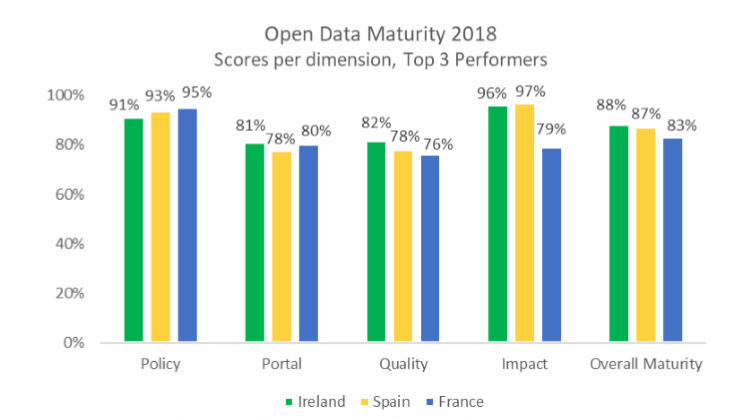
Let´s see in detail the conclusions of each section.
Dimension 1: Policy
The key factors that Ireland, Spain and France share are:
- A strategic vision around open data, grounded in a comprehensive policy framework. All three countries analysed have is a state-level policy that drives a common vision of open data. In the case of Spain, the report highlights the role of the Aporta Initiative as a common framework that drives the ecosystem of open data in the country. The document also highlights the creation of two specific plans aimed at promoting coordination among different agencies: the “Digital Transformation Plan for the General Administration and Public Agencies 2015-2020", which foresees actions for the publication of information for citizens and businesses and fostering of its re-use, and the "Digital Plan" of 2013, where the objective is to simplify the conditions for re-using public sector information. In addition, Spain is an example of overcoming barriers related to complex federal structures, thanks to a framework that favours the coordination of different government levels (national, regional and local) for the development and implementation of local open data initiatives.
- An inclusive open data governance structure. Ireland, Spain and France have understood the need to launch an inclusive and participatory process, where the needs of the different actors are taken into account. Through different activities (such as working groups, events or seminars), publishers, re-users or society members in general can share their vision of the open data ecosystem. Among other actions, the report highlights the collaborative and interoperable platform launched by A Coruña, Madrid, Santiago de Compostela and Zaragoza under the umbrella of the Ciudadesabiertas.es project.
Dimension 2: Portal
In this dimension, the report analyses the scope and mission of national open data portals. All three portals are not a mere repository for metadata records, but have become virtual spaces for knowledge development, exchange and interaction on open data. In particular, the three countries have in common:
- Advanced features that foster access to data, and enable interaction between users. All portals include tools that facilitate interaction between publishers and re-users. For example, in France and Spain, users have the possibility of providing comments to each data set, and including new data or use cases in the corresponding sections. The report also highlights the usefulness of dashboards to obtain statistics on key performance indices and analyse data impact.
- Access to data, tools and editorial content. It is not surprising that one of the key functions of a national open data portal is to enable access to all open data published across the country. But it should also provide materials and editorial content on relevant topics aimed at a broad audience, including publishers and re-users from all sectors, as well as the general public. In the case of Spain, the Spanish portal provides separate sections for open data reports, news, events, interviews, etc.
Dimension 3: Impact
The key aspects to take into account in this dimension are:
- Strategic awareness around fostering, monitoring and measuring open data reuse. All three portals provide good examples of use cases to demonstrate the reuse of open data on each of the sectoral dimensions assessed by the European Data Portal: political, social and environmental as well as studies that focus on assessing the economic impact of open data. The report also highlights how the implementation of seminars, events or contests, such as Aporta Meetings or Aporta Challenges, can help boost the reuse of open data in the country.
- Focus on developing data ecosystems in thematical domains. Ireland, Spain or France boost the publication and reuse of open data in specific sectors. Last year, Spain focused on the economic and innovative value of data, a topic that started 2018 Aporta Meeting and the Infomediary Sector Report of ASEDIE. France also focused on the business sector, as well as transport and geographic data, while Ireland has opted to create a series of events, called "Open Data Impact Series", focused every time in a different sector.
Dimension 4: Quality
The differentiating elements in this dimension are:
- Ensuring discoverability and regular updating of open data stemming from local, regional and national sources.
- Monitoring the quality of and fostering better open data publication in the country
This is provided by a mix of automated harvesting and manual editing of metadata records. Additionally, backend mechanisms (such as validators) as well as documentation (such as guidelines or support centres that provide help to publishers) were set up,
The implementation of all these actions enabled Ireland, Spain and France to secure top positions in the European Data Portal assessment, but also, and more importantly, to foster a sustainable transformation of open data ecosystem in the country.
These key elements can be used to develop a checklist to guide next steps of national policy makers and open data portal managers. However, as any best practice, each country needs to assess the transferability and applicability to their individual context and adopt a tailored approach that ensures the response to their specific needs.