


Noticia
BiodivERsA is a network of organisations focused on research on biodiversity and ecosystems in European countries and territories, to promote their conservation and sustainable management. Among other actions, this network has published a Guidance document on data management, open data, and the production of Data Management Plans in the framework of scientific research.
The document has been developed in the context of Horizon 2020, with the aim of guiding project teams funded through joint transnational research calls in the drafting and development of their Data Management Plan, with a focus on making their data and publications as open as possible.
The report begins with an introduction on the importance of scientific data and its management, the principles of open science, open data and FAIR principles. It then analyses the concepts and needs of data management in the context of this type of internationally funded project, and ends by highlighting a number of interesting tools and resources.
The importance of scientific data and its management
Organising and making data accessible is becoming increasingly important in the world of science, with the aim of improving traceability and encouraging data sharing. This improves the transparency of studies, but also encourages the reuse of data in new research that generates knowledge for the benefit of society.
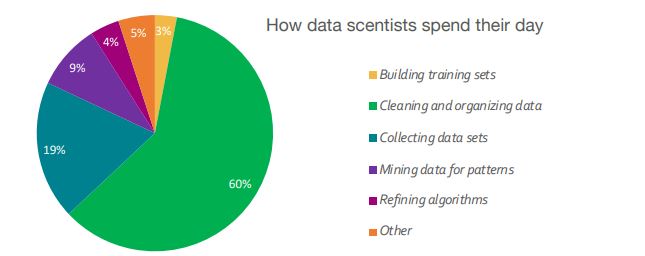
The guide refers to a survey carried out by CrowdFlower. This study states that, far from what can be imagined, data scientists do not invest most of their time in building algorithms, exploring data or carrying out predictive analysis. On the contrary, the reality is that most of their time is spent on cleaning and organizing the data. Therefore, an improvement in this aspect would mean a great advance in efficiency, resource optimization and cost reduction.
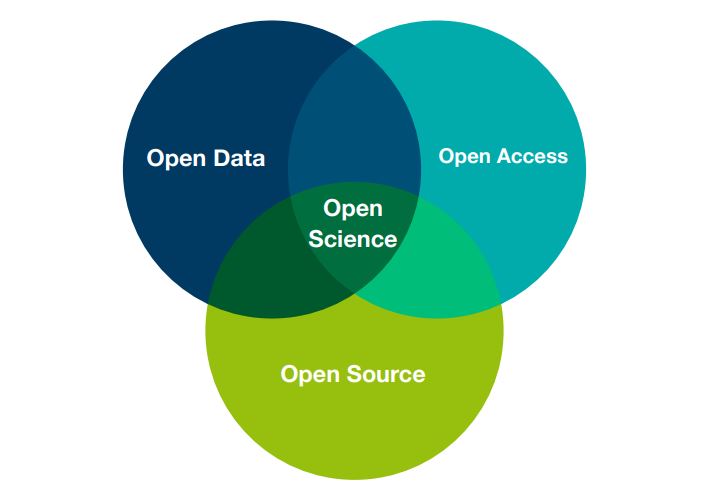
The authors of the guide stress that science today requires more systematic open access to scientific data and, to this end, they analyse concepts such as data sharing, open access or FAIR principles that scientific data must comply with in order to be shared to its full potential.
Keys and benefits of developing a Data Management Plan (DMP)
A Data Management Plan (DMP) is a document that describes the management cycle of the data that will be collected and processed when generating a research project. The report draws on this report to highlight the main benefits of creating and developing a DMP:
- Increased efficiency during the project
- Allows data to be collected and stored in a more structured way
- Prevents or minimises the risk of data loss
- Allows data to be shared and reused with guarantees
- Increases the verifiability of the investigation
- Increases the longevity of the project by making data available even after the project ends
Structure of a Data Management Plan
DMPs are unique: their content, composition and structure can vary greatly as they depend on the project and the data generated. However, to ensure that all aspects are covered, the report proposes a generic structure for a DMP that can be modified or adapted according to the needs of each project. This structure is organized in nine sections, with a series of questions to facilitate its drafting. Some examples of these questions are included below:
- Data Managers. Who manages the data? Does the research team include a data expert?
- Data Identification & Description. What is the purpose of the research? What data is used and in what format? How often is it collected?
- Data Organization & Exchange. How is the data managed? Where is it stored? Who has access to it?
- Data Storage & Back-up. What is the strategy for data back-up and storage? How frequently do you do your backups?
- Data Sharing, Standards & Metadata. Are you using a file format that is standard to your field? What tools are required to read the data? Is supporting documentation being generated?
- Data Restrictions. How open will the data be? Is there a plan to protect or anonymise the data if necessary?
- Data Publishing & Licensing. where and how will the data be released, under what licenses?
- Data archiving. How will the data be managed when the project ends to ensure its long-term availability? Will it be published with a Digital Object Identifier (DOI)?
- Costs. what are the estimated costs of managing the data and how have these costs been accounted for?
The report also makes a number of general and practical recommendations which apply to all types of projects and their management plans, such as that free and easily accessible Open Science tools should be used as far as possible or that data generated by the project should be posted on a single website.
Tools and resources
The report ends with a series of tools and resources, such as data repositories or the most important biodiversity data standards.
Data repositories
Funded research projects must store and make available their project data to other users through the main national and international archives and storage services.
The report divides the repositories into two main groups. On the one hand, the general repositories, which are open to all research fields, and on the other hand, the specific repositories, which focus on specific subjects. The following table shows some examples of general research repositories.
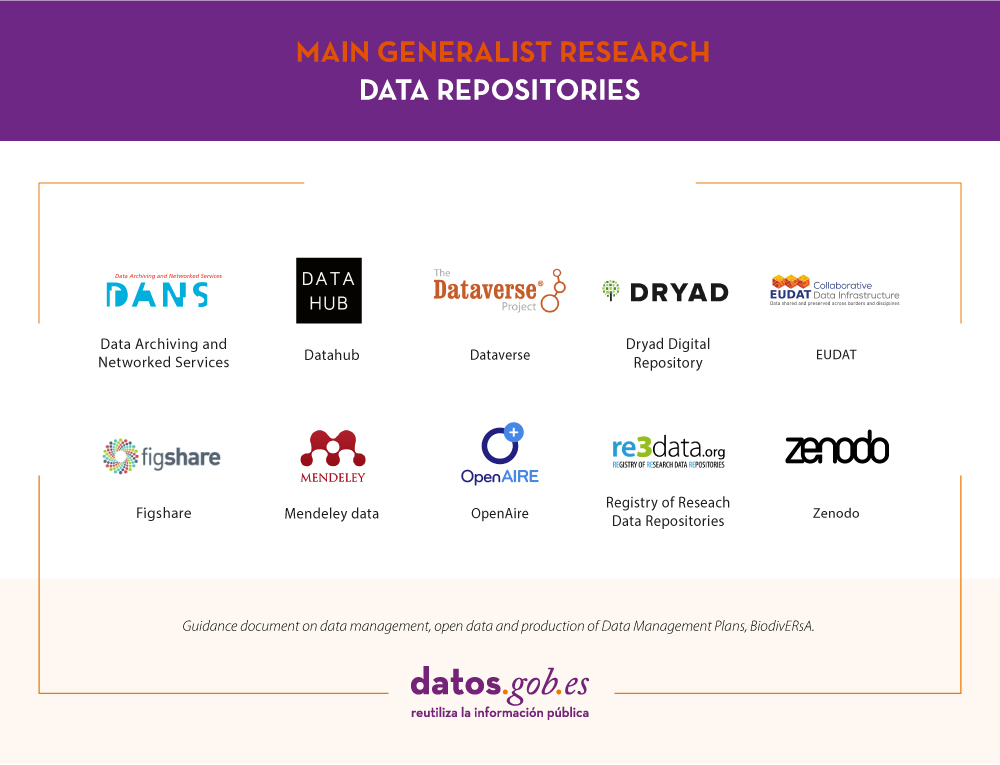
You can access these repositories through the following links:
- Data Archiving and Networked Services
- Datahub
- Dataverse
- Dryad Digital Repository
- EUDAT
- Figshare
- Mendeley data
- OpenAire
- Registry of Research Data Repositories
- Zenodo
The report also shows examples of specific repositories in the area of biodiversity such as Arctic Biodiversity Data Service or Dynamic Ecological Information Management System.
Standards and licences
The use of norms and standards by the biodiversity research community greatly enhances the interoperability of published datasets. Some of the main ones can be found on this website.
Licensing, on the other hand, boosts visibility, especially when using attribution licenses. In this regard, the report provides a list of resources to better understand and address licensing and other publication considerations.
As a final conclusion we can establish the capital importance of carrying out a data management plan in the scientific field and its subsequent storage in the corresponding repositories in order to promote the reuse of this information and with it the development of new research that promotes the knowledge of humanity. This report offers the keys needed to develop it step by step in a practical and simple way.

Noticia
We have been talking about the digital transformation for years, but perhaps it has been in the last few months when we have had to stay at home and resort to teleworking or e-commerce, that we have noticed the need for it the most. Many companies have had to transform quickly, adapting their internal processes, their relationship with customers and even their business models to new needs.
However, the digital transformation is nothing new, and before the health crisis there were already many organizations with a long way to go. This is reflected in the Digital Economy and Society Index (DESI), which each year measures the performance and evolution of the EU Member States in terms of digital competitiveness.
DESI INDEX
The DESI Index performs its analysis based on 5 indicators: Digital Public Services, Connectivity, Human Capital, Integration of Digital Technology and Use of Internet Services.
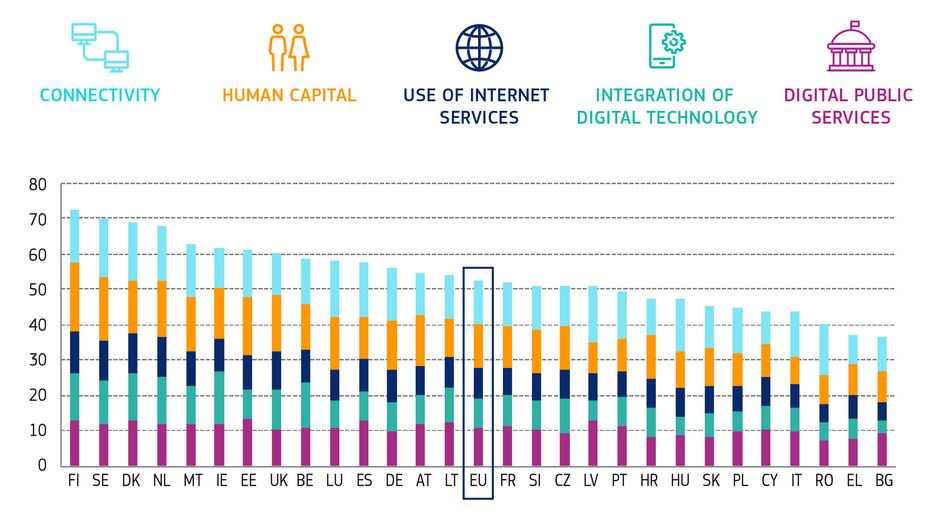
In this index, Spain is above the European Union average, occupying the eleventh position, with unequal scores in the various markers:
- The score where our country stands out the most is Digital Public Services, where it is in second place in Europe, improving its position with respect to last year, thanks to the application of a default digital strategy throughout its central administration. One of the indicators driving Spain's position in this dimension is open data, where we are in second place in terms of maturity in Europe. We are also above average in the availability and use of e-government services.
- Spain also performs well in the area of connectivity (5th place), driven by the good implementation of high-speed networks: 80% of households have fiber optic coverage, well above the EU average (34%).
- In contrast, Spain is below the EU average in the human capital indicator (16th place), with 43% of people between 16 and 74 years of age still lacking digital skills. It does improve on last year's percentage of ICT graduates and specialists in total employment. The report highlights the government's efforts to improve this situation, with actions such as the Strategic Plan for Vocational Training in the Education System 2019-2022, which seeks to create forty new degrees in different ICT fields.
- With regard to the integration of digital technology, Spain ranks 13th, in line with the EU average. Spanish companies take advantage of the opportunities offered by digital technologies and are above Europe in the use of electronic information exchange systems (43% compared to 34%), although slightly below in access to macrodata analysis (11% compared to 12) and the use of the cloud (16% compared to 18%). With regard to emerging technologies, the report highlights that Spain has developed a significant number of coordination measures, especially in the field of cyber security.
- Finally, the use of Internet services has increased since the previous year, and the country has obtained results above the EU average. However, it is worth mentioning that it is still used more for leisure activities (consuming multimedia content), than for day-to-day business, such as banking or e-commerce.
The study was carried out before the pandemic, so the results do not include the actions carried out in recent months, such as the publication of the Digital Agenda 2025, which includes the promotion of a Data Economy. The measures to be developed include the implementation of an Artificial Intelligence Strategy, the development of a Data Office with a Chief Data Officer at the head and the creation of an Artificial Intelligence Advisory Council, among others.
OTHER REPORTS ON DIGITAL TRANSFORMATION IN SPAIN
In addition to the DESI index, in recent months two reports of particular importance when it comes to digitalization have been published in our country: the "Digital Society in Spain Report 2019" and the "COTEC 2020" report.
Digital Society in Spain 2019 Report
This report, published by the Telefónica Foundation, includes data and indicators that describe the state of Spanish society in relation to the media, uses and digital services. Specifically, it focuses on the deployment of telecommunications infrastructure, the level of implementation of the most advanced technologies and the state of the art of Spanish digital life.
The conclusions of the report are very much in line with the DESI index, which it takes as a reference. It highlights that 9 out of 10 inhabitants are Internet users, and that the gender gap in cyberspace has been completely eliminated, although an age gap still exists. The report also highlights that our country has a very good connection, with ultra-fast network coverage in three out of every four homes.
The study indicates that the main technological currents that are shaping the digital transition in Spain revolve around artificial intelligence, industry 4.0 and cyber security, with the first one standing out above all: while in 2013 only one out of every fifty emerging companies focused its activity on artificial intelligence, now one out of every twelve do so.
The report ends with an analysis of the degree of digital development presented by the Autonomous Communities, describing the current situation and the challenges facing each region.
You can read the full report at this link.
COTEC 2020 Report
The COTEC report, on the other hand, focuses on a fundamental aspect to boost the digital transformation: the R&D+I. The report shows us the innovation map in Spain, through the analysis of the main indicators and national, regional and international strategies.
The report analyzes data from 2018 and shows that R&D has gained weight in the productive structure for the second consecutive year, driven mainly by private investment. However, we are still far from countries like France, Italy or Germany.
The autonomous communities maintain heterogeneous levels of effort. The five most advanced regions are the Basque Country, Madrid, Navarre, Catalonia and Castile and Leon).
The report also focuses on education, where it highlights that Spain has a higher rate than the European average in STEM graduates, but with a much wider gender gap than in most surrounding countries. It should be noted that our country has a low proportion of people with an average educational level, since we have a high rate of population that leaves school at an early age, and a high percentage of young people who graduate from university.
You can read the full report at this link.
After taking a look at these reports, we can conclude that both the public and private sectors are making an effort to promote the digital transformation of Spain in order to make the digital transformation and innovation a driver of economic and social development in our country. There are still areas for improvement, but there is no denying the interest in tackling the challenges ahead.
Noticia
The OECD's work on open data began in 2013, but has steadily expanded to reflect its growing importance in member and partner countries. The OECD sees open data as a key asset for economic development, digital innovation and good governance, while always paying special attention to privacy, transparency and ethics.
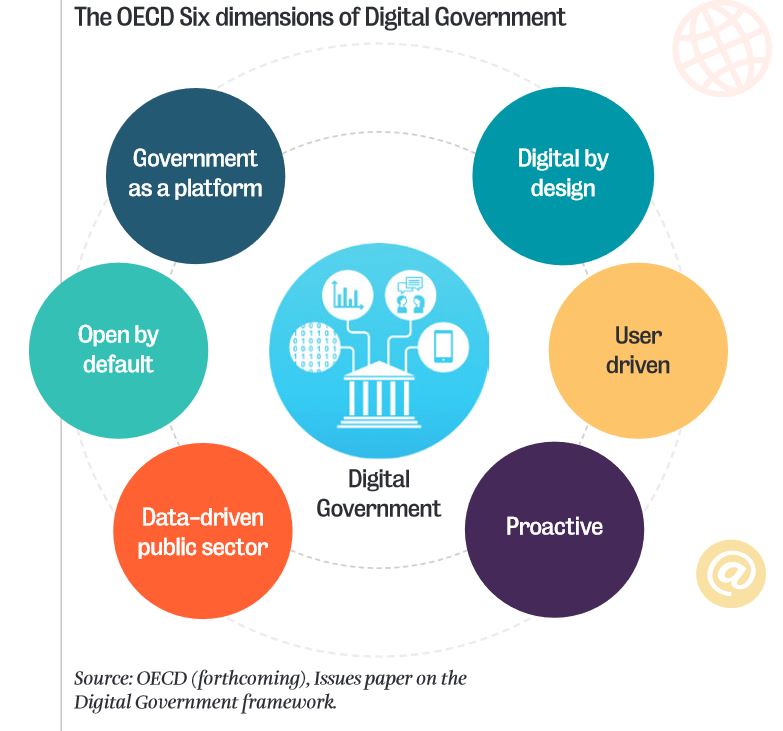
The OECD includes the need to create a culture based on data as one of the principles needed to promote the digital transformation of the public sector. In its own words "open government data is a public good, which must be delivered with a purpose, in a proactive manner and with a focus on reuse, in line with user needs and its potential contribution to the joint creation of value". In this sense, he has developed a series of indicators to evaluate the digital transformation of countries, based on 6 key dimensions:
The OURdata index: a way to measure the availability, accessibility and reuse of government data
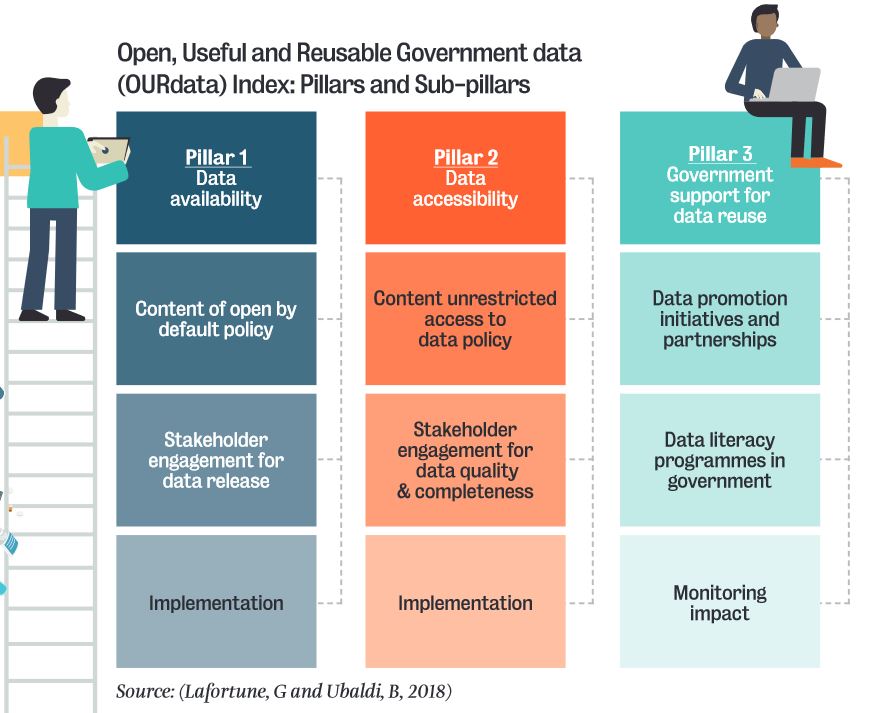
The OURdata index, which evaluates the progress and challenges of open government data policies using 3 pillars, is based on this theoretical framework:
- Data Availability: measures the degree to which governments have adopted and implemented official requirements to promote open government data at the central level.
- Data Accessibility: measures the availability of formal requirements designed to promote unrestricted access to data.
- Government support for data reuse: measures the extent to which governments are playing a proactive role in promoting the reuse of government data within and outside of government.
These pillars are summarized in the table below:
The results of the OURdata 2019 index
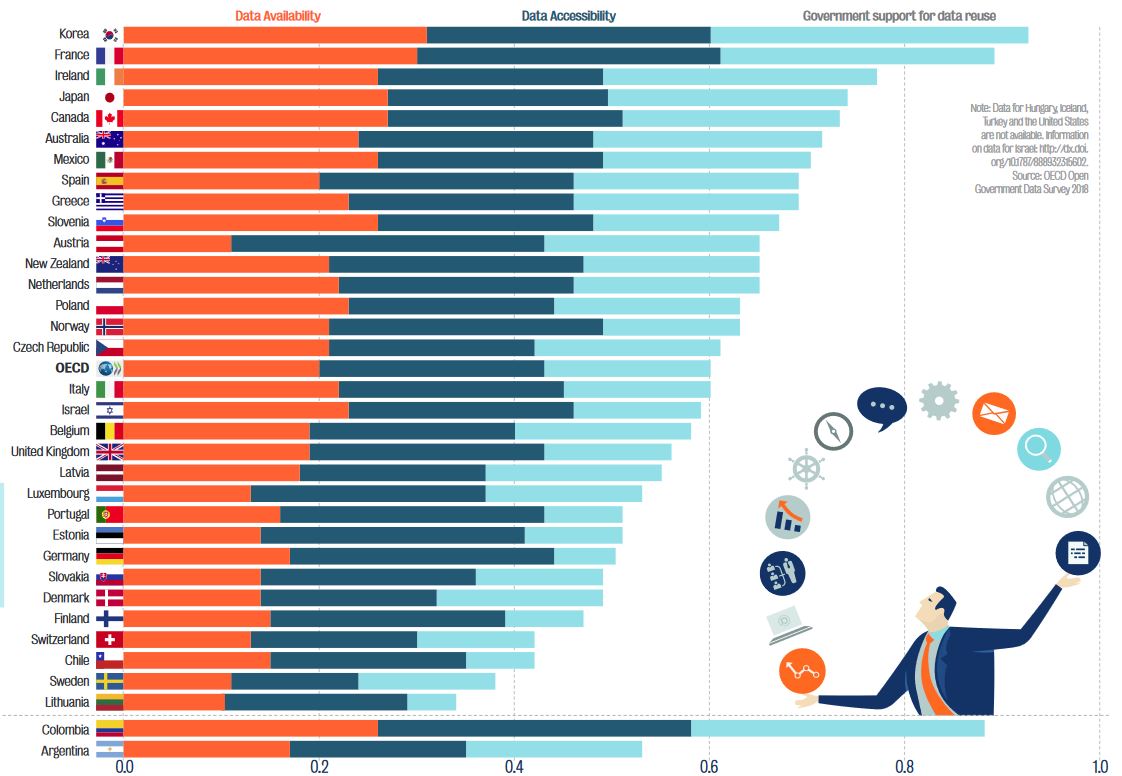
The latest edition of the OURdata index published by the OECD is 2019. This report compares the results obtained with those of 2017, with the aim of finding out the state of maturity of the countries analyzed in order to promote improvements that will increase data flows.
The 2019 results show general improvements in all countries. Most countries have adopted the "open by default" approach, including formal requirements not only in the open data strategies, but also in laws and regulations. In addition, more and more governments are enabling their open data portals as communication and feedback tools. These portals are not intended to be mere "data catalogs" but rather platforms to foster innovative, collaborative and knowledge-sharing practices.
Despite these improvements, however, there are still areas for improvement at the general level. More sustainable, long-term approaches are needed, with more defined governance frameworks. There is also a need to boost the training of public officials and encourage high-level political commitment to help recognize the value of data. It is therefore necessary to focus not only on supply, but to put in place mechanisms that stimulate demand and reuse.
In this regard, the report provides a series of recommendations to OECD governments:
- Ensure political support for open data and establish enabling environments to sustain implementation efforts over the long term.
- Build a common approach with a focus on sustainable development and gender issues, among other areas.
- Create Open Government Data portals by adopting an "Open by Default" and "Government as a Platform" approach.
- Ensure that data publication is proactive, timely, and understandable to both humans and machines (using metadata, common standards, etc.), as well as addressing quality issues and biases in data collection and generation.
- Maintain practices that ensure the publication of high-value data taxonomies and their integration across different sectors, driving greater social, government and business innovation.
- Ensure open data policies and establish governance frameworks that facilitate data monitoring and are aligned with data protection regulations In this sense, the OECD has developed a framework for public sector data governance that includes good practices to be followed based on strategic, tactical and data availability components, detailed in its report The Path to Becoming a Data-Driven Public Sector.
- Establish federated models that facilitate data discovery, while maintaining the right levels of autonomy at the local level, and ensure quality at the central level.
- Make the necessary arrangements to enable the delivery of public value through open data in order to maintain and multiply its benefits and impact.
- Maintain efforts that aim to promote the reuse of open government data outside the public sector, as well as its real-time integration into the value chain of relevant actors (e.g., through APIs).
- Increase measurement efforts focused on understanding the effects of data reuse within the public sector.
Spain's position
In the 2019 index, Spain is in eighth position, above the average of the countries analyzed, although with a slight decrease compared to 2017. The indicator where our country scores best is in data accessibility. Among other issues, the report highlights as a good practice the creation of the series of reports "Emerging Technologies and Open Data", which helps the reader to understand how different disruptive technologies work, what the role of (open) data is in them and what their impact on our society will be. Currently available are the volumes dedicated to Artificial Intelligence and Natural Language Processing.
The OECD is already working on the next edition of the index, which is expected to be released in 2021. We will then be able to analyze whether countries have followed the recommendations of this body and have promoted improvements in their open data policies.
Noticia
Earlier this year the World Bank announced that its next annual World Development Report would focus on the role of data in development. Each annual report of the World Bank has always been an important milestone in the world of development, but the next report, scheduled for next year, will be even more special because it is the first one focus on the world of data.
We already know that the main theme guiding the development of the report will be "Data for Better Lives", and it will be based on the premise that, while recent years have shown that high-quality data are indispensable tools for effective public policy formulation, the availability of the data needed for proper decision-making is still too low today. As a consequence, a large part of the value of data remains untapped.
Thus, the final objective of the report is to understand the barriers to the proper exploitation of data in the developing world and to explore two possible avenues that together would lead to the solution needed to unlock the full potential of these data:
- On the one hand, addressing data governance considerations and making the necessary changes in the way data is collected, managed, analysed and used in the current global environment.
- On the other hand, by considering how combining public and private data could lead to better results, with public data offering better coverage of populations of interest and private data with greater frequency, timeliness and granularity.
To this end, the World Bank team has been working on an initial draft as a proof of concept, explaining their vision of how data could have a positive impact on development, while introducing us to the other issues to be addressed by the report, including: "the use of data in public policy, data in the private sphere, synergies triggered by data, and the various challenges in terms of infrastructure, regulatory systems, economic policies and data management systems that we will have to face in the process".
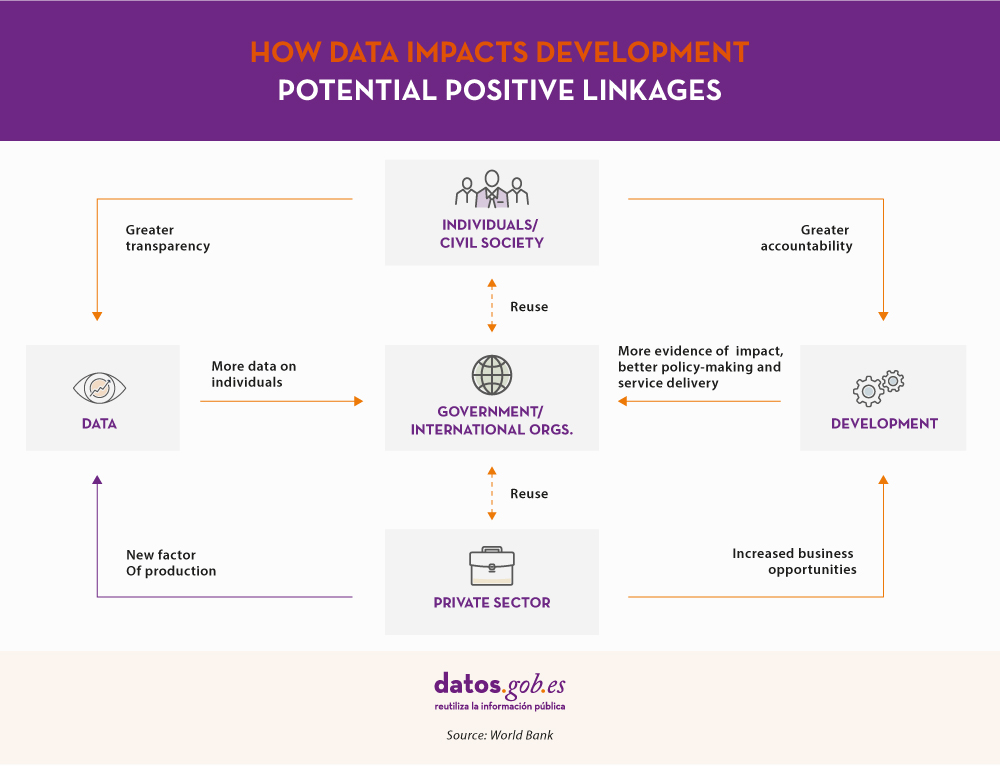
In addition, the World Bank has prepared a round of consultations that will run until the end of this month and which aim to deeply understand the scope of the challenges outlined by answering a number of questions:
How can data contribute to development?
It seeks to understand how data can contribute to improving people's lives in the context of global development, as well as the role of governments and data markets in making more effective use of data. It will also discuss how data can be used to understand the impact of public policies and improve services while mitigating potential risks associated with their intensive use, and how data must be managed to make this possible.
What are the current gaps in national data systems?
To explore what types of resources and investments will be needed, both financially and humanly, to realize the long-term vision of a large data system that can unify data management. This system will be managed by a fully resourced government agency. In this aspect, it is also fundamental to understand what barriers managers and users face through the different layers of the infrastructure.
What are the legal and regulatory challenges?
The objective is to establish the legal basis and the necessary actors to establish and regulate reliable data flows, maximizing their benefits while minimizing the possible associated risks. Here the key will probably lie in finding the right balance between sometimes conflicting concepts such as openness, transparency, right to information, interoperability, accountability, privacy and security.
What are the economic policy challenges?
The report will analyse what is the real impact on less developed countries of an economy that is increasingly driven by data, resulting in a large market concentration in a rather limited number of companies that in turn have the largest capitalization values in the world today. Enabling appropriate policies to ensure competitive markets, adequate trade rules and a fair taxation scheme will be crucial for those countries that are currently disadvantaged by large private players.
This initial round of consultations will remain open until the end of the month and during this time anyone can provide comments on the general concept of the report through this form. The authors of the report are also particularly interested in good practices and examples of how the data has helped improve the lives of those most in need to date, and encourage anyone who want to share a case directly through WDR2021@worldbank.org.
The next stages in the development of the report will also be announced through the website they have prepared to coordinate all work until the final version is made public early next year.
Empresa reutilizadora
A company dedicated to business and technology information for companies. Its main mission is to help companies around the world, with advanced analytics solutions and data integration tools, to identify business opportunities and potential risks of non-payment through business information, predictive models and propensity to buy; so that the areas of finance, risk, marketing, sales, purchasing and logistics can identify opportunities and potential risks of non-payment through business information, predictive models and propensity to buy; so that the areas of finance, risk, marketing, sales, purchasing and logistics can identify opportunities and potential risks of non-payment:
- Find new and good customers.
- Analyse the financial health of companies.
- Minimise the risk of non-payment of commercial transactions.
Iberinform is a subsidiary of Crédito y Caución, a global credit insurance operator with a presence in more than 50 countries.
Noticia
ASEDIE (Multisector Information Association) has published a new edition of the Infomediary Sector report, which analyses the real, economic and social value of companies reusing both public and private data to create value-added products.
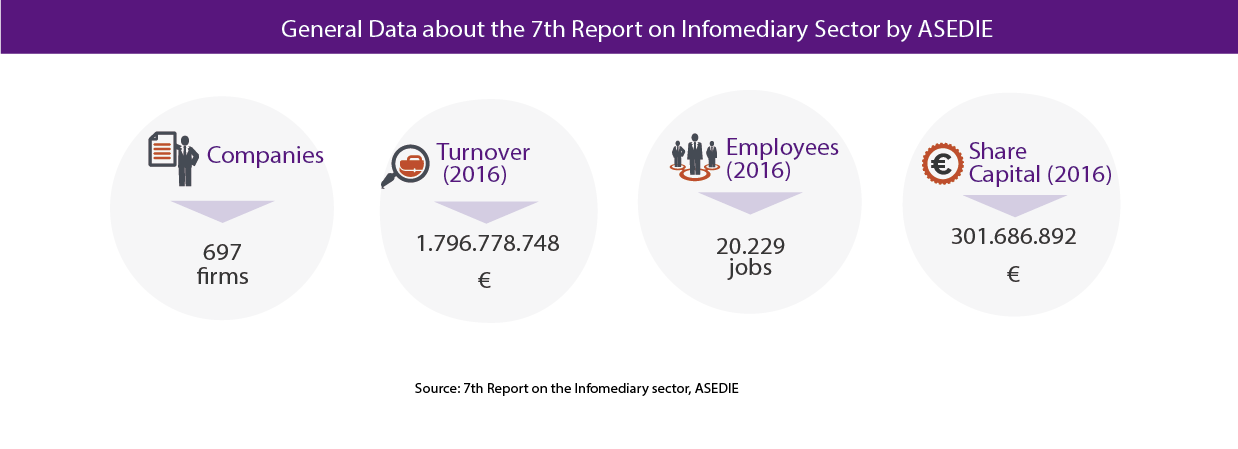
The number of companies analysed on this occasion was 697, 35 more than in the previous edition. It should be noted that the financial information used for sales and employees corresponds to fiscal year 2017, because 2018 information was not yet available.
The main conclusions of the report are:
- 97% of Infomediary companies use open data from the public sector. In addition, three of four combine this information with private data. In this context, it is not surprising that 83% of surveyees believe that the opening of databases and access to them for reuse is apriority for the sector's evolution.
- More than 50% of the companies are located in the Community of Madrid (37%) and Catalonia (18%). However, the Infomediary Sector is represented in all the Autonomous Communities, with the exception of the Autonomous Cities of Ceuta and Melilla.
- 3 sectors continue to concentrate most of the activity. Most infomediary companies specialize in "geographic information" (22%), "market research" (21%) and the "economic & financial" subsector (20%).
- A sustainable sector, but with a large number of new companies. 60% of the companies analyzed have more than 10 years and almost one third (29%) exceeds twenty - as a curiosity, the oldest company dates from 1947-. But it is also a sector that attracts new actors, since 31% of companies have been created in the last 5 years.
- Turnover increased by 5.4% compared to the previous year. Specifically, the aggregated turnover in the Infomediary Sector is € 1,796,778,748. This figure is very positive, although it should be noted that most of the turnover is concentrated in a few big companies.
- And the number of employees increased by 4.6%, reaching 20,229 workers. These data are very positive, since national full-time employment was 2.9%.
- The aggregate subscribed capital of the sector exceeds 300 million euros. After two consecutive years of decline, the aggregate subscribed capital has experienced a 10% growth in this year, although it is lower than 2016.
- 70% of companies present benefits. 70% of the companies present an average profit of approximately 300,000 euros, with the average loss of the remaining 30% being similar, but with a negative sign. As in previous years, the net profit generated has exceeded 62 million euros.
- Low commercial risk. The probability risk estimated for a company over the last 12 months is moderate or minimum for 74% of companies.
- Data analysis and Big Data stand out again as the main challenges of the Infomediary Sector, followed very closely by the opening of new information sources. On the other hand, the barriers for reuse most mentioned by the surveyees are the different data availability between Autonomous Communities and City Councils.
The report ends by showing a series of success stories in infomediary companies, as re-users, and public sector, as open data publishers.
In short, we are facing a sector with good health, which has experienced a remarkable growth, and with positive prospects for the future: more than half of the surveyees (65%) estimate that the Infomediary Sector will grow over the course of this year, specifically 64% of them estimate the growth to be between 2-5%.
Noticia
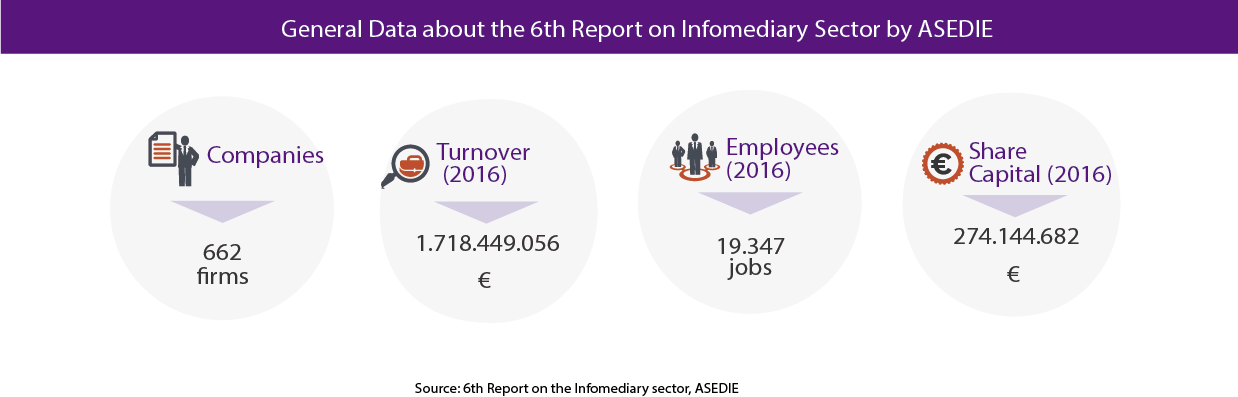
For the sixth consecutive year, ASEDIE (Multisectorial Information Association) has presented a new edition of its report on the infomediary sector. Its objective is to favor the opening of databases and to know the real economic and social value that this sector brings to society. To that end, 662 companies have been analyzed, 26 more than in the 2017 edition. The report analyzes the 2016 data, comparing the result with the previous edition of the report.
Among the novelties of this year, we can find new analyzes and indicators, such as the average turnover per employee or profit and loss analysis, and the monitoring of information requests at Autonomous Communities level. In addition, a specific survey has been conducted to more than 50 infomediary companies, to find out about their vision of the challenges and opportunities of the sector. The report also include success stories that can be used as a guide to optimize the reuse of open data from public organizations.
Some of the main conclusions of the report are:
- Lack of knowledge about what an infomediary is. Despite the fact that 80% of the surveyed companies share that the use and treatment of information affects their business, only 39% considered themselves as being an Infomediary Company. ASEDIE defines infomediary companies as those who “create value-added products and services with data from both the private and public sector, which help in the decision-making”
- The number of companies increased. In 2017, 21 companies ceased their activity, while 47 new companies were incorporated. The main reason for these inactivities is the company’s own commercial extinction, above mergers or defaults
- Three sectors concentrate most of the activity. Whitin infomediary sector, the main subsectors are geographic information (23.0%), market research (22.5%) and economic and financial activities (20.8%).
- Madrid and Catalonia, the favorite locations. The sector is represented in all the Autonomous Communities, except for the Autonomous Cities of Ceuta and Melilla. As happened last year, most of the infomediary companies are concentrated in the community of Madrid (36%) and Cataluña (18%), followed by other communities, such as por Andalucía (8%), Galicia (7%) and the community of Valenciana (7%).
- Turnover increases by almost 2%. According to the annual accounts available in the Mercantile Registry, the sector turn over close to 1,720 million euros in 2016. This figure represents an increase of 1.9%, comparing with the previous year and an average turnover of 2.9 million of euros (although the median is 194,698 euros, due to 15 companies concentrate close to 50% of turnover).
- The number of employees working in infomediary companies remains stable. In 2016, the infomediary companies employed 19,347 personnel, a figure similar to 2015 (19,362). In addition, the average turnover per employee reached 88,822 euros.
- Subscribed capital decreases. At the end of 2017, the subscribed capital, that is, the shares acquired by the shareholders, was 274 million euros, compared to 366 million euros in 2016, which represents a reduction of -25% per year, for the second consecutive year. 83% of the capital is concentrated in 4 subsector: “Market research”, “Geographic Information”, “Economic & Financial” and “Publishing”.
- A sector with benefits. 68% of analyzed companies presented benefits in 2016, which highlights the economic opportunities of information reuse to create value added products and services.
- Big Data and data analysis, the main challenges. Due to the increase in volume and diversity of the data that must be analyzed by infomediary companies, it is not surprising that 55% of the companies surveyed consider Big Data and data analysis as their main challenges.
- Need for greater homogenization in data. The lack of a common database makes users have to go to the different platforms enabled by Autonomous Communities or local authorities. The infomediaries surveyed consider this fact one of the main barriers to the information reuse. In addition, they indicate that they would need more complete, up-to-date and easily accessible information, as well as regulations that will facilitate and encourage reuse.
Although there are still Challenges to be overcome, such as the greater homogenization of the data or the attraction of Big Data talent, the conclusions of the report show us an encouraging future. The majority of respondents (69%) consider that the informadiary sector will have a positive economic growth during the coming years. The increase in the turnover in2016 and the fact that most of the infomediary companies present benefits seem to point in this same direction, positioning the infomediary sector as one of the drivers of the economic growth of our country.
Noticia
The COTEC Foundation, a private non-profit organization that promotes innovation as a driving force for economic and social development in Spain, recently published its report "The Reuse of Open Data: an opportunity for Spain". In this study, led by the experts Alberto Abella, María Ortiz de Urbina and Carmen de Pablos, different diagnostic exercises have been carried out to draw a scenario that seeks to show current knowledge about the reuse of open data, in order to identify guidelines and recommendations that help promote the use of data in the generation of business.
The realization of the study has followed a methodology that mainly includes three research areas:
- Study of 103 operational national portals included in the map of initiatives of datos.gob.es, and of their maturity according to a simplified version of the model established by the pan-European data portal.
- Study of the published datasets, on a total of 20,026 identified datasets, after the necessary filtering to avoid duplication as a result of federations among portals.
- Study of the reuse of the published data through a survey carried out to the responsible for the open data portals in Spain.
After the corresponding analysis, a SWOT analysis has been carried out, which has highlighte a series of evidences and reflections that are summarized in the following graph:
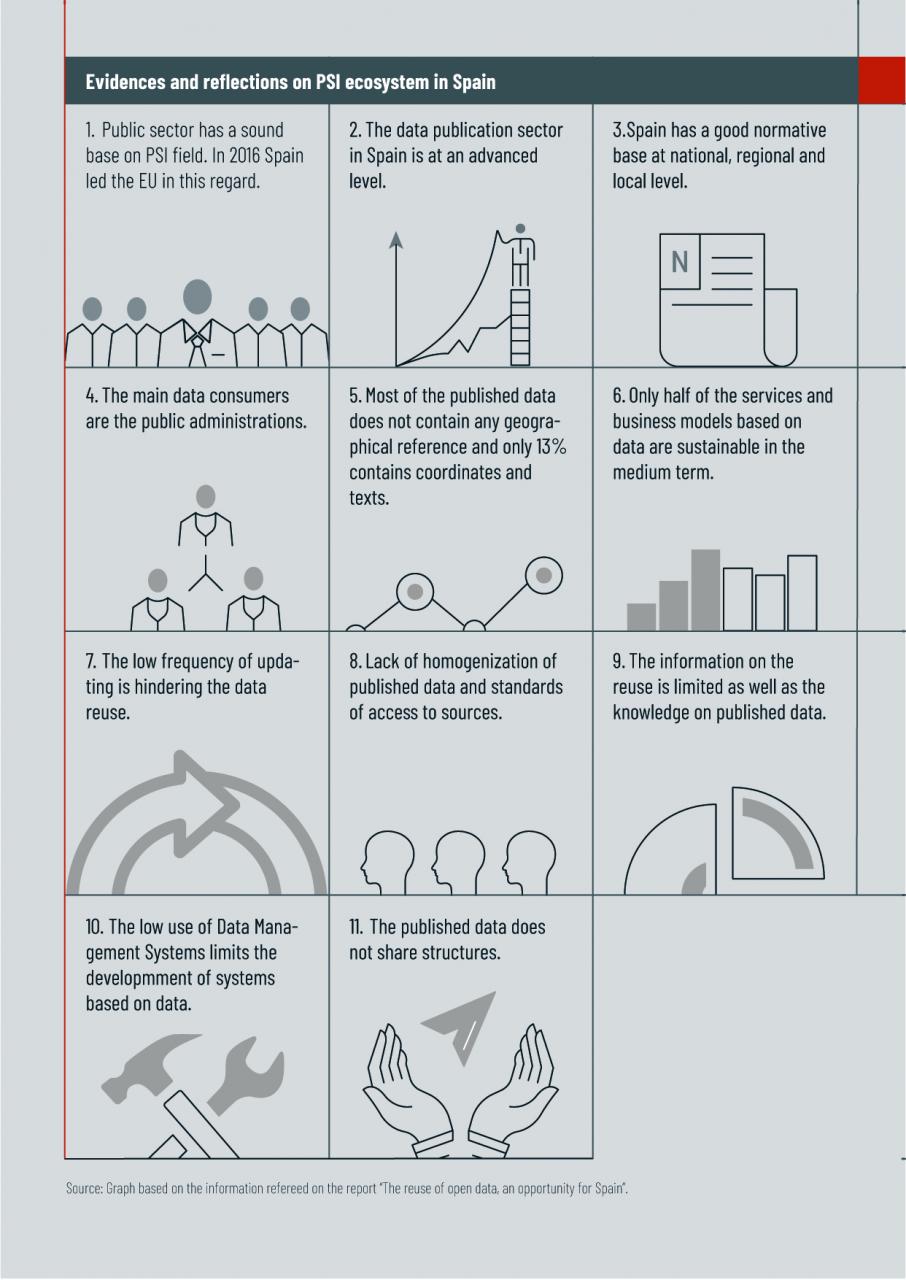
Thus, according to the report, aspects such as the lack of homogeneity and quality of published data are presented as great barriers to the creation of innovative businesses. In fact, despite the fact that 87% of the services generated from open data are geolocated and are in real time by 67%, 52% of the published data does not contain any geographical reference and only 5% is updated at least once a week.
In parallel, this study identifies a set of strategic barriers and key techniques. As regards strategic barriers, the lack of mechanisms for internal governance of data to control and manage how data moves within the organization and mechanisms of publication and systematic updating. Regarding technical barriers, the scarce use of adequate tools for the publication of data stands out, which limits the automation of access, the systematic publication, the notification of new features or the adequate understanding of information due to the lack of visualizations about the published data.
Finally, and based on the diagnosis made, the report concludes with a series of key measures to overcome the identified barriers, many of which have in commeon the need for coordination, the importance of a strategy in service generation organizations based on data and measurement actions of use and impact.
The publication of data is not an exercise in transparency, but the sowing of resources that must bear fruit in other entities (re-users). The field where this reuse occurs must be taken care of. - Alberto Abella, 2017-
Documentación
The public sector is not only a large supplier of open data but also one of the largest users and beneficiaries of the opening of government data. The report ‘The value of open data for the Government’ that we published on Datos.gob.es outlines a large number of examples of how the government could see benefits in various areas and rely on the data for feedback and to reflect, cooperate, understand, optimise, and learn.
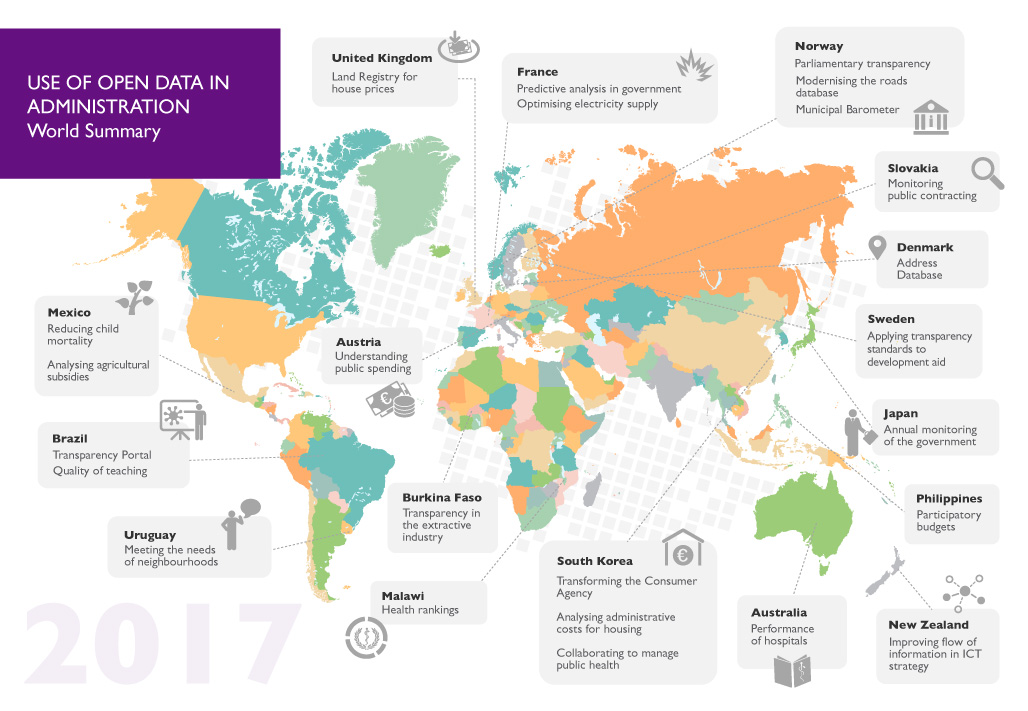
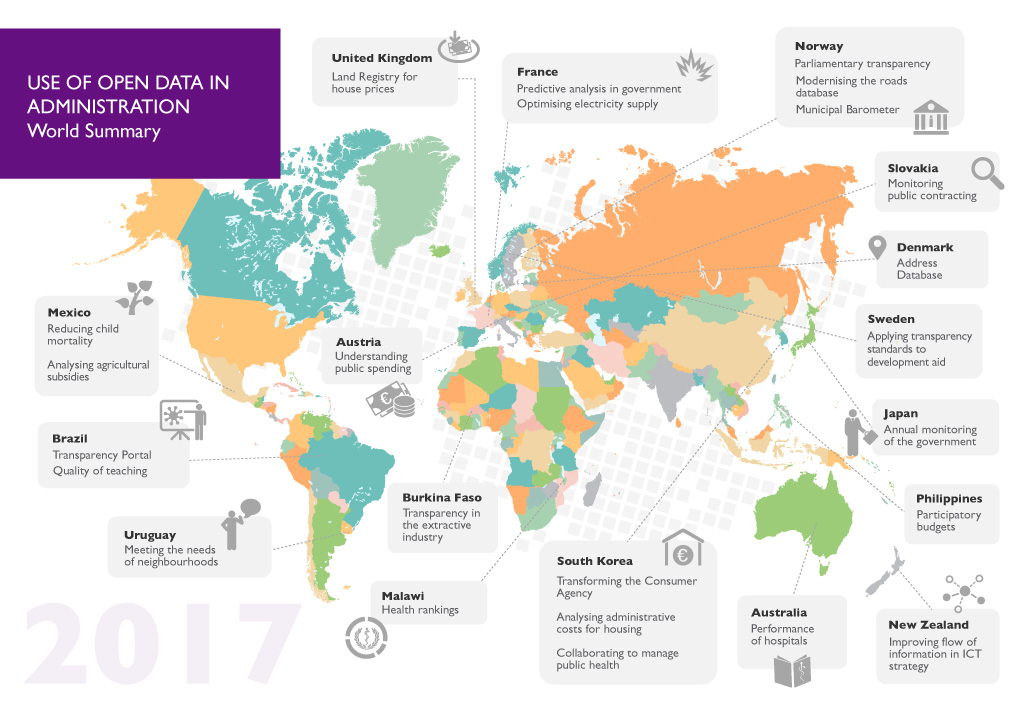
The creation of an open database in Japan to improve support for victims of the devastating earthquake in 2011, the early warning system to detect trends in diseases or epidemics launched by the Korean government, the portal for the quality of teaching in public schools in Brazil that drew on data from the Ministry of Education, the buildings in France in order to optimise supply, and the large global database of companies presented by Open Corporates are excellent examples of how to make public administration more agile and efficient by making good use of data.
El sector público no es únicamente un gran proveedor de datos abiertos, sino que es también uno de los mayores usuarios y beneficiarios de la apertura de los datos gubernamentales. El informe “El valor de los datos abiertos para la Administración” que publicamos en Datos.gob.es hace un recorrido por un buen número de ejemplos de cómo la administración puede beneficiarse en distintas áreas y apoyarse en los datos para retroalimentarse, reflexionar, colaborar, comprender, optimizar y aprender.
La creación de una base de datos abiertos en Japón para mejorar la asistencia a las víctimas del gran terremoto de 2011; el servicio de alarma temprana para detectar tendencias sobre enfermedades o epidemias puesto en marcha por el gobierno de Corea; el portal sobre la calidad de la enseñanza en las escuelas públicas de Brasil con datos procedentes del ministerio de educación; el estudio sobre los datos de consumo eléctrico en los edificios públicos de Francia para optimizar el suministro o la gran base de datos global de empresas que nos ofrece Open Corporates son grandes ejemplos de cómo lograr una administración pública más ágil y eficiente a través de un buen uso de los datos.
The report highlights how the use of open data improves the efficiency and effectiveness of the government itself through better planning of available resources, collaboration between different departmental areas, scrutiny of the correct use of resources, improvements in the interoperability of data and processes, as well as the adoption of standards that facilitate the sharing and storage of data.
It also emphasises that the use of such open data drives public innovation by contributing to the identification of patterns that help decision-making, to more active development and implementation of public policies, and the improvement of data quality thanks to public feedback.
The attached Report can be downloaded in PDF, Word, and ODT format.
Noticia
The public sector is not only a large supplier of open data but also one of the largest users and beneficiaries of the opening of government data. The report ‘The value of open data for the Government’ that we published on Datos.gob.es outlines a large number of examples of how the government could see benefits in various areas and rely on the data for feedback and to reflect, cooperate, understand, optimise, and learn.
The creation of an open database in Japan to improve support for victims of the devastating earthquake in 2011, the early warning system to detect trends in diseases or epidemics launched by the Korean government, the portal for the quality of teaching in public schools in Brazil that drew on data from the Ministry of Education, the buildings in France in order to optimise supply, and the large global database of companies presented by Open Corporates are excellent examples of how to make public administration more agile and efficient by making good use of data.
The report highlights how the use of open data improves the efficiency and effectiveness of the government itself through better planning of available resources, collaboration between different departmental areas, scrutiny of the correct use of resources, improvements in the interoperability of data and processes, as well as the adoption of standards that facilitate the sharing and storage of data.
It also emphasises that the use of such open data drives public innovation by contributing to the identification of patterns that help decision-making, to more active development and implementation of public policies, and the improvement of data quality thanks to public feedback.
The document compiles concrete examples, such as the improvement in the management of public health services in Malawi due to the study of the in the various districts, the reduction in levels of infant mortality in Mexico due to the greater availability of information, and the significant improvement in quality seen in the database of addresses in Denmark due to the openness of the information.
Another advantage and benefit of open data for the government itself, as detailed in this report, is the promotion of transparency and innovation. ‘Monitoring of government's decisions and actions can be better performed, facilitating understanding of public policies and helping citizens to rebuild trust in their governments,’ notes the report.
Examples of the potential of open data in government include the Philippines’ open and participatory budgeting, the scrutiny of contracts in Slovakia due to their publication online, the project to publish all the information regarding public spending by local governments in Austria, and the transparency portal in Brazil.
The attached Report can be downloaded in PDF, Word, and ODT format.