


Noticia
A symptom of the maturity of an open data ecosystem is the possibility of finding datasets and use cases across different sectors of activity. This is considered by the European Open Data Portal itself in its maturity index. The classification of data and their uses by thematic categories boosts re-use by allowing users to locate and access them in a more targeted way. It also allows needs in specific areas to be detected, priority sectors to be identified and impact to be estimated more easily.
In Spain we find different thematic repositories, such as UniversiData, in the case of higher education, or TURESPAÑA, for the tourism sector. However, the fact that the competences of certain subjects are distributed among the Autonomous Communities or City Councils complicates the location of data on the same subject.
Datos.gob.es brings together the open data of all the Spanish public bodies that have carried out a federation process with the portal. Therefore, in our catalogue you can find datasets from different publishers segmented by 22 thematic categories, those considered by the Technical Interoperability Standard.
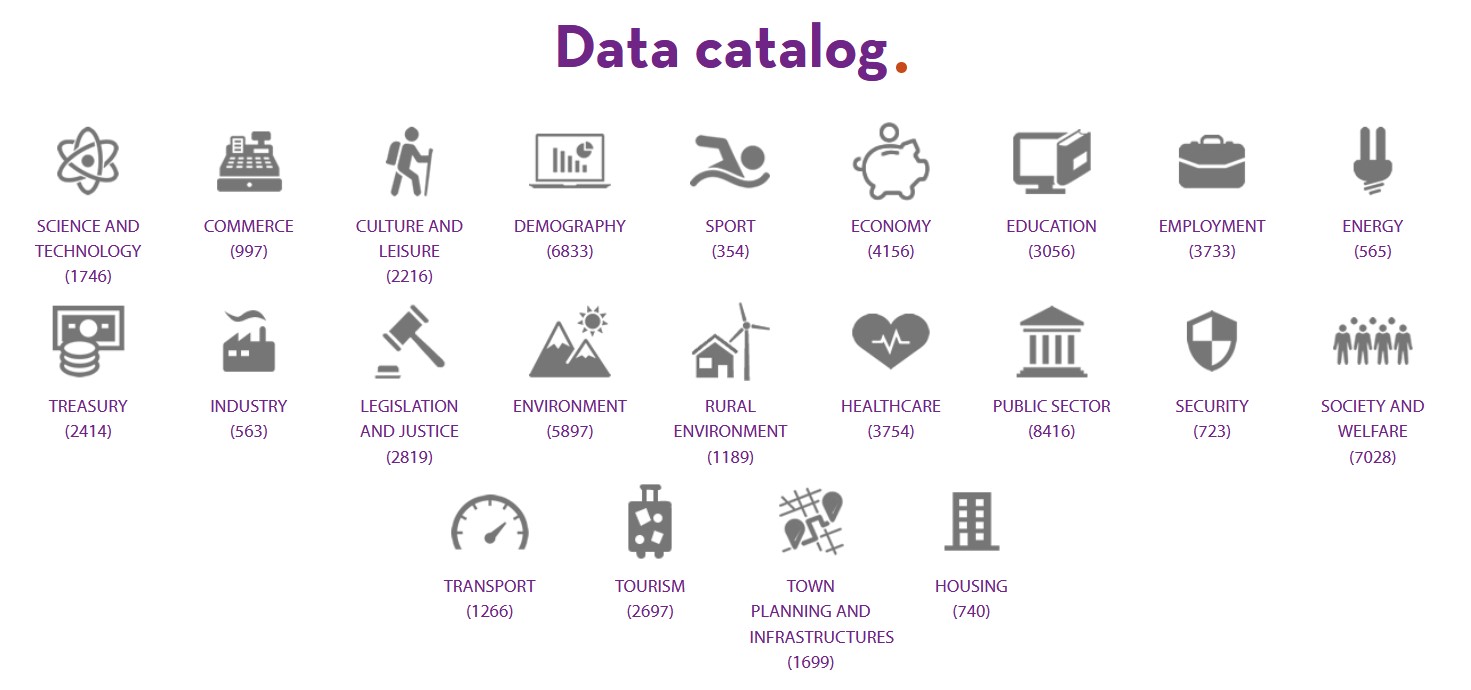
Number of datasets by category as of June 2021
But in addition to showing the datasets divided by subject area, it is also important to show highlighted datasets, use cases, guides and other help resources by sector, so that users can more easily access content related to their areas of interest. For this reason, at datos.gob.es we have launched a series of web sections focused on different sectors of activity, with specific content for each area.
4 sectorial sections that will be gradually extended to other areas of interest
Currently in datos.gob.es you can find 4 sectors: Environment, Culture and leisure, Education and Transport. These sectors have been highlighted for different strategic reasons:
- Environment: Environmental data are essential to understand how our environment is changing in order to fight climate change, pollution and deforestation. The European Commission itself considers environmental data to be highly valuable data in Directive 2019/1024. At datos.gob.es you can find data on air quality, weather forecasting, water scarcity, etc. All of them are essential to promote solutions for a more sustainable world.
- Transport: Directive 2019/1024 also highlights the importance of transport data. Often in real time, this data facilitates decision-making aimed at efficient service management and improving the passenger experience. Transport data are among the most widely used data to create services and applications (e.g. those that inform about traffic conditions, bus timetables, etc.). This category includes datasets such as real-time traffic incidents or fuel prices.
- Education: With the advent of COVID-19, many students had to follow their studies from home, using digital solutions that were not always ready. In recent months, through initiatives such as the Aporta Challenge, an effort has been made to promote the creation of solutions that incorporate open data in order to improve the efficiency of the educational sphere, drive improvements - such as the personalisation of education - and achieve more universal access to knowledge. Some of the education datasets that can be found in the catalogue are the degrees offered by Spanish universities or surveys on household spending on education.
- Culture and leisure: Culture and leisure data is a category of great importance when it comes to reusing it to develop, for example, educational and learning content. Cultural data can help generate new knowledge to help us understand our past, present and future. Examples of datasets are the location of monuments or listings of works of art.
Structure of each sector
Each sector page has a homogeneous structure, which facilitates the location of contents also available in other sections.
It starts with a highlight where you can see some examples of outstanding datasets belonging to this category, and a link to access all the datasets of this subject in the catalogue.
It continues with news related to the data and the sector in question, which can range from events or information on specific initiatives (such as Procomún in the field of educational data or the Green Deal in the environment) to the latest developments at strategic and operational level.
Finally, there are three sections related to use cases: innovation, reusing companies and applications. In the first section, articles provide examples of innovative uses, often linked to disruptive technologies such as Artificial Intelligence. In the last two sections, we find specific files on companies and applications that use open data from this category to generate a benefit for society or the economy.
Highlights section on the home page
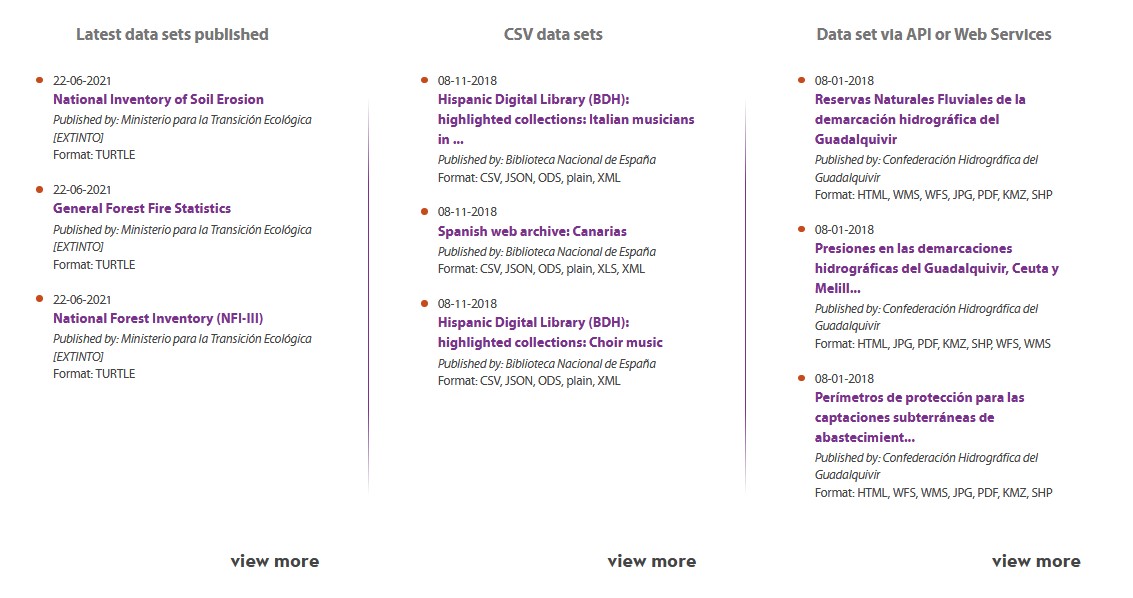
In addition to the creation of sectoral pages, over the last year, datos.gob.es has also incorporated a section of highlighted datasets. The aim is to give greater visibility to those datasets that meet a series of characteristics: they have been updated, are in CSV format or can be accessed via API or web services.
What other sectors would you like to highlight?
The plans of datos.gob.es include continuing to increase the number of sectors to be highlighted. Therefore, we invite you to leave in comments any proposal you consider appropriate.

Blog
Artificial intelligence is transforming companies, with supply chain processes being one of the areas that is obtaining the greatest benefit. Its management involves all resource management activities, including the acquisition of materials, manufacturing, storage and transportation from origin to final destination.
In recent years, business systems have been modernized and are now supported by increasingly ubiquitous computer networks. Within these networks, sensors, machines, systems, vehicles, smart devices and people are interconnected and continuously generating information. To this must be added the increase in computational capacity, which allows us to process these large amounts of data generated quickly and efficiently. All these advances have contributed to stimulating the application of Artificial Intelligence technologies that offer a sea of possibilities.
In this article we are going to review some Artificial Intelligence applications at different points in the supply chain.
Technological implementations in the different phases of the supply chain
Planning
According Gartner, volatility in demand is one of the aspects that most concern entrepreneurs. The COVID-19 crisis has highlighted the weakness in planning capacity within the supply chain. In order to properly organize production, it is necessary to know the needs of the customers. This can be done through techniques of predictive analytics that allow us to predict demand, that is, estimate a probable future request for a product or service. This process also serves as the starting point for many other activities, such as warehousing, shipping, product pricing, purchasing raw materials, production planning, and other processes that aim to meet demand.
Access to real-time data allows the development of Artificial Intelligence models that take advantage of all the contextual information to obtain more precise results, reducing the error significantly compared to more traditional forecasting methods such as ARIMA or exponential smoothing.
Production planning is also a recurring problem where variables of various kinds play an important role. Artificial intelligence systems can handle information involving material resources; the availability of human resources (taking into account shifts, vacations, leave or assignments to other projects) and their skills; the available machines and their maintenance and information on the manufacturing process and its dependencies to optimize production planning in order to satisfactorily meet the objectives.
Production
Within of the stages of the production process, one of the stages more driven by the application of artificial intelligence is the quality control and, more specifically, the detection of defects. According to European Comission, 50% of the production can end up as scrap due to defects, while, in complex manufacturing lines, the percentage can rise to 90%. On the other hand, non-automated quality control is an expensive process, as people need to be trained to be able to perform the inspections properly and, furthermore, these manual inspections could cause bottlenecks in the production line, delaying delivery times. Coupled with this, inspectors do not increase in number as production increases.
In this scenario, the application of computer vision algorithms can solve all these problems. These systems learn from defect examples and can thus extract common patterns to be able to classify future production defects. The advantages of these systems is that they can achieve the precision of a human or even better, since they can process thousands of images in a very short time and are scalable.
On the other hand, it is very important to ensure the reliability of the machinery and reduce the chances of production stoppage due to breakdowns. In this sense, many companies are betting on predictive maintenance systems that are capable of analyzing monitoring data to assess the condition of the machinery and schedule maintenance if necessary.
Open data can help when training these algorithms. As an example, the Nasa offers a collection of data sets donated by various universities, agencies or companies useful for the development of prediction algorithms. These are mostly time series of data from a normal operating state to a failed state. This article shows how one of these specific data sets (Turbofan Engine Degradation Simulation Data Set, which includes sensor data from 100 engines of the same model) can be taken to perform a exploratory analysis and a model of linear regression reference.
Transport
Route optimization is one of the most critical elements in transportation planning and business logistics in general. Optimal planning ensures that the load arrives on time, reducing cost and energy to a minimum. There are many variables that intervene in the process, such as work peaks, traffic incidents, weather conditions, etc. And that's where artificial intelligence comes into play. A route optimizer based on artificial intelligence is able to combine all this information to offer the best possible route or modify it in real time depending on the incidents that occur during the journey.
Logistics organizations use transport data and official maps to optimize routes in all modes of transport, avoiding areas with high congestion, improving efficiency and safety. According to the study “Open Data impact Map”, The open data most demanded by these companies are those directly related to the means of transport (routes, public transport schedules, number of accidents…), but also geospatial data, which allow them to better plan their trips.
In addition, exist companies that share their data in B2B models. As stated in the Cotec Foundation report “Guide for opening and sharing data in the business environment”, The Spanish company Primafrio, shares data with its customers as an element of value in their operations for the location and positioning of the fleet and products (real-time data that can be useful to the customer, such as the truck license plate, position, driver , etc.) and for billing or accounting tasks. As a result, your customers have optimized order tracking and their ability to advance billing.
Closing the transport section, uOne of the objectives of companies in the logistics sector is to ensure that goods reach their destination in optimal conditions. This is especially critical when working with companies in the food industry. Therefore, it is necessary to monitor the state of the cargo during transport. Controlling variables such as temperature, location or detecting impacts is crucial to know how and when the load deteriorated and, thus, be able to take the necessary corrective actions to avoid future problems. Technologies such as IoT, Blockchain and Artificial Intelligence are already being applied to these types of solutions, sometimes including the use of open data.
Customer service
Offering good customer service is essential for any company. The implementation of conversational assistants allows to enrich the customer experience. These assistants allow users to interact with computer applications conversationally, through text, graphics or voice. By means of speech recognition techniques and natural language processing, these systems are capable of interpreting the intention of users and taking the necessary actions to respond to their requests. In this way, users could interact with the wizard to track their shipment, modify or place an order. In the training of these conversational assistants it is necessary to use quality data, to achieve an optimal result.
In this article we have seen only some of the applications of artificial intelligence to different phases of the supply chain, but its capacity is not only limited to these. There are other applications such as automated storage used by Amazon at its facilities, dynamic prices depending on the demand or the application of artificial intelligence in marketing, which only give an idea of how artificial intelligence is revolutionizing consumption and society.
Content elaborated by Jose Antonio Sanchez, expert in Data Science and enthusiast of the Artificial Intelligence.
Contents and points of view expressed in this publication are the exclusive responsibility of its author.
Blog
Open mobility data plays a key role in transforming current transport networks and systems, promoting their digitization and improving their sustainability and efficiency. The European Union is aware of this situation, and for this reason it has not only included mobility data among the categories considered of high value in the directive (EU) 2019/1024, but also highlighted its importance in the new "Sustainable and smart mobility strategy", including lines of action related to its impulse, how we approach previously.
In this new article we are going to focus on the situation in Spain, where measures related to open data have also been included in the national mobility strategy.
The Secure, Sustainable, Connected Mobility Strategy 2030
The Secure, Sustainable, Connected Mobility Strategy 2030 (es.movilidad) published by the Ministry of Transport, Mobility and Urban Agenda (MITMA) in September 2020 recognizes the importance of open data in the process of digitization and automation of transport, as well as the regulatory challenges posed by collection conditions, transfer and access to the data generated in the different parts of the value chain. For this reason, the strategy proposes that a future Law on Sustainable Mobility and Transport Financing addresses these issues, offering solutions that eliminate barriers to the opening of data andwhat guarantee the privacy of users and the protection of different business strategies.
Although they are present in other measures, in axis 5 (Intelligent Mobility) of the Strategy there are four measures, three of them within the line of action for the Facilitation of Mobility as a Service, Open Data and New Technologies for Analysis and Optimization of Mobility, in which open data explicitly plays a prominent role:
- To the extent designed to promote the publication of open mobility data from MITMA in coordination with the data.gob.es platform aims to adopt a proactive role in making open data available (both planned and in real operation) that are relevant to society.
- The implementation of the National Data Access Point for multimodal travel aims to create a single repository of open transport data (schedules, fares, routes, geographical coordinates of stops, etc.) provided by transport authorities, operators, providers of shared mobility services or transport services on demand, infrastructure managers, etc. anyway at the national level. In this sense, it should be noted that MITMA intends to go beyond the mandatory minimum and create three other national access points (real-time traffic, safety information in relation to traffic and safe parking for freight transport).
- To promote the development of mobility applications, guaranteeing the availability of quality and real-time data, MITMA will analyze the convenience of promoting complementary regulation so that all transport operators, infrastructure managers, and transport service providers on demand. provide dynamic, reliable and real-time data of their transport services to be made available to third parties.
- Finally the design and implementation of the SIMPLE technology platform, also foresees the reuse of information throughout the logistics and transport chain, based on the principle of providing unique data only once. This platform will allow to know the traceability of goods in the different means of transport and, on the other hand, will allow the interconnection between the Public Administration and the different agents of the private logistics sector to facilitate trade and transport, nationally and internationally.
These measures are summarized in the following image:

On the other hand, a request for expressions of interest to identify proposals for the integration of artificial intelligence in the value chains of the economy in order to promote the digital transformation of the economic fabric, within the framework of Recovery Plan. And one of the five axes on which one's own National Artificial Intelligence Strategy (ENIA) recognizes the impact of AI and data is of course, sustainable and smart mobility. It should be noted that it is an invitation aimed at projects in the phases closest to the market of the innovation process based on medium to high maturity technologies (TRL 6 onwards) as a complement to R&D support actions.
Now that the pandemic period is coming to an end, the economic recovery effort opens up fascinating opportunities for innovation and digital transformation in sectors where the penetration of artificial intelligence and the use of data so far has been much lower than the sector of the information technologies, something that not only happens in mobility and transport but also in the farming, energy or health and education.
We are therefore faced with a unique opportunity that we cannot afford to miss; which is also accompanied by a significant boost in the form of public financing and in which transport and mobility stand out due to their impact not only on the economy, but also on the environment and on the quality of life of citizens.
Content written by Jose Luis Marín, Senior Consultant in Data, Strategy, Innovation & Digitalization.
The contents and points of view reflected in this publication are the sole responsibility of its author.
Blog
More than two years ago we started 2019 very hopeful about the progress that was being made in Spain regarding the openness of data related to transport and mobility, after a few years in which there had not been much progress. Although there is still room for improvement, especially in the availability of open data in real time, the fact that applications in the transport category already represent 20% of the total published on the datos.gob.es portal serves as an indicator of progress in this period.
In these two years, the pace of innovation in everything related to the use of data and artificial intelligence has been accelerated not only by technological progress, but also by a significant legislative impulse, both at European and national level. For example, the new Directive (EU) 2019/1024 considers data related to mobility and transport to be among the six groups declared to be of high value for their considerable benefits to society, the environment and the economy. Therefore, their momentum has been considered in the new mobility strategy.
European framework for mobility data
The European data strategy published in 2020 has among its objectives to create a single data market that ensures Europe's global competitiveness and data sovereignty through the creation of common European data spaces in nine strategic sectors, capable of ensuring that more data are available for use in the economy and society. Actions leading to the development of these data spaces are being channelled through the different strategies that the European Commission is developing to deliver on the priorities set for the period 2019-2024. Some examples already under development are the common manufacturing data space or the common agricultural data space.
As regards transport, in December 2020 the European Commission presented its "Sustainable and Smart Mobility Strategy" accompanied by an action plan of 82 initiatives for the next 4 years that will contribute to achieving the objectives of the European Green Pact. This strategy lays the groundwork for how the EU transport system must achieve its green and digital transformation to become more resilient to future crises.
Although the role of data is present in most of the points, among the ten key actions there is one that focuses exclusively on the role of data. In Action 7: "Innovation, data and artificial intelligence for smarter mobility", in addition to the objectives related to fostering innovation in general and building adequate digital infrastructures, the following points related to data and artificial intelligence stand out:
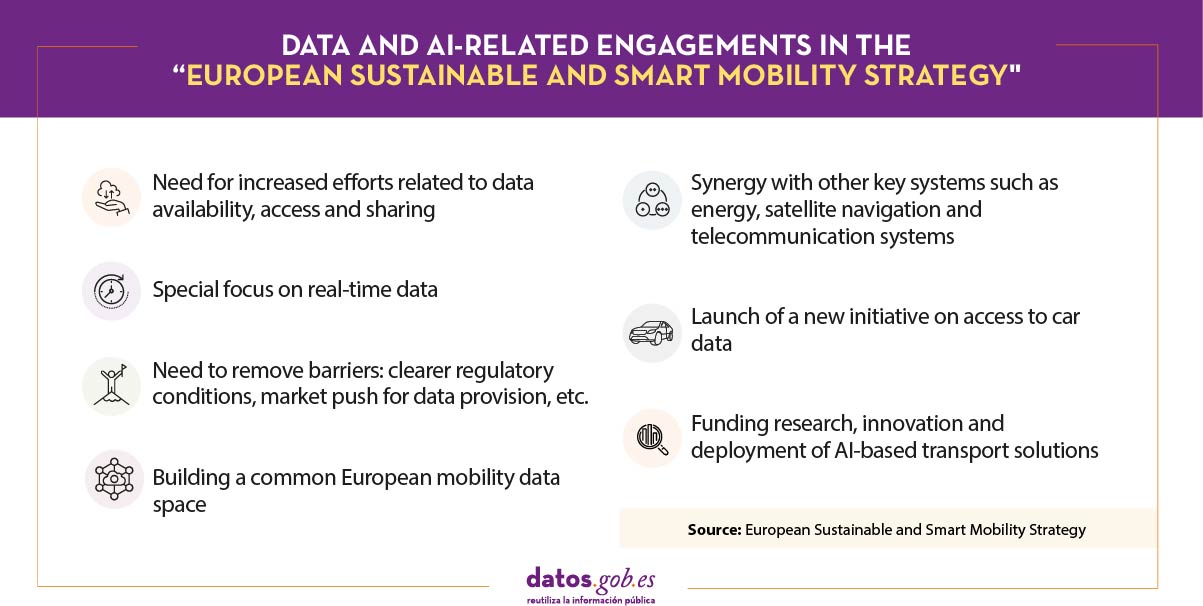
- The Commission stresses the need to step up efforts related to data availability, access and exchange in order to make the digital transformation of the transport and mobility sector a reality.
- It recognises that the availability of data and statistics is also essential, especially real-time data, as it enables better services to citizens or transparency of supply chains in freight transport.
- The need to remove barriers such as unclear regulatory conditions, the absence of an EU market for data provision, the lack of an obligation to collect and share data or misgivings about data sovereignty, among others, is highlighted.
- The commitment to propose further actions to build a common European data space for mobility data, set out in the Data Strategy, is developed. This sets the objective of collecting, connecting and making data available to achieve the objectives of sustainability and multimodality.
- Of particular relevance is the commitment that the mobility data space should work in synergy with other key systems such as energy, satellite navigation and telecommunications.
- It deals in a very differentiated way with access to vehicle data where the Commission is committed to present a new initiative on access to vehicle data, through which it will propose a balanced framework to ensure fair and efficient access to vehicle data for mobility service providers.
- The Commission plans to fund research, innovation and deployment of transport solutions based on artificial intelligence through the Horizon Europe and Digital Europe programmes, recognising that artificial intelligence is central to the automation of transport in all its modes. In this context, the Commission will support test and experimentation centres dedicated to AI for smart mobility.
This is certainly a very ambitious set of commitments that must also be compatible with EU data protection rules and ensure a level playing field for data in the value chain, so that innovation can flourish and new business models emerge. Otherwise operators would perceive that the common mobility data space is not secure and reliable for sharing their data and it would be very difficult to meet the ambitious targets that already by 2030 aim for automated mobility to be deployed on a large scale and for multimodal passenger transport to be a reality supported by integrated e-ticketing.
Contenido elaborado por Jose Luis Marín, Senior Consultant in Data, Strategy, Innovation & Digitalization.
The contents and views expressed in this publication are the sole responsibility of the author.
Noticia
Data related to mobility and transport are among the most demanded by users and re-users. The European Union itself considers them as high-value data, according to the preliminary classification included in Directive (EU) 2019/1024, due to their "considerable benefits for society, the environment and the economy".
The opening and re-use of transport data brings benefits for all:
- Public bodies. Detailed information, often in real time, helps public authorities to make decisions aimed at efficient infrastructure management and service improvement. It also helps to reduce costs, as demonstrated several years ago in the UK’s Transport for London (ODImpact) study by the GovLab.
- Private transport companies. Private public transport operators, mobility service providers and private infrastructure managers also need reliable information to understand the different variables that affect their business and to act accordingly, adapting their services to users' needs.
- Businesses and re-users. The openness of transport data stimulates economic growth. There is a huge market for applications based on transport data. You only need to take a look at the applications section of our portal to see that almost 20% of the applications highlighted are related to this category: applications that provide information on traffic conditions, public service timetables, the best routes to reach the requested destination, etc.
- Citizens. Thanks to these solutions, citizens can, for example, plan their journey in advance, thus saving time, and benefit from more efficient, accessible and sustainable transport.
What kind of data related to mobility and transport can I find in datos.gob.es?
At datos.gob.es we have an extensive catalogue of data related to mobility. There are currently 1,820 datasets grouped under a category called "Transport", following the cataloguing rules set out in the Technical Interoperability Standard (NTI, in its Spanish acronym). Based on this standard, this category includes communications and traffic datasets, such as data on traffic control, registrations, accidents, civil aviation, land transport (road and rail) or merchant navy, among others.
Most of these datasets are in CSV (1,333) and JSON (1,113) format, facilitating their re-use. There are state, regional and local data. The publishers that share the most data of this type are the National Statistics Institute (INE), Gijón City Council, the Autonomous Community of the Basque Country and Madrid City Council.
The most important of these datasets are listed below, together with the format in which they can be consulted:
At the state level
- INE. Movement of people by mobility areas. Daily. National. CSV, XLSX, XLS, HTML, PC-Axis, JSON.
- Port Authority of Barcelona. Railway services of the Port of Barcelona. RDF-XML.
- Port Authority of the Balearic Islands. Maritime traffic forecast. CSV, HTML.
- Renfe – Operator. List of Alta Velocidad, Larga Distancia and Media Distancia stations. CSV, XLSX.
- Central Trafficking Office. Driver census. CSV, XLS.
- Central Trafficking Office. Traffic accidents with victims. XLS
At Autonomous Community level
- Autonomous Community of the Canary Islands. Vehicles registered according to type of vehicle and services by Canary Islands and time periods. HTML, JSON, PC-Axis.
- Basque Government. Transport and mobility resources in the Basque Country. KML, Api, GeoJSON, XML, RSS, JSON, XLSX.
- Government of Catalonia. Monthly electrified and hybrid vehicle registrations in Catalonia. XML-APP, CSV, JSON, RDF-XML.
- Government of Catalonia. Real time road incidents in Catalonia. RSS, XML-APP.
- Government of the Balearic Islands. Mallorca Car Rental Agencies. RDF-XML, CSV, XML-APP, JSON.
- Government of Aragon. Mobility analysis with Big Data. CSV, JSON, XLS, XML-APP.
- Castilla y Leon Government. Statistics on passenger cars. CSV, RDF-XML, JSON.
- Andalusian Government. Data from the Andalusian Network of Transport Consortiums. JSON.
- Government of Valencia. GTFS of itineraries and timetables of intercity public transport services by bus. ZIP.
At local level
- Madrid City Council. Bicycle. Quiet streets. KML, ZIP, XLS, CSV.
- La Palma Island Council. Road and track infrastructures. HTML, JSON.
- Barcelona City Council. Surface parking spots rates' information in the city of Barcelona. CSV.
- Santiago de Compostela City Council. Real time traffic observations. CSV, GML, JSON.
- Alcoy City Council. Charging points. KML, ZIP, JSON.
- Terrasa City Council. Petrol stations. CSV.
- Santander City Council. TUS sales/recharge points. HTML, RDF-XML, CSV, RDF-Turtle, RDF-N3, JSON, XML-APP, JSON-LD, Atom.
- Caceres City Council. Caceres Monumental City car park. XLS, GeoJSON, JSON, RDF-Turtle, CSV, SPARQL.
- Pamplona City Council. Car park occupancy in real time. XML-APP.
In addition, the Ministry of Transport, Mobility and Urban Agenda is publishing new datasets. Specifically, the data on mobility in Spain during the COVID-19 pandemic at national level. These data, which are now openly available on the Ministry's website, are the result of the Mobility Study with Big Data carried out to assess the effectiveness of the mobility restriction measures adopted during the state of alarm and to support decision-making.
Some examples of re-use of mobility-related data
As we saw earlier, data related to mobility is a great raw material for the impulse of ingenuity and creativity in the form of new products and services. The best known are the applications that provide information on the timetables of public transport services or the most suitable routes and means of transport for each journey, but there are many more.
In our section on reusing companies we find some organisations that have taken advantage of this data to develop new businesses. One example is Canard Drones, which develops and markets solutions for the verification and calibration of navigation aids (NAVAID) and runway inspection, using public data. Another example is remOT Technologies and its RuralMaps application, which facilitates GPS navigation on roads in rural environments by indicating the optimal and fastest route to reach the desired destination, saving cost and time for agricultural technicians and emergency services.
Transport data can also be used to enrich tourism applications and improve the experience of visitors, who can find all the information they need to enjoy their stay (hotels, transport, points of interest, etc.) on a single platform. Or they can help to improve the architecture of cities: the data collected can be used to define spaces that are more suitable for the common good in cities, for example, the necessary width of pavements.
With the rise of smart cities, with IoT devices collecting data to manage assets and resources efficiently, we can expect more and more mobility data to become available. Data that can be queried, enriched with new data, and used to create valuable applications and services.
We live in a world where travellers' needs and habits are constantly evolving, and there is a growing demand for efficiency and flexibility in mobility options. Open data can help respond to this demand, while driving economic development.
Blog
When we think about the reasons for promoting open data policies, one of the main reasons that immediately comes to mind is the improvement of citizens' life quality. There are many areas where open data have shown a significant impact on improving our day to day decisions-making, but one of the most important is related to mobility.
Public transport is one of the basic services managed by our public administrations to contribute to the efficient and sustainable development of people's travel needs. In addition, of course, an enormous amount of data is generated. Published in the form of open data, these data contributes even more to the efficiency and sustainability of transport, which, moreover, is increasingly intermodal.
In 2013, the consulting firm McKinsey & Company identified three ways in which open data can help local and state governments reduce transport costs and improve service: 1) contributing to improved infrastructure planning and management, 2) optimising fleet investment and 3) providing better information for user decision-making. This does not include the indirect usefulness that mobility data can have for organizations that operate outside mobility area, such as tourism.
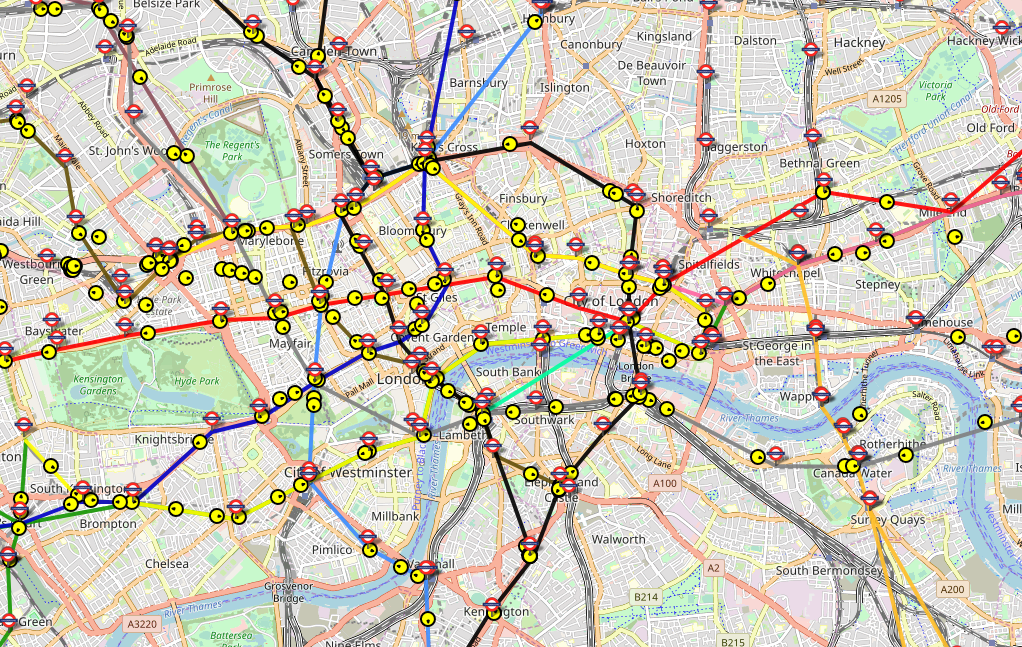
In cities such as London, we saw how open data from city's transport authority, Transport for London (TfL), was used in a Hackaton to map the approximate location of metro trains in real time, even before June 2010. This project, which is still available on the web, is just one example of the multitude of applications built to try to optimise the transport decisions made by the citizens of London every day. According to Deloitte's 2017 assessment report, the city economic impact is 130 million pounds per year, with 42% of Londoners using some application based on open TfL data. Around 14,000 developers are registered to data access and more than 700 applications are feed with these data, giving a clear idea of why TfL is considered a world reference in open public transport data.
It is not a coincidence that in the 2018 Open Data Barometer, the United Kingdom scored 100 in the transport category.
The fourth edition of the Open Data Barometer (2016), the last complete version, ranked Spain 11th with a total of 73 points out of 100. The barometer methodology scores the state of open data in 15 key areas including legislation, land registration, commercial registration, environmental statistics and, of course public, transport data. Among the four worst scores that Spain obtains in these 15 areas is precisely data on public transport timetables, which obtain 15 points out of 100.
It is striking that in this decade (taking as reference 2016), Spain has not reached a degree of development commensurate with the importance of open transport data potential impact.
If we review the large applications of urban or interurban mobility, we see that both Moovit and Google Transit have real-time data from numerous cities in Spain. Moovit states that it works with 35 cities in Spain and Google lists 27 cities and a good number of inter-regional sources. On the other hand, few cities, such as Malaga or Gijón, publish these data in their open data portals, thus limiting the possibilities for developers to form ecosystems that propose mobility innovations that could be very beneficial for citizens.
However, something seems to be changing if we look at the announcements we have seen in 2018 related to important advances in the publication of open data related to transport and mobility.
The municipal transport company of Madrid has launched MyNavega in 2018 to allow users to configure maps and data, based on the contents found in the EMT GIS and has announced that it is working on a new API REST to improve access to its data.
The Metropolitan Area of Barcelona (AMB) announced at the ESRI 2018 Conference the launch of a geoportal that allows viewing and downloading detailed maps of topography, land use, orthophotos and details of public transport for the 36 municipalities that make up the metropolitan area.
In addition to these advances, Renfe announced at the 2018 Aporta meeting, the launch of its open data portal, which is already available with 47 data sets related to stations, timetables and indicators. This is another important step towards a more decisive impulse in the publication and reuse of open public transport data.
We hope that these remarkable advances in 2018 will mean that 2019 will be the year of open public transport and mobility data in Spain.
Content prepared by Jose Luis Marín, Head of Corporate Technology Startegy en MADISON MK and Euroalert CEO.
Contents and points of view expressed in this publication are the exclusive responsibility of its author.
Noticia
At the end of 2018, Renfe launched its open data portal, a space to share information and key indicators with citizens. The launch of this portal was part of its digital transformation strategy to, in its own words, "put the customer at the center of all its services".
With the continuous maintenance of this portal, the operator seeks to improve services and attention to users, as well as to promote transparency and accountability. But, as is always the case with open data, the aim is not only to make the data accessible to citizens, but also to encourage its dissemination and use. Renfe's open data federation with datos.gob.es and consequently also its federation with the European Data Portal enhance its visibility both nationally and internationally.
63 sets of data on rail transport
Renfe currently has 63 datasets, which provide information on stations, schedules and notices in 6 formats, as shown in the image below.
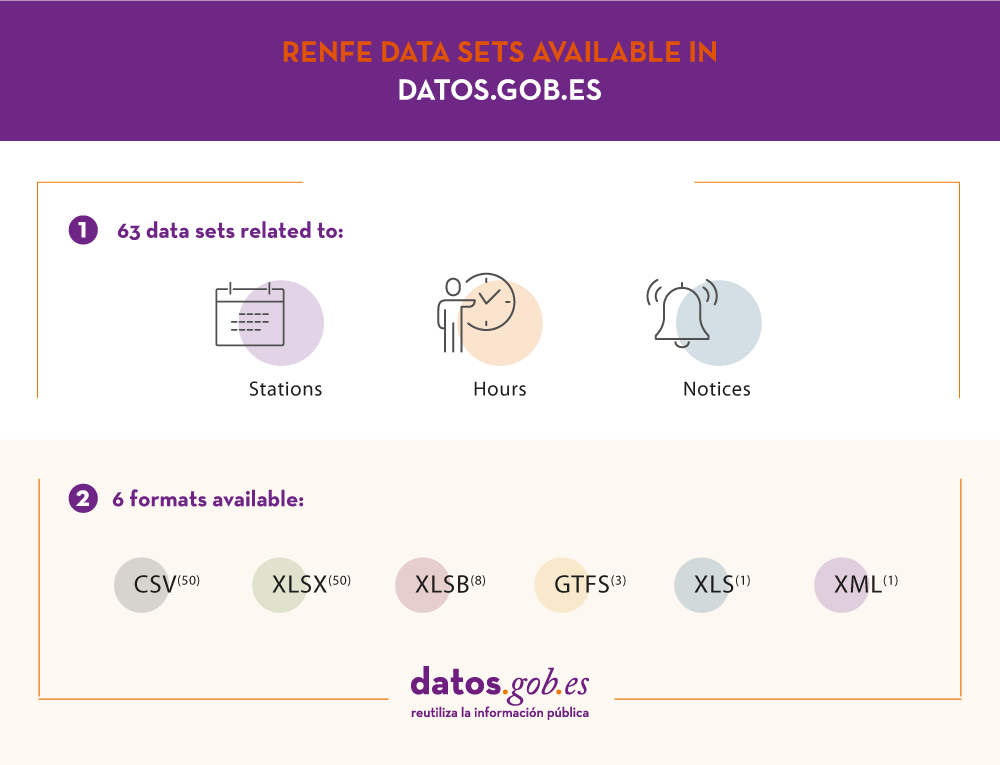
Since its inception, the portal has focused on providing operational data, such as general and suburban timetables, geolocated stations or notices of service changes. All of this, giving priority to machine-readable formats to facilitate their reuse.
Of all the datasets currently available, the most visited, according to their own control panel, are:
- High-speed, long-distance and medium-distance schedules.
- Local timetables.
- Stations. Complete list.
- Number of employees.
- List of High Speed, Long Distance and Medium Distance stations.
Renfe's idea is to continue expanding the datasets on a regular basis and taking into account the contributions of citizens. For example, on April 1 of this year they incorporated new data on Cercanías passengers by time slots, as well as train sheets.
Why are open transport data important?
Open data actions such as Renfe's help democratize information, so that it can be consumed free of charge and reused to create valuable products and services.
Transport data is one of the most reused data categories, which is why the European Commission (EC) has identified it as high-value data. In the datos.gob.es data applications section, you can find multiple examples of products and services that are based on this type of information.
The most popular applications created on the basis of this type of data are those that provide information on the arrival time and routes of the various trains or that integrate different transport methods to determine the easiest and quickest way to reach a destination, such as this example. But transport data also provide us with information to better understand our environment and make decisions. For example, we can know how the empty Spain moves, an important information for the development of policies to help us fight this problem. Or know the services of a particular metropolitan area, something fundamental when deciding where to buy a house.
These examples highlight the importance of transport data and why it is necessary to promote its openness and reuse. With the launch of its portal and its continuous updating, Renfe subscribes to its commitment to this type of data, and is aligned with the strategy set out by the European Union in its new directive, which highlights the need to open up transport data due to its great benefits for society, the environment and the economy.
Empresa reutilizadora
Desidedatum is a consultancy that offers public administrations and companies the tools and knowledge necessary to optimize processes, reduce costs and time. They offer personalized services according to their clients’ needs.
They have experience in Open Data, Transparency, Data Governance and Open Government.
Empresa reutilizadora
GIS4tech is a Spanish Spin-Off company founded in 2016, as a result of the research activity of the Cluster Territorial group and the Department of Urban Planning of the University of Granada. GIS4tech is dedicated to technical assistance, advice, training, research and development supported by Geographic Information Systems and related technologies. The team has more than 20 years of experience in territory studies, elaboration of cartographies and Geographic Information Systems.
Application
RuralMaps facilita la gestión de emergencias proporcionando información a través de mapas dinámicos que se adaptan a la situación del terreno.
La aplicación permite acceder a la red completa de caminos rurales y pistas forestales, y calcular la ruta óptima para alcanzar un destino en un momento determinado. Para ello, tiene en cuenta los eventos que se estén produciendo (incendios, inundaciones, etc.) y proporciona rutas alternativas que puede suponer un ahorro de recursos y de tiempo, algo vital en caso de emergencia.
RuralMaps puede ser de gran utilidad para los técnicos agrícolas y para los servicios de emergencia, como la policía, los bomberos o la guardia civil, que a veces tienen que alcanzar un destino sin conocer bien la situación del terreno, pero también puede ser utilizada por otros públicos en situaciones de normalidad. Entre sus usuarios también se encuentran, por ejemplo, turistas, que quieren conocer nuevas rutas para realizar senderismo o BTT.
Esta aplicación ha sido desarrollada por remOT Technologies, una empresa española nacida en torno a la actividad investigadora del grupo Geoforest-IUCA de la Universidad de Zaragoza. Para ello han utilizado datos abiertos procedentes del Instituto Geográfico Nacional.