


Blog
The Data Governance Act (DGA) is part of a complex web of EU public policy and regulation, the ultimate goal of which is to create a dataset ecosystem that feeds the digital transformation of the Member States and the objectives of the European Digital Decade:
- A digitally empowered population and highly skilled digital professionals.
- Secure and sustainable digital infrastructures.
- Digital transformation of companies.
- Digitisation of public services.
Public opinion is focusing on artificial intelligence from the point of view of both the opportunities and, above all, the risks and uncertainties. However, the challenge is much more profound as it involves in each of the different layers very diverse technologies, products and services whose common element lies in the need to favour the availability of a high volume of reliable and quality-checked data to support their development.
Promoting the use of data with legislation as leverage
At its inception the Directive 2019/1024 on open data and re-use of public sector information (Open Data Directive), the Directive 95/46/EC on the processing of personal data and on the free movement of such data, and subsequently the Regulation 2016/679 known as the General Data Protection Regulation(GDPR) opted for the re-use of data with full guarantee of rights. However, its interpretation and application generated in practice an effect contrary to its original objectives, clearly swinging towards a restrictive model that may have affected the processes of data generation for its exploitation. The large US platforms, through a strategy of free services - search engines, mobile applications and social networks - in exchange for personal data and with mere consent, obtained the largest volume of personal data in human history, including images, voice and personality profiles.
With the GDPR, the EU wanted to eliminate 28 different ways of applying prohibitions and limitations to the use of data. Regulatory quality certainly improved, although perhaps the results achieved have not been as satisfactory as expected and this is indicated by documents such as the Digital Economy and Society Index (DESI) 2022 or the Draghi Report (The future of European competitiveness-Part A. A competitiveness strategy for Europe).
This has forced a process of legislative re-engineering that expressly and homogeneously defines the rules that make the objectives possible. The reform of the Open Data Directive, the DGA, the Artificial Intelligence Regulation and the future European Health Data Space (EHDS) should be read from at least two perspectives:
- The first of these is at a high level and its function is aimed at preserving our constitutional values. The regulation adopts an approach focused on risk and on guaranteeing the dignity and rights of individuals, seeking to avoid systemic risks to democracy and fundamental rights.
- The second is operational, focusing on safe and responsible product development. This strategy is based on the definition of process engineering rules for the design of products and services that make European products a global benchmark for robustness, safety and reliability.
A Practical Guide to the Data Governance Law
Data protection by design and by default, the analysis of risks to fundamental rights, the development process of high-risk artificial intelligence information systems validated by the corresponding bodies or the processes of access and reuse of health data are examples of the legal and technological engineering processes that will govern our digital development. These are not easy procedures to implement. The European Union is therefore making a significant effort to fund projects such as TEHDAS, EUHubs4Data or Quantum , which operate as a testing ground. In parallel, studies are carried out or guides are published, such as the Practical Guide to the Data Governance Law.
This Guide recalls the essential objectives of the DGA:
- Regulate the re-use of certain publicly owned data subject to the rights of third parties ("protected data", such as personal data or commercially confidential or proprietary data).
- Boost data sharing by regulating data brokering service providers.
- Encourage the exchange of data for altruistic purposes.
- Establish the European Data Innovation Board to facilitate the exchange of best practices.
The DGA promotes the secure re-use of data through various measures and safeguards. These focus on the re-use of data from public sector bodies, data brokering services and data sharing for altruistic purposes.
To which data does it apply? Legitimation for the processing of protected data held by public sector bodies
In the public sector they are protected:
- Confidential business data, such as trade secrets or know-how.
- Statistically confidential data.
- Data protected by the intellectual property rights of third parties.
- Personal data, insofar as such data do not fall within the scope of the Open Data Directive when irreversible anonymisation is ensured and no special categories of data are concerned.
An essential starting point should be underlined: as far as personal data are concerned, the General Data Protection Regulation (GDPR) and the rules on privacy and electronic communications (Directive 2002/58/EC) also apply. This implies that, in the event of a collision between them and the DGA, the former will prevail.
Moreover, the DGA does not create a right of re-use or a new legal basis within the meaning of the GDPR for the re-use of personal data. This means that Member State or Union law determines whether a specific database or register containing protected data is open for re-use in general. Where such re-use is permitted, it must be carried out in accordance with the conditions laid down in Chapter I of the DGA.
Finally, they are excluded from the scope of the DGA:
- Data held by public companies, museums, schools and universities.
- Data protected for reasons of public security, defence or national security.
- Data held by public sector bodies for purposes other than the performance of their defined public functions.
- Exchange of data between researchers for non-commercial scientific research purposes.
Conditions for re-use of data
It can be noted that in the area of re-use of public sector data:
▪ The DGA establishes rules for the re-use of protected data, such as personal data, confidential commercial data or statistically sensitive data.
▪ It does not create a general right of re-use, but establishes conditions where national or EU law allows such re-use.
▪ The conditions for access must be transparent, proportionate and objective, and must not be used to restrict competition. The rule mandates the promotion of data access for SMEs and start-ups, and scientific research. Exclusivity agreements for re-use are prohibited, except in specific cases of public interest and for a limited period of time.
▪ Attributes to public sector bodies the duty to ensure the preservation of the protected nature of the data. This will require the deployment of intermediation methodologies and technologies. Anonymisation and access through secure processing environments (Secure processing environments or SPE) can play a key role. The former is a risk elimination factor, while PES can define a processing ecosystem that provides a comprehensive service offering to re-users, from the cataloguing and preparation of datasets to their analysis. The Spanish Data Protection Agency has published an Approach to data spaces from a GDPR perspective that includes recommendations and methodologies in this area.
▪ Re-users are subject to obligations of confidentiality and non-identification of data subjects. In case of re-identification of personal data, the re-user must inform the public sector body and there may be security breach notification obligations.
▪ Insofar as the relationship is established directly between the re-user and the public sector body, there may be cases in which the latter must provide support to the former for the fulfilment of certain duties:
- To obtain, if necessary, the consent of the persons concerned for the processing of personal data.
- In case of unauthorised use of non-personal data, the re-user shall inform the legal entities concerned. The public sector body that initially granted the permission for re-use may provide support if necessary.
▪ International transfers of personal data are governed by the GDPR. For international transfers of non-personal data, the re-user is required to inform the public sector body and to contractually commit to ensure data protection. However, this is an open question, since, as with the GDPR, the European Commission has the power to:
1. Propose standard contractual clauses that public sector bodies can use in their transfer contracts with re-users.
2. Where a large number of requests for re-use from specific countries justify it, adopt "equivalence decisions" designating these third countries as providing a level of protection for trade secrets or intellectual property that can be considered equivalent to that provided for in the EU.
3. Adopt the conditions to be applied to transfers of highly sensitive non-personal data, such as health data. In cases where the transfer of such data to third countries poses a risk to EU public policy objectives (in this example, public health) and in order to assist public sector bodies granting permissions for re-use, the Commission will set additional conditions to be met before such data can be transferred to a third country.
▪ Public sector bodies may charge fees for allowing re-use. The DGA's strategy aims at sustainability of the system, as fees should only cover the costs of making data available for re-use, such as the costs of anonymisation or providing a secure processing environment. This would include the costs of processing requests for re-use. Member States must publish a description of the main cost categories and the rules used for their allocation.
▪ Natural or legal persons directly affected by a decision on re-use taken by a public sector body shall have the right to lodge a complaint or to seek a judicial remedy in the Member State of that public sector body.
Organisational support
It is entirely possible that public sector bodies offering intermediation services will multiply. This is a complex environment that will require technical and legal support, backstopping and coordination.
To this end, Member States should designate one or more competent bodies whose role is to support public sector bodies granting re-use. The competent bodies shall have adequate legal, financial, technical and human resources to carry out the tasks assigned to them, including the necessary expertise. They are not supervisory bodies, they do not exercise public powers and, as such, the DGA does not set specific requirements as to their status or legal form. In addition, the competent body may be given a mandate to allow re-use itself.
Finally, States must create a Single Point of Information or one-stop shop. This Point will be responsible for transmitting queries and requests to relevant public sector bodies and for maintaining an asset list with an overview of available data resources (metadata). The single information point may be linked to local, regional or sectoral information points where they exist. At EU level, the Commission created the European Register of Protected Data held by the Public Sector (ERPD), a searchable register of information collected by national single points of information to further facilitate the re-use of data in the internal market and beyond.
EU regulations are rules that are complex to implement. Therefore, a special pro-activity is required to contribute to its correct understanding and implementation. The EU Guide to the Deployment of the Data Governance Act is a first tool for this purpose and will allow a better understanding of the objectives and possibilities offered by the DGA.
Content prepared by Ricard Martínez Martínez, Director of the Chair in Privacy and Digital Transformation, Department of Constitutional Law of the Universitat de València. The contents and points of view reflected in this publication are the sole responsibility of its author.

Blog
Almost half of European adults lack basic digital skills. According to the latest State of the Digital Decade report, in 2023, only 55.6% of citizens reported having such skills. This percentage rises to 66.2% in the case of Spain, ahead of the European average.
Having basic digital skills is essential in today's society because it enables access to a wider range of information and services, as well as effective communication in onlineenvironments, facilitating greater participation in civic and social activities. It is also a great competitive advantage in the world of work.
In Europe, more than 90% of professional roles require a basic level of digital skills. Technological knowledge has long since ceased to be required only for technical professions, but is spreading to all sectors, from business to transport and even agriculture. In this respect, more than 70% of companies said that the lack of staff with the right digital skills is a barrier to investment.
A key objective of the Digital Decade is therefore to ensure that at least 80% of people aged 16-74 have at least basic digital skills by 2030.
Basic technology skills that everyone should have
When we talk about basic technological capabilities, we refer, according to the DigComp framework , to a number of areas, including:
- Information and data literacy: includes locating, retrieving, managing and organising data, judging the relevance of the source and its content.
- Communication and collaboration: involves interacting, communicating and collaborating through digital technologies taking into account cultural and generational diversity. It also includes managing one's own digital presence, identity and reputation.
- Digital content creation: this would be defined as the enhancement and integration of information and content to generate new messages, respecting copyrights and licences. It also involves knowing how to give understandable instructions to a computer system.
- Security: this is limited to the protection of devices, content, personal data and privacy in digital environments, to protect physical and mental health.
- Problem solving: it allows to identify and solve needs and problems in digital environments. It also focuses on the use of digital tools to innovate processes and products, keeping up with digital evolution.
Which data-related jobs are most in demand?
Now that the core competences are clear, it is worth noting that in a world where digitalisation is becoming increasingly important , it is not surprising that the demand for advanced technological and data-related skills is also growing.
According to data from the LinkedIn employment platform, among the 25 fastest growing professions in Spain in 2024 are security analysts (position 1), software development analysts (2), data engineers (11) and artificial intelligence engineers (25). Similar data is offered by Fundación Telefónica's Employment Map, which also highlights four of the most in-demand profiles related to data:
- Data analyst: responsible for the management and exploitation of information, they are dedicated to the collection, analysis and exploitation of data, often through the creation of dashboards and reports.
- Database designer or database administrator: focused on designing, implementing and managing databases. As well as maintaining its security by implementing backup and recovery procedures in case of failures.
- Data engineer: responsible for the design and implementation of data architectures and infrastructures to capture, store, process and access data, optimising its performance and guaranteeing its security.
- Data scientist: focused on data analysis and predictive modelling, optimisation of algorithms and communication of results.
These are all jobs with good salaries and future prospects, but where there is still a large gap between men and women. According to European data, only 1 in 6 ICT specialists and 1 in 3 science, technology, engineering and mathematics (STEM) graduates are women.
To develop data-related professions, you need, among others, knowledge of popular programming languages such as Python, R or SQL, and multiple data processing and visualisation tools, such as those detailed in these articles:
- Debugging and data conversion tools
- Data analysis tools
- Data visualisation tools
- Data visualisation libraries and APIs
- Geospatial visualisation tools
- Network analysis tools
The range of training courses on all these skills is growing all the time.
Future prospects
Nearly a quarter of all jobs (23%) will change in the next five years, according to the World Economic Forum's Future of Jobs 2023 Report. Technological advances will create new jobs, transform existing jobs and destroy those that become obsolete. Technical knowledge, related to areas such as artificial intelligence or Big Data, and the development of cognitive skills, such as analytical thinking, will provide great competitive advantages in the labour market of the future. In this context, policy initiatives to boost society's re-skilling , such as the European Digital Education Action Plan (2021-2027), will help to generate common frameworks and certificates in a constantly evolving world.
The technological revolution is here to stay and will continue to change our world. Therefore, those who start acquiring new skills earlier will be better positioned in the future employment landscape.
Noticia
Digital transformation has become a fundamental pillar for the economic and social development of countries in the 21st century. In Spain, this process has become particularly relevant in recent years, driven by the need to adapt to an increasingly digitalised and competitive global environment. The COVID-19 pandemic acted as a catalyst, accelerating the adoption of digital technologies in all sectors of the economy and society.
However, digital transformation involves not only the incorporation of new technologies, but also a profound change in the way organisations operate and relate to their customers, employees and partners. In this context, Spain has made significant progress, positioning itself as one of the leading countries in Europe in several aspects of digitisation.
The following are some of the most prominent reports analysing this phenomenon and its implications.
State of the Digital Decade 2024 report
The State of the Digital Decade 2024 report examines the evolution of European policies aimed at achieving the agreed objectives and targets for successful digital transformation. It assesses the degree of compliance on the basis of various indicators, which fall into four groups: digital infrastructure, digital business transformation, digital skills and digital public services.

Figure 1. Taking stock of progress towards the Digital Decade goals set for 2030, “State of the Digital Decade 2024 Report”, European Commission.
In recent years, the European Union (EU) has significantly improved its performance by adopting regulatory measures - with 23 new legislative developments, including, among others, the Data Governance Regulation and the Data Regulation- to provide itself with a comprehensive governance framework: the Digital Decade Policy Agenda 2030.
The document includes an assessment of the strategic roadmaps of the various EU countries. In the case of Spain, two main strengths stand out:
- Progress in the use of artificial intelligence by companies (9.2% compared to 8.0% in Europe), where Spain's annual growth rate (9.3%) is four times higher than the EU (2.6%).
- The large number of citizens with basic digital skills (66.2%), compared to the European average (55.6%).
On the other hand, the main challenges to overcome are the adoption of cloud services ( 27.2% versus 38.9% in the EU) and the number of ICT specialists ( 4.4% versus 4.8% in Europe).
The following image shows the forecast evolution in Spain of the key indicators analysed for 2024, compared to the targets set by the EU for 2030.

Figure 2. Key performance indicators for Spain, “Report on the State of the Digital Decade 2024”, European Commission.
Spain is expected to reach 100% on virtually all indicators by 2030. 26.7 billion (1.8 % of GDP), without taking into account private investments. This roadmap demonstrates the commitment to achieving the goals and targets of the Digital Decade.
In addition to investment, to achieve the objective, the report recommends focusing efforts in three areas: the adoption of advanced technologies (AI, data analytics, cloud) by SMEs; the digitisation and promotion of the use of public services; and the attraction and retention of ICT specialists through the design of incentive schemes.
European Innovation Scoreboard 2024
The European Innovation Scoreboard carries out an annual benchmarking of research and innovation developments in a number of countries, not only in Europe. The report classifies regions into four innovation groups, ranging from the most innovative to the least innovative: Innovation Leaders, Strong Innovators, Moderate Innovators and Emerging Innovators.
Spain is leading the group of moderate innovators, with a performance of 89.9% of the EU average. This represents an improvement compared to previous years and exceeds the average of other countries in the same category, which is 84.8%. Our country is above the EU average in three indicators: digitisation, human capital and financing and support. On the other hand, the areas in which it needs to improve the most are employment in innovation, business investment and innovation in SMEs. All this is shown in the following graph:
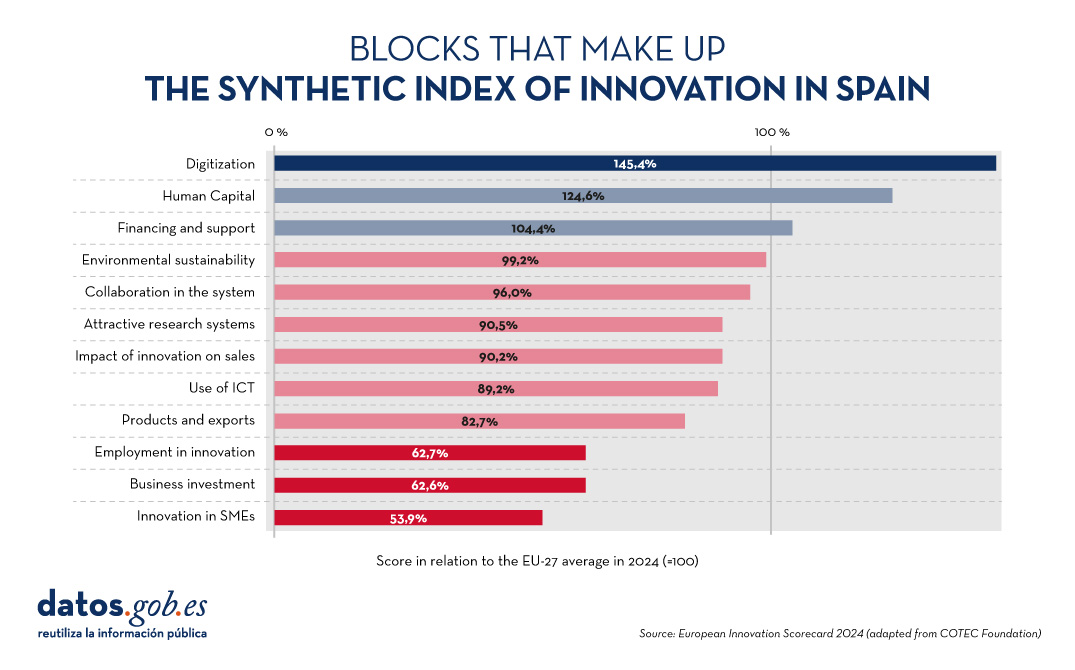
Figure 3. Blocks that make up the synthetic index of innovation in Spain, European Innovation Scorecard 2024 (adapted from the COTEC Foundation).
Spain's Digital Society Report 2023
The Telefónica Foundation also periodically publishes a report which analyses the main changes and trends that our country is experiencing as a result of the technological revolution.
The edition currently available is the 2023 edition. It highlights that "Spain continues to deepen its digital transformation process at a good pace and occupies a prominent position in this aspect among European countries", highlighting above all the area of connectivity. However, digital divides remain, mainly due to age.
Progress is also being made in the relationship between citizens and digital administrations: 79.7% of people aged 16-74 used websites or mobile applications of an administration in 2022. On the other hand, the Spanish business fabric is advancing in its digitalisation, incorporating digital tools, especially in the field of marketing. However, there is still room for improvement in aspects of big data analysis and the application of artificial intelligence, activities that are currently implemented, in general, only by large companies.
Artificial Intelligence and Data Talent Report
IndesIA, an association that promotes the use of artificial intelligence and Big Data in Spain, has carried out a quantitative and qualitative analysis of the data and artificial intelligence talent market in 2024 in our country.
According to the report, the data and artificial intelligence talent market represents almost 19% of the total number of ICT professionals in our country. In total, there are 145,000 professionals (+2.8% from 2023), of which only 32% are women. Even so, there is a gap between supply and demand, especially for natural language processing engineers. To address this situation, the report analyses six areas for improvement: workforce strategy and planning, talent identification, talent activation, engagement, training and development, and data-driven culture .
Other reports of interest
The COTEC Foundation also regularly produces various reports on the subject. On its website we can find documents on the budget execution of R&D in the public sector, the social perception of innovation or the regional talent map.
For their part, the Orange Foundation in Spain and the consultancy firm Nae have produced a report to analyse digital evolution over the last 25 years, the same period that the Foundation has been operating in Spain. The report highlights that, between 2013 and 2018, the digital sector has contributed around €7.5 billion annually to the country's GDP.
In short, all of them highlight Spain's position among the European leaders in terms of digital transformation, but with the need to make progress in innovation. This requires not only boosting economic investment, but also promoting a cultural change that fosters creativity. A more open and collaborative mindset will allow companies, administrations and society in general to adapt quickly to technological changes and take advantage of the opportunities they bring to ensure a prosperous future for Spain.
Do you know of any other reports on the subject? Leave us a comment or write to us at dinamizacion@datos.gos.es.
Blog
Digital transformation has reached almost every aspect and sector of our lives, and the world of products and services is no exception. In this context, the Digital Product Passport (DPP) concept is emerging as a revolutionary tool to foster sustainability and the circular economy. Accompanied by initiatives such as CIRPASS (Circular Product Information System for Sustainability), the DPP promises to change the way we interact with products throughout their life cycle. In this article, we will explore what DPP is, its origins, applications, risks and how it can affect our daily lives and the protection of our personal data.
What is the Digital Product Passport (DPP)? Origin and importance
The Digital Product Passport is a digital collection of key information about a product, from manufacturing to recycling. This passport allows products to be tracked and managed more efficiently, improving transparency and facilitating sustainable practices. The information contained in a DPP may include details on the materials used, the manufacturing process, the supply chain, instructions for use and how to recycle the product at the end of its life.
The DPP has been developed in response to the growing need to promote the circular economy and reduce the environmental impact of products. The European Union (EU) has been a pioneer in promoting policies and regulations that support sustainability. Initiatives such as the EU's Circular Economy Action Plan have been instrumental in driving the DPP forward. The objectives of this plan are as follows:
- Greater Transparency: Consumers no longer have to guess about the origin of their products and how to dispose of them correctly. With a machine-readable DPP (e.g. QR code or NFC tag) attached to end products, consumers can make informed purchasing decisions and brands can eliminate greenwashing with confidence.
- Simplified Compliance: By creating an audit of events and transactions in a product's value chain, the DPP provides the brand and its suppliers with the necessary data to address compliance demands efficiently.
- Sustainable Production: By tracking and reporting the social and environmental impacts of a product from source to disposal, brands can make data-driven decisions to optimise sustainability in product development.
- Circular Economy: The DPP facilitates a circular economy by promoting eco-design and the responsible production of durable products that can be reused, remanufactured and disposed of correctly.
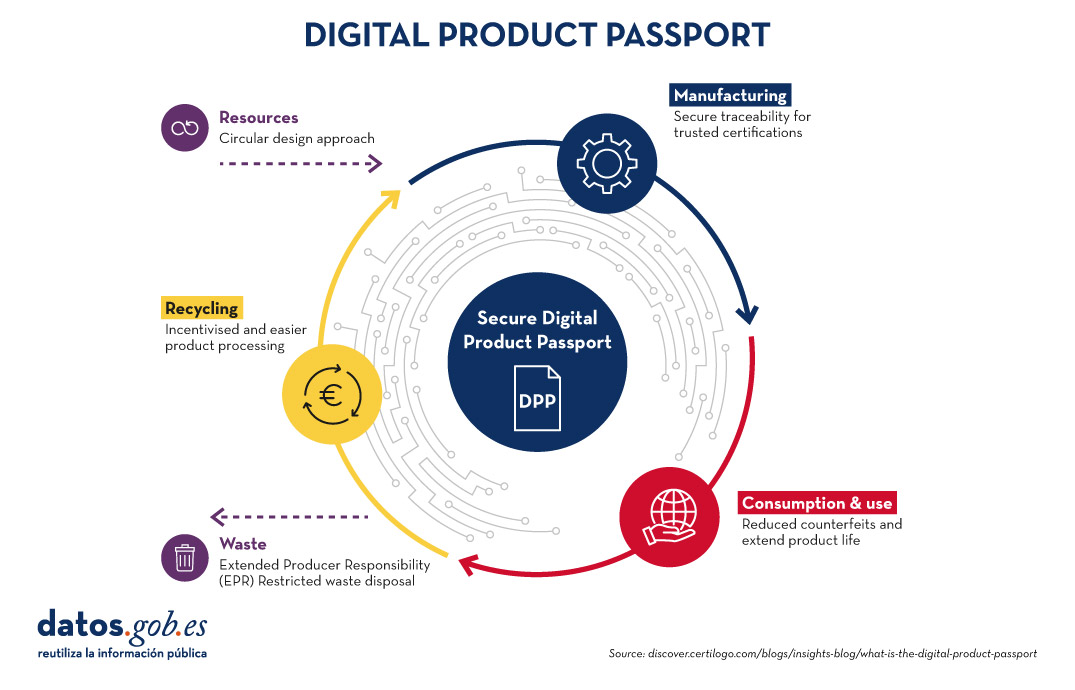
The following image summarises the main advantages of the digital passport at each stage of the digital product manufacturing process:
CIRPASS as a facilitator of DPP implementation
CIRPASS is a platform that supports the implementation of the DPP. This European initiative aims to standardise the collection and exchange of data on products, facilitating their traceability and management throughout their life cycle. CIRPASS plays a crucial role in creating an interoperable digital framework that connects manufacturers, consumers and recyclers.
DPP applications in various sectors
On 5 March 2024, CIRPASS, in collaboration with the European Commission, organised an event on the future development of the Digital Product Passport. The event brought together various stakeholders from different industries and organisations, who, with an eminently practical approach presented and discussed various aspects of the upcoming regulation and its requirements, possible solutions, examples of use cases, and the obstacles and opportunities for the affected industries and businesses.
The following are the applications of DPP in various sectors as explained at the event:
- Textile industry: It allows consumers to know the origin of the garments, the materials used and the working conditions in the factories.
- Electronics: Facilitates recycling and reuse of components, reducing electronic waste.
- Automotive: It assists in tracking parts and materials, promoting the repair and recycling of vehicles.
- Power supply: It provides information on food traceability, ensuring safety and sustainability in the supply chain.
The impact of the DPP on citizens' lives
But what impact will the use of this kind of novel paradigm have on our daily lives? And how does this impact on us as end users of multiple products and services such as those mentioned above? We will focus on four base cases: informed consumers in any field, ease of product repair, trust and transparency, and efficient recycling.
The DPP provides consumers with access to detailed information about the products they buy, such as their origin, materials and production practices. This allows consumers to make more informed choices and opt for products that are sustainable and ethical. For example, a consumer can choose a garment made from organic materials and produced under fair labour conditions, thus promoting responsible and conscious consumption.
Similarly, one of the great benefits of the DPP is the inclusion of repair guides within the digital passport. This means that consumers can easily access detailed instructions on how to repair a product instead of discarding it when it breaks down. For example, if an appliance stops working, the DPP can provide a step-by-step repair manual, allowing the user to fix it himself or take it to a technician with the necessary information. This not only extends the lifetime of products, but also reduces e-waste and promotes sustainability.
Also, access to detailed and transparent product information through the DPP can increase consumers' trust in brands. Companies that provide a complete and accurate DPP demonstrate their commitment to transparency and accountability, which can enhance their reputation and build customer loyalty. In addition, consumers who have access to this information are better able to make responsible purchasing decisions, thus encouraging more ethical and sustainable consumption habits.
Finally, the DPP facilitates effective recycling by providing clear information on how to break down and reuse the materials in a product. For example, a citizen who wishes to recycle an electronic device can consult the DPP to find out which parts can be recycled and how to separate them properly. This improves the efficiency of the recycling process and ensures that more materials are recovered and reused instead of ending up in landfill, contributing to a circular economy.
Risks and challenges of the DPP
Similarly, as a novel technology and as part of the digital transformation that is taking place in the product sectors, the DPP also presents certain challenges, risks and challenges such as:
- Data Protection: The collection and storage of large amounts of data can put consumers' privacy at risk if not properly managed.
- Security: Digital data is vulnerable to cyber-attacks, which requires robust security measures.
- Interoperability: Standardisation of data across different industries and countries can be complex, making it difficult to implement the DPP on a large scale.
- Costs: Creating and maintaining digital passports can be costly, especially for small and medium-sized enterprises.
Data protection implications
The implementation of the DPP and systems such as CIRPASS implies careful management of personal data. It is essential that companies and digital platforms comply with data protection regulations, such as the EU's General Data Protection Regulation (GDPR). Organisations must ensure that the data collected is used in a transparent manner and with the explicit consent of consumers. In addition, advanced security measures must be implemented to protect the integrity and confidentiality of the data.
Relationship with European Data Spaces
The European Data Spaces are an EU initiative to create a single market for data, promoting innovation and the digital economy. The DPP and CIRPASS are aligned with this vision, as they encourage the exchange of information between different actors in the economy. Data interoperability is essential for the success of the European Data Spaces, and the DPP can contribute significantly to this goal by providing structured and accessible product data.
Conclusion
In conclusion, the Digital Product Passport and the CIRPASS initiative represent a significant step towards a more circular and sustainable economy. Through the collection and exchange of detailed product data, these systems can improve transparency, encourage responsible consumption practices and reduce environmental impact. However, their implementation requires overcoming challenges related to data protection, security and interoperability. As we move towards a more digitised future, the DPP and CIRPASS have the potential to transform the way we interact with products and contribute to a more sustainable world.
Content prepared by Dr. Fernando Gualo, Professor at UCLM and Data Governance and Quality Consultant The content and the point of view reflected in this publication are the sole responsibility of its author.
Noticia
The European Parliament's tenth parliamentary term started on July, a new institutional cycle that will run from 2024-2029. The President of the European Commission, Ursula von der Leyen, was elected for a second term, after presenting to the European Parliament her Political Guidelines for the next European Commission 2024-2029.
These guidelines set out the priorities that will guide European policies in the coming years. Among the general objectives, we find that efforts will be invested in:
- Facilitating business and strengthening the single market.
- Decarbonise and reduce energy prices.
- Make research and innovation the engines of the economy.
- Boost productivity through the diffusion of digital technology.
- Invest massively in sustainable competitiveness.
- Closing the skills and manpower gap.
In this article, we will explain point 4, which focuses on combating the insufficient diffusion of digital technologies. Ignorance of the technological possibilities available to citizens limits the capacity to develop new services and business models that are competitive on a global level.
Boosting productivity with the spread of digital technology
The previous mandate was marked by the approval of new regulations aimed at fostering a fair and competitive digital economy through a digital single market, where technology is placed at the service of people. Now is the time to focus on the implementation and enforcement of adopted digital laws.
One of the most recently approved regulations is the Artificial Intelligence (AI) Regulation, a reference framework for the development of any AI system. In this standard, the focus was on ensuring the safety and reliability of artificial intelligence, avoiding bias through various measures including robust data governance.
Now that this framework is in place, it is time to push forward the use of this technology for innovation. To this end, the following aspects will be promoted in this new cycle:
- Artificial intelligence factories. These are open ecosystems that provide an infrastructure for artificial intelligence supercomputing services. In this way, large technological capabilities are made available to start-up companies and research communities.
- Strategy for the use of artificial intelligence. It seeks to boost industrial uses in a variety of sectors, including the provision of public services in areas such as healthcare. Industry and civil society will be involved in the development of this strategy.
- European Research Council on Artificial Intelligence. This body will help pool EU resources, facilitating access to them.
But for these measures to be developed, it is first necessary to ensure access to quality data. This data not only supports the training of AI systems and the development of cutting-edge technology products and services, but also helps informed decision-making and the development of more accurate political and economic strategies. As the document itself states " Access to data is not only a major driver for competitiveness, accounting for almost 4% of EU GDP, but also essential for productivity and societal innovations, from personalised medicine to energy savings”.
To improve access to data for European companies and improve their competitiveness vis-à-vis major global technology players, the European Union is committed to "improving open access to data", while ensuring the strictest data protection.
The European data revolution
"Europe needs a data revolution. This is how blunt the President is about the current situation. Therefore, one of the measures that will be worked on is a new EU Data Strategy. This strategy will build on existing standards. It is expected to build on the existing strategy, whose action lines include the promotion of information exchange through the creation of a single data market where data can flow between countries and economic sectors in the EU.
In this framework, the legislative progress we saw in the last legislature will continue to be very much in evidence:
- Directive (EU) 2019/1024 on open data and re-use of public sector information, which establishes the legal framework for the re-use of public sector information, made available to the public as open data, including the promotion of high-value data.
- Regulation (EU) 2022/868 on European Data Governance (EDG), which regulates the secure and voluntary exchange of data sets held by public bodies over which third party rights concur, as well as data brokering services and the altruistic transfer of data.
- Regulation (EU) 2023/2854 on harmonised rules for fair access to and use of data (Data Act), which promotes harmonised rules on fair access and use of data in the framework of the European Strategy.
The aim is to ensure a "simplified, clear and coherent legal framework for businesses and administrations to share data seamlessly and at scale, while respecting high privacy and security standards".
In addition to stepping up investment in cutting-edge technologies, such as supercomputing, the internet of things and quantum computing, the EU plans to continue promoting access to quality data to help create a sustainable and solvent technological ecosystem capable of competing with large global companies. In this space we will keep you informed of the measures taken to this end.
Blog
One of the main objectives of Regulation (EU) of the European Parliament and of the Council of 13 December 2023 on harmonised rules for fair access to and use of data (Data Regulation) is to promote the development of interoperability criteria for data spaces, data processing services and smart contracts. In this respect, the Regulation understands interoperability as:
The ability of two or more data spaces or communication networks, systems, connected products, applications, data processing services or components to exchange and use data to perform their functions.
It explicitly states that 'interoperable and high quality data from different domains increase competitiveness and innovationand ensure sustainable economic growth', which requires that 'the same data can be used and reused for different purposes and in an unlimited way, without loss of quality or quantity'. It therefore believes that "a regulatory approach to interoperability that is ambitious and inspires innovation is essential toovercome the dependence on a single provider, which hinders competition and the development of new services".
Interoperability and data spaces
This concern already existed in the European Data Strategy where interoperability was seen as a key element for the valorisation of data and, in particular, for the deployment of Artificial Intelligence. In fact, interoperability is an unavoidable premise for data spaces, so that the establishment of appropriate protocols becomes essential to ensure their potential, both for each of the data spaces internally and also in order to facilitate a cross-cutting integration of several of them.
In this sense, there are frequent standardisation initiatives and meetings to try to establish specific interoperability conditions in this type of scenario, characterised by the diversity of data sources. Although this is an added difficulty, a cross-cutting approach, integrating several data spaces, provides a greater impact on the generation of value-added services and creates the right legal conditions for innovation.
According to the Data Regulation, those who participate in data spaces and offer data or data services to other actors involved in data spaces have to comply with a number of requirements aimed precisely at ensuring appropriate conditions for interoperability and thus that data can be processed jointly. To this end, a description of the content, structure, format and other conditions of use of the data shall be provided in such a way as to facilitate access to and sharing of the data in an automated manner, including in real time or allowing bulk downloading where appropriate.
It should be noted that compliance with technical and semantic standards for interoperability is essential for data spaces, since a minimum standardisation of legal conditions greatly facilitates their operation. In particular, it is of great importance to ensure that the data provider holds the necessary rights to share the data in such an environment and to be able to prove this in an automated way
Interoperability in data processing services
The Data Regulation pays particular attention to the need to improve interoperability between different data processing service providers, so that customers can benefit from the interaction between each of them, thereby reducing dependency on individual providers.
To this end, firstly, it reinforces the reporting obligations of providers of this type of services, to which must be added those derived from the general regulation on the provision of digital content and services general regulation on the provision of digital content and services. In particular, they must be in writing:
- Contractual conditions relating to customer rights, especially in situations related to a possible switch to another provider or infrastructure.
- A full indication of the data that may be exported during the switching process, so that the scope of the interoperability obligation will have to be fixed in advance. In addition, such information has to be made available through an up-to-date online registry to be offered by the service provider.
The Regulation aims to ensure that customers' right to free choice of data service provider is not affected by barriers and difficulties arising from lack of interoperability. The regulation even contemplates an obligation of proactivity so that the change of provider takes place without incidents in the provision of the service to the customer, obliging them to adopt reasonable measures to ensure "functional equivalence" and even to offer free of charge open interfaces to facilitate this process. However, in some cases - in particular where two services are intended to be used in parallel - the former provider is allowed to pass on certain costs that may have been incurred.
Ultimately, the interoperability of data processing services goes beyond simple technical or semantic aspects, so that it becomes an unavoidable premise for ensuring the portability of digital assets, guaranteeing the security and integrity of services and, among other objectives, not interfering with the incorporation of technological innovations, all with a marked prominence of cloud services.
Smart contracts and interoperability
The Data Regulation also pays particular attention to the interoperability conditions allowing the automated execution of data exchanges, for which it is essential to set them in a predetermined way. Otherwise, the optimal operating conditions required by the digital environment, especially from the point of view of efficiency, would be affected.
The new regulation includes specific obligations for smart contract providers and also for those who deploy smart contract tools in the course of their commercial, business or professional activity. For this purpose, a smart contract is defined as a contract that
a computer programme used for the automated execution of an agreement or part thereof, which uses a sequence of electronic data records and ensures their completeness and the accuracy of their chronological order
They have to ensure that smart contracts comply with the obligations of the Regulation as regards the provision of data and, among other aspects, it will be essential to ensure "consistency with the terms of the data sharing agreement that executes the smart contract". They shall therefore be responsible for the effective fulfilment of these requirements by carrying out a conformity assessment and issuing a declaration of compliance with these requirements.
To facilitate the enforcement of these safeguards, the Regulation provides for a presumption of compliance where harmonised standards published in the Official Journal of the European Union are respected the Commission is authorised to request European standardisation organisations to draw up specific provisions.
In the last five years, and in particular since the 2020 Strategy, there has been significant progress in European regulation, which makes it possible to state that the right legal conditions are in place to ensure the availability of quality data to drive technological innovation. As far as interoperability is concerned, very important steps have already been taken, especially in the public sector public sector where we can find disruptive technologies that can be extremely useful. However, the challenge of precisely specifying the scope of the legally established obligations still remains.
For this reason, the Data Regulation itself empowers the Commission toadopt common specifications to ensure effective compliance with the measures it envisages if necessary. However, this is a subsidiary measure, as other avenues to achieve interoperability, such as the development of harmonised standards through standardisation organisations, must be pursued first.
In short, regulating interoperability requires an ambitious approach, as recognised by the Data Regulation itself, although it is a complex process that requires implementing measures at different levels that go beyond the simple adoption of legal rules, even if such legislation represents an important step forward to boost innovation under the right conditions, i.e. beyond simple technological premises.
Content prepared by Julián Valero, Professor at the University of Murcia and Coordinator of the Research Group "Innovation, Law and Technology" (iDerTec). The contents and points of view reflected in this publication are the sole responsibility of its author.
Blog
The European Drug Report provides a current overview of the drug situation in the region, analysing the main trends and emerging threats. It is a valuable publication, with a high number of downloads, which is quoted in many media outlets.
The report is produced annually by the European Union Drugs Agency (EUDA), the current name of the former European Monitoring Centre for Drugs and Drug Addiction. It collects and analyses data from EU Member States, together with other partner countries such as Turkey and Norway, to provide a comprehensive picture of drug use and supply, drug harms and harm reduction interventions. The report contains comprehensive datasets on these issues disaggregated at the national level, and even, in some cases, at the city level (such as Barcelona or Palma de Mallorca).
This study has been carried out since 1993 and translated into more than 20 official languages of the European Union. However, in the last two years it has introduced a new feature: a change in internal processes to improve the visualisation of the data obtained. A process they explained in the recent webinar "The European Drug Report: using an open data approach to improve data visualisation", organised by the European Open Data Portal (data.europa.eu) on 25 June. The following is a summary of what the Observatory's representatives had to say at this event.
The need for change
The Observatory has always worked with open data, but there were inefficiencies in the process. Until now, the European Drug Report has always been published in PDF format, with the focus on achieving a visually appealing product. The internal process leading up to the publication of the report consisted of several stages involving various teams:
- A team from the Observatory checked the format of the data received from the supplier and, if necessary, adapted it.
- A specialised data analysis team created visualisations from the data.
- A specialised drafting team drafted the report. The team that had created the visualisations could collaborate in this phase.
- An internal team validated the content of the report.
- The data provider checked that the Observatory had interpreted the data correctly.
Despite the good reception of the report and its format, in 2022 the Observatory decided to completely change the publication format for the following reasons:
- Once the various steps of the publication process had been initiated, the data were formatted and were no longer machine-readable. This reduced the accessibility of the data, e.g. for screen readers, and limited its reusability.
- If errors were detected in the different steps of the process, they were corrected directly on the format of the data in this step. In other words, if an error was detected in a chart during the revision phase, it was corrected directly on that chart. This procedure could cause errors and dull the traceability of data, limiting efficiency: the same static graph could be present several times in the document and each mention had to be corrected individually.
- At the end of the process, the format of the source data had to be adjusted due to changes in the publication procedure.
- Many of the users who consulted the report did so from a mobile device, for which the PDF format was not always suitable.
- Because they are neither accessible nor mobile-friendly, PDF documents did not usually appear as the first result in search engines. This point is important for the Observatory, as many users find the report through search engines.
A responsive web format was needed, which automatically adjusts a website to the size and layout of its users' devices. The aim was to:
- Improved accessibility.
- A more streamlined process for creating visualisations.
- An easier translation process.
- An increase in visitors from search engines.
- Greater modularity.
The process behind the new report
In order to completely transform the publication format of the report, an ad hoc visualisation process has been carried out, summarised in the following image:
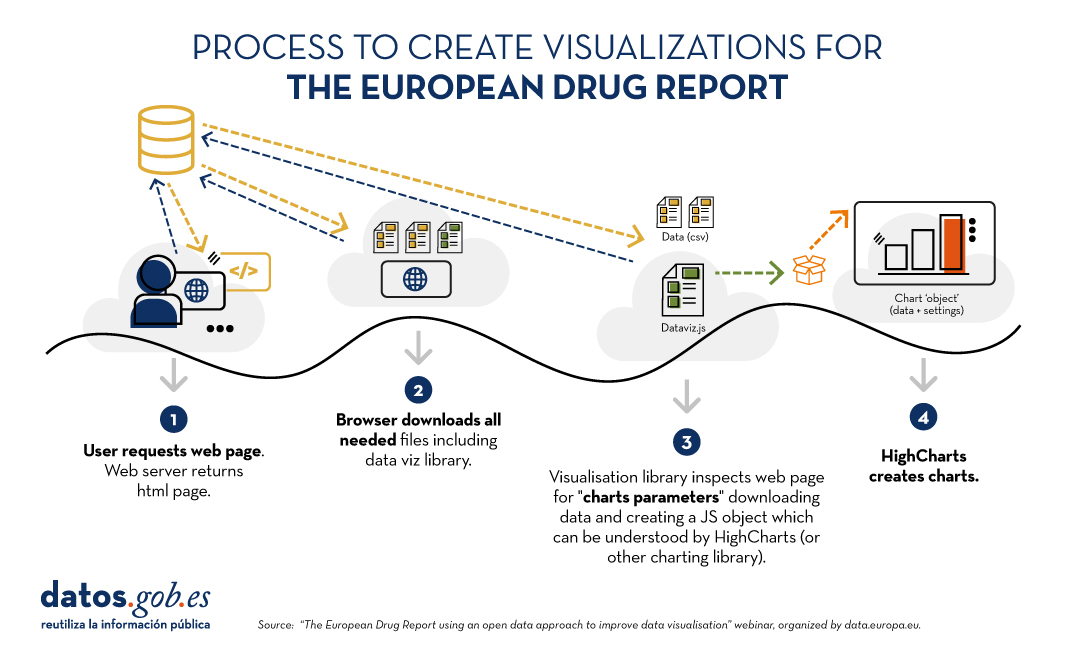
Figure 1. Process for creating visualizations for the European Drug Report. Source EN: Webinar “The European Drug Report using an open data approach to improve data visualisation”, organized by data.europa.eu.
The main new feature is that visualisations are created dynamically from the source data. In this way, if something is changed in these data, it is automatically changed in all visualisations that feed on it. Using the Drupal content management system, on which much of the site is based, administrators can register changes that will automatically be reflected in the HTML and therefore in the displays. In addition, site administrators have a visualisation generator which, based on data and indications - equivalent to simple instructions such as "sort from highest to lowest" expressed in HTML - creates visualisations without the need to touch code.
The same dynamic update procedure applies to the PDF that the user can download. If there are changes in the data, in the visualisations or if typographical errors are corrected, the PDF is generated again through a compilation process that the Observatory has created specifically for this task.
The report after the change
The report is currently published in HTML version, with the possibility to download chapters or the full report in PDF format. It is structured by thematic modules and also allows the consultation of annexes.
Furthermore, the data are always published in CSV format and the licensing conditions of the data (CC-BY-4.0) are indicated on the same page. The reference to the source of the data is always made available to the reader on the same page as a visualisation.
With this change in procedure and format, benefits for all have been achieved. From the readers' point of view, the user experience has been improved. For the organisation, the publication process has been streamlined.
In terms of open data, this new approach allows for greater traceability, as the data can be consulted at any time in its current format. Moreover, according to the Observatory speakers, this new format of the report, together with the fact that the data and visualisations are always up-to-date, has increased the accessibility of the data for the media.
You can access the webinar materials here:
Blog
The cross-cutting nature of open data on weather and climate data has favoured its use in areas as diverse as precision agriculture, fire prevention or the precision forestry. But the relevance of these datasets lies not only in their direct applicability across multiple industries, but also in their contribution to the challenges related to climate change and environmental sustainability challenges related to climate change and environmental sustainability, which the different action lines of the which the different action lines of the European Green Pact seek to address.
Meteorological data are considered by the European Commission, high value data in accordance with the annex to Regulation 2023/138. In this post we explain which specific datasets are considered to be of high value and the level of availability of this type of data in Spain.
The State Meteorological Agency
In Spain, it corresponds to the State Agency for Meteorology (AEMET) the mission of providing meteorological and climatological services at national level. As part of the Ministry for Ecological Transition and the Demographic Challenge. AEMET leads the related activities of observation, prediction and study of meteorological and climatic conditions, as well as research related to these fields. Its mission includes the provision and dissemination of essential information and forecasts of general interest. This information can also support relevant areas such as civil protection, air navigation, national defence and other sectors of activity.
In order to fulfil this mission, AEMET manages an open data portal that enables the reuse by natural or legal persons, for commercial or non-commercial purposes, of part of the data it generates, prepares and safeguards in the performance of its functions. This portal, known as AEMET OpenData currently offers two modalities for accessing and downloading data in reusable formats:
- General access, which consists of graphical access for the general public through human-friendly interfaces.
- AEMET OpenData API, designed for periodic or scheduled interactions in any programming language, which allows developers to include AEMET data in their own information systems and applications.
In addition, in accordance with Regulation 2023/138, it is envisaged to enable a third access route that would allow re-users to obtain packaged datasets for mass downloading where possible.
In order to access any of the datasets, an access key (API Key) which can be obtained through a simple request in which only an e-mail address is required, without any additional data from the applicant, for the sending of the access key. This is a control measure to ensure that the service is provided with adequate quality and in a non-discriminatory manner for all users.
AEMET OpenData also pioneered the availability of open meteorological data in Europe, reflecting AEMET''s commitment to the continuous improvement of meteorological services, support to the scientific and technological community, and the promotion of a more informed and resilient society in the face of climate challenges.
High-value meteorological datasets
The Annex to Regulation (EU) 2023/138 details five high-value meteorological data sets: weather station observations, validated weather data observations, weather warnings, radar data and numerical prediction model (NMP) data. For each of the sets, the regulation specifies the granularity and the main attributes to be published.
If we analyse the correspondence of the datasets that are currently available grouped in 14 categories in the portal AEMET OpenData portal, with the five datasets that will become mandatory in the coming months, we obtain the conclusions summarised in the following table:
| High-value meteorological datasets | Equivalence in the AEMET OpenData datasets |
|---|---|
| Observation data measured by meteorological stations | The "Conventional Observation" dataset, generated by the Observing Service, provides a large number of hourly variables on liquid and solid precipitation, wind speed and direction, humidity, pressure, air, soil and subsoil temperature, visibility, etc. It is updated twice an hour. In accordance with the Regulation, ten-minute data shall be included with continuous updating. |
| Climate data: validated observations | Within the category "Climatological Values", four datasets on climate data observations are provided: "Daily climatologies", "Monthly/annual climatologies", "Normal values" and "Recorded extremes". The validated dataset provided by the National Climatological Data Bank Service is normally updated once a day with a delay of four days due to validation processes. Attributes available include daily mean temperature, daily precipitation in its standard 07:00 to 07:00 measurement form, daily mean relative humidity, maximum gust direction, etc. In accordance with the Regulation, the inclusion of hourly climatology is planned. |
| Weather warnings | Adverse weather warnings" are provided for the whole of Spain, or segmented by province or Autonomous Community. Both the latest issued and the historical ones since 2018. They provide data on observed and/or forecast severe weather events, from the present time until the next 72 hours. These warnings refer to each meteorological parameter by warning level, for each weather zone defined in the Meteoalert Plan. It is generated by the Adverse Events Functional Groups and the information is available any time an adverse weather event is issued, in line with the Regulation, which requires the dataset to be published "as issued or hourly". In this case, AEMET announces preferential broadcasting hours: 09:00, 11:30, 23:00 y 23:50. |
| Radar data | There are two sets of data: "Regional radar graphic image" and "National radar composition image", which provide reflectivity images, but not the others described in the Regulation (backscatter, polarisation, precipitation, wind and echotop). The dataset is generated by the Land Remote Sensing group and the information is available at a periodicity of 10 minutes instead of the 5 minutes recommended in the Regulation. However, according to the Strategic Plan 2022-2025 of the AEMET the updating of the 15 weather radars and the incorporation of new radars with higher resolution is foreseen, so that in addition to strengthening the early warning system, the obligations of the Regulation can be fulfilled. |
| PMN model data | There are several datasets with forecast information, some available for download and some available on the web: weather forecast, normalised text forecast, specific forecasts, maritime forecast and maps of weather variables maps of the HARMONIE-AROME numerical models for different geographical areas and time periods. However, the AEMET, according to their frequently asked questions document does not currently consider numerical model outputs as open data. AEMET offers the possibility of requesting this or any other dataset through the general register or through the electronic site but this is not an option provided for in the Regulation. In line with this, the inclusion of numerical atmospheric and wave model outputs is foreseen. |
Figure 1: Table showing the equivalence between high value datasets and AEMET OpenData datasets.
The regulation also sets out a number of requirements for publication in terms of format, licence granted, frequency of updating and timeliness, means of access and metadata provided.
In the case of metadata, AEMET publishes, in machine-readable format, the main characteristics of the downloaded file: who prepares it, how often it is prepared, what it contains and its format, as well as information on the data fields (meteorological variable, unit of measurement, etc.). The copyright and terms of use are also specified by means of the legal notice. In this regard, it is foreseen that the current licences will be reviewed to make the datasets available under a licensing scheme compliant with the Regulation, possibly following the recommendation by adopting the license CC BY-SA 4.0.
All in all, it seems that the long track record of the State Meteorological Agency (AEMET) in providing quality open data has put it in a good position to comply with the requirements of the new regulation, making some adjustments to the datasets it already offers through AEMET OpenData to align them with the new obligations. AEMET plans to include in this service the datasets required by the Regulation and which are currently not available, as it adapts its regulations on public prices, as well as the infrastructure and systems that make this possible. Additional datasets that will be available will be ten-minute observation data, hourly climatologies and some data parameters from regional radars and numerical wave and forecast models.
Content prepared by Jose Luis Marín, Senior Consultant in Data, Strategy, Innovation & Digitalization. The contents and views reflected in this publication are the sole responsibility of the author.
Blog
Spain, as part of the European Union, is committed to the implementation of the European directives on open data and re-use of public sector information. This includes the adoption of initiatives such as the Implementing Regulation (EU) 2023/138 issued by the European Commission, which defines specific guidelines for government entities with regard to the availability of High value datasets (HVD). These data are categorised into themes previously detailed in earlier discussions: Geospatial, Earth Observation and Environment, Meteorology, Statistics, Societies and Societal Properties, and Mobility. In this article we will focus on the last group mentioned.
The Mobility category encompasses data collections falling under the domain of "Transport Networks", as demarcated in Annex I of the Directive 2007/2/EC of the European Parliament and of the Council of 14 March 2007 establishing an Infrastructure for Spatial Information in the European Community (INSPIRE). In particular, this Directive refers to the requirement to make available to users datasets relating to road, rail, air and inland waterway networks, with their associated infrastructure, connections between different networks and the trans-European transport network, as defined by Decision No 1692/96/EC of the European Parliament and of the Council of 23 July 1996 on Community guidelines for the development of the trans-European transport network.
In addition, it includes the datasets as described in the Directive 2005/44/EC of the European Parliament and of the Council of 7 September 2005 on harmonised River Information Services (RIS) on inland waterways in the Community. The main objective of the Directive is to improve inland waterway traffic and transport, and it applies to canals, rivers, lakes and ports capable of accommodating vessels of between 1,000 and 1,500 tonnes. These datasets include:
| Data type | Inland waterways datasets |
|---|---|
| Static data |
|
| Dynamic data |
|
| Inland electronic and navigational charts (Inland ENC according to the Inland ECDIS Standard) |
|
Figure 1: Table with the high value datasets related to Directive 2005/44/EC for the creation of a trans-European river information network.
In order for all of us to make the most of the information available, the Regulation defines some basic rules on how this data is shared:
- Free and easy to use. The data must be ready to be used and shared with everyone for any purpose by acknowledging and citing the source of the data, as prescribed by the Creative Commons BY 4.0 licence.
- Easy to read and use. Data will be presented in a way that both people and computers can easily understand them and everything will be explained in public.
- Direct and easy access. There will be special ways (called APIs) that allow programs to access data automatically. In addition, the user can alternatively download a lot of information at once.
- Always up to date. It is important that data is up to date, so there will be access to the most recent version. But if the user needs to access previous data, it will also be possible to view previous versions.
- Detailed and precise. Data will be shared in as much detail as possible, to a very fine level of accuracy, so that the whole territory is covered when combined.
- Information on information. There will be "information about the information" (metadata) that will tell everything about the data. The metadata shall contain at least the elements listed in the Annex to Commission Regulation (EC) No 1205/2008 of 3 December 2008.
- Understandable and orderly: It will explain well how the data are organised and what all means, in a way that is easy for everyone to understand (structure and semantics).
- Common language. Data shall use vocabularies, code lists and categories that are recognised and accepted at European or global level.
in Spain, who is responsible for the creation and maintenance of mobility data?
In Spain, the responsibility for the creation and maintenance of mobility data generally lies with different governmental entities, depending on the type of mobility and the territorial scope:
- Level national level. The Ministry of Transport and Sustainable Mobility is the main body in charge of mobility in terms of infrastructure and transport at national level. This would include data on roads, railways, air and maritime transport.
- Regional and local level. Autonomous communities and municipalities also play an important role in urban and regional mobility. They are responsible for urban mobility, public transport and public roads, within their respective jurisdictions.
- Public business entities. There are entities such as ADIF (acronym for Administrador de Infraestructuras Ferroviarias, that is Railway Infrastructure Administrator), AENA (acronym for Aeropuertos Españoles y Navegación Aérea, that is Spanish Airports and Air Navigation), Puertos del Estado (State Ports) and others tentities hat manage specific data related to their field of action in rail, air and maritime transport, respectively.
In Spain, the Ministry of Transport and Sustainable Mobility, in collaboration with the autonomous communities, plays a key role in providing access to a wide range of mobility data. In compliance with INSPIRE and LISIGE (Law 14/2010 of 5 July 2010 on geographic information infrastructures and services in Spain, which transposes the INSPIRE Directive), it offers resources such as the Geoportal of the Spatial Data Infrastructure of Spain (IDEE in Spanish acronyms) where citizens and professionals can access geographic data and services, especially with regard to mobility.
Does Spain comply with the HVD Mobility Regulation?
To solve this question we have to go to the INSPIRE Geoportal where official information classified as high value datasets in Europe is available. Specifically in the mobility category.

Figure 2: Screenshot of the Inspire Geoportal.
As of April 2024 Spain has published the following information in the INSPIRE Geoportal:
- Port service areas in Spain. The port service areas include the cartographic and alphanumeric information of the land service area and water areas I and II. The Spanish State-owned Port System is made up of 46 ports of general interest, managed by 28 Port Authorities.
- Spanish Transport Networks. The Transport Network of the Geographic Reference Information of the National Cartographic System of Spain is a three-dimensional network of national coverage, defined and published in accordance with the INSPIRE Directive, which contemplates five modes of transport: road, rail, inland waterways, air and cable, together with their respective intermodal connections and the infrastructures associated with each mode. This information has the linear geometry of the roads and the punctual geometry of the portals and kilometre points.
- ADIF''s Spanish Rail Transport Network. Public geographic dataset on the adaptation of the Spanish ADIF Common Traamification to the INSPIRE regulations (Transport Networks Annex I).
The publication of these high-value datasets responds positively to the question of Spain''s compliance with the HVD regulation, and is an achievement that reflects Spain''s continued commitment to transparency and access to mobility data.
The joint effort between the Ministry of Transport, Mobility and Urban Agenda, the National Cartographic System and the Autonomous Communities and Public Business Entities underlines the importance of a collaborative approach to mobility information management.
The availability of this data highlights Spain''s commitment to publishing high-value datasets and underlines the importance of continuously improving access to information to optimise inland navigation and mobility data.
Content prepared by Mayte Toscano, Senior Consultant in Data Economy Technologies. The contents and points of view reflected in this publication are the sole responsibility of its author.
Blog
The transformative potential of open data initiatives is now widely recognised as they offer opportunities for fostering innovation, greater transparency and improved efficiency in many processes. However, reliable measurement of the real impact of these initiatives is difficult to obtain.
From this same space we have also raised on more than one occasion the recurring question of what would be the best way to measure the impact of open data, we have reviewed different methods and best practices to try to quantify it, as well as to analyse it through detailed use cases or the specific impact on specific topics and sectors such as employment, geographic data, transport or sustainable development objectives. Now, thanks to the report "Indicators for Open Data Impact Assessment" by the data.europa.eu team, we have a new resource to not only understand but also be able to amplify the impact of open data initiatives by designing the right indicators. This publication will provide a quick analysis of the importance of these indicators and also briefly explain how they can be used to maximise the potential of open data.
Understanding open data and its value chain
Open data refers to the practice of making data available to the public in a way that makes it freely accessible and usable. Beyond ensuring simple availability, the real value of open data lies in its use in various domains, fostering economic growth, improving public sector transparency and driving social innovation. However, quantifying the real impact of data openness poses significant challenges due to the multiple ways in which data is used and the wide-ranging implications it can have for society.
To understand the impact of open data, we must first understand its value chain, which will provide us with a structured and appropriate framework for transforming raw data into actionable insights. This chain includes four main stages that form a continuous process from the initial production to the final use of the data:
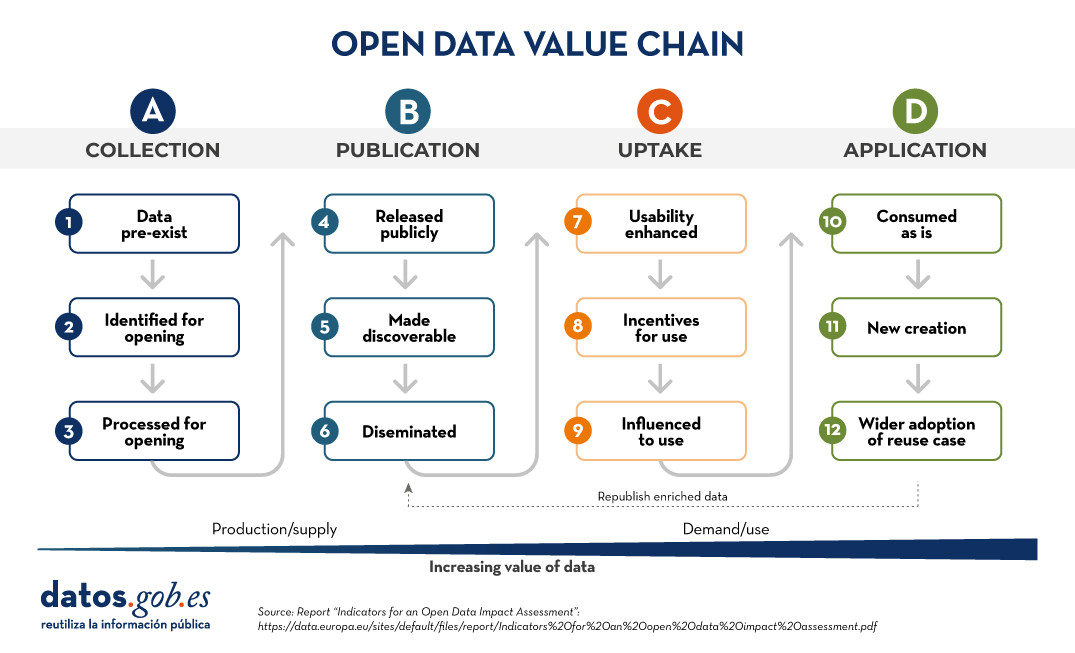
Figure 1: Open Data Value Chain
- Collection: this consists of identifying existing data and establishing the necessary procedures for their cataloguing.
- Publication: making data available in an accessible form and easy to locate.
- Uptake:will come sooner when data is easy to use and accompanied by the right incentives to use it.
- Application:either through direct consumption of the data or through some transformation that adds new value to the initial data.
Each of these steps will play a critical role in contributing to the overall effectiveness and value derived from open data. The indicators developed to assess the impact of open data will also be closely linked to each of these stages, providing a holistic view of how data is transformed from simple information into a powerful tool for development.
Indicators for impact assessment
The report introduces a set of robust indicators that are specifically designed to monitor open data initiatives through their outputs, outcomes and impact as a result of their value chain. These indicators should not be seen as simple metrics, but as tools to help us understand the effectiveness of open data initiatives and make strategic improvements. Let us look at these indicators in a little more detail:
-
Output indicators: are those that focus on measuring the immediate results that come from making open data available. Examples would be the number of datasets released, the frequency of dataset updates , the number of visitors to the data catalogue, the accessibility of the data across various platforms, or even the efforts made to promote the data and increase its visibility. Output indicators help us to assess the efficiency of data publication and dissemination processes and are generally easy to measure, although they will only give a fairly superficial measure of impact.
-
Indicators of effect: Outcome indicators measure the short- and medium-term consequences of open data. These indicators are crucial to understand how open data influences decision-makingprocesses, leads to the development of new applications or improves government transparency. Thus, improved public transport planning based on usage data, increased citizen participation in the development of public policies to tackle climate change brought about by the increased availability of data and information, or improved productivity of public services through the use of data can be considered as significant examples of outcome indicators.
- Impact indicators: This is the deepest level of measurement, as impact indicators assess the broader, long-term effects of open data. These indicators may include economic benefits such as job creation or GDP growth, social impacts such as improved trust in public entities, or even environmental impacts such as the effective reduction of greenhouse gases. At this level, indicators are much more complex and specific, and should therefore be defined for each specific domain to be analysed and also according to the objectives set within that domain.
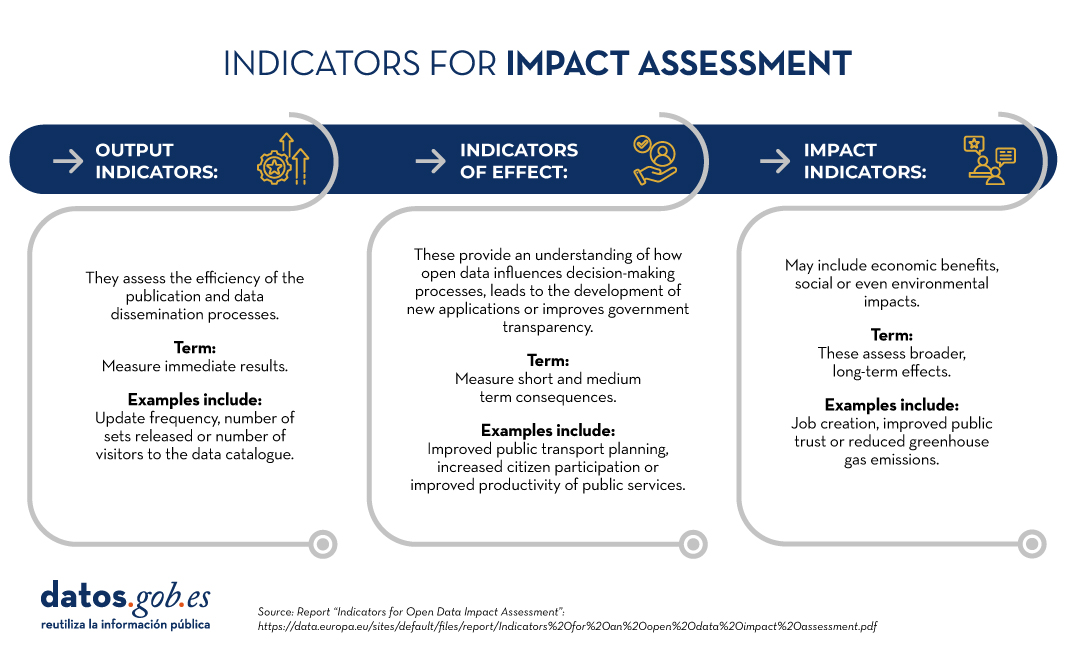
Figure 2: Indicators for impact assessmen
Implementing these indicators in practice will require the implementation of a robust methodological framework that can capture and analyse data from a variety of sources. It is recommended to combine automated and survey-based data collection methods to collect more comprehensive data. This type of dual approach allows for capturing quantitative data through automated systems while also incorporating qualitative insights through user feedback and more in-depth use case analysis.
Looking to the future
The future of open data impact assessment looks towards refining the indicators used for measurement and consolidating them through the use of interactive monitoring tools. Such tools would enable the possibility of a more continuous assessment that would provide real-time information on how open data is being used and its effects in different sectors. In addition, the development of standardised metrics for these indicators would facilitate comparative analysis across regions and over time, further improving the overall understanding of the impact of open data.
Another important factor to take into account are possible privacy and ethical considerations applicable to the selected indicators. As in any other data-centric initiative, privacy and data protection considerations will be paramount and mandatory for the indicators developed. However, once we get into its use by users, it could lead to more delicate situations. Generally, this should not be a particularly problematic issue when monitoring data. However, once we get into its use by users, it could lead to more delicate situations. Ensuring anonymity in indicators and secure practices in their management is also crucial to maintaining trust and integrity in open data processes.
In conclusion, the development and implementation of specific detailed indicators following the recommendations of the report"Indicators for an Open Data Impact Assessment" would be a significant step forward in terms of how we measure and understand the impact of open data.Continuous refinement and adaptation of these indicators will also be crucial as they evolve in tandem with the open data strategies they accompany and their growing sphere of influence. In the medium term the European Commission will further develop its analysis in this area of work through the data.europa.eu project with the ultimate goal of being able to formulate a common methodology for the assessment of the impact of the re-use of public data and to develop an interactive monitoring tool for its implementation.
Content prepared by Carlos Iglesias, Open data Researcher and consultant, World Wide Web Foundation. The contents and views expressed in this publication are the sole responsibility of the author.