


Description
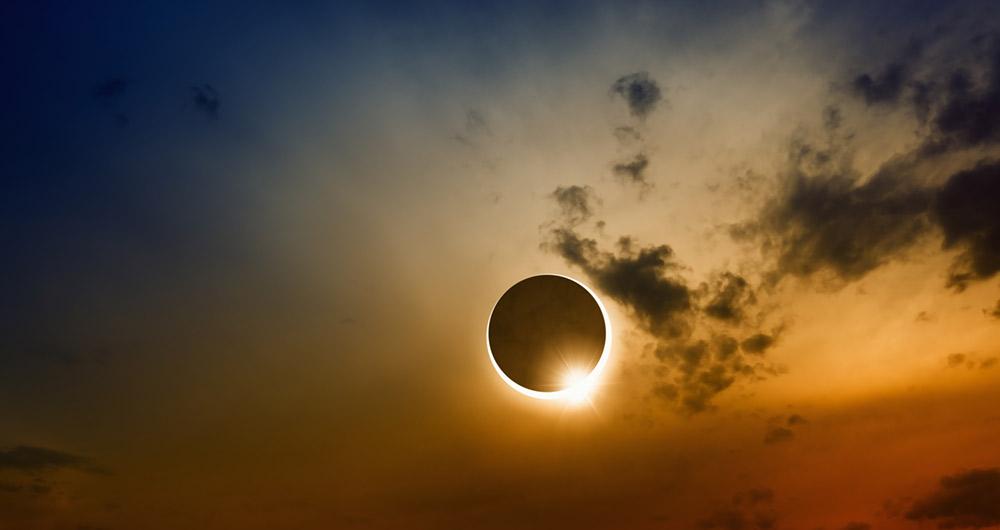
August 12, 2026 is marked on the calendar of thousands of people around the world and especially in Spain. The solar eclipse that will occur that day will cross the Iberian Peninsula from west to east, covering territories of several autonomous communities: Galicia, Asturias, Castilla y León, Community of Madrid, Castilla-La Mancha, Cantabria, La Rioja, Basque Country, Navarre, Aragon, Catalonia, the Valencian Community and the Balearic Islands. Spain is in the heart of the so-called totality strip, that is, the one where the Moon will completely cover the Sun, so it is expected that the phenomenon will attract thousands of people to these places, both from inside and outside our country.
An astronomical phenomenon with a high territorial impact
We are about to live through an exceptional stage from an astronomical point of view. Between 2026 and 2028, three solar eclipses of great relevance will be visible in Spain, which has been called the "Trio of eclipses". The one that will take place during the sunset of Wednesday, August 12, will be the first total solar eclipse visible from the Iberian Peninsula in more than a century.
Although eclipses are associated with scientific dissemination and astronomical observation, an event of these characteristics also becomes a real challenge of territorial planning. The temporary concentration of visitors in rural or sparsely populated areas can generate problems of mobility, security, access to services or environmental impact. In this context, open data is already being used to plan and anticipate these situations.
The forecast of a high impact has led to the creation of an Interministerial Commission for the preparation and coordination of actions related to the trio of eclipses. The aim is to coordinate areas as diverse as mobility, civil protection, public safety, public health and tourism in areas where a greater influx of visitors is expected. In such a scenario, the use of open geographic data helps to identify suitable spaces for observation and ensure the provision of essential services during the event.
Open data to understand and plan for the eclipse
A solar eclipse takes place when the Moon occults the Sun or a part of it as seen from the Earth's perspective. In this case, it is a total solar eclipse, which occurs when the Moon completely covers the Sun. This phenomenon is only visible from a small strip of the Earth. In the rest of the territory, outside the band of totality, the eclipse is partial.
To describe an eclipse accurately, astronomical and geographical data are used to determine aspects such as the trajectory of the Moon's shadow, the duration of totality or the exact time at which it will begin and end at each point of the territory.
The National Geographic Institute (IGN) has developed an interactive visualizer following the calculations made by the National Astronomical Observatory. This tool allows you to consult detailed information by municipalities and specific locations such as the start and end time, the duration of totality, the percentage of solar dimming or the elevation of the Sun above the horizon.
This visualizer integrates astronomical and geographic data from official public sources, making it easy for anyone to explore the eclipse before it occurs. Open geographic data is especially relevant in this case, since a total eclipse is not observed in the same way from all points of the territory. The duration of totality varies significantly between relatively close municipalities and small displacements outside the main strip modify the percentage of occultation of the Sun. This tool is an example of how the reuse of public open data allows the creation of digital tools of general interest.
However, to manage an event of these characteristics, it is not enough to know the path of the eclipse. It is also necessary to combine information related to mobility, accessibility, public services or environmental risks. By cross-referencing different sets of data, valuable information is obtained for decision-making. For example, a place with excellent astronomical visibility conditions may not be suitable if it has difficult access or potential evacuation problems.
This type of analysis requires integrating multiple layers of information, such as digital terrain models, road network, population density, proximity to health centers or availability of basic services. The joint reuse of this data makes it possible to identify areas that are more suitable for observation and to better plan the response of public administrations.
Meteorology, a key factor in enjoying the eclipse
As the date approaches, the atmospheric conditions will occupy the attention of experts and all those who want to enjoy the phenomenon, since cloudiness and fog can prevent its observation. The fact that the phenomenon occurs in summer, when visibility is usually greater, suggests that there will be good conditions in much of the territory of the strip of totality. However, it should be borne in mind that the weather in Spain is complex due to the orography, vegetation and winds.
The National Geographic Institute includes information on average weather conditions on the eclipse portal, although when there are only a few days left the forecasts of the State Meteorological Agency (AEMET) will focus much of the attention. At the moment, there are no specific weather forecasts, but historical data suggest that the areas with the most favourable weather to observe the eclipse are located in the north of the Central Plateau and the Ebro Valley.
Digital tools for citizens and astronomical tourism
The opening up of public data facilitates institutional planning and, at the same time, allows the development of digital tools aimed at citizens, related to scientific dissemination or astronomical tourism.
The Interministerial Commission for the Eclipse Trio, attached to the Ministry of Science, Innovation and Universities, has launched the Eclipse Trio portal, which centralises information related to these events. In addition to providing access to IGN viewers, the portal offers informative content, recommendations for observation and information aimed at guaranteeing safety, accessibility and territorial preparedness for an event that is expected to mobilize millions of people.
The availability of public information and visualization tools also makes it easier for anyone to plan trips or identify the best areas to observe the eclipse. The reuse of open data thus contributes to generating new services and experiences linked to scientific dissemination and tourism.
How Open Data Allows Eclipse Visualization
The case of the eclipse of August 12, and those that will take place over the next two years, represent an interesting example of how open data makes it possible to create spatial and temporal simulations of complex phenomena.
Current tools allow the eclipse to be represented as a dynamic process in motion. Thus, the trajectory of the Moon's shadow can be visualized in real time, showing how it advances over the territory and how the observation conditions change depending on the place and time. This type of visualization contributes to a better understanding of the territorial dimension of the phenomenon and favors the interpretation of astronomical information by the general public.
The combination of geospatial data and astronomical models in digital visualization tools demonstrates how the reuse of public information can be applied to public management and the understanding of natural processes and phenomena. The National Center for Geographic Information (CNIG) has published datasets on these three eclipses, which can be reused to develop visualizations and applications related to these astronomical phenomena.
In summary, the solar eclipse of 12 August, and those that will take place over the next two years, show that open data can play an important role in public management, scientific dissemination and tourism.
The planning of an event of these characteristics requires integrating astronomical, geographical, meteorological, demographic and infrastructure information to anticipate scenarios and coordinate actions. The possibility of reusing this data in an open way facilitates the work of public administrations both in the management of resources and in the development of tools aimed at citizens.
Cartographic visualizers, such as those developed by the IGN, show how public information can be transformed into useful and accessible digital services for society. The eclipse is thus a very illustrative example of the potential of the reuse of open data in the understanding and management of phenomena that simultaneously affect territory, mobility, security and citizen experience.

Comments