


5 documents found

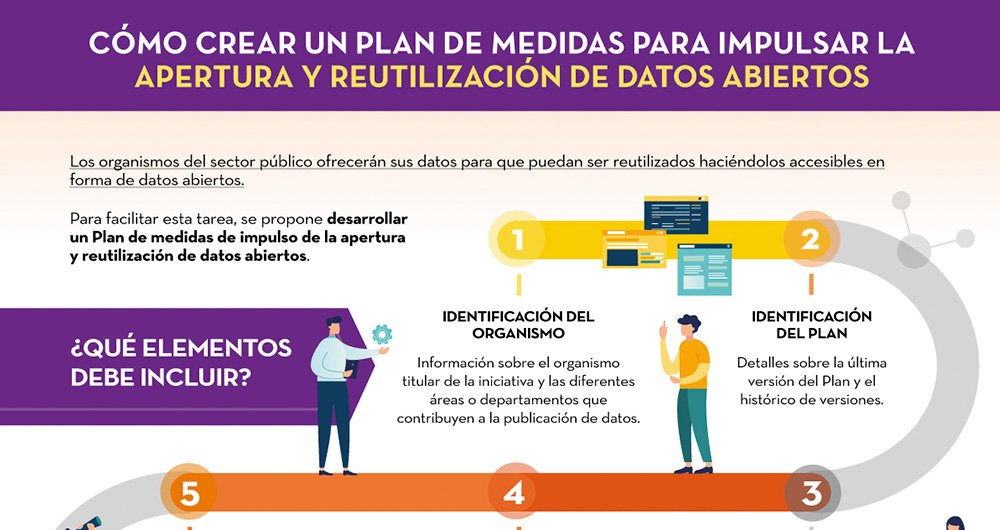
How to develop a plan of measures to promote openness and reuse of open data
Public sector bodies must make their data available for re-use, making it accessible in the form of open data, as referred to in Spain's legislative framework. The first step for this is that each entity, at local, regional and state level, as well as bodies, entities and trading companies…

- Guides
Introduction to data anonymisation: Techniques and case studies
Data anonymization defines the methodology and set of best practices and techniques that reduce the risk of identifying individuals, the irreversibility of the anonymization process, and the auditing of the exploitation of anonymized data by monitoring who, when, and for what purpose they are used…
- Guides

Practical guide for improving the quality of open data
When publishing open data, it is essential to ensure its quality. If data is well documented and of the required quality, it will be easier to reuse, as there will be less additional work for cleaning and processing. In addition, poor data quality can be costly for publishers, who may spend more…
- Guides

Features for the creation of data spaces
A data space is an ecosystem where, on a voluntary basis, the data of its participants (public sector, large and small technology or business companies, individuals, research organizations, etc.) are pooled. Thus, under a context of sovereignty, trust and security, products or services can be…
- Guides

Emerging Technologies and Open Data: Predictive Analytics
In order to extract the full value of data, it is necessary to classify, filter and cross-reference it through analytics processes that help us draw conclusions, turning data into information and knowledge. Traditionally, data analytics is divided into 3 categories:
Descriptive analytics, which…
- Reports and studies
