Evento
Asedie, the Multisectoral Information Association, is once again organising its International Conference on the Re-use of Public Sector Information. This year's edition, now in its fourteenth year, will be focused on the theme "Data Strategy in Europe and Spain".
The event aims to serve as a platform for sharing knowledge and experiences among all those involved in the information and data community, as well as to promote public-private collaboration for the benefit of the general interest.
When and where does it take place?
This is a face-to-face event. The event will take place on 17 November 2022 at the Colegio de Registradores (Calle Alcalá 540), in Madrid. The reception of attendees will start at 9:00h and the event will end at 13.40h.
What is the programme?
The focus of this edition will be on the Data Economy and the practical development of the Act on the Reuse of Public Sector Information. It will also address issues related to data, such as transparency, artificial intelligence, digitisation, geospatial information and personal data protection, among others. These topics will be addressed by leading experts in the field.
The session will open at 9:30 a.m. with a welcome from the Dean of CORPME, Ms. María Emilia Adán García, followed by the inauguration of the President of Asedie, Mr. Ignacio Jiménez.
The event will feature two round tables:
- The first will focus on "The Data Economy: rights, obligations, opportunities and barriers". Carlos Alonso, Director of the Data Office Division, will participate in it, together with representatives of the Ministry of Finance and Public Function, the Autonomous Community of Madrid and the Association of Registrars.
- The second round table, moderated by Emilio López, Director of the CNIG, is entitled "The potential of geospatial information as a high-value dataset", and will be attended by representatives of the European Commission, the National Statistics Institute, the General Directorate of Cadastre and the Autonomous Community of La Rioja.
During the day, there will also be presentations linked to the European Commission, such as that of Mr. Szymon Lewandowski, who will speak on data and innovation policies, and that of Martin Ulbrich on artificial intelligence. Leandro Cervera-Navas, Director of the European Data Protection Supervisor (EDPS), will also participate.
In addition, as usual, the Asedie Award, now in its ninth edition, will be presented within the framework of the Conference. The purpose of this award is to recognise those individuals, companies or institutions that stand out for their contribution to the innovation and development of the infomediary sector in the current year.
You can consult the full programme here.
How can I register?
As capacity is limited, it is necessary to register through the Asedie website before Tuesday 15 November.

Noticia
On 25 October, the workshop "Use cases of the Spanish Tourism data space" was held, with the aim of starting the design and deployment of the first interoperable Tourism dataspace at European level, built under the Gaia-X seal.
This activity, organised by the Data Office in collaboration with the Secretary of State for Tourism, through SEGITTUR, is part of the public-private collaboration model for the constitution of sectoral data spaces promoted by the Secretary of State for Digitalisation and Artificial Intelligence of the Ministry of Economic Affairs and Digital Transformation. The event is a continuation of the process of revitalisation of national data spaces that began with the event "Governmental impulse to a data-driven reindustrialisation - Spanish Tourism Data Space", and is part of the actions carried out by the Government of Spain to create the legal, political, technological and funding environment conducive to the deployment of the data economy, as detailed in the Digital Spain 2026 strategy. This action is aligned with the European scene.
Why a tourism data space?
Data is a vital element in the development and sustainability of the tourism sector. Enabling its proper valorisation reinforces the already significant contribution of the sector to the national economy. The place to realise this latent value is the data space.
According to their European meaning, data spaces are ecosystems where different actors share data voluntarily and securely. In this way, the sharing of data between participants is realised while respecting the principles of self-determination in data sharing (sovereignty), privacy, transparency, security and fair competition.
Tourism, given its ecosystem of public and private participants of different sizes and technological maturity, is an optimal environment in which to test the benefits of these federated data ecosystems. They facilitate the extraction of value from non-traditional data sources, with high scalability, and guaranteeing in any case robust conditions of security, privacy and therefore data sovereignty.
The high availability of tourism data brings great benefits to the sector, as it facilitates the creation of more personalised offers, products and services that provide an improved experience tailored to the needs of customers, thus improving the ability to attract tourists. It also fosters greater knowledge of the sector and informed decision-making by both public and private organisations, which can more easily identify new business opportunities.
An eminently practical workshop
During the workshop, the more than one hundred participants, from both the tourism and technology sectors, tackled the detailed characterisation of different data sharing use cases that could satisfy specific business needs in the tourism sector. The participants were organised around different working groups considering the maturity of the use cases proposed, seeking to encourage the variety of profiles and the grouping of interests. The different work dynamics were carried out in accordance with the methodology for the discovery and design of use cases developed by the Data Office, allowing the validation of their content and their scalability to the rest of the sectoral data spaces to be created.
During the final conclusions of the conference, the Data Office emphasised the central role of data spaces as a place to create new business opportunities within the tourism sector. It was also highlighted that the synergies derived from data sharing go beyond the sum of individual data, and investments, duly supported by public-private collaboration, must be seen beyond the short term and need to be backed by management. The problem to be solved is a business problem and the solution is not exclusively technological. Simple solutions must be sought that are easy to adopt and use, with robust, agile and simple deployment that do not generate barriers to entry for small participants. Taking advantage of the current technological, economic, political and social situation, it is possible to develop a tourism sector that is data-oriented, sustainable, generates social value and is inclusive.
In this link you can see the presentation of the workshop, which includes, among others, methodological aspects for the creation of data spaces, such as the characteristics or the elements to be considered.Below you can also access several infographics:
- Tourism Data Spaces and the Gaia-X Model
- Use case sheet for data sharing
- Identification and proposal of use cases in tourism
- Elements involved in the data sharing process
Blog
Many organisations and administrations have found in open data a transformational pillar on which to exercise the strategy towards the data culture. Having access to data in a structured way is the basis for new business models, as well as for new initiatives aimed at citizens in different fields of action.
However, realising the full potential of open data requires a platform capable of making this data available to third parties while ensuring its quality, understanding, privacy and security.
In this context, the book “Designing Data Spaces”, includes a chapter by Fabian Kirstein and Vincent Bohlen, which proposes the use of the IDS-RAM architecture proposed by the International Data Spaces (IDS) for the development of open data ecosystems. It provides a proof of concept on the feasibility of the IDS architecture for public data spaces with the aim of achieving a solid foundation for building and maintaining interoperable open data ecosystems capable of addressing existing challenges.
The following is a summary of the views gathered in the chapter.
Open data ecosystems
Data spaces are ecosystems where different actors share data voluntarily and securely, following common governance, organisational, regulatory and technical mechanisms.
IDSA (International Data Spaces Association) was created in 2016, with the aim of boosting the global digital economy, through a secure and sovereign system of data exchange in which all participants can obtain the maximum value from their data. It is a coalition of more than 130 international companies with representation in more than 20 countries around the world.
Among other initiatives, it promotes an architectural reference model called IDS-RAM, which aims to facilitate the exchange of data to optimise its value, but without losing control. It offers several approaches whose applicability can be understood in the context of both private and open data, as it is based on metadata repositories for sharing information. That is, the data remain under the control of its owners and the standardised metadata are centrally managed for sharing.
The creation of data spaces brings with it a number of risks to be addressed, both from the consumer's and the provider's point of view. Data providers focus on legal compliance, through issues such as data ownership. Although common standards exist for aspects such as metadata description - the World Wide Web Consortium is no stranger to the problem and therefore proposed several years ago its Data Catalog Vocabulary (DCAT), a standard for describing data catalogues - the truth is that interoperability is sometimes far from its greatest potential. This is because there is sometimes incomplete metadata, the quality is poor, data is outdated, there are difficulties in accessing data and interoperating, and so on.
The applicability of IDS-RAM in open data environments
IDS offers an approach based on guaranteeing data sovereignty to providers, facilitating data exchange and addressing the concerns of both consumers and providers.
The concepts and technologies underlying open data and IDS-RAM are very similar. Both initiatives rely on metadata repositories to share information about the availability and accessibility of data. These repositories store metadata, without the need to transfer the actual data. Therefore, both concepts follow the principles of decentralisation and transfer of metadata to and from central information access points. The actual data remains under the control of the data publisher's infrastructure until a user requests it. In addition, the IDS information model is based on the principles of Linked Data and DCAT. This makes it a system that is easily compatible with open data portals, driving interoperability between data spaces and open data portals.
The architecture proposed by IDS is mainly based on two artefacts, a connector to data sources (Open Data Connector) and a metadata store (Open Data Broker), as shown in the following image extracted from the book "Designing Data Spaces":
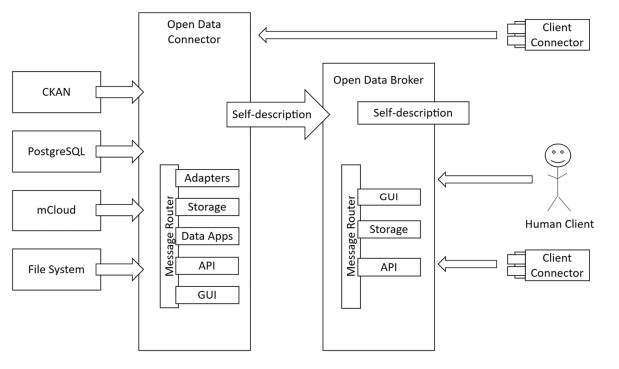
- Open Data Connector: adopts the role of open data provider. Each publishing entity applies an instance of the connector to announce availability and grant access to the data. As it is open data, and therefore public, it is not necessary to apply usage policies or restrictions as strict as in the case of other private data connectors based on this architecture, which allows for easier configuration and management a priori.
- Open Data Broker: the centralised metadata repository fulfils a similar function to that of an open data portal. From this metadata, the portal interface offers functionalities to locate and download the data from the connectors.
This management allows grouping by different application domains, i.e. centralised metadata repositories can be created for sectors such as health or tourism, as well as at municipal, regional, national or international level.
In a data ecosystem such as the one proposed by IDS, the connector informs about available or updated data, and in the metadata repository these are updated accordingly. For this purpose, communication mechanisms based on the IDS information model and the IDS Communication Protocol (IDS Communication Protocol or IDSCP) are used to announce possible changes in data availability. In this way, the availability of up-to-date data is guaranteed.
In open data portals that collect a large number of data sources, accessibility and overall usability depend on the metadata provided by the original data providers. Standards such as DCAT provide a common basis, but IDS offers more stringent specifications in the communication process.
Although it is an interesting proposal, in the context of open data, this approach has not yet been implemented in any space. However, proofs of concept have already been made, as can be seen in the Public Data Space, a showcase available since December 2020 that reproduces how the solution works. Here, connectors display the open data offerings of different data portals in Germany and are registered in a metadata repository.
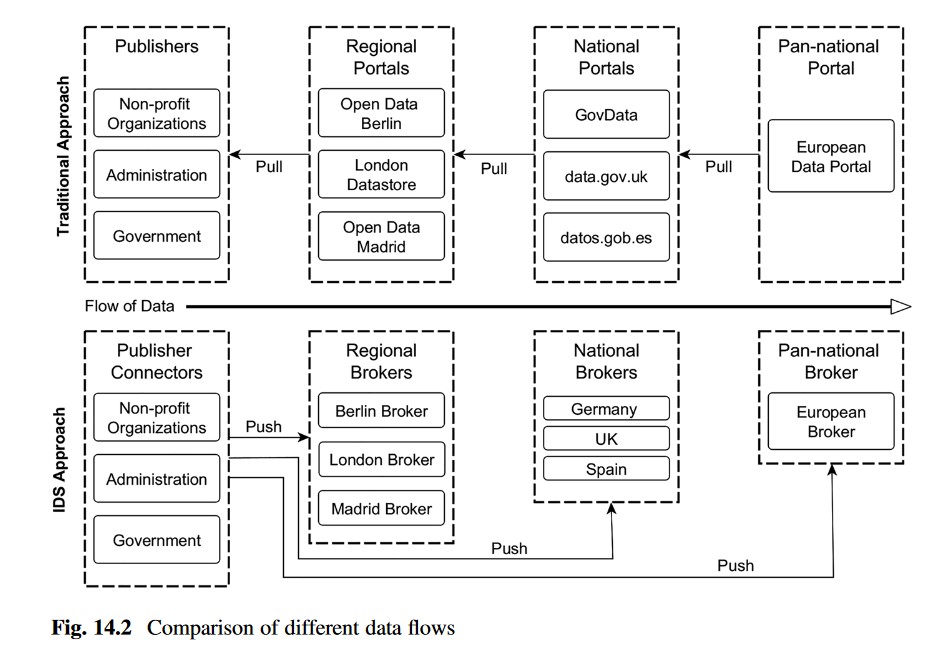
The following image shows the workflow of an IDS-RAM-based model versus a more traditional approach:
Conclusions
Open data portals provide access to open data from a variety of providers. The overall usability of these portals depends to some extent on the discoverability of the data, which in turn depends on the quality of their metadata.
To counteract the problems of unavailable data or dead links that sometimes occur in open data environments, portals periodically collect the publisher's data catalogues and perform availability checks. In the IDS-RAM-based open data ecosystem, the connector informs the broker about available or updated datasets. The 'pull' accountability approach that is common in the typical open data environments is reversed to a 'push' approach in the IDS ecosystem. This approach focuses on the responsibility of the publisher to maintain the data supply and also presents new possibilities to control its dissemination. Using IDS-RAM, the publisher chooses which metadata broker it signs up to, giving it greater sovereignty over their data.
For data consumers, this approach can lead to improvements in terms of the ability to find data in a timely manner and reduces fragmentation. Moreover, if open data can be acquired, managed and processed with the same tools and applications that are already applied in industry, the possibilities for integration and reuse multiply.
Content prepared by Juan Mañes, expert in Data Governance, with contributions from the Data Office.
The contents and views expressed in this publication are the sole responsibility of the author.
Blog
For a data space to function properly, it is necessary to have sufficient actors to cover a set of roles and a set of technological components. These elements enable a common governance framework to be established for secure data sharing, ensuring the sovereignty of the participants over their own data. This concept, data sovereignty, can be defined as the ability of the data owner to set the policies for the use and access of the data to be exchanged, and is the core element of a data space.
In this sense, the EU-funded report "Design Principles for Data Spaces" (April 2021) provides the fundamentals that data spaces should follow in order to act in accordance with EU values: decentralisation, openness, transparency, sovereignty and interoperability. The report was prepared by experts from 25 different companies, thus giving a consensus view with industry.
The following is a summary of some of the main contributions of the document, taking as a reference the article "Elements of a data space" published in the Boletic magazine of the Professional Association of Information Systems and Technologies. In this article, the elements of a data space are divided into two categories:
- Roles and domains
- Fundamental components
Roles
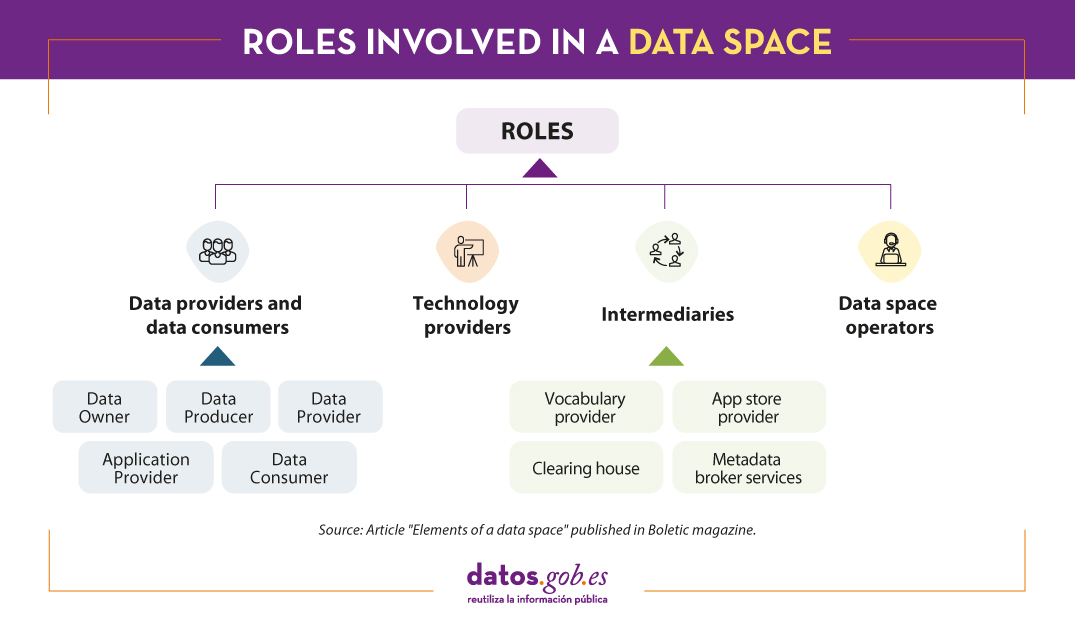
In a data space we can find different participants, each of them focused on a specific field of action. This is known as roles:
-
Data providers and data consumers
These are the participants who provide and interact with the data. Within this category there are several roles:
- Data Producer: Generates the data.
- Data Owner: The holder of the rights to access and use the data.
- Data Acquirer or Data Provider: Captures the data and offers it through the data space catalogue.
- Data Consumer: Accesses the data from the catalogue.
- Application Provider: Provides applications that allow working with the data offering added value (e.g. machine learning models, visualisations, cleansing processes, etc.).Intermediaries
-
Intermediaries
In this case we are talking about third parties that offer the services necessary for publishing, searching for resources and registering transactions. Some examples of services offered by intermediaries are:
- Vocabularies and ontologies, which allow information to be systematically organised, categorised or labelled, improving interoperability.
- Application stores, which list the tools offered by application providers, ensuring that they have passed a quality control process.
- Metadata broker services for the publication of a catalogue of resource offerings (data and applications) with as much information as possible.
- Orchestration services, allowing the automation of various activities.
- Clearing house, which allow to keep control of the operations carried out.
-
Technology providers
They provide components for the data space to operate correctly, making it a secure and trusted environment. Examples of these components are the connector - a fundamental element that we will see below -, user management systems or monitoring systems.
Brokerage services and applications do not fall into this category.
-
Data space operators
Focused on the management of the space, they carry out tasks such as the processing of requests or incidents, change control, software maintenance, etc. Among other things, they certify participants, exercise the governance of the data space and define the roadmap of functionalities.
All these roles are not exclusive, and the same user can adopt several roles.
Components of a data space
There are different approaches to the components that a data space should have. One can refer to Gaia-X and/or take as a reference the IDS-RAM architecture model (Reference Architecture model), characterised by an open, reliable and federated architecture for cross-sector data exchange.
In any case, at least the following blocks are necessary for carrying out the activity in a secure and controlled manner:
-
Components for accessing the data space: Connector
One of the main elements of data spaces is the connector, through which participants access the data space and the data. It is responsible for handling the data according to the usage policies defined by the owner of the access and usage rights, guaranteeing its sovereignty. To prevent malicious manipulation, connectors can be signed by a certificate provided by the data space governance, so as to guarantee their integrity and compliance with the usage rights established by the data owner.
-
Components for intermediation
They allow for the intermediation services mentioned above, the metadata broker, the app store, etc. Of all of them, the most fundamental is the resource catalogue. In addition to a list of the available offer, it is also the tool that allows the resource provider, its characteristics and conditions of use to be located.
-
Components for identity management and secure data exchange
These components ensure the identity of participants and the security of transactions. For this reason, participants are often required to present credentials (e.g. via X.509 certificates).
-
Data space management components
These are tools that allow the data space to operate normally, facilitating daily operations, management of participants (registration, deregistration, revocation, suspension), monitoring of the activity, etc.
How do all these elements interact?
All these roles and components interact with each other. First, the data provider registers its data offering in the catalogue, including relevant metadata such as usage policies. The data consumer searches the catalogue for datasets and applications of interest. Once located, he/she contacts the provider, communicating which resources he wants to acquire. In this process, further negotiation of terms and conditions may take place. Once an agreement is reached, the consumer can download the data.
The transaction must be registered by both the supplier and the consumer.
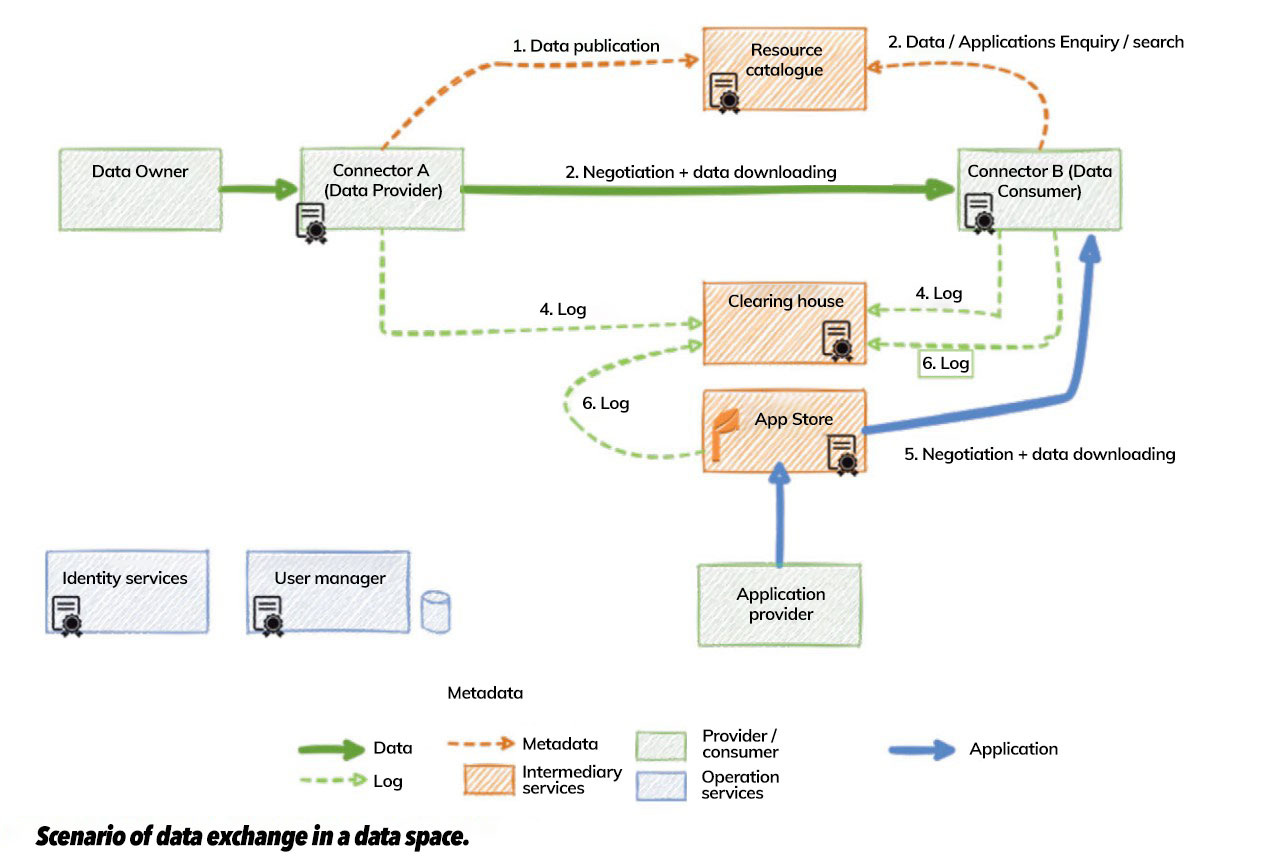
All these elements (roles, components and processes) allow data sharing in a secure and controlled manner, in a managed environment of trust. The aim is to enable European companies and organisations to exchange information, generating a European data market that will give rise to new products and services of value, boosting the European economy.
Content prepared by the datos.gob.es team.
Evento
On 20 October, Madrid will host a new edition of the Data Management Summit Spain. This event is part of the Data Management Summit (DMS) 2022, which was previously held in Italy (7 July) and Latam (20 September).
The event is aimed at a technical audience: CiOs, CTOs, CDOs, CIOs, CIOs, Business Intelligence Officers and Data Scientists in charge of implementing emerging technologies in order to solve new technological challenges and align with new business opportunities.
Date and time
The conference will take place at the Nebrija University, on 20 October 2022, from 9:30 to 19:30.
The day before, a DMS prologue will take place in the same space, exclusively for representatives of public administrations, from 14:00 to 19:30.
Agenda
The agenda is made up of presentations, round tables and group dynamics between professionals, which will allow networking.
The prologue on the 19th will focus on open data and the exchange of information between administrations. Carlos Alonso, Director of the Data Office Division, will be one of the speakers. Among the different activities, there are two group dynamics that will focus on open data and interoperability, as well as two round tables, in the first of which the red.es coordinator of the datos.gob.es platform will participate:
- Round table 1: Open Data and data interoperability in public administrations.
- Round table 2: Challenges and barriers to data exchange in the public sector.
Day 20 will have a business-oriented focus. This second day will also feature expert presentations and group dynamics focusing on data governance, data quality, master data and data architecture, among other topics. There will be three round tables:
- Roundtable 1: “Data Architecture, Data Mesh or Data Fabric?” which will discuss the Data Mesh architecture pattern, with a decentralised approach, as opposed to Data Fabric, which promotes a single unified data architecture.
- Roundtable 2: “How Data Governance changes with the new paradigm of open banking” that will address the evolution towards an economy based on full interoperability and APIs, where the traceability of processes is complete.
- Roundtable 3: “How to converge the different data quality models”, focusing on how to measure data quality, how to manage quality processes automatically and how to avoid Data Lake corruption.
You can see more about the event in this video.
¿Cómo puedo asistir?
El aforo de cada sesión está limitado a 60 plazas presenciales y a 100 online.
How can I attend?
The capacity of each session is limited to 60 places in person and 100 online.
Registration for the session on the 20th can be done through this link (currently the capacity is full, but you can join the waiting list). Registration for the 19th is available, but remember that this session is exclusively for Public Administrations.
More information on the summit website.
Documentación
When publishing open data, it is essential to ensure its quality. If data is well documented and of the required quality, it will be easier to reuse, as there will be less additional work for cleaning and processing. In addition, poor data quality can be costly for publishers, who may spend more money on fixing errors than on avoiding potential problems in advance.
To help in this task, the Aporta Initiative has developed the "Practical guide for improving the quality of open data", which provides a compendium of guidelines for acting on each of the characteristics that define quality, driving its improvement. The document takes as a reference the data.europe.eu data quality guide, published in 2021 by the Publications Office of the European Union.
Who is the guide aimed at?
The guide is aimed at open data publishers, providing them with clear guidelines on how to improve the quality of their data.
However, this collection can also provide guidance to data re-users on how to address the quality weaknesses that may be present in the datasets they work with.
What does the guide include?
The document begins by defining the characteristics, according to ISO/IEC 25012, that data must meet in order to be considered quality data, which are shown in the following image
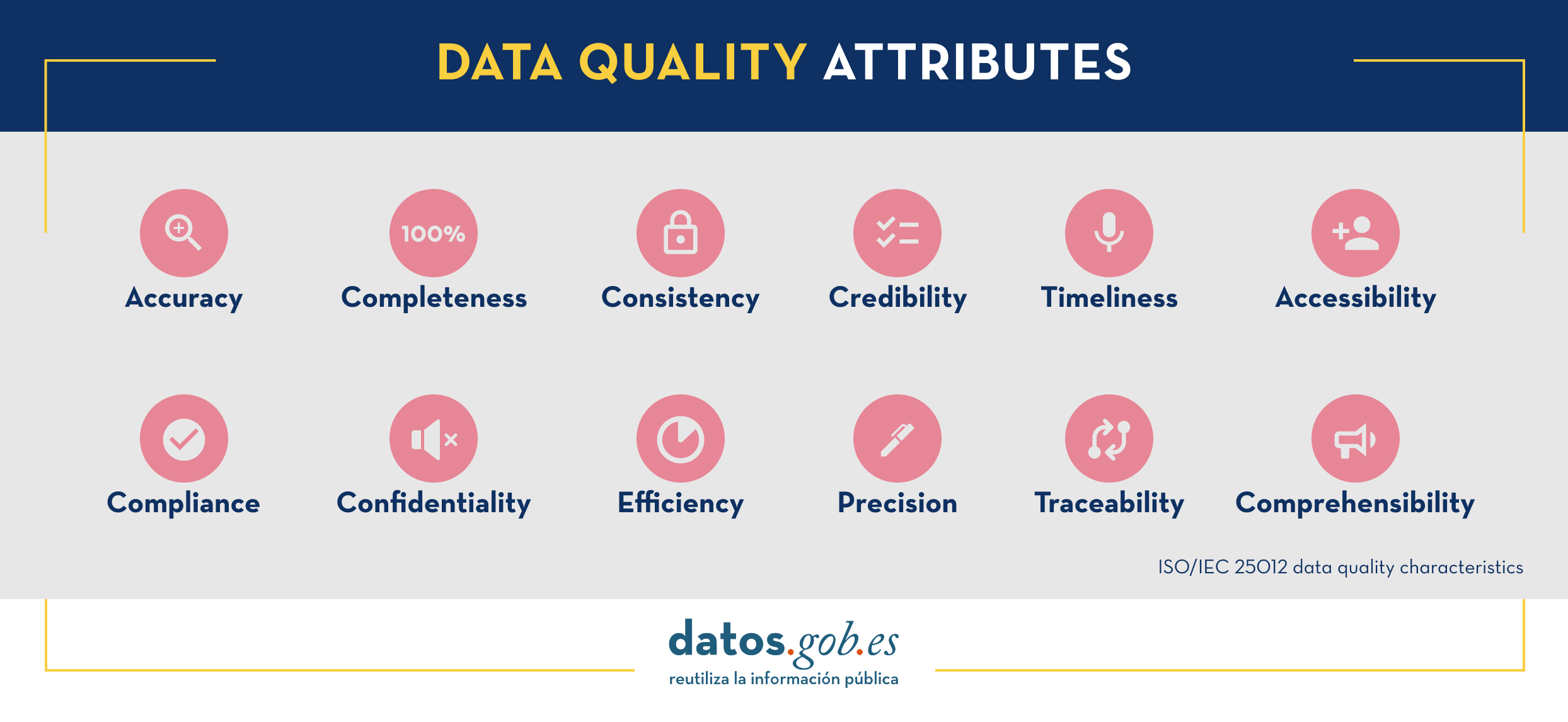
Next, the bulk of the guide focuses on the description of recommendations and good practices to avoid the most common problems that usually arise when publishing open data, structured as follows:
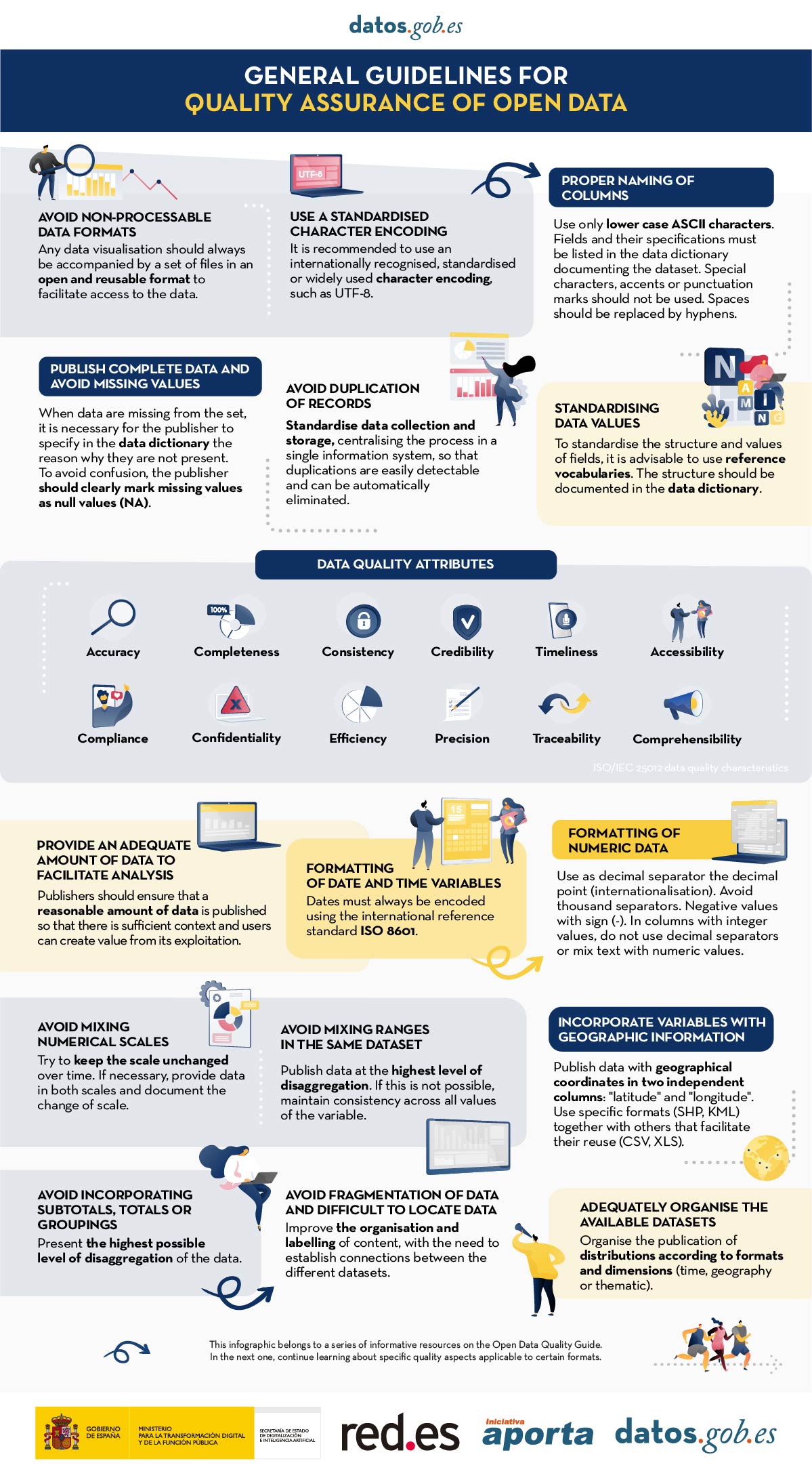
- A first part where a series of general guidelines are detailed to guarantee the quality of open data, such as, for example, using a standardised character encoding, avoiding duplicity of records or incorporating variables with geographic information. For each guideline, a detailed description of the problem, the quality characteristics affected and recommendations for their resolution are provided, together with practical examples to facilitate understanding.
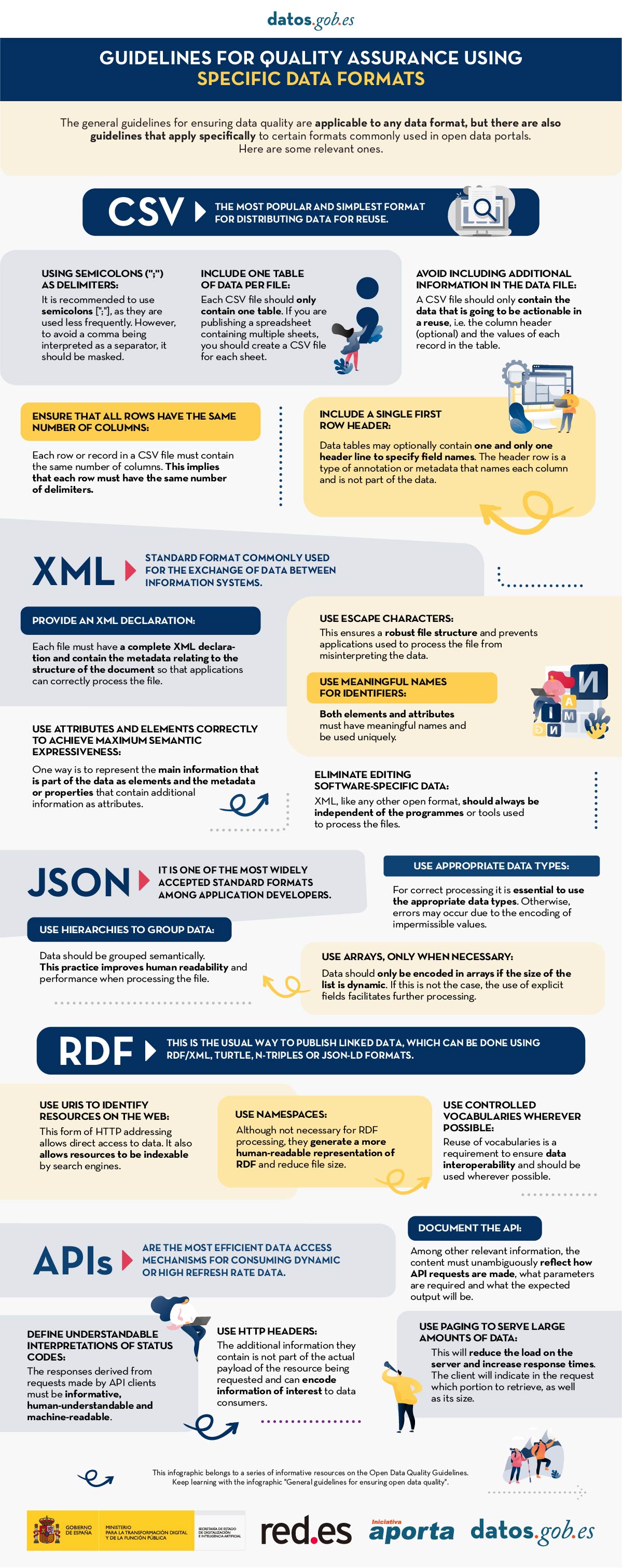
- A second part with specific guidelines for ensuring the quality of open data according to the data format used. Specific guidelines are included for CSV, XML, JSON, RDF and APIs.
- Finally, the guide also includes recommendations for data standardisation and enrichment, as well as for data documentation, and a list of useful tools for working on data quality.
You can download the guide here or at the bottom of the page (only available in Spanish).
Additional materials
The guide is accompanied by a series of infographics that compile the above guidelines:
- Infographic "General guidelines for quality assurance of open data".
- Infographic "Guidelines for quality assurance using specific data formats”.
Noticia
The Data Spaces Business Alliance (DSBA) was born in September 2021, a collaboration of four major organisations with much to contribute to the data economy: the Big Data Value Association (BDVA), FIWARE, Gaia-X and the International Data Spaces Association (IDSA). Its goal: to drive the adoption of data spaces across Europe by leveraging synergies.
How does the DSBA work?
The DSBA brings together diverse actors to realise a data-driven future, where public and private organisations can share data and thus unlock its full value, ensuring sovereignty, interoperability, security and reliability. To achieve this goal, DSBA offers support to organisations, as well as tools, resources and expertise. For example, it is working on the development of a common framework of technology agnostic blocks that are reusable across different domains to ensure the interoperability of different data spaces.
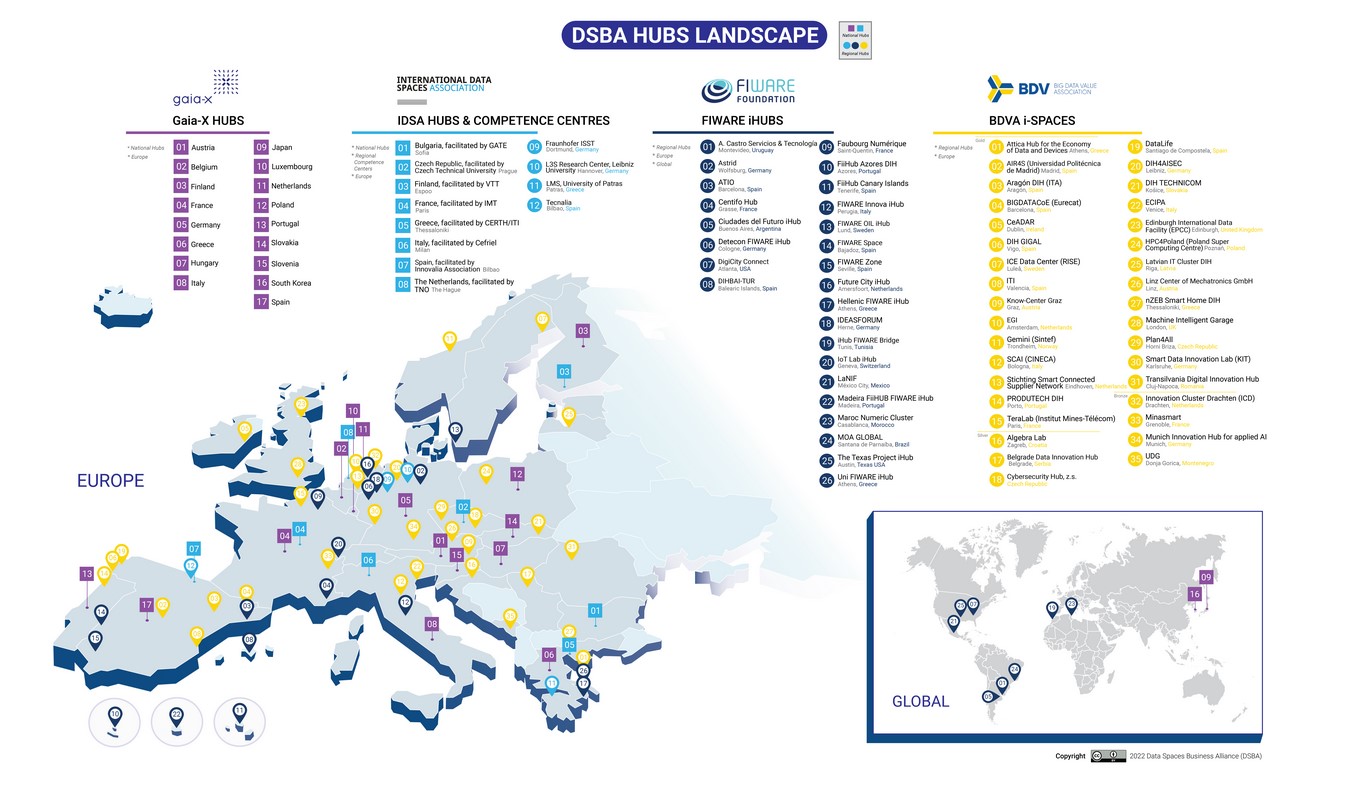
The four founding organisations, BDVA, FIWARE, Gaia-X and IDSA, have a number of international networks of national or regional hubs, with more than 90 initiatives in 34 countries. These initiatives, although very heterogeneous in focus, legal form, level of maturity, etc., have commonalities and great potential to collaborate, complement each other and create impact. Moreover, by operating at local, regional and/or national level, these initiatives provide regular feedback to European associations on the different regional policies, cultures and entrepreneurial ecosystems within the EU.
In addition, DSBA's application has been successful in the European Commission's call for the creation of a Support Centre, which will promote and coordinate actions related to sectoral data spaces. This centre will make available technologies, processes, standards and tools to support the deployment of common data spaces, thus enabling the re-use of data across sectors.
The DSBA hubs
The DSBA hubs refer to the global network combining the existing BDVA, FIWARE, Gaia-X and IDSA initiatives, as shown in the figure below.
The main characteristics of each of these groups are as follows:
BDVA i-Spaces
BDVA i-Spaces are cross-sector and cross-organisational data incubators and innovation hubs, aimed at accelerating data-driven innovation and artificial intelligence in the public and private sectors. They provide secure experimentation environments, bringing together all the technical and non-technical aspects necessary for organisations, especially SMEs, to rapidly test, pilot and exploit their services, products and applications.
i-Spaces offer access to data sources, data management tools and artificial intelligence technologies, among others. They host closed and open data from corporate and public sources, such as language resources, geospatial data, health data, economic statistics, transport data, weather data, etc. The i-spaces have their own Big Data infrastructure with ad hoc processing power, online storage and state-of-the-art accelerators, all within European borders.
To become an i-Space, organisations must go through an assessment process, using a system of 5 categories, which are ranked according to gold, silver and bronze levels. These hubs must renew their labels every two years, and these certifications allow them to join a pan-European federation to foster cross-border data innovation, through the EUHubs4Data project.
FIWARE iHubs
FIWARE is an open software community promoted by the ICT industry, which - with the support of the European Commission - provides tools and an innovation ecosystem for entrepreneurs to create new Smart applications and services. FIWARE iHubs are innovation hubs focused on creating communities and collaborative environments that drive the advancement of digital businesses in this area. These centres provide private companies, public administrations, academic institutions and developers with access to knowledge and a worldwide network of suppliers and integrators of this technology, which has also been endorsed by international standardisation bodies.
There are 5 types of iHubs:
- iHub School: An environment focused on learning FIWARE, from a business and technical perspective, taking advantage of practical use cases.
- iHub Lab: Laboratory where you can run tests and pilots, as well as obtain FIWARE certifications.
- iHub Business Mentor: Space to learn how to build a viable business model.
- iHub Community Creator: Physical meeting point for the local community to bring together all stakeholders, acting as a gateway to the local and global FIWARE ecosystem.
Gaia-X Hubs
The Gaia-X Hubs are the national contact points for the Gaia-X initiative. It should be noted that they are not as such part of Gaia-X AISBL (the European non-profit association), but act as independent think tanks, which cooperate with the association in project deployment, communication tasks, and generation of business requirements for the definition of the architecture of the initiative (as the hubs are close to the industrial projects in each country).
Through them, specific data spaces are developed based on national needs, as well as the identification of funding opportunities to implement Gaia-X services and technology. They also seek to interact with other regions to build transnational data spaces, facilitating the exchange of information and the scaling up of national use cases internationally. To this end, the AISBL provides access to a collaborative platform, as well as support to the respective hubs in the distribution and communication of the use cases.
IDSA Hubs
The IDSA Hubs enable the exchange of knowledge around the reference architecture (known as the IDS-RAM) at country level. By bringing together research organisations, innovation promotion organisations, non-profit organisations, and companies that use IDS concepts and standards in the region, they seek to foster their adoption, and thus promote a sovereign data economy with greater capillarity.
These centres are driven in each country by a university, research organisation, or non-profit entity, working with IDSA to raise awareness of data sovereignty, transfer knowledge, recruit new members, and disseminate IDS-RAM-based use cases. To this end, they develop activities ranging from training sessions to meetings with decision-makers from different public administrations. They also promote and coordinate research and development projects with international organisations and companies, as well as with governments and other public entities.
Conclusion
As we said at the beginning, there is a great potential for synergies between these groups, which should be explored, discussed and articulated in concrete actions and projects. We are facing a promising opportunity to join forces and make further progress in the development and expansion of data spaces, in order to generate a significant impact on the Data Economy.
To stimulate the initial debate, the Data Spaces Business Alliance has prepared the document "Data Spaces Business Alliance Hubs: potential for synergies and impact", which explores the situation described above.
Noticia
The Constituent Assembly of the Gaia-X Spain Association, whose headquarters are located in Talavera de la Reina, was held on 18 March. The event brought together more than 150 entities of all kinds, including companies, public bodies, universities and innovation institutions, with the aim of joining forces to create an open, federated and interoperable data infrastructure, following the values of digital sovereignty and data availability. The ultimate goal is to drive the transformation of strategic sectors within the framework of the Data Economy.
To advance in this area, a number of working groups have been set up. These groups seek to leverage the advantages of Gaia-X to develop sectoral data spaces where different actors share data in a voluntary and secure manner.
The Gaia-X national hub working groups
Among the various working groups that have been set up, we find both sectoral groups, as well as horizontal groups focused on enabling technologies, ethics and legislation. The aim is to develop the vision of the data space in each sector of activity, as well as to obtain common and guiding principles for all of them.
The working groups of the Gaia-X national hub facilitate the connection between companies, administrations and other entities that offer and demand data services and technologies, with the aim of obtaining an adequate development and interoperability of the sectorial data spaces. They also act as a meeting point to disseminate experiences, success stories and lessons learned.
These groups also participate in various events. One of them was Global Mobility Call, organised by IFEMA MADRID and Smobhub on 16 June to discuss sustainable mobility. It was attended by members of the mobility working group of the national Gaia-X Hub. During the session, several challenges related to the creation of data spaces came up, which, although focused on the field of mobility, can be applicable to other sectors.
4 challenges to consider
1. Moving from Theory to Practice
The creation of a data space must be done from a clear bottom-up approach, starting from concrete use cases, and making the most of the technological building blocks already available.
To this end, the first step is to identify the needs and opportunities that can be addressed by the exchange and exploitation of data within each sector. Use cases must address a specific business need. An economic model must be agreed and the responsibilities to be acquired by the actors involved, as well as an incentive scheme, must be established. Beyond the technical components, certainty is needed about the operational, legal and commercial considerations that will govern the data exchanges.
In developing the use cases, it is essential to establish the data catalogues to be exchanged and exploited, as well as the semantics of the data. It is also important that the solution created seeks interoperability with analogous solutions, as well as establishing mechanisms for continuous improvement of the quality of the data exchanged.
The use cases must demonstrate the value derived from data sharing. This can be done by taking advantage of the experimentation spaces available within the Data Spaces Business Alliance (DSBA) hubs, as well as by using agile methodologies that allow results to be visualised early on.
2. Standardisation
The recently proposed EU Data Act provides for the development of interoperability standards for the re-use of data across sectors, in an attempt to remove barriers to data exchange. In the absence of applicable standards, the Commission will adopt implementing orders in this respect.
In this regard, there is a need to change the way in which standards are generated in order to gain agility. Working group members can identify specific standardisation needs and even propose solutions that become de facto standards.
On the other hand, it is necessary to focus on the convergence of the different perspectives and approaches to the creation of data spaces that currently exist. Their development should not be conceived in isolation, or from the exclusive vision of a single association, but as holistically as possible.
3.Awareness raising and change management actions
In order to share data externally, there must be a mindset of sharing internally. This change of mindset involves complex change management where top management support is essential. A data culture needs to be embedded in organisations to maximise the value of data.
4.Communication and dynamisation actions to disseminate the model
It is also essential to develop workshops and congresses to address common problems, best practices and seek synergies of action. In order to raise awareness, it is necessary to evangelise about the profitability that data sharing generates for the sector's agents. This profitability is not only derived from its sale, but also from the generation of new products or the enrichment of existing ones, which adds value to the business.
These four general considerations must be nuanced by taking into account the specific needs of each sector to drive the development of effective sectoral data spaces. These spaces will facilitate the creation of innovative solutions based on data and disruptive technologies, such as artificial intelligence, helping to boost the competitiveness of companies and the advancement of society in general.
Noticia
The Tourism Data Space event took place on 9 June, organised by Gaia-X, the European private sector initiative for the creation of an open, federated and interoperable data infrastructure to drive the Data Economy while respecting digital sovereignty. During the event, which was held online, international experts from the public and private sector discussed "How can data spaces contribute to the development of tourism in Europe through citizen-centric offerings?”. The event was a success with more than 250 attendees from 21 countries.
The tourism sector has a strong economic weight in Europe, although it has been affected by the COVID-19 pandemic and the drop in international tourist arrivals, which exceeded 70% worldwide. In this context, Gaia-X and data spaces are positioned as a great opportunity for companies in the sector. Gaia-X aims to make European data available to improve the ability to attract tourists by creating more personalised offers, products and services, resulting in an enhanced experience tailored to customers' needs. It was with this premise in mind that the event kicked off, focusing on the requirements and need for a secure, decentralised and citizen-oriented European tourism data space.
The opening speech of the event was given by Carme Artigas, Secretary of State for Digitalisation and Artificial Intelligence of the Spanish Ministry of Economy and Digital Transformation, who highlighted the importance of the tourism sector: "“Finally, we are giving the tourism the importance it deserves also in the data economy. At the EU level, the tourism sector directly contributes to almost 4% of GDP with 2.3 million businesses, majority of which are SMEs”. This sector also employs 22.4% of the service sector workforce, as Francesco Bonfiglio, Director General of Gaia-X AISBL, commented: "This market is worth billions of euros, and is one of the areas with the greatest impact if we decide to invest in a common European data space".
Artigas also stressed that "Before the end of the year we will have a new digital space for tourism at European level, and this is great news", always respecting the basic principles of data sovereignty, privacy, security and interoperability.
Yvo Volman, Chief Data Officer at DG-CNECT (European Commission), explained that in order to achieve the set objectives, empowerment and data sharing also across sectors is essential. This is the only way to establish better services and promote sustainability. The importance of education was also stressed by Natalia Bayona, Director of Innovation, Education and Investment at the World Tourism Organisation (UNWTO): "Tourism is the main employer of women and young people. However, 50% of people working in tourism have only secondary skills. If we want to develop a high-level economic sector, we have to develop education". In her speech, she also focused on the need for a public-private relationship, with projects such as Gaia-X as a spearhead to drive innovation.
This was followed by several presentations focused on providing an overview of the landscape of the Gaia-X Tourism data space in Europe, with experts from different countries. From Spain, Ana Moniche, Senior Analyst at Turismo Andaluz and NECSTourR, and Cristina Núñez, Director of Necstour, spoke about European regional practices for competitive and sustainable tourism, highlighting how European data sharing is fundamental to develop strategies based on quality information. Data sharing also offers companies with fewer resources the possibility of accessing large amounts of data, which they would not be able to access through their own mechanisms.
Dolores Ordóñez, Director of AnySolution and Vice President of the Spanish Gaia-X Hub, also spoke in this section. In her speech, she highlighted the need for collaboration between companies of different sizes and sectors, especially in four major areas: tourism, health, industry 4.0 and mobility. In the section dedicated to the pillars of tourism data spaces, among other speakers, Alberto Palomo, CDO of the Government of Spain, pointed out the importance of generating scalability in data sharing, as well as the creation of a common framework that shapes governance mechanisms that are useful and accepted by industry players. He also warned that the paradigm we are facing is that of an "innovative decentralised infrastructure", something that all participants must be clear about, because of the cultural change it implies.
To conclude, the event was divided into 3 thematic sessions, designed to create an atmosphere of cross-border collaboration and help create a sustainable data infrastructure for the tourism industry. These sessions focused on smart destinations, the tourism value chain and its technological enablers. More information about the event can be found in the video teaser. This event is part of a series of meetings organised by Gaia-X around data spaces. Two previous events have focused on mobility and health. Gaia-X will continue to hold such activities in the coming months, as can be seen in its calendar. In addition, it has launched a magazine and a podcast series to keep up to date with the latest trends related to the data space.
Documentación
A data space is an ecosystem where, on a voluntary basis, the data of its participants (public sector, large and small technology or business companies, individuals, research organizations, etc.) are pooled. Thus, under a context of sovereignty, trust and security, products or services can be shared, consumed and designed from these data spaces.
This is especially important because if the user feels that he has control over his own data, thanks to clear and concise communication about the terms and conditions that will mark its use, the sharing of such data will become effective, thus promoting the economic and social development of the environment.
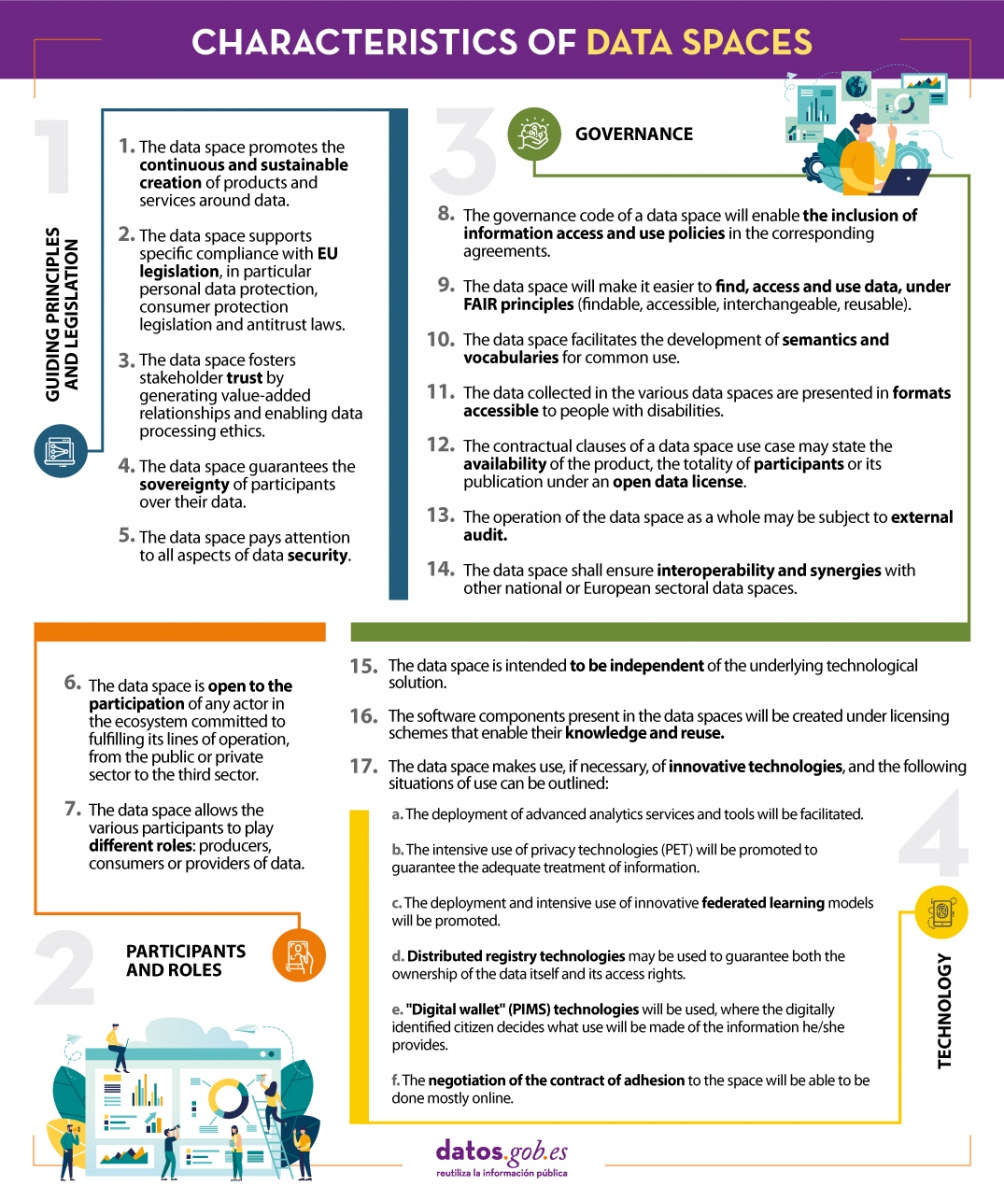
In line with this idea and with the aim of improving the design of data spaces, the Data Office establishes a series of characteristics whose objective is to record the regulations that must be followed to design, from an architectural point of view, efficient and functional data spaces.
We summarize in the following visual some of the most important characteristics for the creation of data spaces. To consult the original document and all the standards proposed by the Data Office, please download the attached document at the end of this article.
(You can download the accessible version in word here)