


Blog
The Commission's drive to promote data spaces within the framework of a European Strategy is based on the firm commitment to a regulatory framework that provides regulatory coherence throughout the Union. In particular, the aim is to establish a solid regulation that offers legal certainty to a model based on respect for rights and freedoms. Thus, initially, two initiatives have been promoted to, on the one hand, establish the regulatory bases of the governance model - already definitively adopted by Regulation (EU) 2022/868 of 30 May - and, on the other hand, to establish harmonised rules on the access and fair use of data throughout the Union.
However, while recognising the importance of the design of this general legal architecture, the effective opening and exchange of data requires a more concrete approach that takes into account the specificities of each sectoral area and, in particular, the difficulties and challenges to be faced. Therefore, taking into account the general regulatory framework referred to above, the Commission has presented the first regulatory initiative for one of these areas, related to health data, which is currently under public consultation and negotiation in the Council of the EU and in the European Parliament, and which is part of the project to create a European health data area.
In particular, beyond facilitating the development of cross-border e-services, the proposal aims to address a triple objective:
• Establish a uniform legal framework to facilitate the development, marketing and use of electronic health record systems by establishing a compulsory self-certification scheme for certain systems, which in any case provides for some exceptions, e.g. general purpose software used in healthcare environments.
• Facilitating patients' electronic access to their own data in the framework of healthcare provision (primary use of health data). In this respect, the proposal seeks to strengthen consistency across Member States in protecting health data irrespective of where the healthcare provision takes place or the type of entity carrying it out.
• Encourage the re-use of such data for other secondary purposes. To this end, a specific governance model is envisaged with a specific body at the head - the so-called European Health Data Space Board - and the deployment of duly coordinated state administrative structures - health data access bodies.
We will look at this last point in more detail below.
The promotion of secondary uses
With regard to the re-use of data for purposes other than health care, the proposed regulation is based on the following evidence: although health data are already being collected and processed using electronic means, in many cases, however, access to them is not facilitated to satisfy other purposes of general interest. For this reason, in general, it is intended to establish a broad regulation that facilitates secondary uses of health data. For example, the elaboration of statistics, the development of training and research activities, such as technological innovation -including the training of algorithms- or personalised medicine.
However, for the purposes of denying access to health data, some secondary uses are expressly declared incompatible, such as:
• The adoption of decisions detrimental to natural persons, meaning not only those that produce legal effects but also those that significantly affect them. In this respect, changes relating to insurance contracts, such as an increase in the amounts to be paid, are specifically highlighted.
• The carrying out of advertising or marketing activities aimed at healthcare professionals, organisations in the sector or natural persons.
• Making data available to third parties that are not covered by the data permission granted.
• The development of harmful products and services, including in particular illicit drugs, alcoholic beverages, tobacco products or goods or services that contravene public order or morality.
With regard to the parties obliged to share data, in principle the proposed regulation extends to those who collect and process data with public funding, who must make them available to the competent bodies for access to health data in order to facilitate their re-use. However, given their importance in some States, the regulation also extends its scope of application to private parties providing health services - except in the case of micro-enterprises - and also to professional associations. Specifically, this regulation would affect "any natural or legal person, which is an entity or a body in the health or care sector, or performing research in relation to these sectors, as well as Union institutions, bodies, offices and agencies who has the right or obligation, in accordance with this Regulation, applicable Union law or national legislation implementing Union law, or in the case of non-personal data, through control of the technical design of a product and related services, the ability to make available, including to register, provide, restrict access or exchange certain data".
Purpose and conditions of access to health data
The proposed Regulation is based on a broad concept of health data, which includes the following categories:
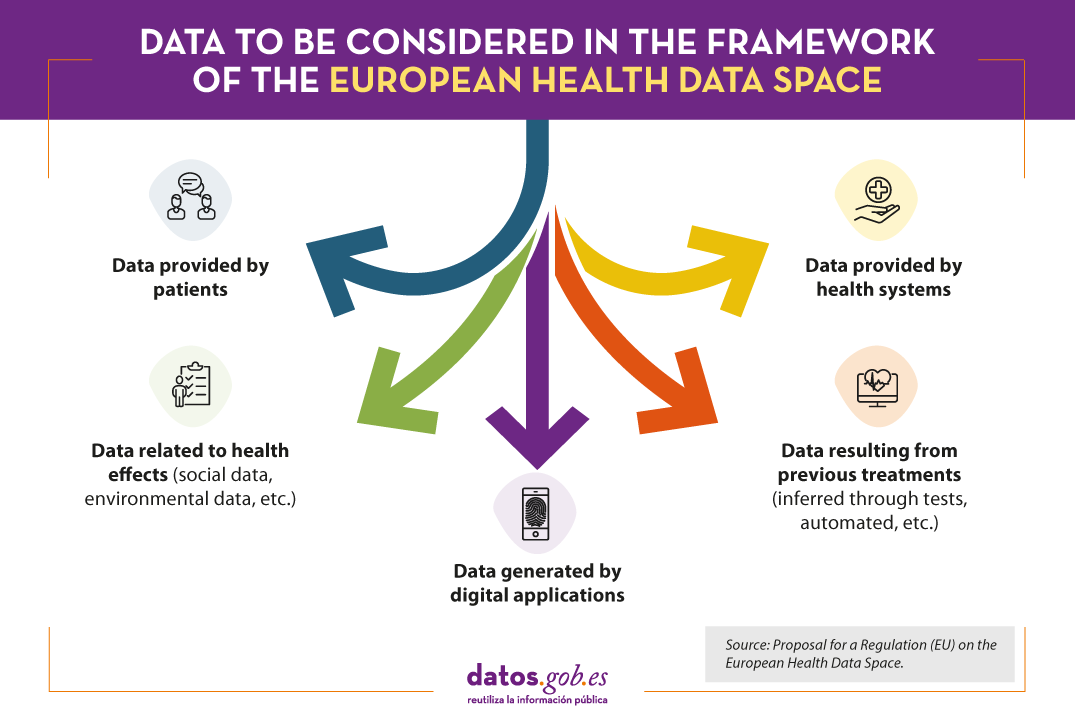
The regulation is based on a general rule: access to anonymised data as a measure to reduce privacy risks, although a specific regime is also envisaged for personal data. In this case, the request must include an adequate justification and the data will only be provided in pseudonymised form.
As regards the form of access, the particular sensitivity of health data determines that it is proposed that they should be made available through a secure processing environment that complies with the technical and security standards included in the proposal. In particular, the proposal does not allow that, except for non-personal data, the data are transmitted directly to the person who will re-use them. Furthermore, it provides for processing to take place in secure environments under the control of the access authorities.
Access authorities for health data
From the perspective of the governance model underpinning the proposal, States should have at least one health data access body to provide electronic access to health data for secondary purposes. In the case of multiple bodies due to requirements arising from their political-administrative organisation, one of them will have a coordinating role. Beyond the organisational freedom of the States to choose one or another organisational formula, it is essential that the independence of the coordinating body be guaranteed, without prejudice to the mechanisms of financial or judicial control.
As already indicated, the main purpose of this measure is to ensure a uniform and consistent application of the regulatory framework for access to health data for secondary purposes across the European Union, in particular as regards the protection of personal data in this sector. In this respect, it is proposed that these bodies should be given the powers to verify compliance with these rules and, in particular, to impose sanctions and other measures such as temporary or definitive exclusion from the European Health Data Area of those who do not comply with their obligations.
The harmonisation sought by the proposed Regulation is also envisaged in the establishment of a standardised process for the issuing of permissions to re-use data for secondary purposes. In particular, in cases where anonymised access to the data is not enough, reasons should be given as to why pseudonymised access is necessary. In the latter case, the request must specify the legal basis for requesting access to the data from the perspective of personal data protection law, the secondary purposes for which the data are intended to be re-used, as well as a description of the data and tools necessary for their processing.
Finally, the proposed regulation includes active disclosure obligations addressed to these bodies about the available datasets. This is an essential measure, since the existence of a catalogue of datasets at European level - based on the interconnection of national datasets - would be extremely useful for promoting not only research and innovation but also decision-making at regulatory and political level. Specifically, for each set of available data, the nature of the data, its source and the conditions for making it available will have to be indicated.
In short, this is a certainly innovative initiative to address the regulatory diversity existing in each Member State, which is, however, at an early stage of processing. Precisely, a participation procedure is currently open that allows for the submission of allegations against the initial drafting until 28 July 2022 through a simple procedure accessible via this link.
Content prepared by Julián Valero, Professor at the University of Murcia and Coordinator of the Research Group "Innovation, Law and Technology" (iDerTec).
The contents and views expressed in this publication are the sole responsibility of the author.

Evento
The Open Government Week, organised by the Open Government Partnership in the framework of Open Gov Week, is taking place this year from 27 June to 1 July 2022. The aim of this initiative is to open up and bring public administrations closer to citizens, based on the Open Government principles mentioned above.In Spain, this initiative is promoted by the Directorate General for Public Governance, in collaboration with the Open Government Forum.
As usual, this year's Open Government Week will feature numerous events organised by public administrations throughout Spain. Due to health circumstances, some of these activities will still be held in a virtual or semi-presential format, along with other events that will be held exclusively in-person.
Online webinar on 29 June to learn about the Data Office and the Aporta Initiative
You can watch the presentations of the event here:
Among the types of activities that will take place during this week, we can find some of a diverse nature such as presentations of government plans and programmes, citizen consultations and participatory processes or open days, among others. Of all of them, we would like to highlight the event to be organised by the Ministry of Economic Affairs and Digital Transformation so that citizens can learn more about the Data Office, and also find out more about the Aporta Initiative of datos.gob.es.
This event, which will be held via an online webinar on Wednesday 29 June, from 12:00 to 13:30, will consist of two parts: one dedicated to further information about the Data Office and the other aimed at disseminating the activity of the datos.gob.es portal.
Part One: Data Office
The Data Office, part of the Secretary of State for Digitalisation and Artificial Intelligence, will be the protagonist of this first part of the online event. They will try to explain how they are addressing the main challenges that exist today in the data economy, defining the legal and political frameworks for data sharing and governance.
The European Union has established as one of the next priorities the promotion of the data economy, and one of the measures that our country has carried out to achieve this goal has been the creation of the Data Office. In this webinar you will be able to learn more about the functions of this body and how it can intervene to promote data sharing as a means to boost the data economy.
Specifically, the Data Office is focused on enabling data sharing through the deployment of data spaces. The data space is key to the development of the data economy, enabling its access, exchange and legitimate re-use, positioning data as a non-rivalrous resource, whose utility grows as its use becomes more widespread in a clear example of the network effect. Data spaces go beyond the bilateral exchange of information, constituting in their most advanced version authentic sharing networks where the value of data is realised.
Part Two: Aporta initiative/datos.gob.es
The second part, which will focus on the Aporta initiative, will be aimed at raising public awareness of the value of open data as a key element of open government and what actions are being taken to encourage its publication and use.
Open data is a key element in driving the data economy. Spain is at the top of the European open data maturity index. In this virtual event you will be able to discover what underlies the philosophy and practice of open data, and what services are offered from the datos.gob.es platform as a one-stop space for reusable data offered by the public sector, among other aspects.
You can follow the event through this link.
Other events of interest of the Open Government Week 2022
Although you can consult the full calendar of events that will take place during Open Government Week at this link, below is a small selection of events related to topics such as open data, transparency, open government and citizen science, among others.
- 30 June. "Reuse of public sector information beyond open data" (online), University of Valencia, PAGODA: this seminar will analyse, among other issues, how the dynamics of traditional Open Data environments raise questions about the purpose of data use, attribution and traceability of such uses.
- 27 June. Open Government for All (semi-presential), State Secretariat for Public Administration, Madrid: this event will address the project on Collaboration for Inclusive Communication in Open Government, the result of the agreement signed between the Third Sector Platform and the Ministry of Finance and Public Administration.
- 29 June. “Presentation of the Open Government Digital Portal of the Fuenlabrada City Council” (in-person), Auditorium of the CIFE - Avda. de las Provincias, 33, Fuenlabrada: description of the new sections of the portal: transparency, open data, participation, economic and infrastructure viewers, etc. Thanks to them, the city council will be able to be accountable more accurately to citizens and they will be able to access administrative information of municipal relevance in an easy and understandable way.
- 29 June. "Open government, transparency and public service in the face of the demographic challenge: citizen services aimed at all Madrid city councils" (online), General Directorate of Cadastre. Regional Cadastre Office of Madrid: this informative session will provide information on the multi-channel offer available to the General Directorate of Cadastre, enabling universal access to cadastral information and the provision of face-to-face information services.
In short, initiatives such as Open Government Week allow citizens to increase their knowledge of and participation in public administrations. Remember that this is just a small selection of events, but you can consult them all on this map.
Noticia
Just a few days ago, Alberto Palomo-Lozano, Chief Data Officer of the Spanish Government, participated in Cibercotizante, one of Capital Radio's most followed technology programmes. Throughout the almost thirty minutes of the interview, Palomo-Lozano gives a succinct assessment of his first 10 months at the head of the Data Office and underlines the importance of the Office as part of the gear and mission of the Secretary of State for Digitalisation and Artificial Intelligence.
"It has been a period of creation and coordination (to) promote the Data Culture and the Data Economy", he points out, adding that the Data Office "was not created to invent technology, but to articulate innovation capacity around data".
In fact, according to Palomo-Lozano himself, the strategy to be followed arises from the European Data Strategy, which is focused on harnessing the full potential of data, and consists of 4 pillars: legal reference framework for data access and use, technological enablers and infrastructures, empowerment and training, and common European sectoral data spaces.
Several different but complementary strategic lines are pursued:
- Identification of re-usable data sources.
- Characterising other data sources that can be made available (under the necessary conditions of security and confidentiality).
- Elaborate general guidelines for data governance, management and data quality.
- Study the dimensions of data sharing and exploitation:
- Business models
- Regulatory framework
- Functionalities for carrying out sharing
- Data sharing and exploitation aspects (quality, modelling, value chain, ...)
- Considerations for operational sustainability
- Purpose issues
- Technologies for shaping national data spaces
The weight of the Autonomous Communities and the importance of common governance
In terms of Public Administration data, these plans and strategies cannot be understood without taking into account the role played by the Autonomous Communities in terms of coordination and data sharing: "We are looking for synergies and meeting points between the activities carried out by the territorial administrations and the General State Administration”. The experience of these territorial administrations is fundamental to gain capillarity in the development of data spaces. However, "it is also important to have a series of common rules and commitments, precisely to overcome barriers and reluctance to share and exploit data, which is a non-rivalrous resource; in other words, it is not wasted when used and can be used in several areas at the same time", adds Alberto Palomo-Lozano.
Almost in parallel, and so that all listeners can understand the challenges and opportunities faced by a role such as his, the Chief Data Officer of the Spanish Government explains the role played by his international counterparts in the digital society. Thus, while countries such as Canada or the United States have similar roles at the national level, these "have not had a transversal structure, they have been CDOs in (vertical and specific) departments". In the UK or France the figure "has dedicated (horizontal) functions", aligned with national data strategies and "the improvement of public service thanks to digital technology (...) based on exploiting government data, AI, open source, ...".
In line with this idea, Alberto Palomo-Lozano argues that the Spanish Data Office has a slightly different role than the previous ones: "The approach in Spain combines the internal with the external. On the one hand, it is similar to what France does with respect to government data (generating frameworks for sharing and exploiting data to improve public service, opening them up to implement transparency actions, data-driven policies) and - in turn - also supporting and coordinating the efforts of society; promoting the exploitation of industrial data, (as well as) developing infrastructures and digital sovereignty that guarantees (this capacity to extract value)". In other words, work is being done in two complementary directions, because "we have to set an example from within, and also because government data has an impact on the Society and the industrial data initiatives themselves", he adds.
Finally, and with regard to the role played by our country in the data strategy at European level, Palomo-Lozano is enthusiastic and grateful for the trust that the Governmental Advisory Board of Gaia-X has placed in Spain, which holds the Presidency of the council that will advise the European entity when its activities intersect with the public policies and strategies of the member states. The interrelationship is broad, because "although Gaia-X is a private initiative, it has a strong public impetus because it is aligned with the European Data Strategy".
"Gaia-X is a three-legged initiative. On the one hand, there is the European non-profit association, which aims to generate specifications for data architecture and data services. Then there is the development community, which creates the Federated Data Services consisting of four blocks or families: identity and trust, federated catalogue, sovereign data exchange and compliance. Finally, the third leg is the national hubs, where market development takes place. In other words, regional organisations use the developed framework to create data services that are then used in projects and applications", says the Spanish government's Chief Data Officer. Data projects that - for the tourism sector - will be addressed at an event on 9 June.
However, according to his words on Capital Radio, Spain not only stands out internationally thanks to initiatives such as Gaia-X, but has also begun to emerge as a pole of attraction for large DPCs (Data Processing Centres) from different parts of the world. Palomo-Lozano believes that this is mainly due to reasons such as:
- The international connectivity of the Iberian Peninsula through submarine cables. It is also a gateway from continental Europe to Latin America, and therefore also a wide range of cloud offerings in Spanish.
- The existence of powerful cloud facilities located in Spain, which makes us count on human talent with knowledge and experience. Some of them: Amazon, Microsoft, Google, IBM or Oracle.
- A large part of the data traffic is produced within the data centres themselves, and between data centres. In other words, economies of scale are generated proportionally to the presence of other data centres.
If you are interested in knowing in depth the vision of the Data Office, you can listen to the full interview on Capital Radio by clicking on the following link.
Evento
Part of the European Union's new strategy to create a digital single market focuses its attention on the construction of a Data Economy. In carrying out this process, European data spaces are of paramount importance. Data spaces are ecosystems that make it easy to share, find, access, and use data.
To talk about it, Cajasiete Chair of Big Data, Open Data and Blockchain of the University of La Laguna will arrange a new online webinar focused on this theme. The event will take place next Thursday, May 24, at 12:00 p.m. (11:00 a.m. in the Canary Islands) and will be attended by Carlos Alonso Peña, director of the Data Office Division.
The webinar will focus on the importance of this ecosystem when materializing the voluntary sharing of the data of its participants, within an environment of sovereignty, trust and security. This requires the establishment of integrated governance, organizational, regulatory and technical mechanisms.
The boost of the Data Economy
Promoting the Data Economy is one of the main priorities set by both the European Union and our country. In fact, one of the EU's goals is to become a leader in a data-driven society, relying on a single digital market where data is shared freely between member countries. For this purpose, the European Data Strategy was launched, from which you can obtain more information through this link.
Digital Spain 2025, the plan designed to promote digital transformation in our country includes the Data Economy as one of its main axes. This document sets out, among other aspects, the need to make Spain a benchmark in the digital transformation towards a Data Economy, using the opportunities offered by cloud services or new technologies such as Artificial Intelligence.
The role of the Data Office in this process
One of the measures that it was agreed to carry out to achieve the above objectives was the implementation of a Data Office, something that is already a reality. This body is in charge of designing and proposing strategies that promote the sharing, management and use of data in all productive sectors of the economy and society, thus guaranteeing good governance and security.
In this sense, the Data Office seeks to face the main challenges that currently exist in the Data Economy, defining legal and policy frameworks for data sharing and governance, as well as collaborating in the promotion of data spaces and initiatives such as the Spanish hub of Gaia-X, which will enhance and support the competitiveness of the Data Economy.
Both the data spaces and initiatives of the nature of Gaia-X are undoubtedly presented as elements of great importance when it comes to achieving the objectives of the European strategy, also helping to promote the creation of ecosystems capable of promoting development new products and services based on more accessible data.
Blog
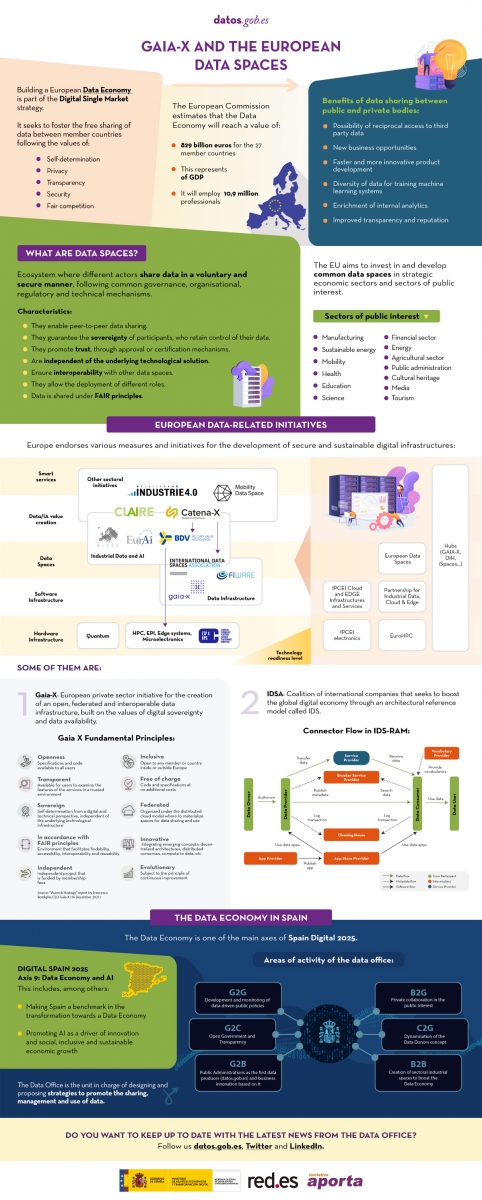
The following infographic shows the context driving the development of data spaces, focusing on some related European initiatives such as Gaia-X and ISDA. For more in-depth content you can read the following articles:
- The importance of deploying European Data Spaces
- Gaia-X and the drive for the data economy
- https://datos.gob.es/en/blog/ids-ram-reference-architecture-model-and-its-role-data-spaces
- The Data Office: the challenge of promoting the Data Economy
Click on the infographic to see it in full size and access the links:
Blog
The data economy represents a huge business opportunity for companies of all sizes and sectors. According to European Commission estimates, the Data Economy will be worth €829 billion in 2025 for the 27 member states. But for the data economy to develop properly, structures are needed to facilitate the exchange of data and, with it, the development of business models based on its exploration and exploitation.
Data spaces fulfil this function by facilitating the development of an ecosystem where different actors share data in a voluntary and secure manner. To do so, they must follow common governance, organisational, regulatory and technical mechanisms.
One way to ensure that this is done properly is through reference models, such as the IDS-RAM (International Data Spaces Reference Architect Model), an initiative developed by the International Data Space Association and endorsed by the European Union.
What is the International Data Space Association?
IDSA (International Data Spaces Association) is a coalition currently comprised of 133 international, not-for-profit companies, which emerged in 2016 to work on the concept of data spaces and the principles that their design should follow in order to obtain value from data through sharing, based on secure, transparent and fair mechanisms for participants, which guarantee sovereignty and trust. These companies represent dozens of industry sectors and are based in 22 countries around the world.
IDSA is connected to different European initiatives, including BDVA, FIWARE and Plattform Industrie 4.0, participating in more than twenty European research projects, mainly in the Horizon 2020 programme.
IDSA's mission is to drive the global digital economy. To this end, among other things, it promotes an architectural reference model called IDS (International Data Spaces), a secure and sovereign data exchange system. The aim of this model is to standardise data exchange in such a way that participants can obtain all possible value from their information without losing control over it, setting the conditions for the use of their own data.
IDS-RAM architecture
The IDS-RAM (Reference Architecture model) is characterised by an open architecture (they publish their code as open source software), reliable and federated for cross-sector data exchange, facilitating sovereignty and interoperability.
IDS-RAM establishes a series of standardised roles and interactions through a 5-layer structure (business, functional, process, information and system) that are addressed from the perspective of security, certification and governance, as shown in the following figure.

These layers are critical to ensure the success of a data sharing initiative. Let's look at each of them based on the IDSA's own "Reference architecture model" and Planetic's "Positioning on Data Spaces" report, where IDS-RAM is analysed as a success story.
The business layer defines the different existing roles and the interaction patterns between them, including contracts and data usage policies. Specifically, there are four roles:
- Essential participant: any organisation that owns, offers or consumes data.
- Intermediary: trusted entities and intermediaries, such as brokers, clearing houses, identity providers and others.
- Service/Software Provider: companies that provide services and/or software to participants.
- Governance body: such as certification bodies, which are essential to guarantee the capabilities of organisations and generate an environment of trust. The IDS Association itself would also be included in this section.
These roles are related in an ecosystem marked by six categories of requirements, defined in the functional layer:
- Trust, achieved through identity management and user certification.
- Security and data sovereignty, which includes authentication and authorisation, usage policies, trusted communication and technical certification.
- Data Ecosystem, which includes the description of data sources, data brokering and vocabularies used for metadata.
- Standardisation and interoperability, which ensures the operability necessary for successful data exchange.
- Value-added applications, which allow data to be transformed or processed.
- Data marketisation, which covers aspects such as billing, usage restrictions, governance, etc., necessary when data sharing is done under payment models.
The process layer captures the interactions that take place within the data space, including the on-boarding of users, for which they need to acquire an identity provided by a certification body and request a data connector (a technical component to be installed) from a software provider.
identity provided by a certification body and request a data connector (a technical component to be installed) from a software provider. This layer also defines the processes required for data exchange and the publication and use of data apps.
The information layer explains the information model and the common vocabulary to be used to facilitate compatibility and interoperability, so that data exchange can be automated. A proprietary ontology based on an RDF schema is used for its definition.
Finally, the system layer assigns a concrete architecture of data and services to each role in order to guarantee functional requirements.
All these abstractions of layers and perspectives enable the exchange of data between data providers and data consumers, using the appropriate software connectors, accessing the metadata broker where data catalogues and their conditions of use are specified, with the possibility of deploying applications for data processing and keeping track of the transactions carried out (clearing house), all of this guaranteeing the identity of the participants.
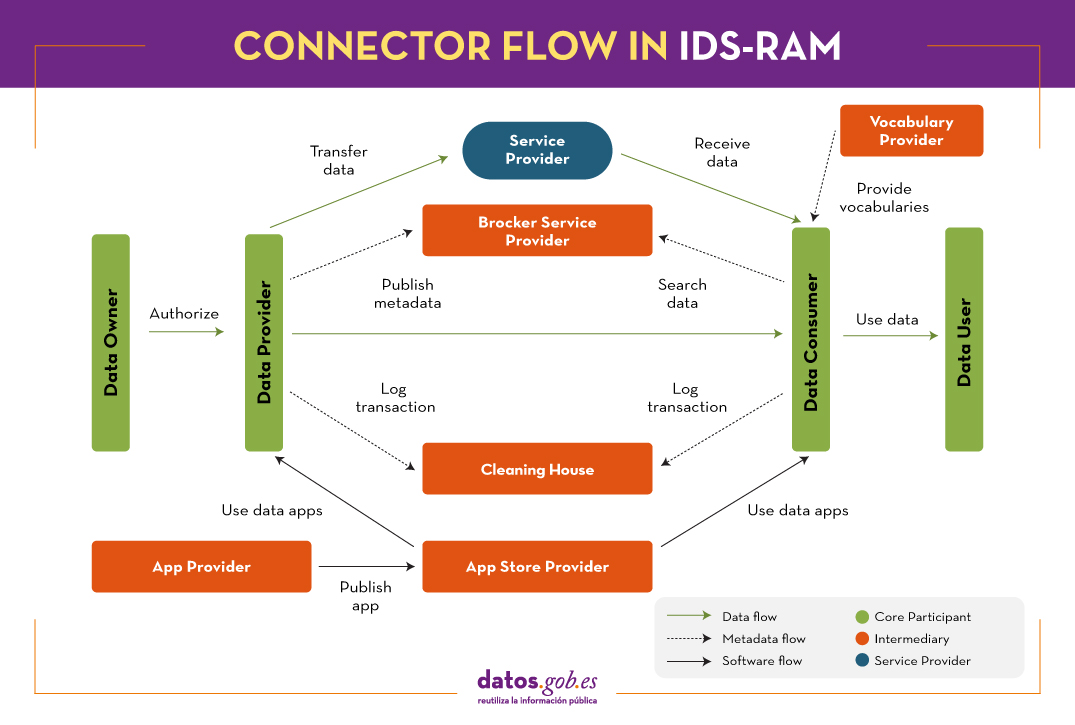
Ultimately, it is a functional framework that provides a governance framework for secure and reliable interoperability and an open software architecture to ensure maximum adoption. In this sense, the IDSA has set itself the following objectives:
- Establish the IDS model (RAM) as the international standard for data exchange in the economy of the future.
- Evolve this reference model according to use cases.
- Develop and evolve an adoption strategy for the model.
- Support its deployment based on certifiable software solutions and commercial models.
This standard is already being used by many companies as diverse as Deutsche Telekom, IBM or Volkswagen.
The role of IDS-RAM in Gaia-X and the European Data Strategy
The IDS reference architecture model is part of the initiatives deployed within the overall framework of the EU data strategy.
Through various initiatives, the European Commission seeks to promote and interconnect data spaces in order to foster the consultation, sharing and cross-exploitation of available data, while ensuring their privacy. It is in this framework that Gaia-X has been launched, an European private sector initiative for the creation of an open, federated and interoperable data infrastructure, built on the values of digital sovereignty and data availability, and the promotion of the data economy.
The IDSA association, promoter of the IDS reference architecture, is actively participating in Gaia-X, so that the initiatives currently underway to develop reference models and implementations for data sharing with sovereignty and trust can be brought together in a de facto open standard.
Content prepared by the datos.gob.es team.
Noticia
ASEDIE (the Multisectoral Information Association) has just published a new edition of its Infomediary Sector Report, which analyses the real, economic and social value of companies reusing data from the public and/or private sector to develop value-added products. The presentation took place at an event at the National Geographic Institute, in which the Data Office also participated.
This year is special because the report is in its 10th edition. Throughout these years, the different reports have shown the growth and consolidation of the sector. Specifically, for this edition, 701 companies have been identified, which represents a growth of 58% compared to the first report, produced in 2013. However, the figure is very similar to that already analysed in 2021.
This year's edition is subtitled "Data Economy in the Infomediary". The data economy already plays a major role in European production ecosystems and is expected to continue to grow: by 2025, it is estimated that it will contribute 4% of GDP.
In this context, ASEDIE has set among its objectives not only to promote the infomediary sector and the Data Economy, but also to contribute to raising public awareness of its benefits. To this end, it has prepared this report with various indicators that show the impact of the sector.
Main findings of the report
Below is a breakdown of the main conclusions drawn from the report:
- The 10th edition of the report shows a turnover of more than €2 billion, offering employment to almost 23,000 professionals.
- 44% of the infomediary companies surveyed use AI to create value-added products or as a tool. 72% of respondents claim to use both public and private data for the creation of their products and/or services. On the other hand, 17% of the companies indicate that they only use private information compared to 11% that only use public data.
- There are 3 sectors that continue to account for most of the activity, with geographic information standing out. The majority of infomediaries specialise in "geographic information" (24%), "market research" (20%) and the "economic and financial" sub-sector (19%).
- Only two of the subsectors account for almost half of total sales (49%): "Geographic information" and "Economic and financial". However, "Publishing", despite being the 6th sector in terms of number of companies, is the one with the highest average sales (€6M) and median (€917,000). Regarding the latter, it practically doubles the next most important sector ("Directoriales"), which has a value of around €503,000, well above the rest of the sectors.
- Most of the companies are located in the Community of Madrid (38%), Catalonia (13%) and Andalusia (11%). As in previous years, the Infomediary Sector is represented in all the Autonomous Communities.
- 71% of the infomediary companies have been created less than 20 years ago. Of these, 36% are between 11 and 20 years old and 35% are less than 10 years old. The average age continues to be 16 years, with the Publishing subsector being the oldest and the Tourism subsector the youngest.
- The average number of employees per company in the Infomediary Sector is 43, reaching 22,638 employees. As in turnover, the subsector with the highest figure is "geographic information" with 30% of the total.
- The aggregate subscribed capital reached 273,789,439 €, which represents a decrease of 12.2% with respect to the previous edition. Furthermore, the three most capitalised subsectors are "market research", "economic and financial" and "geographic information".
- The net profit generated this year exceeds 110 million euros, which represents a slight decrease compared to the previous year. "Culture" and "Directories" were the only two sub-sectors whose companies did not make a positive profit this year.
- The report identifies the opening of new public sources, the digitisation of the public sector and the interoperability of sources as the main challenges to be addressed. The updating and quality of information are some of the barriers to access and reuse of information.
- 94% of respondents see the creation of the Data Office as an opportunity for the geospatial sector. They expect this body to help in the coordination, centralisation and integration of data, and to promote openness and homogenisation of the availability of public sources.

Top 3 ASEDIE and success stories
The report includes a review of the status of the Top 3 Asedie, ASEDIE's initiative to promote the complete opening of three datasets by all Autonomous Communities, following unified criteria that facilitate their reuse. In 2019, the opening of the Cooperatives, Associations and Foundations databases was proposed. The initiative was a success, and all Communities have now opened at least two of the three proposed databases. This initiative is included in Commitment 9 of the 4th Open Government Plan.
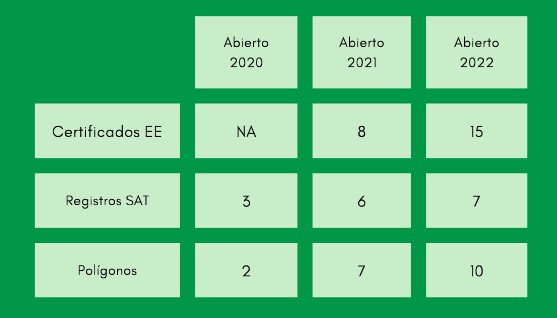
Given the good reception, a new Top 3 was launched in 2020, aimed at those Autonomous Communities that had already opened the first three databases, so that they could continue to advance in the opening of new datasets relating to: Register of Energy Efficiency Certificates, Industrial Estates and SAT Registers (Agricultural Transformation Companies). The evolution in the opening of these databases in the last year has also been remarkable, as shown in the following image.
The report concludes with several success stories of infomediary companies and examples of the products and services they produce, such as Infoempresa's web browser extension for obtaining business information or Axesor's platform (Investiga Pro) that allows online consultation of the Real Property Databases of both the Commercial Registry and the General Council of Notaries.
The report is available on Asedie's website in Spanish together with the video of the presentation of the report. It will soon be available in English together with an executive summary in French and Portuguese.
In conclusion, the sector is in good health, but this year has shown a slight decrease of 4.6% in times of pandemic. However, these figures are above the Spanish average (Spain's GDP fell by almost 10% in the same period). Although 55% of respondents have noticed the effect of Covid-19 on companies' or citizens' access to their data, the fact that 92% of respondents say they are satisfied with the level of digitisation available to them gives hope for improved results in the near future.
Blog
There is no doubt that data is a fundamental asset for companies. Properly processed, they generate great competitive advantages, both in decision-making and in the generation of new products and services, enabling technologies such as Artificial Intelligence. This situation has made many organisations wary of sharing their data. However, the situation is changing and more and more companies and organisations are becoming aware of the advantages of this practice.
Data sharing drives efficiency in supply chains, enabling faster and more innovative product development. By sharing their data, organisations also benefit from access to third-party data, which can be of great use in a variety of fields: from training machine learning systems to enriching internal analytics. In addition, the fact that several companies are working in the same field, generating advances, means that the market matures earlier, opening up new business opportunities, as well as reducing the time and costs of marketing products. There are also benefits in terms of transparency and reputation.
Secure and controlled environments, such as data spaces, are necessary for this data exchange to take place in a safe and secure manner.
What are data spaces?
A data space is an ecosystem where diverse actors share data in a voluntary and secure manner, following common governance, organisational, regulatory and technical mechanisms. Some of the characteristics of advanced data spaces include:
- They ensure participants' trust and sovereignty over their data, creating an ecosystem of peer-to-peer data sharing. In a data space, each participant retains control over its own data, indicating the terms and conditions under which it can be used.
- They are independent of the underlying technological solution. This allows for portability and deployment in different physical infrastructures.
- Data is shared under FAIR principles, which facilitates the location, access and use of the data. To this end, datasets must be properly described, including the taxonomies used and their restrictions on use.
- They enable the deployment of different roles, such as data producers, consumers, data service providers, component developers or operators of essential services, facilitating the development of data intermediaries.
- They ensure the identity of the participants, as well as the suitability of the software components used, by means of appropriate approval or certification mechanisms.
- They enable different policies of access and use of information, so that data subjects can determine whether data is shared for free or not, under mechanisms that guarantee its proportionality.
- They ensure interoperability
European data spaces key to boosting the data economy
Data spaces are a key element of the European Data Strategy, which, among other issues, seeks to boost the region's economy through the creation of a single European data market, where data flows between Member States and between sectors of activity, in accordance with the European values of self-determination, privacy, transparency, security and fair competition.
In this strategy, the European Commission has already announced its interest in investing in and developing common data spaces in strategic economic sectors and sectors of public interest, notably those related to manufacturing, sustainable energy, mobility, health, finance, energy, agriculture, public administrations and skills. Once developed, these spaces are expected to be interconnected, so that the data available in them can be cross-exploited.
The creation of these data spaces seeks to overcome the legal and technical barriers linked to data sharing, through common standards, tools and infrastructures in a context of digital sovereignty. According to the European data strategy, the development of European data spaces should be carried out taking into account the following elements:
- The deployment of tools and services for data processing, exchange and sharing, as well as the federation of secure and energy-efficient cloud capabilities and related services. These tools should enable access to data in a fair, transparent, proportionate and non- discriminatory manner.
- The development of clear and reliable data governance structures, in compliance with EU law, with particular attention to the protection of personal data, consumer and competition law.
- Improving the availability, quality and interoperability of data, both within specific domains and across sectors.
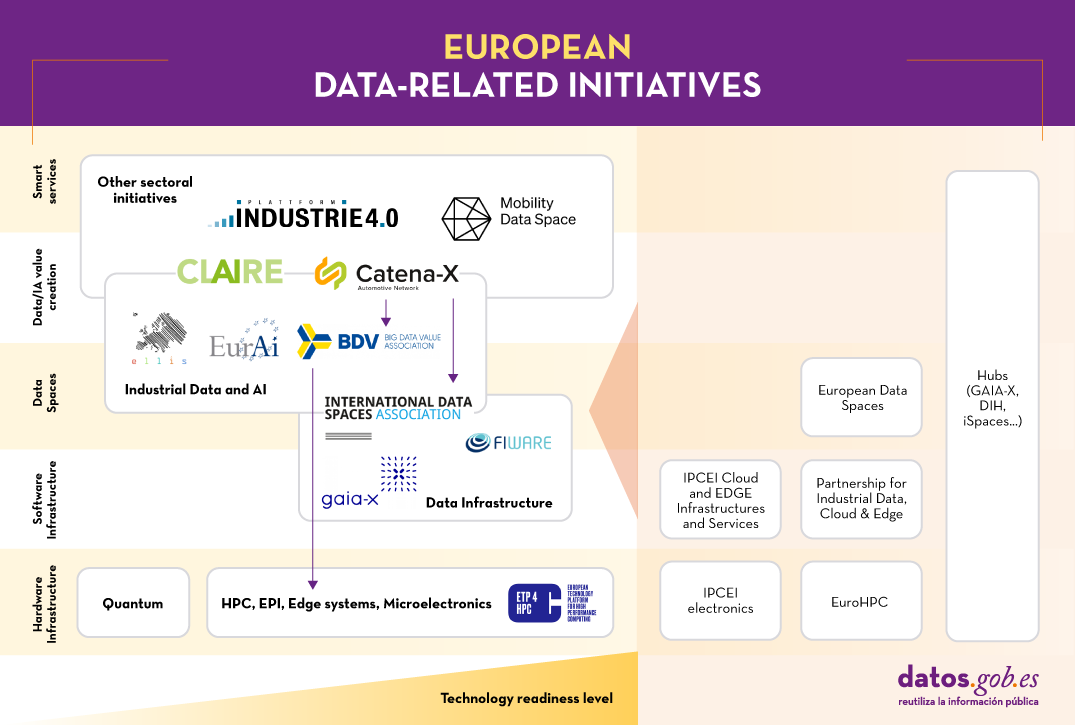
In this regard, the European Commission endorses various measures and initiatives for the development of secure and sustainable digital infrastructures. These include Gaia-X, which seeks the development of an open, federated and interoperable data infrastructure in the cloud, and the International Data Spaces Association (IDSA), probably a substantial part of Gaia-X, which promotes an architectural reference model for the development of data spaces.
In the image below you can see these and other European initiatives at different levels related to data spaces. The left and central part shows some of the main European data initiatives, and how these are supported by hardware infrastructures. The right hand side shows the alignment with the most important EU initiatives within the European Data Strategy.
Spain is aligned with Europe in this area: the transition to a data economy is among the axes of the Digital Spain 2025 Plan. Work is currently underway to promote the enabling environment for the creation of sectoral data spaces, through the various data initiatives included in the Recovery, Transformation and Resilience Plan. One example is the Spanish Gaia-X Hub, aimed at deploying a robust ecosystem in the field of industrial data sharing, comprising companies of all sizes. The aim of this type of action is to create a community around data that favours innovation and economic growth, with the consequent benefit for society.
Content written by the datos.gob.es team
Noticia
The application of new techniques aimed at extracting value from data has become a reality in the current environment, accelerating its transformation into knowledge for decision making. Therefore, it is common to focus on the exploitation of data as an indispensable part of its management, arising linked to the concept of its exploitation the concept of data space, enabling its sharing, involving both the private sector and the different public agencies, whether local, national or international.
A data space is an ecosystem where the voluntary sharing of its participants' data materializes within an environment of sovereignty, trust and security, established through integrated governance, organizational, regulatory and technical mechanisms. The concept of sovereignty is key, understood as the ability of a participant to maintain control over its own data, expressing the terms and conditions that will govern its permitted uses.
What is Gaia - X?
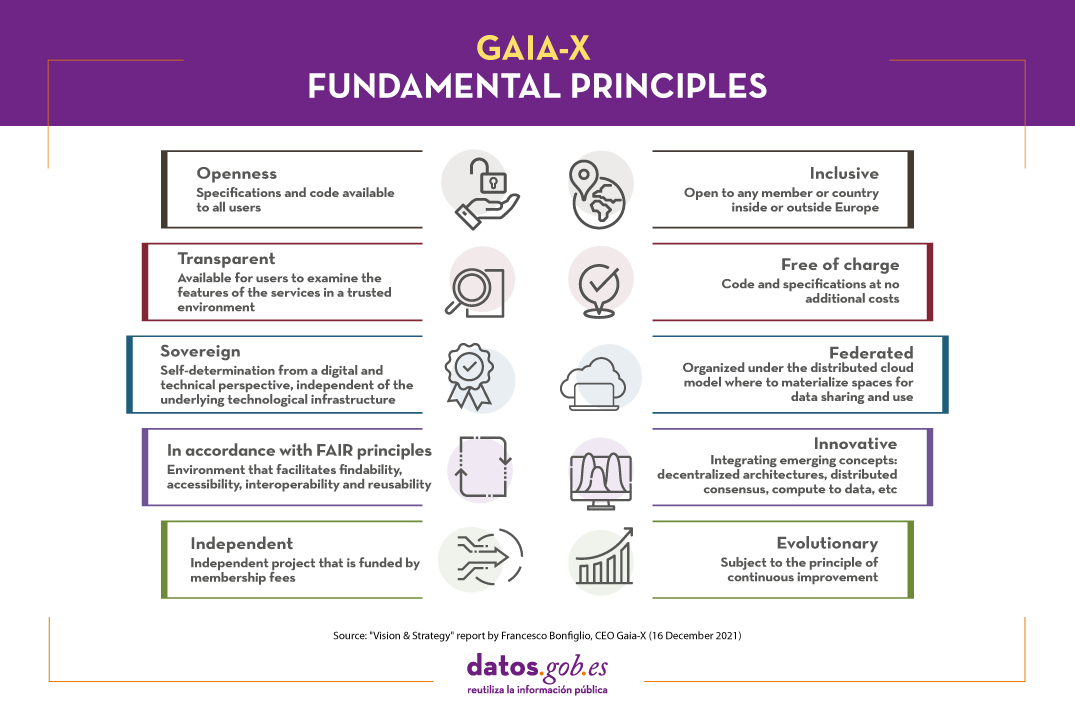
In this context, the Gaia-X initiative was born, a European private sector initiative for the creation of an open, federated and interoperable data infrastructure, built on the values of digital sovereignty and data availability, and the promotion of the Data Economy. The challenge is to establish an ecosystem in which data from European entities are available and shared in a trusted and managed environment according to European principles of decentralization, openness, transparency, sovereignty and interoperability.
Gaia-X aims to develop a federation of cloud data services, enabling cooperation and data sharing between companies and organizations across the European Union independently of infrastructure providers. Gaia-X defines the technical concepts, as well as the governance, for the interoperability of datasets and data infrastructures, assuming the role of orchestrator, mediating between data providers and data consumers via the federated services, and creating a physical decoupling between the data layer and the infrastructure layer.
From the origins
The Gaia-X initiative began to see the light of day in October 2019, when the French and German ministries of economic affairs presented the project. Since then, its growth has been exponential. At the end of 2020, a summit was held, leading to the founding of the Gaia-X association AISBL in January 2021. During that year, Gaia-X is defined as a brand, as well as the first versions of its services. Among its objectives is the development of common standards, best practices, tools, as well as governance mechanisms.
Gaia-X currently has 324 members around the world. Companies, associations, research institutions, administrations and politicians have joined forces to work together in the initiative. The 22 founding members are divided between France and Germany, where organizations such as Amadeus, Atos, OVH, Orange Business Services, Siemens, IDS, SAP SE and Deustche Telekom stand out. However, these 22 have been joined over the years by private and public organizations from Asia (China, India, Japan, Singapore, Qatar, Korea), the USA and mainly Europe (Austria, Belgium, Estonia, Finland, France, Germany, Greece, Poland, Ireland, Italy, Lithuania, Luxembourg, the Netherlands, Poland, Portugal, Slovakia, Slovenia, Spain, Sweden, Switzerland, the UK).
In Spain, in mid-2021, the Ministry of Economic Affairs and Digital Transformation, through the Secretary of State for Digitalization and Artificial Intelligence, promotes the creation of the Gaia-X national hub, an organizational initiative whose objective is to accelerate European capacity in industrial/sectoral data sharing and digital sovereignty, contributing to generate the common European infrastructure, through the launch of a manifesto of interest whose response from private sector companies was overwhelming.
In this way, Spain also joins the Government Advisory Board of Gaia-X, the European partnership to accelerate the response to data sharing. The Spanish Gaia-X Hub seeks that companies of all sizes create community around data, serving to develop and implement innovative solutions based on data and Artificial Intelligence, which boost national competitiveness, paying special attention to SMEs and micro-SMEs. Thus, it is proposed the creation of data spaces in the different productive sectors, interoperable with European spaces and without interfering in other spaces that the industry has planned to develop.
The data economy in Spain
This project aims to contribute to the economic growth of our country. According to the European Data Market study, the data economy in Spain had in 2019 a value equivalent to 2.5% of the national GDP, and it is estimated that by 2025, this value will represent more than 4% of the Spanish GDP, provided that the appropriate legal, political and financing environment is created, which highlights the importance of data in the economy.
Spain's commitment to the data economy is part of the Digital Spain 2025 strategy, which highlights the need to support the digitization of key sectors for the economy, such as tourism and healthcare in particular, but also others such as mobility, the agri-food sector and e-commerce.
Conclusions
Data are the focus of the major transformations taking place in today's environment as a result of the application of new digital technologies. For this reason, no digital economy will be able to consolidate and compete globally without a strong data economy.
The European strategy aims to create a single European data market, open to data from all over the world, in which personal and non-personal data, including sensitive business data, is secure and businesses have access to high-quality industrial data in a way that drives growth and creates value. Through the associated rules and mechanisms, the aim is to ensure that data can flow, European standards and values are fully respected, and the rules for data access and use are fair, practical and clear.
Data spaces in general, and initiatives such as Gaia-X in particular, are key elements in achieving the objectives of the European strategy, serving to foster ecosystems that create new products and services based on more accessible data.
Content prepared by Juan Mañes, expert in Data Governance, with contributions from the Data Office.
The contents and views expressed in this publication are the sole responsibility of the author.
Blog
The favorable regime of access to environmental information
Environmental legislation has traditionally been characterized by establishing a more beneficial legal regime than that which has inspired the general rules on access to information held by the public sector. Indeed, the Aarhus Convention, adopted in 1998, was an important milestone in recognizing the right of access to environmental information under very advanced legal conditions, imposing relevant obligations on public authorities. Specifically, the Convention starts from an inescapable premise: in order for society to enjoy the right to a healthy environment and fulfill its duty to respect and protect it, it must have relevant access to environmental information. To this end, on the one hand, the right to obtain information held by public authorities was recognized and, on the other, an obligation was established for the latter to make certain information public without prior request.
In execution of said international treaty and, specifically, of the obligations assumed by the European Union through Directive 2003/4/EC of the European Parliament and of the Council, of January 28, 2003, on public access to environmental information, Law 27/2006, of July 18, regulating the rights of access to information, public participation and access to justice in environmental matters, was approved. Unlike the general regime contemplated in Law 19/2013, of December 9, on transparency, access to public information and good governance, Law 27/2006 does not contain any reference to open and reusable formats. However, it does include the following developments:
- establishes the obligation to provide the information even when, without having generated it directly in the exercise of its functions, it is in the possession of the entity from which it is requested;
- requires that the grounds for refusal of the request for access be interpreted in a restrictive manner, so that in case of doubt when interpreting the exceptions provided by law, access to information must be favored;
- for those cases in which the request is not resolved and notified within the established period, the rule of positive silence is applied and, therefore, access will be understood to be granted.
The impact of regulations on open data and reuse of public sector information
As in the previous regulation, Directive (EU) 1024/2019 excludes its application in those cases in which the corresponding regulation of the Member States limits access. This would not be, therefore, the case of the environment sector, since, apart from the cases in which access is not applicable, in general the availability of the information is especially assured. Consequently, except for the legal exceptions to the obligation to provide environmental information, there are no specific restrictions that would be an obstacle to facilitating its reuse.
On the other hand, one of the main novelties of European legislation is a measure that ultimately obliges the Member States to adapt their regulations regarding access to environmental information. Indeed, Chapter V of the Directive establishes a unique regime for the so-called high-value datasets, which, in general, will be available free of charge, machine-readable, provided through APIs and, where appropriate, provided in the form of bulk download. Precisely, this very favorable legal regime is envisaged, among others, for the field of Earth Observation and Environment, although the specific datasets to which it will apply are still pending a decision by the European Commission after the elaboration of an extensive impact analysis whose final result is yet to be finalized.
On the other hand, following the European regulatory model, among the novelties that Royal Decree-Law 24/2021, of November 2, has incorporated into Spanish legislation on the reuse of public sector information, one that stands out is one referring to high-value data. Specifically, Article 3.ter of Law 37/2007 contemplates the possibility that, in addition to the datasets established by the European Commission, others may be added at the national level by the Ministry of Economic Affairs and Digital Transformation, taking into account the selection made by the Data Office Division, so that those specifically referring to the environment could be extended, where appropriate.
The potential for high-value environmental data
As the European regulation itself points out, the reuse of high-value datasets is seen as a tool to facilitate, among other objectives, the creation and dynamization of value-added digital applications and services that have the potential to generate considerable benefits for society, the environment and the economy. Thus, in this area, open data can play an important role in tackling technological innovation to address challenges of enormous relevance such as climate change, deforestation and, in general, the challenges posed by environmental conservation.
On the other hand, the development of digital applications and services can serve to revitalize rural areas and promote tourism models that value the knowledge and protection of natural resources, especially taking into account the rich and varied natural heritage existing in Spain, for which it is essential to have specific datasets, particularly with regard to natural areas.
Ultimately, from the perspective and demands of Open Government, the accessibility of environmental information, according to the standards of high-value data in accordance with the provisions of the regulations on the reuse of public sector information, could have a significant reinforcement by facilitating social control regarding the decisions of public entities and citizen participation. However, for this it is essential to overcome the model on which the regulatory framework on access to environmental information has traditionally been based, since, although at the time it represented a significant advance, the fact is that the 2006 regulation does not include any reference to the possibilities of technological innovation based on open data.
In short, it seems that the time has come to raise a debate about an eventual update of the sectorial regulation on access to environmental information in order to comply with the requirements of the legal regime contemplated in Directive (EU) 1024/2019.
Content prepared by Julián Valero, Professor at the University of Murcia and Coordinator of the Research Group "Innovation, Law and Technology" (iDerTec).
The contents and points of view reflected in this publication are the sole responsibility of its author.