


Blog
The year 2021 is undoubtedly a crucial period for the definitive progress in a regulatory and institutional framework that will enable the promotion of data strategies at both national and European level. As regards the latter, as has been advanced through various media, the main initiative refers to the foreseeable approval of a new data governance framework already announced with the draft Regulation made public in November 2020. As can be seen in this outline, this regulation is set to become one of the cornerstones of European policy on open data.
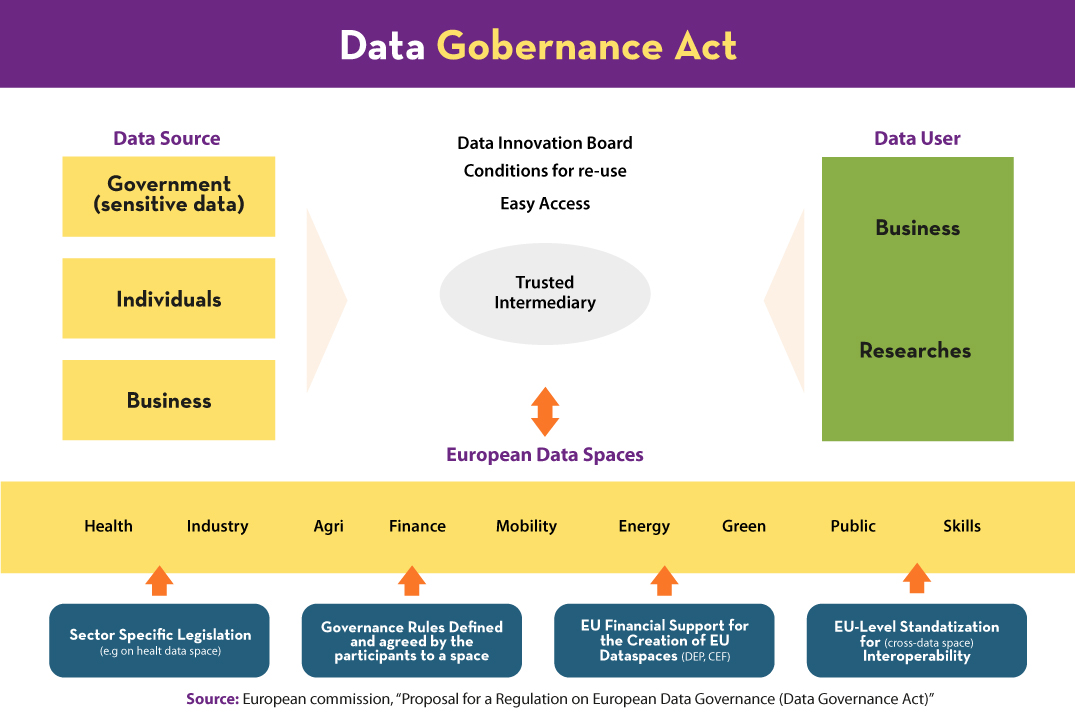
As a basis for the proposal for a Regulation on data governance, an impact assessment has been carried out beforehand, which has considered various analytical criteria, in addition to assessing the cost-benefit ratio of each of the measures envisaged. Specifically, the impact assessment identified several regulatory options of varying intensity in relation to the four main challenges identified:
- Identifying mechanisms to improve the re-use of public sector data
- Promoting trust in intermediaries
- Facilitating the transfer of data for altruistic purposes
- Fostering horizontal aspects of governance.
The evaluation found that there are barriers related to difficulties in accessing data, mostly related to technical aspects and data quality, but other barriers are also highlighted, such as those related to denial of access or the setting of unfair or prohibitive conditions, both financial and otherwise.
Throughout the process of preparing the impact assessment, evidence has been gathered through different and complementary methodologies, such as case studies and workshops on the possible existence of third-party rights hindering re-use and on governance structures; market studies on the role of intermediaries; and legal analysis, in particular on altruism in the release of data.
The different regulatory options considered ranged from no general measures at all (although they could be considered in relation to specific sectoral areas or, where appropriate, by Member States), to high/low intensity regulatory measures, without ruling out simple coordination based on guidelines and recommendations.
What were the different regulatory options envisaged in each of the above areas and why have some been prioritised over others?
Mechanisms to improve the re-use of public sector data
As a low-intensity measure - finally chosen - it was envisaged that Member States should establish a one-stop shop that would allow re-users to contact public sector bodies and even offer them advice, in particular to facilitate the re-use of publicly owned data subject to third party rights under certain conditions. The more demanding option, which was discarded in the final proposal, was instead to oblige them to set up a single body with decision-making powers, although this would entail significant legal and institutional challenges and more rigidity.
Promoting trust in intermediaries
In this respect, the approach is to seek to strengthen the role of intermediaries in fostering reliable data exchange systems both in business-to-business (B2B) and consumer-to-business (C2B) scenarios. In particular, while the less intensive alternative focused on an EU-wide voluntary labelling/certification scheme for such intermediaries, the more demanding option would have been to make such schemes mandatory. The major difficulties relating to the lack of an appropriate industry forum for the development of such a model and the difficulties in setting neutrality criteria, as well as the risk of fragmentation, led the draft Regulation to incorporate the first of the alternatives.
Facilitating the transfer of data for altruistic purposes
In relation to this objective, the aim was to ensure the availability of more data for the common good by increasing trust in systems inspired by altruism in the provision of data. Thus, a choice was made between requiring States to establish voluntary certification schemes for the implementation of data altruism mechanisms and/or for the entities that offer them or, on the contrary, opting for a model based on the need to have an authorisation to carry out such activities. This authorisation, granted by a public authority in advance and valid in the rest of the Member States, would aim at verifying whether the requirements laid down by law are actually met. The latter alternative was finally chosen in order to strengthen confidence in such entities and arrangements.
Fostering horizontal aspects of governance
The draft Regulation proposes the creation of a formal group of experts - the so-called European Data Innovation Board - in charge of promoting the exchange of national practices and policies based on the information provided by the States themselves, as well as exercising advisory functions, facilitating standardisation and the improvement of interoperability, providing coherence to the proposed governance model as explained in the following image:
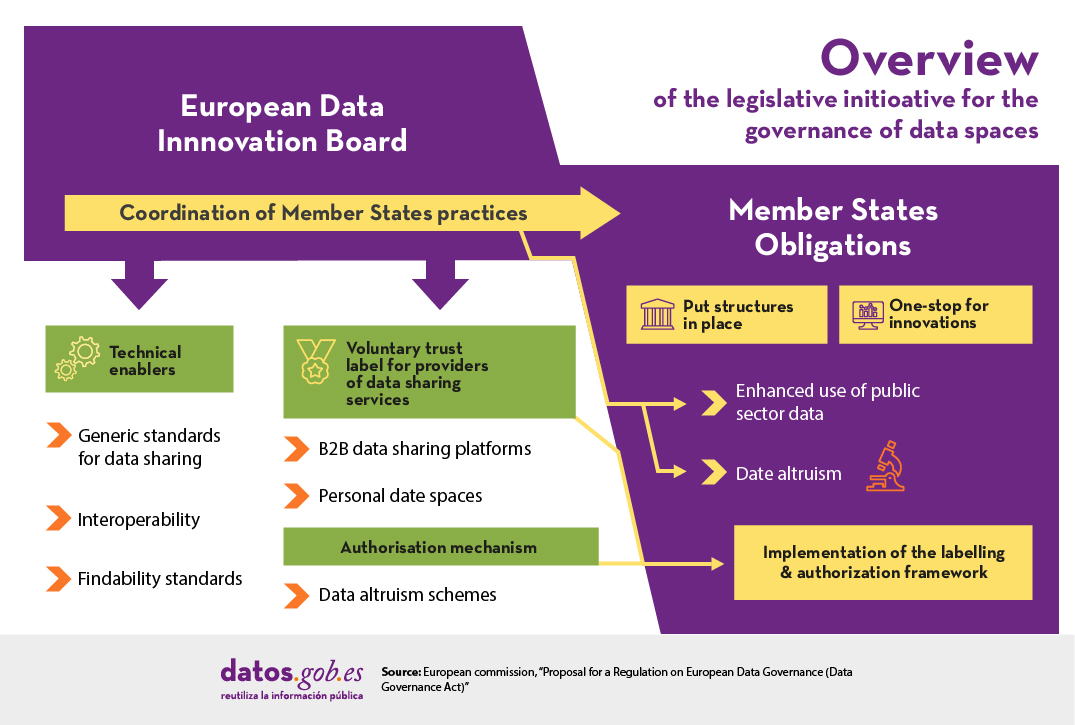
However, the creation of a body with its own legal personality was envisaged which, in addition to the above-mentioned functions, would assume the task of supervising the process of granting labels and certifications, as well as the authorisations granted by the Member States. This last alternative was rejected, among other reasons, due to the results of the cost/benefit analysis carried out from the point of view of economic efficiency.
Finally, the document itself envisages a mid-term review mechanism through which to check whether, four years after the entry into force of the Regulation's provisions -three in the case of the objective of strengthening confidence in data sharing- the measures adopted really meet the expected results in terms of a series of specific indicators for each of the objectives and solutions finally proposed. In short, this is an approach that takes on a singular relevance if we consider the dynamism that characterises the data economy, since the regulation proposed with the draft Regulation is destined to be one of the main tools in meeting the objectives formulated in the European Data Strategy.
Content prepared by Julián Valero, professor at the University of Murcia and Coordinator of the Research Group "Innovation, Law and Technology" (iDerTec).
Contents and points of view expressed in this publication are the exclusive responsibility of its author.

Blog
More than two years ago we started 2019 very hopeful about the progress that was being made in Spain regarding the openness of data related to transport and mobility, after a few years in which there had not been much progress. Although there is still room for improvement, especially in the availability of open data in real time, the fact that applications in the transport category already represent 20% of the total published on the datos.gob.es portal serves as an indicator of progress in this period.
In these two years, the pace of innovation in everything related to the use of data and artificial intelligence has been accelerated not only by technological progress, but also by a significant legislative impulse, both at European and national level. For example, the new Directive (EU) 2019/1024 considers data related to mobility and transport to be among the six groups declared to be of high value for their considerable benefits to society, the environment and the economy. Therefore, their momentum has been considered in the new mobility strategy.
European framework for mobility data
The European data strategy published in 2020 has among its objectives to create a single data market that ensures Europe's global competitiveness and data sovereignty through the creation of common European data spaces in nine strategic sectors, capable of ensuring that more data are available for use in the economy and society. Actions leading to the development of these data spaces are being channelled through the different strategies that the European Commission is developing to deliver on the priorities set for the period 2019-2024. Some examples already under development are the common manufacturing data space or the common agricultural data space.
As regards transport, in December 2020 the European Commission presented its "Sustainable and Smart Mobility Strategy" accompanied by an action plan of 82 initiatives for the next 4 years that will contribute to achieving the objectives of the European Green Pact. This strategy lays the groundwork for how the EU transport system must achieve its green and digital transformation to become more resilient to future crises.
Although the role of data is present in most of the points, among the ten key actions there is one that focuses exclusively on the role of data. In Action 7: "Innovation, data and artificial intelligence for smarter mobility", in addition to the objectives related to fostering innovation in general and building adequate digital infrastructures, the following points related to data and artificial intelligence stand out:
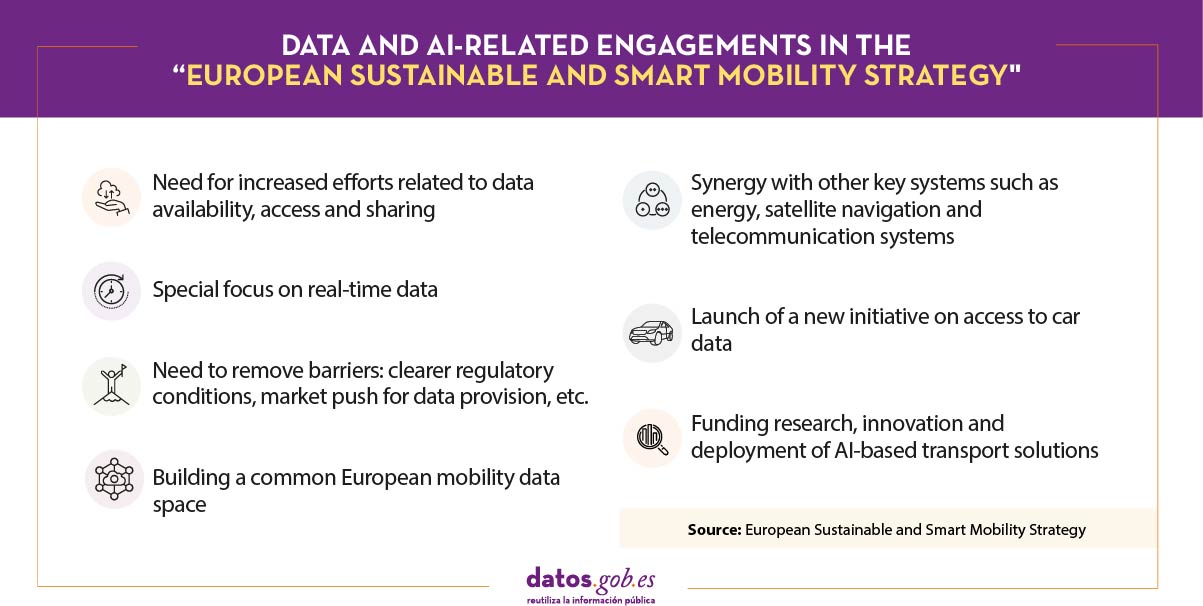
- The Commission stresses the need to step up efforts related to data availability, access and exchange in order to make the digital transformation of the transport and mobility sector a reality.
- It recognises that the availability of data and statistics is also essential, especially real-time data, as it enables better services to citizens or transparency of supply chains in freight transport.
- The need to remove barriers such as unclear regulatory conditions, the absence of an EU market for data provision, the lack of an obligation to collect and share data or misgivings about data sovereignty, among others, is highlighted.
- The commitment to propose further actions to build a common European data space for mobility data, set out in the Data Strategy, is developed. This sets the objective of collecting, connecting and making data available to achieve the objectives of sustainability and multimodality.
- Of particular relevance is the commitment that the mobility data space should work in synergy with other key systems such as energy, satellite navigation and telecommunications.
- It deals in a very differentiated way with access to vehicle data where the Commission is committed to present a new initiative on access to vehicle data, through which it will propose a balanced framework to ensure fair and efficient access to vehicle data for mobility service providers.
- The Commission plans to fund research, innovation and deployment of transport solutions based on artificial intelligence through the Horizon Europe and Digital Europe programmes, recognising that artificial intelligence is central to the automation of transport in all its modes. In this context, the Commission will support test and experimentation centres dedicated to AI for smart mobility.
This is certainly a very ambitious set of commitments that must also be compatible with EU data protection rules and ensure a level playing field for data in the value chain, so that innovation can flourish and new business models emerge. Otherwise operators would perceive that the common mobility data space is not secure and reliable for sharing their data and it would be very difficult to meet the ambitious targets that already by 2030 aim for automated mobility to be deployed on a large scale and for multimodal passenger transport to be a reality supported by integrated e-ticketing.
Contenido elaborado por Jose Luis Marín, Senior Consultant in Data, Strategy, Innovation & Digitalization.
The contents and views expressed in this publication are the sole responsibility of the author.
Noticia
The EU Publications Office has awarded a six-year contract to a consortium including the Ontology Engineering Group of the Universidad Politécnica de Madrid. The aim of the contract is to continue the development of the European Data Portal and to carry out consultancy and research work leading to the new data.europa.eu service.
data.europa.eu: a single access point for data across Europe
Until now, users wishing to locate public sector data related to Europe or member states had two platforms at their disposal:
- The European Union Open Data Portal (EUOPD), which provides access to data from the European Union institutions and other bodies for commercial or non-commercial use; and
- The European Data Portal (EDP), which federates the metadata of public sector information available in the open data portals of European countries. In the case of Spain, the datasets that the different organisations federate with datos.gob.es are automatically federated with the EDP, increasing their visibility at an international level.
The awarded contract aims, among other objectives, at the development, maintenance, operation and evolution of a pan-European data portal infrastructure combining the two current portals under the name data.europa.eu.This service is expected to act as a single point of access to open datasets made available by different publishers, including EU Member States, EU institutions, regional and local authorities, and possibly also NGOs and other international organisations. It will also integrate the EU web archive and resources with persistent URIs of EU institutions and bodies. In this way, it aims to facilitate the publication and re-use of open data across the region.
Continuing the impulse, analysis and assessment of the European open data ecosystem
The consortium's tasks will include fostering the provision of quality data and metadata, as well as promoting the re-use of public sector information across Europe. It will also continue to support the open data community through various actions such as participation in its own and third party events, the organisation of webinars and the production of news, articles and reports on open data developments, best practices and use cases.
In this sense, the consortium will continue to carry out, among others, two of the key studies that the EDP has been developing, such as the following:
- The Open Data Maturity Assessment in Europe. Every year, the European Data Portal publishes the Open Data Maturity Report, which measures the development achieved in the field of open data in Europe. In recent years, Spain has occupied second place in the maturity ranking, positioning itself as a trend-setter in the field.
- The analysis of the socio-economic impact of open data in Europe. The EDP also periodically produces reports in which the benefits of open data are gathered and its value is measured. In the latest edition in 2020, the size of the open data market was estimated at 184 billion euros and was expected to grow to between 199.51 and 334.21 billion euros by 2025.
3 key pillars
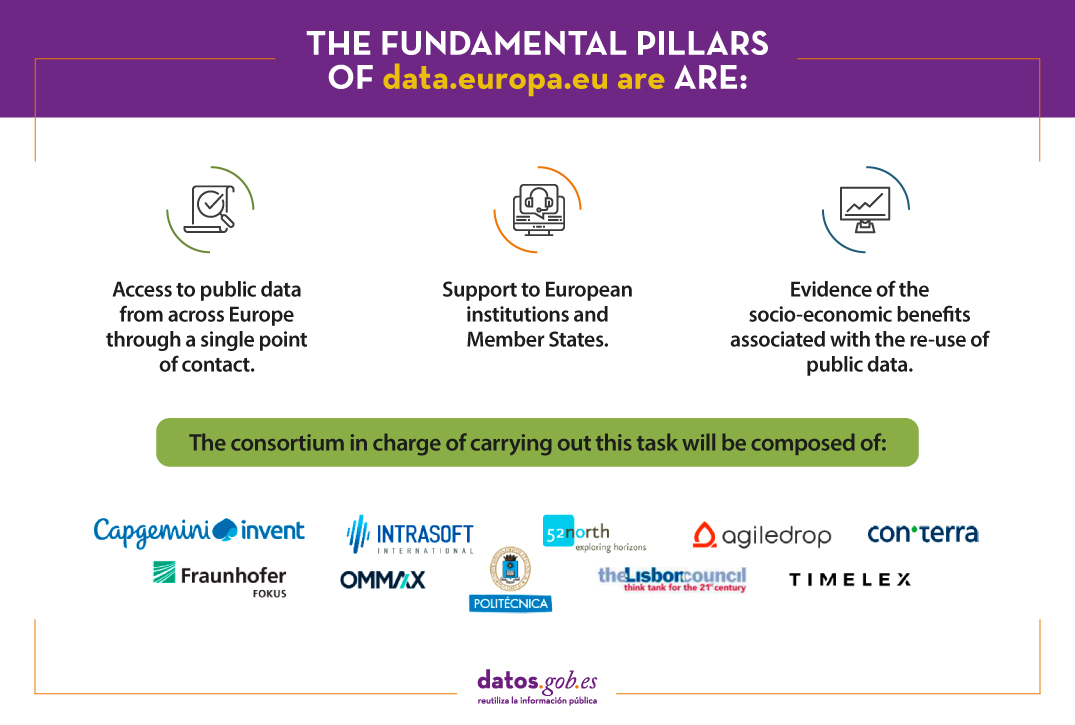
In short, the new portal will be based on three main pillars:
- Access to public data from across Europe through a single point of contact. It will offer more than 1 million datasets from 36 countries, 6 European institutions and 79 European bodies and agencies.
- Support to European institutions and Member States through community building, training and consultancy activities to improve, maintain and document good practice in data publishing. Assistance will be provided to those European countries where it is deemed necessary to improve data availability and enhance portals to foster the re-use of public data in each country and community.
- Evidence of the socio-economic benefits associated with the re-use of public data and incentives to encourage and demonstrate the creation of value and use of such data.
Through these pillars data.europa.eu seeks to support the creation and improvement of processes, products and services that reuse public data resources to create economic, social, political and environmental impact.
More information about the Ontological Engineering Group of the Universidad Politécnica de Madrid
The Ontological Engineering Group of the Polytechnic University of Madrid (OEG-UPM) is part of this project through a consortium led by Capgemini Invent, in collaboration with INTRASOFT International, and which also includes other organisations such as Fraunhofer FOKUS, OMMAX, con. terra, 52°North, agiledrop, Timelex, the Lisbon Council, the Universidad Politécnica de Madrid, CapGemini Idean and CapGemini Cybersecurity Services.
The OEG-UPM will work together with other consortium members on several of the studies related to the socio-economic impact of open data, the positioning of the future data.europa.eu in the context of the European Data Strategy, the future European Data Spaces and the European Open Science Cloud. It will also collaborate on the homogenisation of data in Europe to boost interoperability and on understanding the role that citizen-generated data can play in this context.
This Group has extensive experience in the area of open data. It leads the Madrid region node of the Open Data Institute and has collaborated in the design of the open data strategy, development and deployment of various open data infrastructures for several public administrations and non-profit organisations (e.g. the National Centre for Geographic Information, the National Library of Spain, the city of Zaragoza or the Regional Transport Consortium of Madrid). He has participated in the development of technical standards such as UNE 178301:2015 on Smart Cities and Open Data, or the series of technical reports and recommendations for the adoption of open data policies for the Spanish Federation of Municipalities and Provinces, among other actions.
This new contract with the EU is a great opportunity to give visibility to these and other actions in our country. As Oscar Corcho, who leads the team at the Universidad Politécnica de Madrid, says, "The work on this six-year contract will allow us to transfer some of our experiences to the future of open data in the European Union and its Member States".
Noticia
2021 has been the year chosen by the Publications Office of the European Union to organize the first Open Data Days of the European Union. Under the name EU Open Data Days, they will take place from November 23 to 25 with the aim of “promoting the value of open data in Europe and highlighting the opportunities they offer to different business models”. The event, which will be virtual, is made up of two proposals:
- EU Dataviz 2021. On November 23 and 24 there will be a conference program focused on open data and visualizations. This program is currently in the definition phase of the agenda, seeking proposals that contribute to enhancing the digital future of Europe.
- EU Datathon 2021. On November 25, for its part, the final of the EU Datathon 2021 will be held. Through this competition, which is now in its fifth edition, the Publications Office of the European Union seeks to promote the creation of products based on open data, such as mobile or web applications, that offer a response to different challenges related to EU priorities.
The registration period to participate in the EU Dathaton has recently been opened, which will run until May 21 (for more information you can read this article). At the same time, as we anticipated, the deadline has been opened to seek speakers for the EU Dataviz, as we will see below.
Who can submit a proposal to EU Dataviz?
The call is aimed at citizens around the world interested in open data, regardless of the sectors to which they belong: academics, private entities, journalists, data visualization professionals, graphic designers and officials of international organizations, from the EU and national, etc.
Proposals submitted to EU Dataviz 2021 should be oriented towards two specific topics:
- 30-45 minute plenary speeches presenting good practices, new use cases and emerging trends on the development of open data and / or data visualizations.
- Thematic sessions of 45 to 60 minutes (including questions and answers) with a practical approach that show initiatives and results, practices to follow and practical advice.
These sessions will have to be related to the topics included in the two days of presentations.
How will the EU Dataviz 2021 conference program unfold?
The event will be divided into two days, one more focused on open data and the other on visualizations:
Day 1: Open Data - November 23, 2021
During this first day it will be revealed how open data can contribute to the digital future of Europe. The challenges and benefits of data reuse and how to make it interoperable will be discussed, along with related topics such as:
- Open data initiatives that support policy making.
- Use cases and good practices of international, national and regional entities.
- How to improve data quality, interoperability and linked open data.
Day 2: Data Visualization - November 24, 2021
The second day will be dedicated to showing examples and good practices on the presentation of data in an attractive, efficient and ethical way. In addition, the different methods of applying data visualization techniques and some related topics will be discussed, such as:
- State-of-the-art tools and technologies in data visualization
- Emerging trends in data visualization
- Powerful visualization in the age of big data
How are the proposals presented?
To participate it is necessary to fill in this form. The deadline for submitting proposals is May 21.

How will the proposals be chosen?
Proposals received will be evaluated by the EU DataViz 2021 Program Committee, according to 4 criteria.
- Relevance of the proposal to the EU DataViz Conference, i.e. whether it can be implemented at the EU level to help shape the digital future of the region and improve the lives of its citizens.
- Clarity and quality of the proposal.
- Innovative approach or professional experience of the collaborator.
- Applicability to the EU public sector and / or use of EU or European open data in the proposal.
Each criterion will be valued for a maximum of 25 points each, with 100 being the maximum possible score.
Whether you are a public body that has launched an open data initiative, a company with innovative solutions based on data or a visualization professional, from datos.gob.es we invite you to present your proposal. Good luck to all participants!
Blog
Over the last year we have heard about 5G on numerous occasions, often linked to hoaxes and fake news with no scientific basis that make us forget what is really important: 5G will mean an unprecedented technological revolution that will affect our professional and personal lives, and that will bring about changes in all sectors of activity.
What exactly is 5G?
5G refers to the fifth generation of mobile communication networks. The previous four were characterised by the following functionalities:
- 1G: first mobile phones with talk-only capability.
- 2G: phones incorporate the ability to send SMS.
- 3G: handsets are able to connect to the internet.
- 4G: broadband is developed, capable of assimilating the exponential increase in mobile data consumption, facilitating functionalities such as video streaming and augmented reality.
5G is not entirely new, but an evolution of previous generations that allows for more efficient use of spectrum. 5G technology significantly improves performance in several aspects:
- High density of connected devices: The higher network capacity allows a greater number of devices to be incorporated through simultaneous connections, facilitating, among other things, the mass deployment of sensors and massive machine-to-machine (M2M) communications.
- Faster speed: The speed of 5G is approaching 15 to 20 Gbs per second, which is almost real time. This is expected to further expand the use of virtual desktops or cloud storage. Applications can be accessed and software can be run remotely instantaneously.
- Lower latency: Latency is the time it takes for a data packet to be transferred within the network. That is, the time it takes for an action to be executed from the time we have launched it. With 5G, latency is around 1 millisecond (ms) compared to 20-30 ms for 4G networks.
Benefits that go well beyond the mobile pone
All this not only means improvements for our smartphones, but also a huge employment and economic opportunity. The European Union highlights the impact of 5G in key sectors such as transport, healthcare and industry, with a benefit of more than €500 billion per year worldwide for 5G-enabled service providers.
In the healthcare sector, it will streamline secure online consultations and remote procedures, such as robotic surgery, improving resource efficiency. In transport, it will be a boon for autonomous vehicles: cars will be able to connect with each other (vehicle-to-vehicle or V2V) to share data on routes or their speed, which can be a big improvement in terms of safety. The 5G Automotive Association (5GAA) estimates that, with the advent of this technology, the risk of traffic accidents could be reduced by 65-68%. And in the industrial sector, it will serve to optimise process automation and control of operations by improving the interconnection between the various machines, objects and devices in the production chain.
Its impact on Smart cities and the world of open data
This revolution will also reach Smart Cities. The ability to manage millions of devices in real time will drive the Internet of Things (IoT), with more and more objects becoming connected to each other. By 2025 there will be 55.7 billion connected devices worldwide, 75% of which will be connected to an IoT platform, many linked to smart city environments.
This growing number of interconnected objects, capable of capturing information and talking to each other, will generate an unprecedented volume of data that can be analysed to make informed decisions about what changes or new projects will most benefit citizens.
In addition to 5G, another factor that will facilitate immediacy is edge computing. This technology allows data to be processed and analysed locally, i.e. as close as possible to the sensors that generated the data. This avoids moving all the raw data to central servers, improving efficiency and saving time.
Despite these opportunities, there are still challenges to overcome. Security concerns, cost of implementation or the need for scalable and versatile infrastructures are barriers to overcome to facilitate the expansion of new use cases.
5G in Europe and Spain
The Covid-19 pandemic has demonstrated the importance of resilient, high-speed communications for working remotely, in our daily lives, and for sustaining business operations and processes. This fact, coupled with the advantages and opportunities mentioned above, has led the European Union to include 5G as one of the 7 key areas of the FRR (Recovery and Resilience Facility). It is estimated that a significant part of its planned digital budget of EUR 150 billion will be used to fund 5G network infrastructure. This is coupled with funds from the Connecting Europe Facility and the Digital Europe Programme strategic investments. All of this is part of the 5G Plan for Europe.
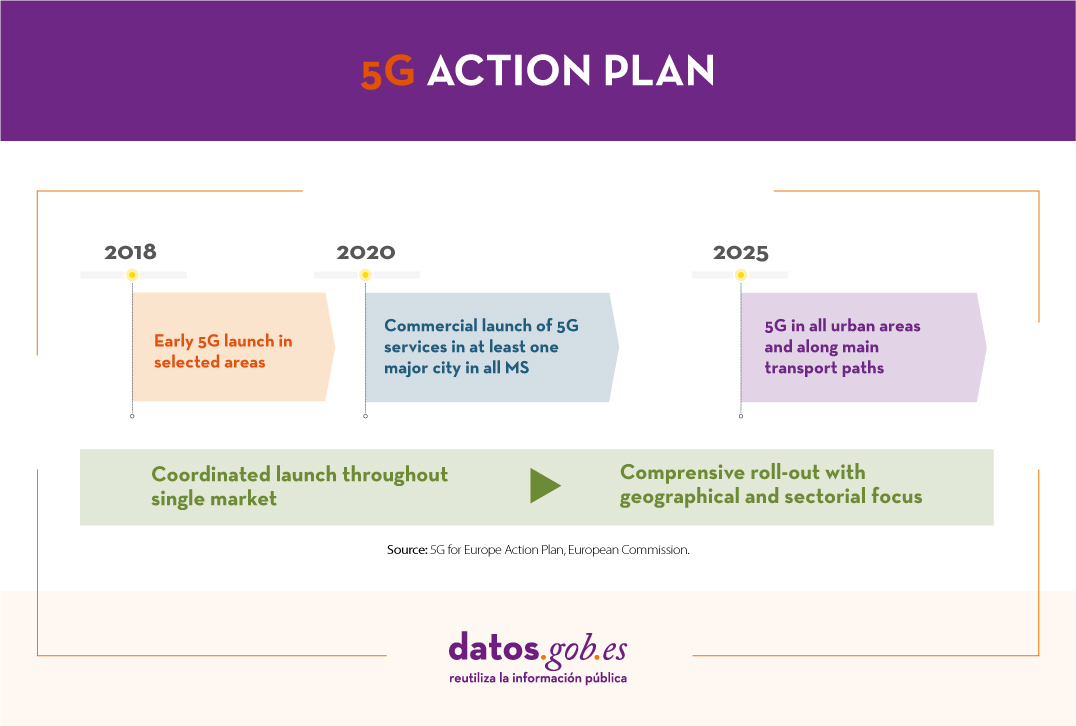
In Spain, the promotion of 5G is one of the lines of action of the Digital Spain 2025 Agenda. The 5G technology promotion strategy will have a budget of 300 million euros in 2021. This strategy continues the work started with the National 5G Plan 2018-2020, which has contributed to making Spain the European country with the largest number of cities with available 5G services and pilot projects where possible applications of this technology are being tested. The calls for proposals to promote the development of 5G technology pilot projects, carried out by Red.es, have helped to launch use cases that experiment with virtual reality and augmented reality in Andalusia or promote the supervision of railway infrastructures using drones and industry 4.0 in Galicia. All this has led to the fact that, according to the latest DESI index, Spain is above the EU average in terms of 5G network readiness.
In our country, 5G will make it possible to extend broadband coverage at high speeds in rural and isolated areas, which will help reduce the digital divide and fight depopulation. It will also boost the availability of digital public services.
In short, this is a great opportunity that will accelerate the digital transformation of society and the economy.
Content prepared by the datos.gob.es team.
Noticia
As a new year begins, it is time to take a look at the strategic, regulatory and political situation that will affect the world of open data in the coming months.
In this article we will focus on the situation in Europe. If you want to know the Spanish framework, you can read the article " The data strategies that will shape 2021 in Spain".
Europe stresses importance of data to drive recovery and innovation
After a 2020 marked by the global pandemic, 2021 is expected to be the year in which both health and economic recovery begins. In this sense, the European Commission considers data as a fundamental asset to overcome the crisis linked to COVID-19, and will therefore continue to promote its openness and reuse.
Already at the end of 2019, with the presentation of the European Green Deal, the Commission set out the roadmap to follow based on two pillars: digitisation and environmental sustainability. Among other issues, the Green Deal highlights the need to promote accessible and interoperable data, which, combined with digital infrastructure (supercomputers, cloud storage, ultrafast networks) and artificial intelligence solutions, facilitate informed decision-making.
Along the same lines is the white paper on Artificial Intelligence, published in February 2020 with the aim of ensuring an AI ecosystem of excellence and trust, based on regulation and investment. Among other issues, the document emphasises the need to ensure access to reusable data in accordance with the FAIR principles. This data must be comprehensive and representative in order to train AI systems and ensure their reliability.
Objectives and lines of action for 2021
The Commission's objectives for 2021 include boosting Europe's digital sovereignty, i.e. improving its competitiveness beyond its borders. To this end, it has established a European data strategy to drive the data economy and a digital single market, where data is shared between member states. This strategy will be accompanied by considerable investment, as the Recovery Plan for Europe, designed to help repair the economic and social damage caused by the pandemic, indicates that €143.4 billion will be allocated to the "Single Market, Innovation and Digital Economy".
This European data strategy is based on:
- A multi-sectoral data use and access governance framework. The proposal for a regulation of the European Parliament and of the Council on European data governance, published at the end of 2020. This regulation establishes a legally binding framework that provides mechanisms for the re-use of public sector data that usually cannot be exploited due to third party rights or personal data protection. The regulation facilitates the transfer of personal and business data for the common good, establishes the figure of neutral data sharing service providers, and obliges states to establish a single point of information, among other issues. This regulatory proposal is accompanied by an impact assessment that analyses the possible policies to be implemented in this area on the basis of their effectiveness, efficiency, coherence and legal and political feasibility. It states that "the general public is in favour of a comprehensive data strategy and the altruistic transfer of data, as well as the implementation of technical tools that allow citizens to actively participate in the data economy".
- This regulation complements the Directive on open data and re-use of public sector information, which extended the scope of Directive 2003/98/EC and its 2013 reform. During the first quarter of 2021, the implementing act on high-value databases, the re-use of which is associated with considerable benefits for society, the environment and the economy, is expected to be adopted, as set out in this directive.
- Boosting public-private collaboration and investments in data, capabilities and infrastructure, with a focus on data storage, cloud, 5G and interoperability. In this regard, one of the commission's major projects is the pan-European cloud federation. On 15 October, the relevant ministers made a joint declaration called 'Building the next generation cloud for businesses and the public sector in the EU' to combine private, national and EU investment in the deployment of competitive, green and secure cloud infrastructure and services. The main focus is on the deployment of European data spaces in sensitive areas such as health, industry or the environment to help overcome technical and legal obstacles. A first initiative in this field is GaiaX.
- The empowerment of people, and investment in SMEs and their training, through actions such as the new Connecting Europe Facility (CEF) grants or the Digital Education Action Plan (2021-2027), which among other actions proposes the development of ethical guidelines on artificial intelligence (AI) and the use of data. It also updates the European Digital Skills Framework, including AI and data-related skills, and support for the development of learning resources for schools.
Finally, other plans and strategies related more generally to data have also been approved during 2020, such as the European Strategy on Open Source Software 2020-2023, the Cybersecurity Strategy or the Berlin Declaration on the digital society and value-based digital governance.
With all these measures, the European Commission seeks to make data one of its priority axes, a valuable asset, which should be reusable, accessible with guarantees and serve as a basis for numerous economic and social activities.

If you want to know how these strategies, plans and regulations are reflected in Spain, we invite you to read the article " The data strategies that will shape 2021 in Spain".
You can see a summary of the data-related strategies that will mark 2021 in Europe and Spain in this link .
Blog
Updated 02/02/2024
In 2020, the proposal for a Regulation of the European Parliament and of the Council on European data governance (Data Governance Act) was made public. This is an initiative that was already announced in the Communication from the Commission to the European Parliament, the Council, the European Economic and Social Committee and the Committee of the Regions entitled "A European strategy for data", one of whose main objectives is to promote a single market for data that favours its rapid handling and, at the same time, is based on the principles and values of the EU.
The text of this proposal was preceded by a public consultation process with wide participation, especially with regard to the data governance model (section 2.1) whit almost eight hundred contributions. Furthermore, as highlighted in the preamble of the proposal itself, the regulatory options finally adopted considered the previous analysis in which the different possible alternatives for achieving the objectives sought were analysed.
Although this new initiative was initially assessed positively, the truth is that it could raise doubts about its necessity, given that Directive (EU) 2019/1024, of 20 June 2019, on open data and the re-use of public sector information, was approved a little over a year ago.
Why then a new regulation now?
Firstly, the new proposal takes the form of a Regulation - not a new Directive - to establish a mandatory, directly applicable regime throughout the Union to harmonise the EU internal market, given the risk that unilateral regulation by States will end up fragmenting it if there is no minimum harmonisation to help boost cross-border digital services. However, the competence of the Member States with regard to the organisational measures to be taken is respected, as is their ability to legislate on access to public sector information, so that the Regulation will not affect existing state rules in this area.
Secondly, it should be noted that the regulation is complementary to the 2019 directive, given that the achievement of the objectives set out above requires an approach which goes beyond the limitations to which that party is subject. Specifically, it is a question of establishing new regulations for those sets of data on which third parties have rights that make their re-use difficult, as is the case in particular with the protection of personal data, intellectual property or, among other legal assets, statistical or commercial confidentiality. Indeed, the existence of these legal barriers may seriously hinder - and even prevent - the re-use of data of enormous value when it comes to implementing projects of great impact in the current social and technological context, such as those relating to research and those based on the innovation required by the digital transformation. The measures incorporated in the proposal for a Regulation are intended to offer solutions specifically aimed at addressing these obstacles, incorporating mechanisms that provide greater legal certainty and therefore strengthen the confidence of the holders of these rights and interests.
It is also intended to establish a number of identical mechanisms throughout the Union to encourage reuse, as is the case with:
- The establishment of a reporting regime for data sharing providers, which will be neutral, i.e. they will not be able to use the data for purposes other than making it available to re-users. The services they provide must also be transparent and non-discriminatory.
- The promotion of altruism in order to facilitate the use of data for the common good on a voluntary basis, including the implementation of a form at European level to facilitate the provision of consent for the transfer of data.
- The obligation for States to establish a single point of information which, in addition, must have a register in which to submit requests for re-use so that, once received, they are sent to the corresponding bodies and entities for resolution within a maximum period of two months.
- The creation at European level of a committee of experts with the aim of facilitating re-use, which will also have an advisory role for the Commission.
What are the main legal guarantees of the Regulation?
With these objectives in mind, the initiative aims to lay the foundations for building a model of European data governance based on transparency and neutrality as a counterweight to trends in other areas. Specifically, the aim is to establish a regulatory framework that reinforces the confidence of citizens, businesses and other organisations that their data will be reused in accordance with minimum legal standards, thus facilitating control over the uses made by third parties. Thus, among the main novelties of the proposal:
- Public bodies that allow the re-use of this type of data affected by the rights and interests of third parties are obliged to adopt the technical, organisational and legal measures that guarantee their protection.
- The possibility is established for public bodies to impose an obligation that data may be re-used only if it has been subject to "pre-processing", which consists in making it anonymous, pseudonymous or, where appropriate, deleting confidential information.
- It is foreseen that re-use is only allowed in environments directly controlled by the public body if there is no other alternative that can meet the needs of the re-user.
- Public bodies are recognised as having the power to prohibit the use of the results of data processing that contains information that endangers the rights and interests of third parties.
- The collaboration of public bodies in the collection of consent from the data subjects is facilitated without the re-users having direct contact with them.
- Effective conditions and guarantees are established for cases in which the processing of the data is to take place outside the European Union, including express acceptance of submission to the jurisdiction of the State in which the public sector body that facilitated the re-use is located.
As the European Commission emphasised in a recent Communication on the occasion of the review carried out after two years of application of the General Data Protection Regulation, its provisions " helps to foster trust-worthy innovation, notably through its risk-based approach and principles such as privacy by design and by default ". This is precisely the approach of the new proposal: to establish the bases of a regulatory model based on the protection of the rights and interests affected, thus facilitating the optimal legal conditions that will allow the re-use of public sector information to be promoted with the appropriate guarantees.
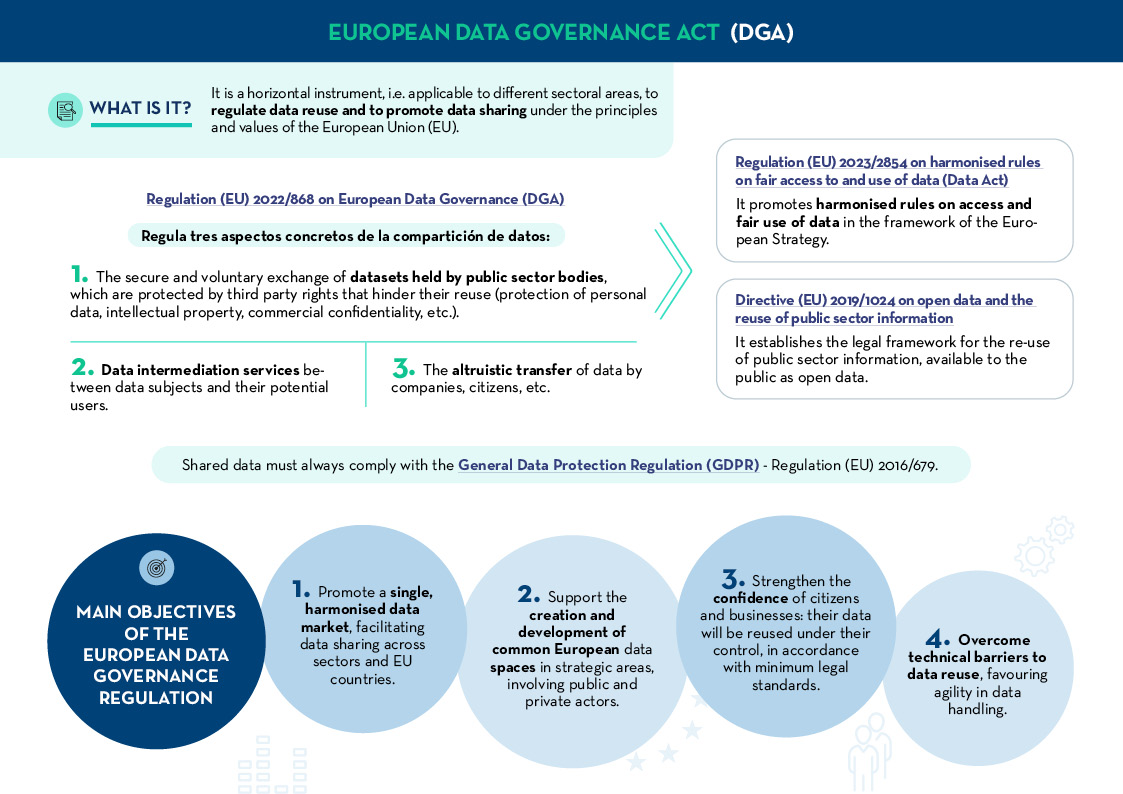
The following infographic provides a summary of the main aspects of the DGA. Click on the images to go to the different versions:
Two-page version One-page version

Content prepared by Julián Valero, professor at the University of Murcia and Coordinator of the Research Group "Innovation, Law and Technology" (iDerTec).
Contents and points of view expressed in this publication are the exclusive responsibility of its author.
Blog
Have you ever stopped to think about how much open source software you use in your day-to-day life without even being aware of it? From most of the apps on your smartphone, to your connected home devices, to the software running in your car. In all of these programs, much of the code is partly based on open source software.
The vast majority of the websites we visit in our daily lives work thanks to open source software (sometimes called free software). From the operating system of their servers and the databases that store information, to the code of their applications, they are, fundamentally, free software. Moreover, 90% of the world's cloud infrastructure is based on Linux as the operating system (OS), perhaps the most recognised free and open source software in the world.
But what is free or open source software?
Open source software combines copyright and a license to give users the freedom to run the software, analyse it, make modifications, and share the code and its modifications with others. Open source software facilitates innovation and agility in the development of new applications as it eliminates barriers and friction when collaborating.
European open source software strategy 2020-2023
At the end of October 2020, the European Commission published an update of its 2020-2023 strategy for the promotion of open source software in the European digital space. The strategy is built on the capacity of open source software to achieve technological sovereignty in Europe. The essence of open source software is aligned with the values of the European Commission, which ensures that all member states benefit from it.
| Interests defended by the EU | Benefits of free software |
|---|---|
| Ensure the proper use and transparency of the public budget. | The code is open to the public, auditable, modifiable and reusable by anyone. |
|
Equal opportunities and freedom of choice in technological tools. Avoid being locked in and blocked by proprietary software applications. |
There are many companies that develop their software products and services based on free software. This allows them to change suppliers while maintaining technological consistency and respecting the selected technologies. |
| To facilitate and enhance the reuse of software solutions. | Same as above. There are many companies that develop their software products and services based on free software. This allows them to change suppliers while maintaining technological consistency and respecting the selected technologies. |
| Ensure interoperability between technological solutions in the EU. | It facilitates the creation of new functions, connectors and integrations freely by any developer. |
The title of this strategy, Think Open, points to a change of approach in which software solutions are designed from the standpoint of openness, sharing, reuse, security, privacy, accessibility and legal considerations. It also demonstrates a clear commitment to actively support the open source developer communities.
No less important is the fact that this strategy complements the equivalent European strategy for data.
Increasingly, free software development and open data are becoming more closely related. Much of today's most widely used free software aims to extract value from data in order to make intelligent decisions. This new strategy on free software, together with the also recent European Directive (2019/1024) on open data and the re-use of public sector information, provides the perfect legal framework to enhance Europe's digital transformation in the hands of free software and open data.
Objectives of the strategy
As mentioned above, the benefits of using open source software are:
- The code is public, it can be reused and adapted in a collaborative way.
- The code can be improved and audited for security issues, regardless of suppliers.
- This adaptability of the code ensures potential interoperability between systems and solutions.
These benefits clearly support the high-level objectives of this strategy:
- To support the Commission's policy priorities and activities with secure digital means and state-of-the-art solutions.
- To provide the Commission with high quality, reliable and borderless digital public services
- Enable the transformation of the Commission and maximise its role in policy making.
- To make the Commission a world-class \"open administration\". An agile, collaborative and innovative administration.
- Ensuring the security of the Commission's IT assets.
- Ensuring the technological resilience of the Commission.
In order to launch and implement this new strategy, the Commission is planning to set up an office for the coordination of the open source software Programme. This office will be responsible for implementing a series of concrete actions aimed at having the greatest transformational impact. The following are some of the concrete actions planned.
| Open source strategy main actions | Impact |
|---|---|
| Set up Open Source Programme Office. | Expedite all activities in the action plan. |
| Enhance the software repository. | Enable co-creation and collaboration. |
| Revise software distribution practices. | Process simplification; lower cost to society. |
| Enable and create innovation with open-source labs. | Drive innovation; encourage co-creation. |
| Develop skills and recruit expertise. | Contribute to staff recruitment and retention. |
| Increase outreach to communities. | Encourage innovation; improve services. |
| Integrate open source in internal IT governance. | Increase organisational efficiency; foster innovation. |
| Ensure code security. | Increase value of open source to the organisation and society. |
| Promote and establish an internal free software culture. | Co-creation and structural collaboration to ensure the success of the strategy and actions. |
Source: Open Source software strategy 2020-2023.
It is hoped that these actions will provide the tools to strengthen and expand the open source culture. The aim is that, gradually, the source code will be made available to all Commission developer teams.
Once the legal barriers are removed, an increasing number of solutions developed internally, under the open source paradigm, will be made available to the general public. The contributions of thousands of citizens to open source projects will undoubtedly contribute to building Europe's digital sovereignty.
Content elaborated by Alejandro Alija, expert in Digital Transformation and Innovation.
Contents and points of view expressed in this publication are the exclusive responsibility of its author.
Blog
Just a few months ago, in November 2019, Ursula von der Leyen, still as a candidate for the new European Commission 2019-2024, presented the development of a European Green Deal as the first of the six guidelines that would shape the ambitions of her mandate.
The global situation has changed radically in the little more than six months since then due to the impact of the COVID-19 pandemic and as a result, many strategic plans of companies in practically all sectors and many roadmaps and roadmaps have been blown up. public policies of governments. Despite the great uncertainty in which we find ourselves, what is clear is that a thorough review will have to be undertaken to adapt these policies and plans to the new reality that is still taking shape.
However, it seems certain that the need and convenience of the European Green Deal has been reinforced in the current context. The Green Deal was conceived as an engine for the transformation of the European economy in the coming decades, but circumstances have made it a fundamental pillar for the reconstruction of the European economy in the short term after the shock induced by the confinements of the population.
In this sense, the European Union has an important advantage over other global players and that is to a large extent that its priorities are already aligned with the main challenges that we will face as the health crisis subsides. In any case, an EU growth strategy that aims to turn Europe into a continent without polluting emissions by 2050 may not seem ambitious enough to us now and we may even deem it pertinent to accelerate this transition.
The plan for the roll-out of the European Green Deal was published with a very ambitious tentative timetable that foresees the development between 2020 and 2021 of actions corresponding to the main key areas: climate ambition, clean, safe and affordable energy, industrial strategy for the economy circular and clean, sustainable and intelligent mobility, common agricultural policy beneficial to the environment and zero pollution and toxic-free environment.
If we analyze the main areas of action of the Green Deal, we clearly see that innovations based on data and artificial intelligence, together with other specific technologies, will be key to solving a good part of the challenges it aims to address. And of course all the documents already published recognize this, integrating data, open data, artificial intelligence and other technologies in the different planned actions. Those that are already available clearly indicate the path that the lines of work that will be approved in the coming years will follow.
EU strategy on biodiversity by 2030
The European biodiversity strategy to reintegrate nature into our lives, published on May 20, 2020, recognizes that “investment in research, innovation and knowledge sharing will be key to obtaining the best data and developing the best nature-based solutions”. As an example, he cites the European Forest Health Assessment, where the European Commission commits to "work with other data providers to further develop the Forest Information System for Europe." These commitments represent a good opportunity for the Spanish forestry sector on its way to transition towards a precision forestry industry approach.
Furthermore, the strategy expressly cites "the need to eliminate bycatch of endangered species or reduce them to a level that allows full recovery." To this end, it is proposed to intensify the collection of data on bycatch of all sensitive species. In this sense, the awarded project in the Aporta 2019 challenge is oriented, Optimatics System, which is designed to help fishermen make decisions in real time and thus rationalize fishing in the fishing grounds.
Ultimately, the European Biodiversity Strategy aims for research and innovation to help the Commission support and finance investments in nature-based solutions by providing objective criteria to prioritize 'green' solutions over 'gray' solutions.
Farm-to-table strategy
The “farm to table” strategy for a fair, healthy and environmentally friendly food system, also published on May 20, 2020, aims to ensure that Europeans have affordable and sustainable food, combat climate change, protect the environment and biodiversity and increase organic farming. This ambitious line of action also integrates the use of data and artificial intelligence in numerous places.
For example, it recognizes that the Common European Data Space on Agriculture, defined in the European Data Strategy, “will enhance the competitive sustainability of Union agriculture through the processing and analysis of data on production, land use, environment and of other types”, to then clarify that these data will allow “the precise and adapted application of the production approaches at the farm level and the monitoring of the results of the sector, in addition to supporting the initiative on carbon sequestration in soils agricultural”. That is, a clear orientation towards precision agriculture.
The key tool to achieve these objectives and for the transition to be fair and beneficial for all is the Common Agricultural Policy, which must be fully aligned with the Green Pact. The new CAP, proposed by the Commission in June 2018, aims to help farmers improve their performance as measured by environmental and climatic criteria. To do this, it proposes, for example, better use of data and analytics and a greater emphasis on investment in green and digital technologies and practices.
The European Union programs Copernicus and the European Sea Observation and Information Network (EMODnet), major open data sources, are cited for their contribution to reducing investment risks and as facilitators of sustainable practices in the fishing and aquaculture sector.
The improvement of data collection systems such as the 2009 Regulation on pesticide statistics or the Agricultural Accounting Information Network are also under attention and improvements are planned that will contribute both to fill the current gaps in the available data, how to promote evidence-based policy making.
New Action Plan for the circular economy
The New Action Plan for the circular economy for a cleaner and more competitive Europe, published on March 11, 2020, also recognizes a decisive role for research, innovation and digitization and therefore data during the transition. In this line, it is intended, for example, to promote the dissemination of environmental data by companies, which will force them to improve their systems for data capture and monitoring of objectives.
In the same way, innovation models based on massive customization or a closer relationship with customers are mentioned, which can accelerate the circularity and dematerialization of our economy. These models will only be possible using intensively data and artificial intelligence combined with other technologies such as blockchain or internet of things.
In addition, the European Commission will define a European data space for smart circular applications, with data on value chains and product information that will provide the architecture and governance system necessary to promote applications and services such as product passports, mapping of resources and information to consumers.
As part of the plan, the indicators, and therefore the data collection systems, on the use of resources will continue to be developed, in particular with regard to consumption and material footprints, which will be associated with the monitoring and evaluation process. of the advances obtained.
Open data
Finally, it is worth highlighting how open data is being used at the European level to promote the development of new solutions. The open data competition organized annually by the European Union, the EUDatathon, dedicated the first of its four challenges to the European Green Deal in 2020. The European Union Publications Office, organizer of the competition, has received 30 proposals (25% of the total) addressed to this challenge, which is a remarkable success considering the novelty of a concept forged only in recent months.
This interest from the open data community has also been reflected in the Spanish participation, which, with 4 proposals, has been the second country most committed to the Green challenge. Among the 3 shortlisted proposals for the final phase, there is a Spanish one, Dataseeds, which aims to help SMEs in the agriculture sector to contribute to the ecological restructuring of the EU industry.
Undoubtedly, the new growth strategy of the European Union represents a new source of opportunities for all economic sectors, but in all of them data will represent a key factor for their development, increasing the potential of other technologies such as intelligence. artificial knowledge and specific knowledge of each domain. And in Spain we have enormous potential both in the form of natural resources and in the form of capacities that can take advantage of this source of opportunities and generate competitive advantages in many sectors during this transition that has just begun.
Content prepared by Jose Luis Marín, Senior Consultant in Data, Strategy, Innovation & Digitalization.
The contents and points of view reflected in this publication are the sole responsibility of its author.
Evento
The European Commission has already published the official call for entries for the European Green Leaf 2022 (EGLA) and European Green Capital 2023 (EGCA) awards, which aim to recognise the progress made by cities committed to sustainability.
This year, the deadline for submissions will remain open until 28 October and the financial allocation for both awards will be up to one million euros combined, to support cities in effectively implementing new urban sustainability measures. This increase in the prize money aims to raise awareness of the objectives of the European Green Deal.
Prize money and benefits
The two winning municipalities or cities of the European Green Leaf 2022 award will each receive 200,000 euros, while the winning city of the European Green Capital 2023 call will receive 600,000 euros. The main objective of both grants is to make the winning cities take on new responsibilities in the fields of sustainability and environment.
In addition to the economic award, the winners of both prizes will have a seal of approval from the European Commission that will allow them to enjoy benefits such as increased media coverage at an international level, as well as receiving a greater focus on environmental projects and foreign investment.
Furthermore, not only the winning cities or municipalities will benefit, as the finalist cities will have access to a knowledge network that already includes the most outstanding candidates from previous years, where they can share knowledge about how to learn to overcome new key challenges in terms of sustainability.
Deadlines and requirements for submission of applications
The European Green Leaf 2022 awards are aimed at municipalities with a population of between 20,000 and 99,999 inhabitants, with a maximum of two population centres to be awarded. On the other hand, the European Green Capital 2023 award remains open to cities with a population of more than 100,000 inhabitants.
The 28th of October 2020 at 23:59 (CET) is the date and time limit for all nominations to be submitted to both awards. All information on how to register, the rules and legal bases, as well as the participation process, can be found on the official website.
La importancia de los datos abiertos en las smart cities
When we talk about open data in smart cities we refer to a basic concept to understand the development of smart cities and the processes of active participation of citizens.
In an increasingly digital society, the importance of data processing and management is essential for companies and administrations. In this sense, smart cities are not an exception, as they represent an important opportunity to check the usefulness of this information to promote new ways of citizen participation in smart cities, to boost informed decision-making and to improve the efficiency of public services.