


Blog
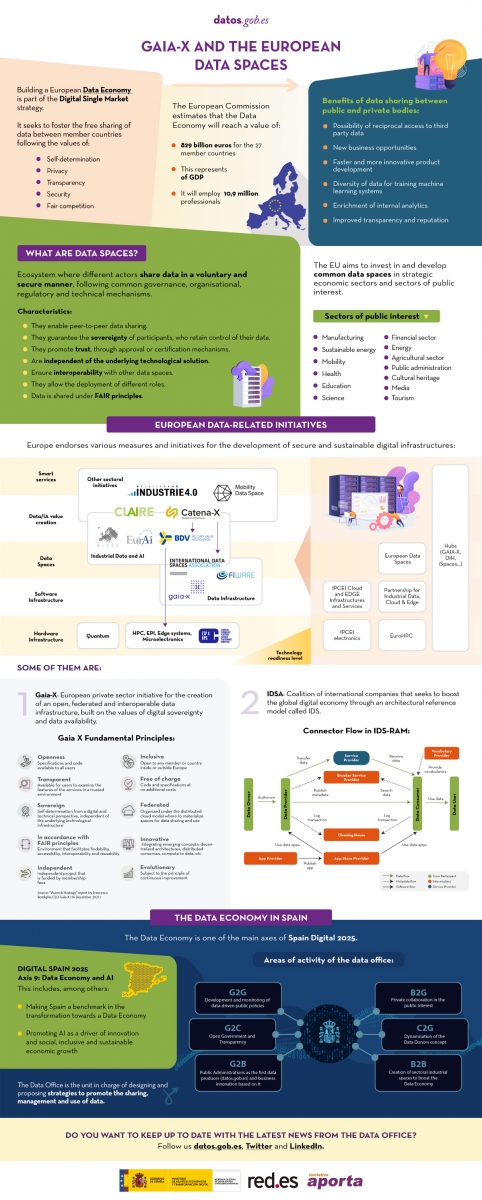
The following infographic shows the context driving the development of data spaces, focusing on some related European initiatives such as Gaia-X and ISDA. For more in-depth content you can read the following articles:
- The importance of deploying European Data Spaces
- Gaia-X and the drive for the data economy
- https://datos.gob.es/en/blog/ids-ram-reference-architecture-model-and-its-role-data-spaces
- The Data Office: the challenge of promoting the Data Economy
Click on the infographic to see it in full size and access the links:

Noticia
The European Union wants to bring digital technology closer to businesses, citizens and public administrations. To this end, it launched the Digital Europe Programme, which aims to close the gap between research in digital technology and its implementation in all sectors of the economy and society. With a 6-year extension (2021-2027), the programme covers areas such as supercomputing, artificial intelligence, cybersecurity and advanced digital skills.
Given that open data has a key potential in the development of many of these disruptive technologies, it is not surprising that within the programme we also find specific grants aimed at their development. This is the case of the "Public Sector Open Data for AI and Open Data Platform" grants, included in the programme's Cloud Data and TEF call (DIGITAL-2022-CLOUD-AI-02).
The objective of these grants is to boost the availability, quality and usability of high-value public sector data, in compliance with the requirements of the Open Data Directive and the re-use of public sector information. This, in turn, is intended to boost the re-use and combination of open public data across the EU for the development of information products and services, with a special focus on Artificial Intelligence.

The importance of high-value data
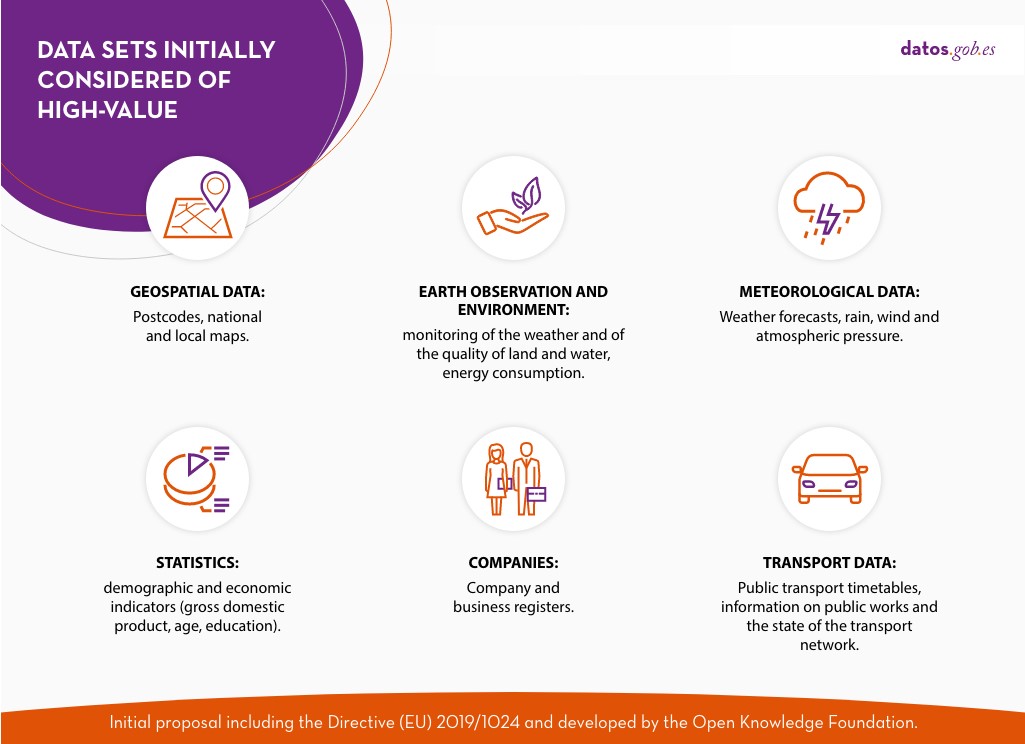
According to Directive (EU) 2019/1024, high-value data is a set of datasets with a high potential to generate "benefits for society, the environment and the economy, in particular because of their suitability for the creation of value-added services, applications and new, decent and quality jobs".
Initially, the Directive listed 6 categories of data to be considered of high value: geospatial, earth observation and environmental, meteorological, statistical, company and mobility data. However, these categories will be modified in the future to respond to technological and market changes. In Spain, the role of adding new categories of high-value data falls to the Data Office with the collaboration of public and private stakeholders, as specified in Royal Decree-Law 24/2021, of 2 November, transposing several European Union directives, including Directive 2019/1024.
What is being sought?
The grants aim to support public administrations at local, regional and national level to increase semantic, technical and legal interoperability and portability of high-value data.
The datasets generated as a result of the work must meet the following conditions:
- They must be freely available through one or more open data portals of the Member States.
- They must belong to one of the 6 thematic categories indicated in Directive (EU) 2019/1024.
- Both new datasets and datasets resulting from the merging of existing, harmonised, quality-enhanced, etc. datasets are valid.
- They must be available through application programming interfaces (APIs), in a machine-readable format.
- Their publication and re-use conditions must be compatible with an open standard licence.
- They must have quality standards (attribute lists, formats, structures, semantics, documentation and terms of use) that ensure cross-border interoperability.
The proposal should propose concrete Key Performance Indicators (KPIs) to assess the benefits of the implemented solutions for citizens and/or businesses.
What does the aid cover?
The aid covers 50% of the actual costs in a number of "eligible" categories, including staff costs, communication costs, purchasing costs, etc.
To whom is the proposal addressed?
The grants are targeted at public administrations to which the obligations of Directive 2019/1024 apply. Public and private data re-users may be involved in the choice of the datasets to be prioritised.
Only legal entities, not natural persons, from EU Member States associated to the European Economic Area or the Digital Europe Programme can participate.
How to participate?
Proposals must be submitted electronically through the European Commission's Funding and Tendering Portal, using a number of forms provided in the system:
- Application Form Part A. Contains administrative information and the summary budget for the project.
- Application form Part B. Contains the technical description of the project (Max. 70 pages).
- Mandatory annexes and supporting documents
The deadline for applications is 17 May 2022.
Blog
There is no doubt that data is a fundamental asset for companies. Properly processed, they generate great competitive advantages, both in decision-making and in the generation of new products and services, enabling technologies such as Artificial Intelligence. This situation has made many organisations wary of sharing their data. However, the situation is changing and more and more companies and organisations are becoming aware of the advantages of this practice.
Data sharing drives efficiency in supply chains, enabling faster and more innovative product development. By sharing their data, organisations also benefit from access to third-party data, which can be of great use in a variety of fields: from training machine learning systems to enriching internal analytics. In addition, the fact that several companies are working in the same field, generating advances, means that the market matures earlier, opening up new business opportunities, as well as reducing the time and costs of marketing products. There are also benefits in terms of transparency and reputation.
Secure and controlled environments, such as data spaces, are necessary for this data exchange to take place in a safe and secure manner.
What are data spaces?
A data space is an ecosystem where diverse actors share data in a voluntary and secure manner, following common governance, organisational, regulatory and technical mechanisms. Some of the characteristics of advanced data spaces include:
- They ensure participants' trust and sovereignty over their data, creating an ecosystem of peer-to-peer data sharing. In a data space, each participant retains control over its own data, indicating the terms and conditions under which it can be used.
- They are independent of the underlying technological solution. This allows for portability and deployment in different physical infrastructures.
- Data is shared under FAIR principles, which facilitates the location, access and use of the data. To this end, datasets must be properly described, including the taxonomies used and their restrictions on use.
- They enable the deployment of different roles, such as data producers, consumers, data service providers, component developers or operators of essential services, facilitating the development of data intermediaries.
- They ensure the identity of the participants, as well as the suitability of the software components used, by means of appropriate approval or certification mechanisms.
- They enable different policies of access and use of information, so that data subjects can determine whether data is shared for free or not, under mechanisms that guarantee its proportionality.
- They ensure interoperability
European data spaces key to boosting the data economy
Data spaces are a key element of the European Data Strategy, which, among other issues, seeks to boost the region's economy through the creation of a single European data market, where data flows between Member States and between sectors of activity, in accordance with the European values of self-determination, privacy, transparency, security and fair competition.
In this strategy, the European Commission has already announced its interest in investing in and developing common data spaces in strategic economic sectors and sectors of public interest, notably those related to manufacturing, sustainable energy, mobility, health, finance, energy, agriculture, public administrations and skills. Once developed, these spaces are expected to be interconnected, so that the data available in them can be cross-exploited.
The creation of these data spaces seeks to overcome the legal and technical barriers linked to data sharing, through common standards, tools and infrastructures in a context of digital sovereignty. According to the European data strategy, the development of European data spaces should be carried out taking into account the following elements:
- The deployment of tools and services for data processing, exchange and sharing, as well as the federation of secure and energy-efficient cloud capabilities and related services. These tools should enable access to data in a fair, transparent, proportionate and non- discriminatory manner.
- The development of clear and reliable data governance structures, in compliance with EU law, with particular attention to the protection of personal data, consumer and competition law.
- Improving the availability, quality and interoperability of data, both within specific domains and across sectors.
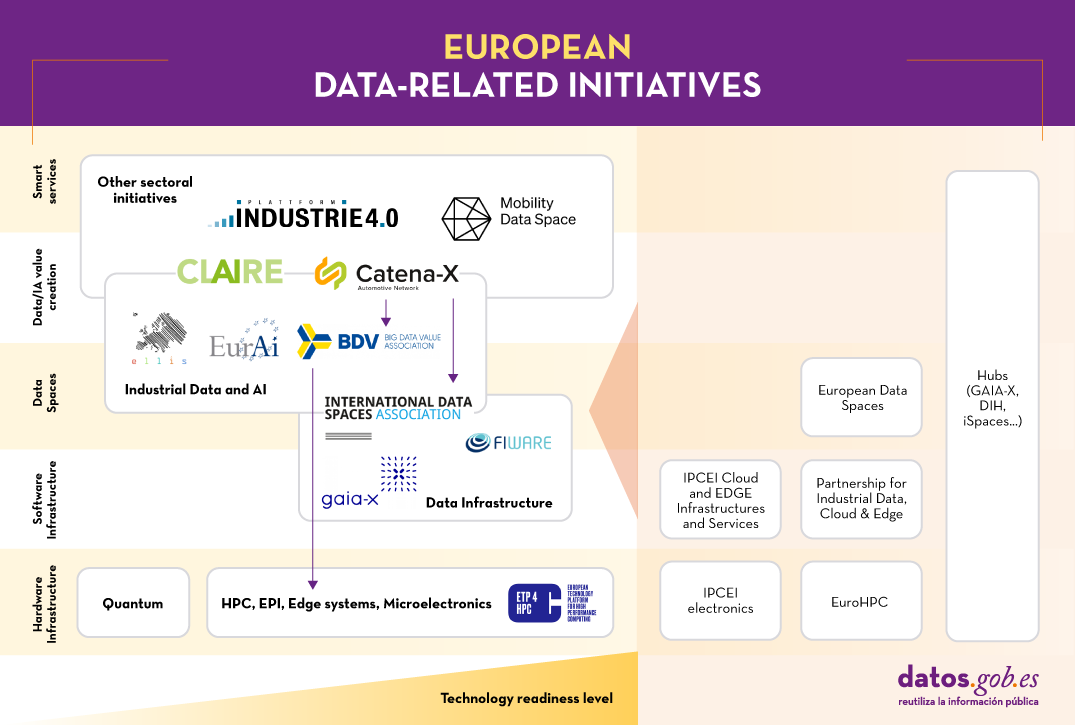
In this regard, the European Commission endorses various measures and initiatives for the development of secure and sustainable digital infrastructures. These include Gaia-X, which seeks the development of an open, federated and interoperable data infrastructure in the cloud, and the International Data Spaces Association (IDSA), probably a substantial part of Gaia-X, which promotes an architectural reference model for the development of data spaces.
In the image below you can see these and other European initiatives at different levels related to data spaces. The left and central part shows some of the main European data initiatives, and how these are supported by hardware infrastructures. The right hand side shows the alignment with the most important EU initiatives within the European Data Strategy.
Spain is aligned with Europe in this area: the transition to a data economy is among the axes of the Digital Spain 2025 Plan. Work is currently underway to promote the enabling environment for the creation of sectoral data spaces, through the various data initiatives included in the Recovery, Transformation and Resilience Plan. One example is the Spanish Gaia-X Hub, aimed at deploying a robust ecosystem in the field of industrial data sharing, comprising companies of all sizes. The aim of this type of action is to create a community around data that favours innovation and economic growth, with the consequent benefit for society.
Content written by the datos.gob.es team
Blog
Updated 02/29/24
At the end of 2021, an agreement was reached between the European Parliament and Member States to push forward the proposed Data Governance Act. The aim was to create processes and structures to facilitate the exchange of data between all relevant actors.
Shortly thereafter, it was followed by another new regulatory initiative launched by the European Commission: the so-called Data Act. It is a new regulation that aims to promote harmonised rules on access and fair use of data within the framework of the European Strategy. Once the appropriate public consultation has been completed and, in view of the conclusions of the corresponding impact analysis, this proposal has been formulated, which is set to profoundly transform the European regulatory framework on data.
What are the objectives of the new regulation?
The initiative is based on a basic premise: despite the progress made, there is still a general problem regarding the insufficient availability of data in the European Union as a whole. In this sense, it has been noted that this is not simply a problem specific to the national sphere, so that it has seemed necessary to promote a new European regulation whose main objectives are:
- To increase legal certainty with regard to rights relating to access to and use of data, especially in a technological environment of interconnected objects.
- To address imbalances in contractual relations between companies whose subject matter concerns the availability of data.
- Establish the conditions under which private entities should provide data to public bodies in exceptional situations.
- Promote a framework for efficient interoperability of data from a cross-sectoral perspective.
- Establish minimum guarantees for users of data processing services when they change provider.
Let us look at each of these points in detail.
Boosting access to and use of data
One of the main novelties of the Regulation concerns the adoption of measures to facilitate access to data generated by connected objects (IoT). In particular, it has been identified that there are insufficient incentives for data owners to make data available to the users of the objects and services, who are ultimately the ones who generate the data when they use or enjoy them. In this respect, the lack of adequate regulation means that there is clear uncertainty about the rights and obligations that correspond to each of the parties, i.e. manufacturers of the objects, persons using them and, where appropriate, third parties providing services.
The approach is to oblige manufacturers of the objects to share, under appropriate conditions, data generated during the use of products or services - which may even include reasonable compensation - with the users themselves and even with third parties, in particular for the purpose of facilitating after-sales and maintenance services. As a result, rights of access and use are assigned, as opposed to the recognition of exclusive rights arising from the greater ability to control that would initially be vested in manufacturers and designers.
Moreover, specific measures are laid down to strengthen the legal position of those who use the objects, in particular with regard to data generated during the enjoyment of the related products or services. In this respect, the right to information prior to purchase is reinforced, and the user must be informed of the nature and volume of the data to be generated, how he can access the data and how it will be generated, or, inter alia, who will use the data or how to request that it be shared with third parties. Moreover, the manufacturer of the object or service provider is required to guarantee the user access to the data generated, without being able to require any additional information from the user beyond what is strictly necessary to verify the user's status as a user.
Contractual imbalances between companies
As regards business-to-business relations, the Regulation has established measures aimed at ensuring that there is a reasonable balance and, in particular, at avoiding unfair impositions in business-to-business contracts when negotiating conditions relating to access to and use of data. Thus, on the one hand, the cases in which a clause is considered unfair for a micro/small/medium-sized enterprise are specified, as would be the case, for example, when it would be prevented from making a copy of the data it has itself generated or when undue restrictions are imposed on the means of redress in the event of non-compliance. Moreover, it is specified in which circumstances the conditions have been unilaterally imposed in an undue manner, with the onus being on the company that proposed the clause to prove that there has been no such imposition. The mandatory nature of these measures is reinforced by the express prohibition to ignore them even if there is an agreement to that effect between the two parties.
Provision of data to public entities
With regard to relations between companies and public bodies, the Regulation envisages the mandatory provision of certain data to meet exceptional needs linked to emergencies or even situations where the public interest so requires. This is a measure that would not be applicable to smaller companies and that, in any case, would be subject to a series of limits and conditions, among which the following stand out:
- The requirement to demonstrate the exceptional need that justifies making the data available, specifying the purpose of the use and its duration.
- The regulations on open data and re-use of public sector information shall not apply to the data provided.
- If the purpose of the provision relates to personal data, reasonable measures for pseudonymisation shall be required, provided that this is not incompatible with the intended purpose.
- The purpose of making the data available is for the performance of a task of public interest, the existence of a legal provision is required and that the data could not have been obtained by any other means, including their purchase on the market.
- In any case, this regulation does not affect cases in which the provision of the data by the companies takes place within the framework of the fulfilment of legal obligations derived from the exercise of surveillance or verification functions, as would be the case, in particular, with the performance of inspection tasks by the public authorities.
In any case, this regulation does not affect cases in which the provision of data by companies takes place in the framework of the fulfilment of legal obligations derived from the exercise of surveillance or verification functions, as would be the case, in particular, with the performance of inspection tasks by public authorities.
A strong commitment to interoperability
One of the main problems that the new Regulation seeks to address is the high level of fragmentation of data, in particular due to the existence of "silos" that prevent their interconnection in the absence of effective rules on interoperability. In this respect, an obligation is laid down for data space operators to comply with a number of minimum requirements to facilitate interoperability, in particular as regards the specification of technical and legal conditions allowing automated data processing. Specific conditions are also laid down for smart contracts, i.e. software that executes and settles transactions on the basis of pre-determined conditions from the perspective of data provision, including a European declaration of conformity system and even the establishment of standardisation criteria.
Interoperability requirements may be general in scope or, where appropriate, sector-specific, for which a broad legal approach will be essential, taking into account the requirements of the respective regulatory frameworks applicable in each case. To this end, the definitive boost to European data spaces can undoubtedly be of great importance in order to specify the scope of regulation in some areas of great strategic relevance and of unquestionable public interest.
Safeguards against switching providers
Another of the main novelties of the proposal consists of recognising minimum rights for users of data processing services when they change provider, so as to extend their ability to choose and ensure that they can dispose of their data, applications and other digital assets without unjustified restrictions. It also establishes certain minimum contents that must be included in the corresponding contract with providers, including the obligation to facilitate and actively collaborate in the migration process, the exhaustive identification of the categories of exportable data and applications or, among other aspects, the establishment of a minimum period for the recovery of data once the contract is terminated.
Although all these aspects may represent significant improvements in terms of facilitating access to data, the fact is that the proposal has raised some doubts, especially with regard to the mandatory nature of their transfer in B2B and B2G environments, the possible increase in costs that the new data processing conditions would entail or, among other aspects, the possible contradiction with the principle of minimisation in force in the area of personal data protection and, in general, the coherence with the rest of the European regulatory framework. These are undoubtedly important challenges whose regulation will have to take shape in the coming months during the long and intense process that is now beginning.

Download the infographic in PDF here
This infographic is also available in two pages
Content prepared by Julián Valero, professor at the University of Murcia and Coordinator of the Research Group "Innovation, Law and Technology" (iDerTec). Contents and points of view expressed in this publication are the exclusive responsibility of its author.
Noticia
The application of new techniques aimed at extracting value from data has become a reality in the current environment, accelerating its transformation into knowledge for decision making. Therefore, it is common to focus on the exploitation of data as an indispensable part of its management, arising linked to the concept of its exploitation the concept of data space, enabling its sharing, involving both the private sector and the different public agencies, whether local, national or international.
A data space is an ecosystem where the voluntary sharing of its participants' data materializes within an environment of sovereignty, trust and security, established through integrated governance, organizational, regulatory and technical mechanisms. The concept of sovereignty is key, understood as the ability of a participant to maintain control over its own data, expressing the terms and conditions that will govern its permitted uses.
What is Gaia - X?
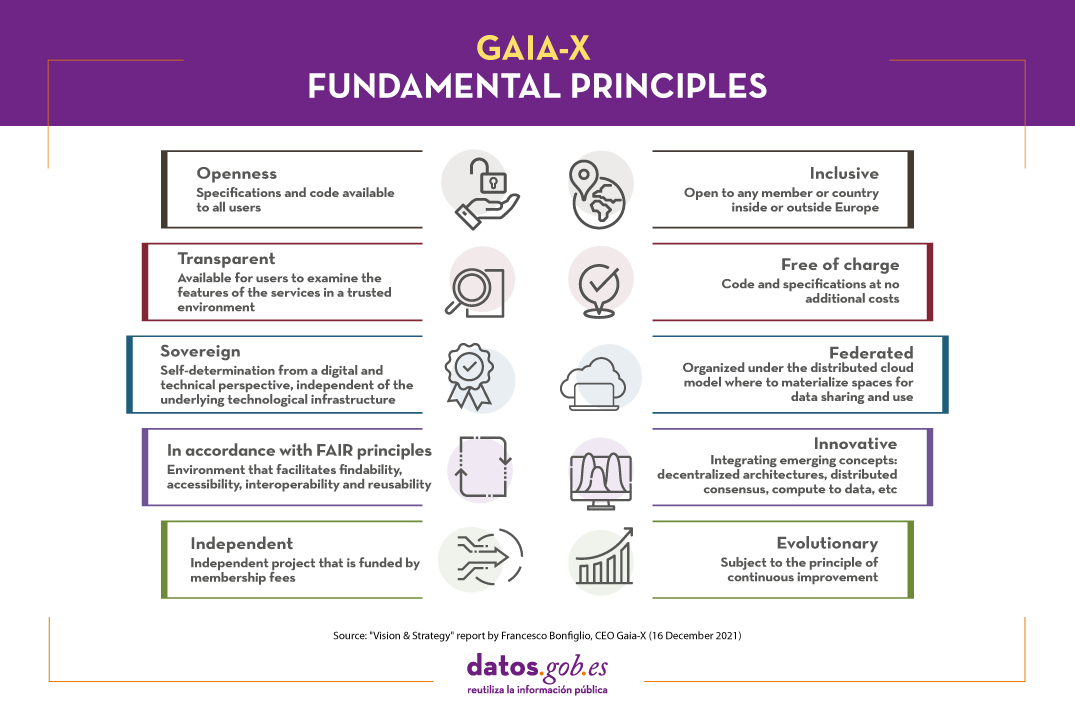
In this context, the Gaia-X initiative was born, a European private sector initiative for the creation of an open, federated and interoperable data infrastructure, built on the values of digital sovereignty and data availability, and the promotion of the Data Economy. The challenge is to establish an ecosystem in which data from European entities are available and shared in a trusted and managed environment according to European principles of decentralization, openness, transparency, sovereignty and interoperability.
Gaia-X aims to develop a federation of cloud data services, enabling cooperation and data sharing between companies and organizations across the European Union independently of infrastructure providers. Gaia-X defines the technical concepts, as well as the governance, for the interoperability of datasets and data infrastructures, assuming the role of orchestrator, mediating between data providers and data consumers via the federated services, and creating a physical decoupling between the data layer and the infrastructure layer.
From the origins
The Gaia-X initiative began to see the light of day in October 2019, when the French and German ministries of economic affairs presented the project. Since then, its growth has been exponential. At the end of 2020, a summit was held, leading to the founding of the Gaia-X association AISBL in January 2021. During that year, Gaia-X is defined as a brand, as well as the first versions of its services. Among its objectives is the development of common standards, best practices, tools, as well as governance mechanisms.
Gaia-X currently has 324 members around the world. Companies, associations, research institutions, administrations and politicians have joined forces to work together in the initiative. The 22 founding members are divided between France and Germany, where organizations such as Amadeus, Atos, OVH, Orange Business Services, Siemens, IDS, SAP SE and Deustche Telekom stand out. However, these 22 have been joined over the years by private and public organizations from Asia (China, India, Japan, Singapore, Qatar, Korea), the USA and mainly Europe (Austria, Belgium, Estonia, Finland, France, Germany, Greece, Poland, Ireland, Italy, Lithuania, Luxembourg, the Netherlands, Poland, Portugal, Slovakia, Slovenia, Spain, Sweden, Switzerland, the UK).
In Spain, in mid-2021, the Ministry of Economic Affairs and Digital Transformation, through the Secretary of State for Digitalization and Artificial Intelligence, promotes the creation of the Gaia-X national hub, an organizational initiative whose objective is to accelerate European capacity in industrial/sectoral data sharing and digital sovereignty, contributing to generate the common European infrastructure, through the launch of a manifesto of interest whose response from private sector companies was overwhelming.
In this way, Spain also joins the Government Advisory Board of Gaia-X, the European partnership to accelerate the response to data sharing. The Spanish Gaia-X Hub seeks that companies of all sizes create community around data, serving to develop and implement innovative solutions based on data and Artificial Intelligence, which boost national competitiveness, paying special attention to SMEs and micro-SMEs. Thus, it is proposed the creation of data spaces in the different productive sectors, interoperable with European spaces and without interfering in other spaces that the industry has planned to develop.
The data economy in Spain
This project aims to contribute to the economic growth of our country. According to the European Data Market study, the data economy in Spain had in 2019 a value equivalent to 2.5% of the national GDP, and it is estimated that by 2025, this value will represent more than 4% of the Spanish GDP, provided that the appropriate legal, political and financing environment is created, which highlights the importance of data in the economy.
Spain's commitment to the data economy is part of the Digital Spain 2025 strategy, which highlights the need to support the digitization of key sectors for the economy, such as tourism and healthcare in particular, but also others such as mobility, the agri-food sector and e-commerce.
Conclusions
Data are the focus of the major transformations taking place in today's environment as a result of the application of new digital technologies. For this reason, no digital economy will be able to consolidate and compete globally without a strong data economy.
The European strategy aims to create a single European data market, open to data from all over the world, in which personal and non-personal data, including sensitive business data, is secure and businesses have access to high-quality industrial data in a way that drives growth and creates value. Through the associated rules and mechanisms, the aim is to ensure that data can flow, European standards and values are fully respected, and the rules for data access and use are fair, practical and clear.
Data spaces in general, and initiatives such as Gaia-X in particular, are key elements in achieving the objectives of the European strategy, serving to foster ecosystems that create new products and services based on more accessible data.
Content prepared by Juan Mañes, expert in Data Governance, with contributions from the Data Office.
The contents and views expressed in this publication are the sole responsibility of the author.
Evento
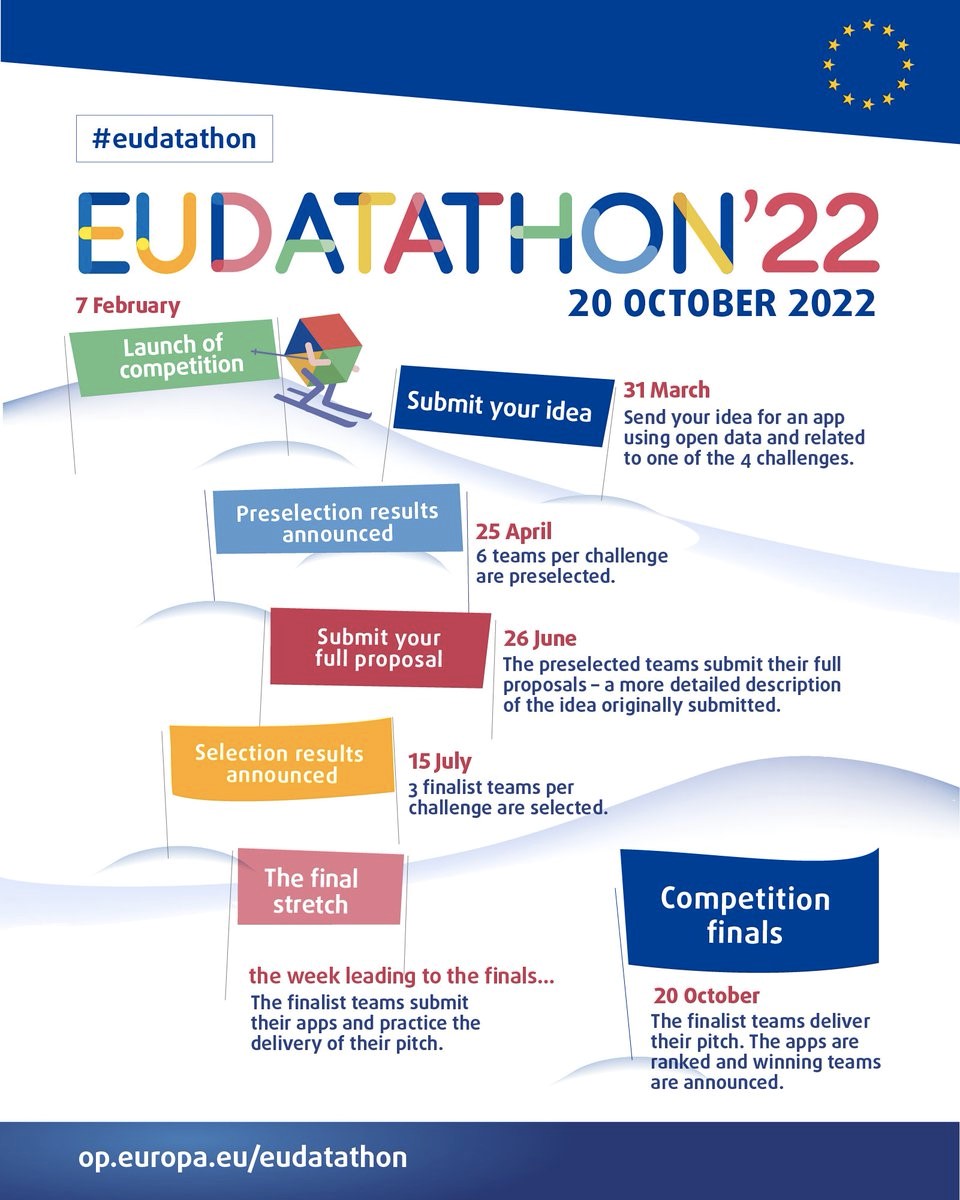
7 February 2022 was the date chosen for the launch of the sixth edition of the EU Datathon. Organised by the Publications Office of the European Union, this competition aims to raise awareness of the value of open data and showcase the opportunities for data-driven business models.
EU Datathon 2022 gives participants the opportunity to gain international visibility for their innovative ideas based on open data, as well as compete for a total prize fund of €200,000.
4 challenges available
Unlike the 2021 edition, which presented 3 challenges, this EU Datathon 2022 has 4 challenges to solve:
- Challenge 1: 'The European Green Deal'. The European Green Deal is the blueprint for a modern, sustainable and competitive European economy. Participants in this challenge must develop applications or services aimed at creating a greener Europe, for example to boost resource efficiency or reduce pollution.
- Challenge 2: 'Transparency in public procurement'. Transparency in public procurement helps to track how public money is spent, to fight fraud and to analyse economic and market trends. Therefore, this challenge invites developers to explore the wealth of information available and develop an application to expose it in a transparent way.
- Challenge 3: 'EU public procurement opportunities for young people'. Public procurement is often perceived as a complex field, where only specialists feel comfortable finding the information they need. This challenge invites developers to propose, for example, apps that help young people to easily find the information they need when applying for public procurement positions.
- Challenge 4: 'A Europe fit for the digital age'. The EU aims for a digital transformation that works for people and businesses. This challenge therefore drives the creation of applications or services that improve data literacy, increase connectivity or make data more understandable for all, based on the European Data Strategy.
How to participate?
Participants must submit an idea for an application that links and uses open datasets to address one of the four challenges above. Importantly, at least one of the datasets used to develop the idea must come from the datasets available on data.europa.eu.
In addition, participants opting for challenges 2 or 3 must use at least one dataset published by the EU Tender Electronic Daily (TED).
Who can participate?
The EU Datathon 2022 is aimed at citizens from all over the world interested in prototyping products based on public open data and even developing new business models, for-profit or not-for-profit, through the exploration of such data.
Participation is open to individuals or legal entities, in teams of one to four members. However, staff working in the institutions, agencies and bodies associated with or contracted by the EU Publications Office are not eligible to apply.
How does the competition unfold?
Participating teams must register their proposal via this form by 31 March 2022 at 23:59 CET (Central European Time). After the registration deadline, the competition will run in 2 phases:
1.Pre-selection
The jury, composed of experts from within and outside the EU institutions and agencies, will evaluate the registered proposals on the basis of a number of criteria such as the relevance of the selected challenge or the potential and creativity of the proposed solution.
For each challenge, the 6 highest scoring teams will be shortlisted. All participating teams will be notified of the results on 25 April 2022.
2.Fase final
The 24 shortlisted teams (6 per challenge) will be invited to turn their proposals into applications. Each team will have to produce and email a 60-second video presenting their app and the team working on it by 15 August 2022.
The final of the competition will take place on 20 October. The applications submitted in each challenge will be evaluated by a jury of experts. In addition to the relevance of the proposal, the open data used (economic and social potential, interoperability with other data sources, etc.) and fit for purpose (maturity of the product, benefits offered, etc.) will be taken into account.
What is the prize money?
This year, the total prize money increases considerably to 200,000 euros, which will be divided for each challenge as follows:
- First place: 25,000 euros
- Second place: EUR 15,000
- Third place: 7,000 euros
From datos.gob.es we invite you to submit your proposal. Remember that if you need inspiration, you can take as a reference CleanSpot, the Spanish company that managed to be a finalist in the EU Datathon 2021, winning second place in its challenge.
You also have at your disposal the information about the winning projects of all the editions of the Aporta Challenge, which, like the EU Datathon, seeks to reward ideas and prototypes based on open data that drive improvements in specific sectors of activity. The first year the focus was on the public sector, the second on the agri-food, forestry and rural sectors, and the third on education. The call for participants for the fourth edition, focusing on the field of health and well-being, has just closed.
Good luck to all participants!
Noticia
The first EU Open Data Days took place from November 23rd to 25th in online format, organized by the Publications Office of the European Union. During 3 days, the open data community was able to learn from experts and professionals from various sectors about the innovations, challenges and opportunities facing the open data ecosystem.
The event, which included Spanish participation, was divided into two parts. During the first two days, the international conference EU DataViz 2021 was held, focused on sharing experiences and best practices in the field of open data and data visualizations. The last day was dedicated to the final of the EU Datathon 2021, an annual competition that seeks to showcase business models linked to the reuse of open data.
EU DataViz 2021: Keynote speakers to highlight the importance of open data
The conference was opened by Hilde Hardeman, the newly appointed Director-General of the Publications Office.
The first day focused on open data as a key driver of digital transformation. Speakers included Xavier Bettel, Prime Minister of Luxembourg, who highlighted the priority that the government of Luxembourg gave to digital transformation, and Yvo Volman of the European Commission, who presented the EU's perspective on open data and its plans to build a European single market for data, highlighting four pillars:
- A cross-sector governance framework promoting access to and use of data, including the legislative arena.
- The investment of between €4 billion and €6 billion for high-impact projects related to federated data spaces and cloud infrastructures.
- The boosting of digital and data skills, especially in SMEs.
- The deployment of common data spaces in crucial sectors and sectors of public interest.
After presentations by representatives of the European Data Portal and The Govlab, the specialized sessions began, where topics ranging from interoperability and accessibility of EU open data to the creation of open data ecosystems were addressed. The Spanish note was set by Antonio Ibáñez, Head of Transparency and Reuse of Information of Castilla y León, and Nuria Oliver, Co-Founder and Vice-President of ELLIS - European Laboratory for Learning and Intelligent Systems-, with two presentations focused on data provision during the COVID-19 pandemic.
- Antonio Ibañez explained the challenges faced by the Castilla y León health service in providing complete and clear information, highlighting the complexity of the data and the need to update it constantly. As a result of their work, 1.6 million records were created and made available to the public through 34 datasets and various visualizations and interactive dashboards.
- For her part, Nuria Oliver spoke about Valencia's experience in using data science in the fight against COVID-19. The objective was to make informed decisions based on available information. To this end, different data sources were used, ranging from health data (cases, hospitalizations, etc.), mobile data that allowed estimates of population density and movements, and data from citizen surveys, among others. Epidemiological and predictive models were developed and used as the basis for policy decisions.
The first day's session was closed by Pascal Leardini, Deputy Secretary-General and Chief Operating Officer of the European Commission.
The second day of presentations focused on data visualization. Boštjan Koritnik, Minister of Public Administration of Slovenia, representing the Slovenian Presidency of the Council of the European Union, opened the day. Sixtine Bouygues of the European Commission highlighted the benefits and challenges of data visualization for EU administration, and Valérie Saintot of the European Central Bank focused on data visualization as a vector for innovation. Finally, Jonathan Schwabish of the Urban Institute spoke about the importance of applying diverse, equitable and inclusive awareness to data visualization.
Specialized sessions inspired discussions on data visualization as a tool for discovering new insights through storytelling. Internationally successful data visualization projects in fields such as finance or transportation were also explored.
The second day was closed by Paul Hofheinz, president and co-founder of The Lisbon Council, ASBL.
EU Datathon 2021: Spanish company CleanSpot wins second prize
The Open Data Days closed with the final of the EU Datathon. Nine teams had reached the final, selected from nearly 100 proposals from 33 countries, which had to create a mobile or web application using open datasets. The finalists were divided into three categories, aligned with the European Commission's policy priorities:
- Challenge 1: 'A European Green Deal', focusing on the European Green Deal and boosting sustainability.
- Challenge 2: 'An economy that works for people', focused on creating a fairer economic union, enabling economic growth while reducing poverty and inequality.
- Challenge 3: 'A Europe fit for the digital age', which seeks improvements in data-related skills and the European data strategy.
Prior to the final, the teams presented their ideas in a series of videos. In his opening speech, Commissioner Johannes Hahn praised the teams' innovative approaches and solutions to help Europe address its key challenges.
A jury of 18 data specialists chaired by Per Nymand-Andersen of the European Central Bank selected the winners of each challenge. Spanish company CleanSpot won second prize in the 'A European Green Deal' category for its app to raise awareness and incentivize recycling through gamification.
Cleanspot also won the second prize from the public, demonstrating the interest of citizens in this type of solutions.
You can see the rest of the winners here.
The awards ceremony ended the first EU Open Data Days, whose success was evidenced by the more than 2,000 registrations received.
If you were unable to attend, you can watch the videos of all the presentations and participations that made up the three days at this link.
Noticia
For the seventh consecutive year, the European Data Portal has presented its Open Data Maturity assessment. This is a report that analyses a series of indicators to measure the maturity of open data across Europe, in order to understand the progress of each country, make comparisons and find areas for improvement.
This year, Spain ranks third with a score of 95%, 14 points above the European average (81%). First place goes to France (98%), followed by Ireland (also with 95%).
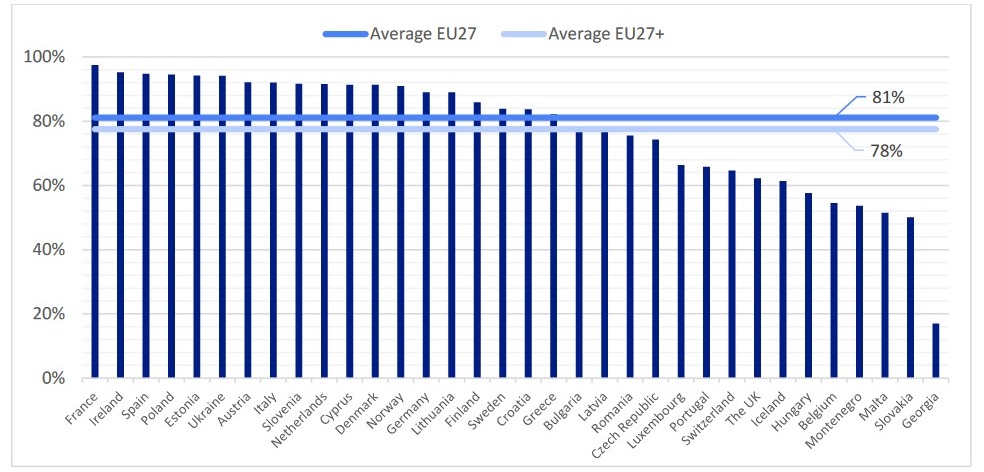
Spain, above the European average in all the analyzed categories
As every year, the report measures 4 categories:
- Policy, focusing on the existence of specific policies and strategies to promote open data at the national level.
- Impact, which analyzes activities to monitor and measure the reuse of open data.
- Portal, which evaluates the existing functions in the national platform (in the case of our country, datos.gob.es) to access open data and interact with the community.
- Quality, which studies the mechanisms that guarantee the quality of (meta)data.
Spain is ahead of Europe in all categories:
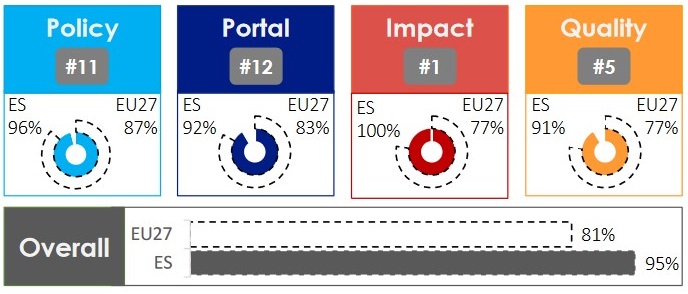
In total, Spain's score has increased by one percentage point compared to 2020, when it stood at 94%. It stands out especially in the impact category, where it is in first position with 100% of the score. The report highlights how the Aporta Initiative conducts an annual national survey to ascertain the control over the use of data by the various national, regional and local public bodies. It also highlights the collaborations that the institutions carry out with universities, such as the agreement adopted by the Valencian Government with all public universities in the Community to work together in training and research activities related to transparency and open data.
Our country continues in the group of open data prescribers
As part of the analysis, the European Portal groups all participating countries into four groups based on the assessment of open data maturity during 2021. With its score, Spain continues to place itself in the leading group of open data in Europe, called trend-setters. The group with the best results is completed by France, Ireland, Poland, Estonia and Ukraine.
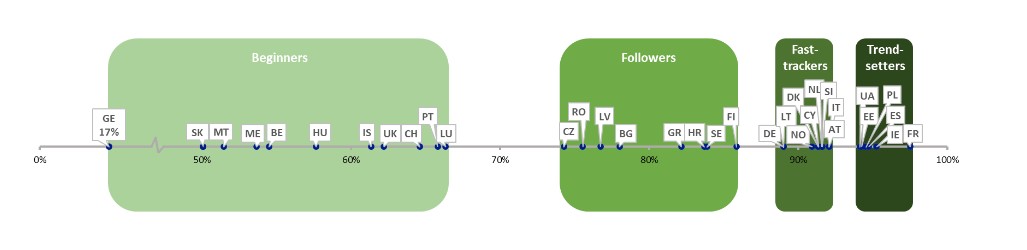
These countries are characterized by an advanced open data policy and a platform with a wide range of functions to meet the needs of advanced users and publishers. They are also countries where there are initiatives to ensure the publication of high-quality data and compliance with the DCAT-AP European open data cataloging profile, and where communities around data reuse are in place. Finally, it is highlighted that there are established methodologies in place to assess the impact of data in the different domains.
Europe's average score rises
In 2021, the average score relating to open data maturity of EU27 countries is 81%, an increase of three percentage points compared to 2020.
The report highlights three trends observed in all the countries analysed:
- Member States are updating their policies to transpose the Open Data Directive into their national legislation. More and more countries are carrying out the transposition process. In the case of Spain, it was included in the Royal Decree-Law 24/2021, approved last December 2 by the Congress. It is worth mentioning that the Open Data Directive still requires the adoption of a future implementing regulation by the European Commission, where the list of high-value datasets to be provided free of charge through APIs is included.
- Understanding, monitoring and measuring the impact of open data is becoming more important. The impact dimension has seen the most growth in the last year, while the quality indicator is the least mature. In recent years, impact has been measured mainly through activities such as maintaining records of data downloads or creating lists of use cases. This year there has been a clear trend towards in-depth studies, such as desk research or surveys, to quantify and verify the impact of open data.
- The COVID-19 pandemic continues to highlight the value and impact of open data. Last year, the health situation led to highlight the importance of systematically collecting data and making it available to the public in an up-to-date manner. This year, the available data is complemented by statistics related to vaccination.
Future recommendations
The report ends with a series of recommendations for each group of countries. In the case of prescribers, a group that includes Spain, some issues are highlighted, such as continuing to develop thematic communities of providers and reusers, giving priority to the high-value data categories highlighted in the Open Data Directive. In this sense, Spain is moving forward with the creation of specific hubs for various sectors such as tourism or health.
Other examples of recommendations are to collaborate with other national and international teams to develop an experimental impact assessment framework and with academic institutions to provide advanced courses and training on open data.
Evento
On 23, 24 and 25 November, the first edition of EU Open Data Days will take place, which can be followed online. Organised by the Publications Office and the Presidency of the Council of the European Union, the aim of the event is to promote open data, showing the value of the different business models based on them.
The event will be divided into 3 days: the first two days will be dedicated to the EU DataViz 2021 conference, focusing on open data and data visualisations, while the last day will be dedicated to the final of the EU Datathon 2021.
EU Dataviz 2021
The EU Dataviz 2021 conference will feature experts addressing techniques and best practices related to open data and its reuse in both the private and public sectors.
The content of the event has been built collaboratively. Between March and May this year, citizens from all over the world had the opportunity to submit their thematic proposals to participate as speakers. From the more than 150 proposals received, the EU DataViz 2021 Programme Committee selected the ones chosen to form the final agenda, which will take up two days.
23 November 2021: Open data
La primera jornada arrojará luz sobre los datos abiertos como base de soluciones que den forma al futuro digital de Europa.
The first day will shed light on open data as the basis for solutions to shape Europe's digital future.
It will be opened by the Director-General of the Publications Office of the European Union. Xavier Bettel, Prime Minister of Luxembourg, will follow with a presentation on data and digitisation at the heart of Luxembourg's innovation. This will be followed by a plenary session - with 30-45 minutes talks showcasing best practices, new use cases and emerging trends - and three thematic sessions - 45-60 minutes, with a more practical focus-:
- Plenary session. It will address the EU's data strategy and its path towards a single European market, as well as the situation of open data in Europe. There will also be a round table dedicated to data intelligence and its conversion into informed decisions. The Spanish side will be presented by Nuria Oliver, Co-Founder and Vice-President of ELLIS - European Laboratory for Learning and Intelligent Systems (Spain), who will talk about Valencia's experience in using data science in the fight against COVID-19.
- Thematic session 1: Creating open data ecosystems. Examples of projects contributing to open data policies, such as the European water health open knowledge (WHOW) project, will be showcased.
- Thematic session 2: Data for people. The importance of citizen participation and user-oriented projects in the field of open data will be highlighted. Among the projects to be showcased, we highlight the presentation by Antonio Ibáñez, Head of Transparency and Re-use of Information of Castilla y León, who will talk about transparency and open data in the health service of the region.
- Thematic session 3: Facilitating data reuse. Focusing on the enablers of open data, such as FAIR principles, digital literacy or mechanisms to ensure interoperability.
24 November 2021: Data visualisation
This conference will address the importance of communicating data efficiently. It will provide good practices and techniques to build data narratives and ensure better service to citizens.
After the opening by Boštjan Koritnik, Minister of Public Administration of Slovenia, representing the Presidency of the Council of the European Union, plenary and thematic sessions will also take place.
- Plenary session. It will consist of three presentations "Data visualisation as a vector of innovation: the case of lawyers", " Applying diverse, equitable and inclusive awareness in data visualisation" and " Opening EU climate open data through data storytelling".
- Thematic session 1: From open data to data visualisation. This session will serve as a bridge between open data and data visualisation. It will discuss storytelling and empowering citizens to turn open data into insights, among other issues.
- Thematic session 2: Serving citizens with dataviz. It will focus on how to involve citizens' needs in the process of creating visualisations and will offer concrete tips, for example for data visualisations on mobile phones.
- Thematic session 3: Using dataviz for policy making. It will show how data visualisation can support the decision-making cycle, with a particular focus on the EU public sector.
EU datathon 2021
The EU Datathon 2021 final will take place on 25 November. The nine finalist teams will present their solutions to the jury, which will evaluate each proposal and determine the final classification in the different categories. Among the finalists is Spain's CleanSpot, an app that seeks to encourage recycling through gamification.
The thematic challenges will be presented by a panel of experts and the event will close with an awards ceremony.
How can I attend?
Registration is free of charge. The different presentations can be followed online, but registration is required. Register and discover the latest trends and use cases of open data!
Noticia
96 ideas from 33 countries. Those have been the proposals presented to the UE Datathon 2021, a competition organized by the Publications Office and the Presidency of the Council of the European Union to promote the use of open data as a basis for new ideas, innovative products and services.
Proposals could be submitted to three different categories: “A European Green Deal”, focused on promoting sustainability, “An economy that works for people”, focused on reducing poverty and inequality, and “A Europe fit for the digital age ”, which seeks improvements in competencies related to data and european strategy in the matter.
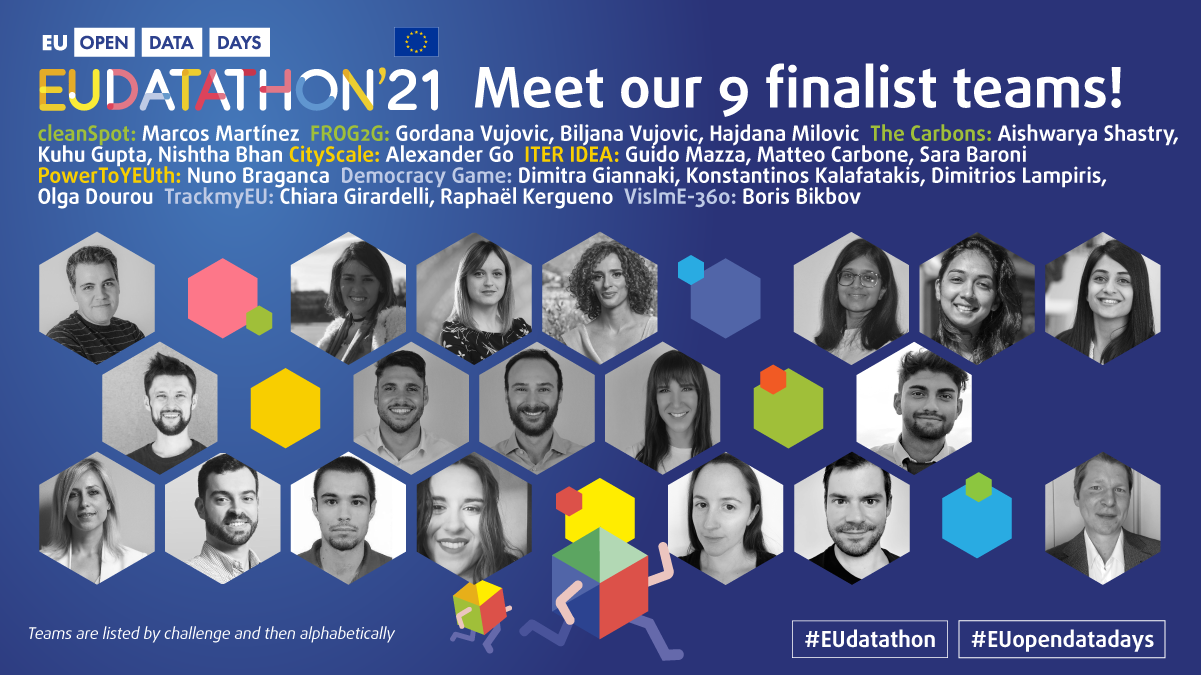
For each of these categories the jury has chosen 3 finalists.
CleanSpot, the Spanish presence in the contest
There were 12 proposals from Spanish teams for the EU Datathon 2021, one of them, CleanSpot, has achieved a place in the final, within the “A European Green Deal” category.
CleanSpot is an app that seeks to promote awareness and incentive of recycling through gamification. The app allows you to locate recycling and reuse points, such as clean points, specialized containers or collection services and centers. The novelty is that it also allows calculating the CO2 that each user avoids emitting into the atmosphere by performing a daily action such as throwing waste into the corresponding recycling container or donating it for reuse. Users can share their results and thus show the community how much they have reduced their carbon footprint, contributing to caring for the environment.
The users with the best score in the ranking receive prizes and recognition. In addition, each time the user goes to a collection or recycling point to deposit their waste, they accumulate points, which can be exchanged for discounts on municipal taxes, savings checks in local businesses or direct payments.
In addition, the app allows you to save favorite locations or services, and gives the option of receiving notifications, for example, reminders about the passage of the mobile clean point - for this service to be available in a specific municipality, prior integration is necessary -. It also allows the generation of awareness campaigns, with advice on recycling or information on specific actions in each area.
Finalists from 8 different countries
This year, the presence of finalists from multiple territories stands out. Only Italy repeats with three teams, one shared with France.
- In the category of “A European Green Deal”, CleanSpot will face each other with FROG2G, from Montenegro, and The Carbons, from India. FROG2G is an interactive visualization tool, created to offer a viable model to make Europe greener, while The Carbons allows you to compare the greenhouse gases that are emitted, for example, when you have a cup of coffee or take a drive.
- In the category "An economy that works for people", we find CityScale, from Ukraine, a tool to visualize, compare and find the best place to live; ITER IDEA, from Italy, a portal that facilitates the mobility of women in Europe; and PowerToYEUth, from Portugal, focused on locating public funding for SMEs and promoting youth employment.
- Finally, in the category “A Europe fit for the digital age”, the finalists are Democracy Game, from Greece, a virtual debate tool; TrackmyEU, from Italy and France, which makes it possible to explore EU policies, follow topics of interest and make the voice of the citizenry heard in Brussels; and VislmE-360, also from Italy, which offers a 360ᵒ view of visual impairments in the EU.
Next steps
The nine finalist teams have 5 months to develop their proposals, from June to November. Proposals will be evaluated by a jury of experts, based on criteria such as lThe open data used and the fitness for purpose. The winner will receive € 18,000, while the second and third will receive € 10,000 and € 5,000 respectively.
The award ceremony will be on November 25, 2021, within the framework of the EU Open Data Days, an event that this year has its first edition. In this event, aimed at push the use of open data in Europe to generate value, we will be able to see the various opportunities and business models offered by the reuse of public information.