10 posts found

Industrial data governance: the basis for more efficient and sustainable production
Today's industry is facing one of the biggest challenges in its recent history. Market demands, pressure to meet climate targets, consumer demand for transparency and technological acceleration are converging in a profound transformation of the production model. This transformation is not only aimed…


Exploring space from the ground: open satellite data in Europe and its applications
The value of open satellite data in Europe
Satellites have become essential tools for understanding the planet and managing resources efficiently. The European Union (EU) has developed an advanced space infrastructure with the aim of providing real-time data on the environment, navigation and meteor…

Discovering the Digital Product Passport (DPP) and CIRPASS: A Look into the Future of the Circular Economy
Digital transformation has reached almost every aspect and sector of our lives, and the world of products and services is no exception. In this context, the Digital Product Passport (DPP) concept is emerging as a revolutionary tool to foster sustainability and the circular economy. Accompanied by in…

The importance of Critical Minerals: Where to locate data of interest?
The energy transition is also a transition of raw materials. When we imagine a sustainable future, we conceive it based on a series of strategic sectors such as renewable energies or electric mobility. Similarly, we imagine a connected and digital future, where new innovations and business models re…

From data strategy to data governance system (part 1)
More and more organisations are deciding to govern their data to ensure that it is relevant, adequate and sufficient for its intended uses, i.e. that it has a certain organisational value.
Although the scenarios are often very diverse, a close look at needs and intentions reveals that many of these…

From data strategy to data governance system (part 2)
In the first part of this article, the concept of data strategy was introduced as the organisation's effort to put the necessary data at the service of its business strategy. In this second part, we will explore some aspects related to the materialisation of such a strategy as part of the design or…

Artificial Intelligence and data: the revolution in the supply chain
Artificial intelligence is transforming companies, with supply chain processes being one of the areas that is obtaining the greatest benefit. Its management involves all resource management activities, including the acquisition of materials, manufacturing, storage and transportation from origin to f…

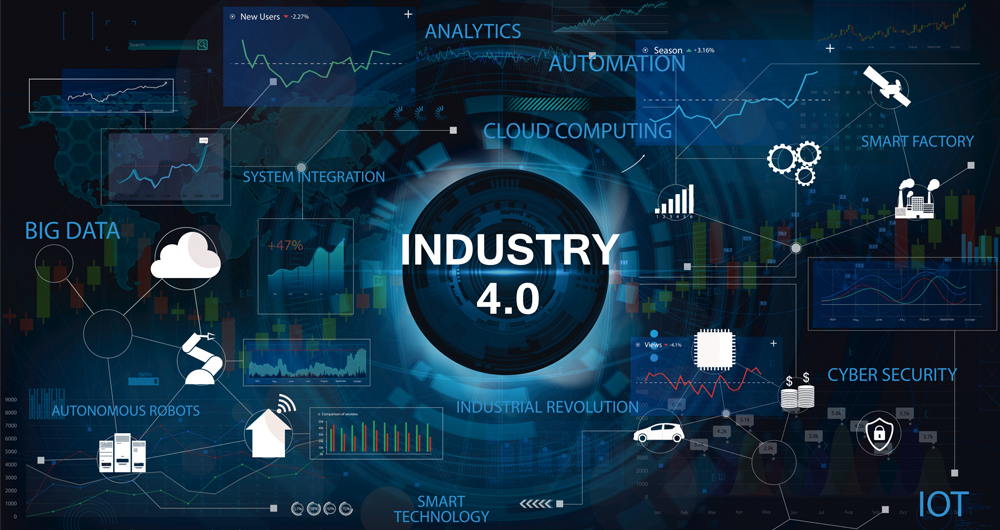
The re-use of public sector information and industry 4.0
The promotion of digitalisation in industrial activity is one of the main axes for tackling the transformation that the Spain's Digital Agenda 2025 aims to promote. In this respect, several initiatives have already been launched by public institutions, including the Connected Industry 4.0 programme…
Technologies that boost the precision forestry industry
The forest industry, as defined by FAO, include all economic activities that mostly depend on the production of goods and services from forests. This is an industry that, in many cases, has been seen as destructive to the environment due to its relationship with the tree felling. However, in almost…

Artificial intelligence impact on business value chain
The commercial adoption of any new technology and, therefore, its incorporation into the business value chain follows a cycle that can be moulded in different ways. One of the best known models is the Gartner hype cycle. With regard to artificial intelligence and data science, the current discussion…